The history of aviation is usually told as a straight line of ever-faster aircraft, which is why most readers end up with a list of machines and no sense of what any of it meant. This order alternates three kinds of book instead: the technical history of who did what, the cultural history of what flight did to how people imagined the world, and the pilots' own accounts, which are the only place the experience actually survives.
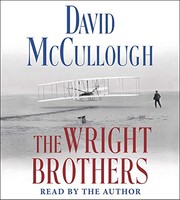
Start with The Wright Brothers. David McCullough's 617-page narrative is the popular entry point — the bicycle shop, the Outer Banks, Katharine Wright, the years of European acclaim before American recognition — and it is deliberately light on engineering, which is why the next book follows it rather than replaces it.
Kitty Hawk, and who actually flew first
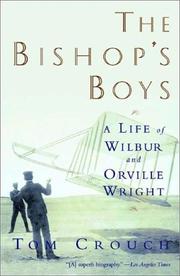
The Bishop's Boys is the definitive Wright biography, written by the Smithsonian's aeronautics curator. Tom Crouch is far better than McCullough on the wind-tunnel work and on the control problem the Wrights actually solved, which was three-axis control rather than the aeroplane as such; he is also honest about the patent wars that consumed Wilbur's last years and arguably held American aviation back a decade. If you read one book on this path, read this one.
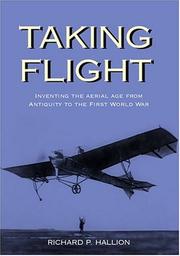
Taking Flight then puts the Wrights inside a community of experimenters — Cayley, Lilienthal, Chanute, Langley, the Europeans — and carries the story to about 1914. That context is what lets you judge the rival priority claims, including Gustave Whitehead's and the Smithsonian's long and compromised role in the argument, rather than waving them away.
Be warned that this stage is front-loaded: those three books run 1,777 pages between them, which is more than a quarter of the whole path before you reach 1914. If that is daunting, read Crouch and Hallion and treat McCullough as optional rather than as the warm-up.
What flight did to the imagination
A passion for wings is Robert Wohl on aviation and the Western imagination from 1908 to 1918 — the poets, painters and futurists who saw in the aeroplane the arrival of a new kind of human being. It is beautifully illustrated and explains, better than any technical account, why a hundred thousand people would turn out to watch a man fly a circuit. The winged gospel is the sharper American version: Joseph Corn documents the sincere interwar belief that aviation would abolish war, remake democracy and put a plane in every garage. Read the two together, in that order. Between them they account for a set of expectations that shaped policy for decades and then evaporated without anyone quite noticing.
The pilots' own books
The Spirit of St. Louis is Charles Lindbergh's Pulitzer-winning account of the 1927 New York-Paris flight, written twenty-five years afterwards: the fatigue, the hallucinations, the navigation done by dead reckoning over open ocean. Superb writing, and a controlled self-portrait by a man whose later politics were toxic — A. Scott Berg's biography is the corrective if you want one.
West with the night is Beryl Markham on flying mail and scouting elephant in colonial Kenya before the first solo east-to-west Atlantic crossing. The prose is extraordinary, the authorship has been disputed for decades, and the colonial setting is presented with very little reflection. Fly girls corrects the cast: Keith O'Brien on the women who forced their way into American air racing in the 1920s and 1930s — Florence Klingensmith, Ruth Elder, Louise Thaden, Amelia Earhart — against rules written explicitly to keep them out, and the best account of the racing circuit that drove aircraft development between the wars.
Antoine de Saint-Exupéry's Wind, Sand and Stars is the obvious fourth memoir here and is not on the path: the only record we could resolve for it was a Russian-language omnibus, so we left it out rather than send you to the wrong book.
War, the airship, and the jet
Empires of the Sky restores a genuine technological alternative — Alexander Rose on the contest between the Zeppelin and the aeroplane, told through Hugo Eckener and Pan Am's Juan Trippe — which is a useful antidote to reading the history backwards from what won. Age of Airpower is deliberately deflationary: Martin van Creveld argues that strategic bombing has almost never delivered what its advocates promised. It is a strong argument to be tested, not the consensus view. Jet age is the clearest short account of the transition to jet travel, told through the metal-fatigue crashes that destroyed de Havilland's lead with the Comet and handed the market to Boeing.
The airline business, and what flying is now
Hard landing explains US deregulation and the two decades of bankruptcies, hub wars and personality clashes that followed — the best answer to why a seat costs what it costs. Boeing versus Airbus covers the manufacturing duopoly and the culture change at Boeing after the McDonnell Douglas merger, written before the 737 MAX crisis, which makes its diagnosis look prescient rather than retrospective. End with Skyfaring, a serving 747 pilot on what the job and the view are actually like. After four stages of invention, war and commerce, it is a reminder that the thing itself is still remarkable.
Fourteen books, about 6,030 pages. The full sequence with lengths and stage goals is on the aviation path.