Best Books on Corsetry and Historical Costume
This curriculum is designed for an intermediate learner who already has basic sewing skills and wants to master historical costuming from the inside out — literally. The path begins with era-by-era silhouette literacy and period pattern drafting, moves into the structural engineering of corsets and underpinnings, and culminates in advanced hand-finishing and bespoke construction techniques. Each stage builds the vocabulary, eye, and hand skills needed for the next.
Era-by-Era Silhouette & Pattern Literacy
IntermediateUnderstand how historical silhouettes evolved across centuries, read period patterns confidently, and begin drafting from historical sources.
▸ Study plan for this stage
Pace: 8–10 weeks, ~25–30 pages/day, with 2–3 days per week dedicated to pattern analysis and drafting practice
- How silhouettes shifted across centuries (1500s–1900s) and the structural role of corsetry in achieving each era's ideal shape
- How to read, interpret, and scale historical flat patterns from primary sources like those in Patterns of Fashion volumes
- The relationship between undergarment construction (stays, corsets, petticoats) and outer garment fit, as documented in Cunnington
- Pattern grading principles: how seam placement, dart positioning, and panel construction changed to accommodate different body ideals
- The distinction between pattern drafting from measurements versus adapting extant historical patterns for modern use
- How fabric choice, boning placement, and closure systems (lacing, hooks, buttons) evolved to support silhouette changes
- Visual literacy: recognizing period silhouettes in artwork, photographs, and garment fragments to date and contextualize pieces
- The practical constraints of historical construction: hand-sewing, limited fabric widths, and pattern economy in historical design
- How did the ideal silhouette change from the 1500s to the 1900s, and what role did corsetry play in achieving each era's aesthetic?
- How do you read a flat pattern from Patterns of Fashion 1 or 2, and what do seam lines, grain lines, and notches tell you about construction sequence?
- What is the relationship between the structure of stays/corsets (as described in Cunnington) and the outer silhouette they were designed to support?
- How would you adapt a historical pattern from these sources for a modern body, and what measurements or adjustments would be necessary?
- What evidence in garment construction—seams, darts, boning channels, closures—reveals the period in which a corset or stays was made?
- How did changes in fabric availability, production methods, and fashion ideology drive changes in corset and pattern design across the centuries?
- Create a visual timeline (digital or paper) mapping silhouette evolution from 1500–1900, using illustrations from Patterns of Fashion 1 & 2 and period artwork; annotate how corsetry supported each shape
- Select 3 patterns from Patterns of Fashion 1 (different centuries); trace or photograph each, label all seam lines, darts, grain lines, and closures, then write a short analysis of how the pattern achieves its era's silhouette
- Read Cunnington's descriptions of stays/corsets for 3 different periods; sketch the internal structure (boning channels, seams, closures) and compare how each design differs
- Draft a simple corset or stays pattern for a specific historical period using measurements from Patterns of Fashion or Cunnington; test the draft on a dress form or muslin mockup to assess silhouette accuracy
- Analyze a pattern from Patterns of Fashion 2 and create a grading chart showing how you would scale it up or down for different sizes while maintaining period proportions
- Compare a garment construction sequence from Patterns of Fashion with Cunnington's written descriptions of the same era; identify which construction methods are documented in both sources
Next up: Mastery of historical pattern literacy and silhouette mechanics prepares you to move into advanced construction techniques—learning to draft original patterns from historical principles, execute period-accurate seaming and finishing, and troubleshoot fit issues specific to historical garment structures.
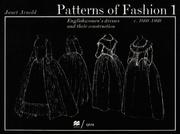
The foundational scholarly reference for English women's and men's dress 1660–1860, with meticulously measured patterns taken from surviving garments. Starting here trains your eye to read real historical construction before touching modern drafting guides.
Extends the Arnold method into 1860–1940 silhouettes, covering the bustle, Edwardian, and early modern eras. Reading it immediately after PoF1 lets you trace the structural logic of silhouette change across a continuous timeline.
A thorough era-by-era survey of underpinnings — stays, corsets, crinolines, bustles — that explains WHY each outer silhouette existed. This contextual layer is essential before you begin constructing the foundations themselves.
Corset Construction & Boning Fundamentals
IntermediateDraft, cut, bone, and finish a historically accurate corset for multiple periods, understanding material choices and structural principles.
▸ Study plan for this stage
Pace: 4–5 weeks, ~40–50 pages/day, with 2–3 days per week dedicated to hands-on boning and construction practice
- Historical evolution of corset silhouettes across periods (16th–20th centuries) and how design changes reflect structural needs
- Boning placement, types (baleen, steel, spiral), and how bone positioning creates and supports specific shaping
- Pattern drafting and grading techniques for multiple corset periods, including bodice integration and closure systems
- Fabric selection, grain line orientation, and interlining choices that support historical accuracy and structural integrity
- Construction sequencing: channel creation, boning insertion, binding, and finishing techniques that ensure durability and proper fit
- Closure systems (lacing, busk channels, hooks and eyes) and their historical context and functional role in fit and adjustment
- How did corset silhouettes and boning strategies differ between the Elizabethan period and the Victorian era, and what structural principles drove these changes?
- What are the key differences between baleen and steel boning, and when would you choose each for a historically accurate reproduction?
- Walk through the complete pattern drafting process for a corset from a specific historical period using Waugh's methods—what measurements and proportions are critical?
- Explain the relationship between fabric choice, grain line, and interlining in supporting the corset's structure and achieving the intended silhouette.
- Describe the step-by-step construction sequence from channel preparation through final binding, and why order matters for structural integrity.
- How do closure systems (lacing, busk, hooks) function both historically and mechanically, and how do you choose and install them for a specific corset design?
- Complete a detailed period-specific corset analysis: select one corset from Waugh's historical examples, sketch its silhouette, identify boning placement, and document how each design choice supports the intended shape.
- Draft a corset pattern for a chosen historical period using Waugh's proportional methods; grade it to at least two sizes and annotate grain lines, seam allowances, and interlining placement.
- Source and compare three different boning materials (baleen substitute, spiral steel, flat steel); test their flexibility, strength, and historical appropriateness by hand-bending and documenting properties.
- Construct a muslin test corset (simplified, single-period design) from your drafted pattern: create channels, insert boning, bind edges, and install closures; fit and adjust based on how the structure performs.
- Create a detailed construction manual for your test corset, including step-by-step photographs or sketches of channel creation, boning insertion, binding technique, and closure installation.
- Analyze Salen's construction techniques against Waugh's historical documentation: identify which modern methods align with historical practice and which are contemporary shortcuts, and document your findings in a comparison chart.
Next up: This stage equips you with the technical skills and historical knowledge to construct historically accurate corsets across multiple periods; the next stage will likely deepen specialization into advanced topics such as fitting and alteration, advanced closure systems, or period-specific embellishment and finishing techniques.
The canonical technical and historical reference for corsetry, packed with period patterns and construction notes drawn from original sources. Read this first in the stage to establish the historical blueprint before moving to modern instruction.

Offers scaled patterns taken directly from museum pieces with clear construction notes, bridging Waugh's scholarship and hands-on making. The variety of periods covered lets you practice drafting across multiple silhouettes.
Period Drafting & Costume Construction in Depth
IntermediateDraft and construct complete period garments — not just underpinnings — using historically grounded methods and fitting techniques.
▸ Study plan for this stage
Pace: 8–10 weeks, ~40–50 pages/day with pattern drafting interspersed. Allocate 3–4 weeks for Baumgarten, then 5–6 weeks for Waugh, with overlapping construction projects.
- How garment construction methods evolved across centuries (1600–1930) and why seam placement, grain alignment, and closure techniques changed
- The relationship between body measurement, ease allowance, and historical fit standards—and how they differ from modern sizing
- Pattern drafting from historical principles: how to read and interpret Waugh's diagrams and translate them into full-scale working patterns
- Fabric grain, nap, and layout strategies specific to period garments, including how historical cutters economized on cloth
- Hand-sewing and period-appropriate seaming techniques: backstitching, fell seams, whip stitches, and their structural and aesthetic purposes
- How to analyze garment construction through close examination (Baumgarten's methodology) to reverse-engineer historical techniques
- The interplay between silhouette, boning, and underpinning—and how outer garment construction depends on what lies beneath
- What are the key differences in bodice construction, seam placement, and closure methods between a 1600s stays-based garment and a 1920s dress, and why did these changes occur?
- How do you interpret Waugh's pattern diagrams to create a full-scale draft, and what adjustments must you make for your specific measurements and historical ease allowances?
- Describe the process of laying out a historical pattern on fabric, accounting for grain, nap, and fabric economy—what decisions would a historical cutter have made?
- What hand-sewing techniques are essential for period-accurate construction, and how do they differ from modern machine methods in terms of durability and appearance?
- How does the construction of an outer garment (e.g., a gown or jacket) depend on the underpinnings beneath it, and how would you adjust fit accordingly?
- What does 'close-up' analysis of an extant garment reveal about historical construction methods that written sources alone cannot convey?
- Read Baumgarten's introduction and select 2–3 garment case studies; photograph or sketch the seam lines, closures, and fabric grain of each, noting construction sequence and techniques used.
- Draft a simple 1600s–1700s bodice using Waugh's diagrams: scale the pattern to your measurements, add appropriate ease, and create a full-scale paper pattern with grain lines and seam allowances marked.
- Lay out your drafted pattern on muslin or scrap fabric, accounting for nap and grain direction; photograph the layout and annotate decisions about fabric economy and pattern orientation.
- Hand-construct a muslin toile (test garment) of your drafted bodice using period-appropriate seaming techniques (fell seams, backstitching); fit it and document fit issues and adjustments needed.
- Select one garment type from Waugh (e.g., a 1800s chemise or 1850s corset cover) and draft, cut, and construct it in appropriate fabric, incorporating hand-finishing techniques observed in Baumgarten's examples.
- Compare a modern commercial pattern to a historical pattern from Waugh for the same garment type; write a 1–2 page analysis of differences in ease, seam placement, and closure methods and why they exist.
Next up: This stage transforms you from understanding historical underpinnings into a maker capable of drafting and constructing complete, historically grounded garments—preparing you to tackle advanced topics like period-specific tailoring, complex closures, and multi-piece garment engineering in the next stage.
A close examination of 18th-century garments from the Colonial Williamsburg collection, with construction details and hand-finishing notes rarely found elsewhere. It bridges museum study and workshop practice.
Waugh's companion volume to Corsets, covering outer garments with scaled period patterns and historical commentary. Placed here, it lets you integrate the underpinnings you've mastered with the outer silhouette they were designed to support.
Advanced Hand Finishing & Couture Techniques
ExpertExecute the hand-sewn finishing details — bound edges, hand-stitched boning channels, period-correct closures, and couture-level seam finishing — that separate authentic reproduction from costume.
▸ Study plan for this stage
Pace: 4–5 weeks, ~25–30 pages/day, with 2–3 dedicated practice days per week for hands-on techniques
- Bound edge construction: measuring, cutting bias strips, pressing, and stitching bound edges by hand for a professional finish
- Hand-stitched boning channels: placement, stitching methods (backstitch vs. running stitch), and securing boning without visible stitching on the exterior
- Period-correct closures: hook-and-eye placement, hand-sewn button attachment with thread shanks, and historically accurate fastening systems
- Couture-level seam finishing: French seams, fell seams, and whip-stitching for invisible seams in corsetry
- Garment construction sequencing: understanding how finishing techniques integrate into the overall assembly process from Maynard's methodologies
- Pattern interpretation from historical sources: reading and adapting patterns from Arnold's documented garments to modern construction
- Hand-sewing stitches for couture work: tension control, stitch length consistency, and thread selection for durability and invisibility
- What are the key differences between machine-finished and hand-finished bound edges, and when is each appropriate in corsetry?
- How do you calculate bias strip width and length for binding curved edges on a corset, and what is the correct pressing sequence?
- Describe the process of hand-stitching a boning channel so that stitches are invisible on the exterior of the garment.
- What are period-correct closure systems for different eras of corsetry, and how do you hand-sew them to withstand repeated use?
- How do French seams and fell seams differ, and which is most appropriate for corset side seams?
- What information can you extract from Arnold's pattern documentation, and how would you adapt a historical pattern for modern construction?
- Practice binding a curved edge on a scrap of fashion fabric: cut bias strips, press, pin, and hand-stitch using Maynard's method; evaluate for even width and invisible stitching on both sides
- Hand-stitch a boning channel on a practice corset panel using backstitch; test the channel by inserting boning and checking for secure hold without visible exterior stitching
- Sew hook-and-eye closures and hand-stitched buttons with thread shanks on a practice strip; test durability by pulling and flexing to simulate wear
- Construct a French seam on a test piece of corset fabric; measure seam allowances and evaluate the final seam for flatness and strength
- Study one complete garment from Arnold's Patterns of Fashion 4; sketch the pattern pieces, annotate closure placement and seam finishes, and identify which techniques from Maynard apply
- Execute a full bound edge on a curved corset panel (armhole or neckline) using hand-stitching throughout; photograph and compare to historical examples for accuracy
Next up: Mastering these hand-finishing techniques establishes the technical foundation for the next stage—whether that involves fitting and alteration, advanced pattern grading, or executing a complete couture corset from historical documentation.
A rigorous, technique-by-technique guide to couture hand and machine finishing that translates directly to historical reproduction work. Reading it at this stage gives you the refined vocabulary to execute what earlier books described.

Arnold's deep dive into the cut and construction of linen shirts and smocks 1540–1660, with extraordinary detail on hand-stitching, embroidery finishing, and period seam techniques — the gold standard for hand-finishing study.
Discussion
Keep reading
Paths that share books, cover the same subject, or open a related topic.