Flashman Reading Order: Where to Start
George MacDonald Fraser's Flashman Papers are a series of 12 novels presented as the fictional "discovered memoirs" of Harry Flashman, the bully from Tom Brown's School Days. This curriculum first orients the beginner with the source material and the opening novel, then works through the series in both publication and historical (in-universe chronological) order so the reader can appreciate Fraser's craft from both angles, and finally deepens the experience with Fraser's own non-fiction and historical context.
The Foundation: Know Where Flashman Came From
BeginnerUnderstand the Victorian literary source that Fraser riffs on, and meet Flashman in his original context before diving into Fraser's reimagining.
▸ Study plan for this stage
Pace: 4–5 weeks total: Week 1–2 — Tom Brown's School Days (~30 pages/day, roughly 280 pages); Week 3–5 — Flashman from the Flashman Papers 1839–1842 (~20–25 pages/day, roughly 256 pages), reading more slowly to savour Fraser's satirical layering and footnotes.
- The Victorian 'muscular Christianity' ideal as embodied in Tom Brown's School Days — the belief that sport, discipline, and moral virtue forge the ideal English gentleman
- Flashman's original role in Tom Brown's School Days as the archetypal school bully and moral foil to Tom Brown, and why Hughes wrote him as a one-dimensional villain
- George MacDonald Fraser's central conceit: rehabilitating and first-person-voicing a minor Victorian villain as the 'hero' of his own memoirs
- The fictional editorial apparatus Fraser constructs — the 'discovered papers,' footnotes, and appendices — and how it blurs the line between history and fiction
- Fraser's use of Flashman as an unreliable narrator: how Harry's self-serving cowardice, racism, and lust are simultaneously confessed and excused
- The historical backdrop of Flashman's first adventure — the First Anglo-Afghan War (1839–1842) and the catastrophic British retreat from Kabul — and how real events anchor the satirical fiction
- Victorian imperialism and its myths of heroism: how Fraser uses Flashman to expose the gap between the empire's self-image and its brutal, chaotic reality
- Intertextuality as a reading skill: recognising how Fraser's novel only fully resonates when the reader knows the Hughes source material it subverts
- In Tom Brown's School Days, what specific actions define Flashman as a villain, and what does Hughes intend the reader to feel about his expulsion from Rugby?
- How does Hughes use Flashman to contrast with Tom Brown's moral development — what does Flashman's presence reveal about the values Hughes is championing?
- When you begin Fraser's Flashman, how does Harry's own account of his expulsion from Rugby differ in tone and self-justification from Hughes's third-person account of the same event?
- What narrative devices does Fraser use to make Flashman's 'papers' feel like authentic Victorian documents, and why does this matter to the satirical effect?
- How does the First Anglo-Afghan War serve Fraser's satirical purpose — in what ways does the historical disaster of the Kabul retreat allow Flashman to be both a coward and an accidental 'hero'?
- After reading both books, how would you describe the relationship between Hughes's moral universe and Fraser's — is Fraser simply mocking Hughes, or is something more complex going on?
- Side-by-side comparison: Find the passage in Tom Brown's School Days describing Flashman's bullying and expulsion, then find Fraser's Flashman's own retelling of those same events in the opening chapters. Write a one-page note on every difference in tone, detail, and self-presentation — this trains the core intertextual skill the whole series demands.
- Character sketch: Write a half-page profile of Flashman as Hughes sees him, then a half-page profile as Flashman sees himself in Fraser. Use only evidence from the texts. The gap between the two profiles is the engine of Fraser's satire.
- Historical anchor exercise: Using only Fraser's footnotes and appendices in Flashman, list every real person and real event mentioned. Look up two or three of them briefly to verify Fraser's accuracy. This builds trust in — and healthy scepticism of — Fraser's blend of fact and fiction.
- Vocabulary and voice log: As you read Fraser's Flashman, keep a running list of 10–15 period-specific slang terms, military ranks, or Victorian idioms Flashman uses. For each, note whether it feels authentic, comic, or both. This attunes your ear to Fraser's ventriloquism of the Victorian voice.
- Reflection journal entry: After finishing both books, write freely for 15 minutes on this prompt — 'Do I like Flashman? Should I?' Revisit this entry at the end of the entire curriculum to track how your relationship with the character evolves.
- Map the retreat: Sketch or annotate a simple map of Afghanistan tracing the British army's retreat from Kabul to Jalalabad as depicted in Fraser's Flashman. Mark the moments where Harry's cowardice intersects with real historical turning points. This grounds the fiction in geography and stakes.
Next up: Having established both where Flashman came from (Hughes's Rugby) and how Fraser launches him into history (the Afghan disaster), the reader is now equipped with the satirical lens and narrative voice needed to follow Harry through the subsequent Papers, where Fraser drops him into one Victorian imperial crisis after another with escalating confidence and complexity.
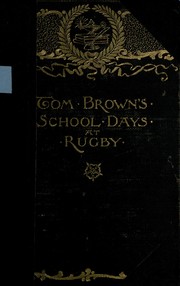
This is the 1857 novel where Harry Flashman first appears as the school bully — Fraser's entire series is a subversive sequel to it. Reading it first makes every joke, reference, and irony in Fraser's work land properly.
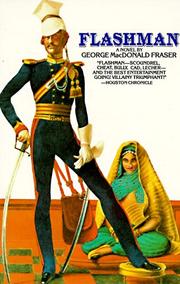
The first published Flashman Paper (1969), picking up immediately where Tom Brown leaves off. Start here: Fraser establishes his voice, the mock-memoir format, and Flashman's character across the First Anglo-Afghan War — the perfect entry point.
Publication Order: Fraser's First Run
BeginnerRead the next four novels in the order Fraser wrote and published them, experiencing how he developed his historical range and comedic depth book by book.
▸ Study plan for this stage
Pace: 8–10 weeks total (~20–25 pages/day, 4–5 days/week): spend roughly 2 weeks on Royal Flash, 2–3 weeks on Flash for Freedom!, 2 weeks on Flashman at the Charge, and 2 weeks on Flashman in the Great Game. Allow a short reflection day between each book to jot notes before moving on.
- Fraser's expanding historical canvas: each book moves Flashman into a new era and geography — Ruritanian Europe, the antebellum American South, the Crimea, and British India during the Mutiny — showing how Fraser widened his range book by book.
- The unreliable narrator as comic engine: Flashman consistently rewrites his own cowardice as bad luck or others' incompetence, and recognizing this gap between his self-report and the implied truth is central to the humor.
- Satirical use of real historical figures: Royal Flash skewers Bismarck and Lola Montez; Flash for Freedom! confronts Lincoln and slave-trade realities; Flashman at the Charge places Flashman at Balaclava alongside Cardigan; Flashman in the Great Game weaves him through the 1857 Indian Mutiny with fi
- Moral cowardice vs. physical survival: across all four books Fraser deepens the joke that Flashman's instinct for self-preservation accidentally produces outcomes that look heroic to everyone else.
- The 'packet' conceit and editorial apparatus: Fraser's mock-scholarly footnotes and editorial introductions grow more elaborate across these four novels, blurring the line between fiction and history.
- Tonal range — from farce to genuine darkness: Royal Flash is the lightest and most farcical; Flash for Freedom! confronts the horror of the slave trade with real moral weight; Flashman at the Charge and Flashman in the Great Game balance adventure with genuine historical tragedy.
- Fraser's research discipline: each novel is grounded in meticulous period detail — dress, slang, military procedure, political intrigue — and learning to notice this texture is key to appreciating the series.
- Character consistency amid new settings: despite radically different backdrops, Flashman's voice, appetites, and survival instincts remain constant, which is Fraser's way of arguing that human nature doesn't change with history.
- In Royal Flash, how does Fraser use the Ruritanian romance genre (and the real figures of Bismarck and Lola Montez) to satirize both Victorian adventure fiction and 19th-century European power politics?
- Flash for Freedom! is often considered the most morally serious of the four books. How does Fraser balance Flashman's comic self-interest with an unflinching depiction of the transatlantic slave trade, and does the humor undercut or intensify the horror?
- Flashman at the Charge places its narrator at one of the most famous military blunders in British history. How does Fraser use Flashman's perspective to reinterpret the Charge of the Light Brigade, and what does this say about the mythology of military glory?
- Across all four novels, how do Fraser's mock-scholarly footnotes and editorial prefaces function — are they purely comic, or do they serve a deeper purpose in anchoring the fiction to real history?
- Trace Flashman's relationship with power and authority across the four books: how does he navigate, manipulate, or simply flee from the powerful figures he encounters (Bismarck, slave traders, Lord Raglan, the leaders of the Indian Mutiny)?
- By the end of Flashman in the Great Game, how has Fraser's portrayal of empire evolved from the relatively light satire of Royal Flash? What does the Indian Mutiny setting allow him to say that the earlier books could not?
- Keep a 'Historical Fact vs. Flashman Spin' log: after each chapter, jot one real historical event or figure Flashman encounters and note how his narration distorts or reframes it. Compare your notes against a brief encyclopedia entry to feel Fraser's sleight of hand.
- Write a one-page 'corrected' version of a single scene from each book — retell the same events as a straight, earnest Victorian adventure hero might have recorded them, then re-read Fraser's version to appreciate the satirical gap.
- Create a simple four-column comparison chart (one column per book) tracking: setting/year, real historical event at the core, Flashman's stated reason for being there, and his actual motivation. This makes Fraser's structural formula visible.
- After finishing Flash for Freedom!, read a short primary-source account of the slave trade (e.g., an excerpt from Frederick Douglass's Narrative or a contemporary abolitionist pamphlet) and write a paragraph on how Fraser's fictional treatment compares in emotional impact.
- Select one of Fraser's footnotes from each novel and research the claim it makes. Write a sentence on whether the footnote is accurate, embellished, or invented — this trains you to engage with the mock-scholarly apparatus critically.
- Draft a brief 'editor's preface' in Fraser's style for an imaginary fifth Flashman packet set in an era of your choosing. This forces you to internalize the voice, the period-research habits, and the structural conceit Fraser uses across all four books.
Next up: Completing these four novels gives you a firm grasp of Fraser's voice, structural formula, and satirical method, equipping you to tackle the remaining books in the series with the critical eye needed to appreciate how Fraser continued to deepen, darken, and occasionally subvert his own formula in later installments.
The second published novel (1970), a brilliant parody of Anthony Hope's The Prisoner of Zenda set in 1840s Europe. Reading it second mirrors Fraser's own creative sequence and shows his expanding ambition.
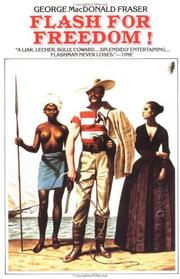
Third published (1971), covering the slave trade and antebellum America. Fraser's historical research deepens here; reading it in publication order lets you see his growing confidence with darker material.
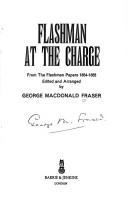
Fourth published (1973), set during the Crimean War and the Charge of the Light Brigade. A fan favourite that rewards the reader who has already absorbed Fraser's mock-heroic formula from the earlier books.
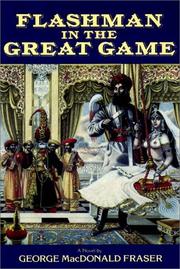
Fifth published (1975), covering the Indian Mutiny of 1857 — widely considered one of the best in the series. By this point the reader is fully fluent in Fraser's style and can savour his most ambitious historical canvas.
Completing the Publication Run
IntermediateFinish the remaining novels in publication order, tracking Fraser's later career choices and the full sweep of Victorian imperial history he covers.
▸ Study plan for this stage
Pace: 8–10 weeks, roughly 25–35 pages per day; each novel takes approximately 10–14 days, allowing time for note-taking and reflection between volumes
- Publication-order evolution of Fraser's craft: compare the tighter plotting and darker irony of these later novels against the earliest Flashman Papers to see how Fraser's authorial voice matured over decades
- Victorian imperial overreach as recurring theme: each book dramatises a distinct theatre of empire — the Malay Archipelago and Madagascar (Flashman's Lady), the American West and the Plains Indian Wars (Flashman and the Redskins), the Taiping Rebellion in China (Flashman and the Dragon), the First A
- Flashman as unreliable moral witness: in these volumes Fraser pushes Flashman's self-serving narration into more explicitly uncomfortable territory — slavery, genocide of indigenous peoples, colonial massacre — forcing the reader to read against the grain of Harry's breezy confessions
- Cross-cultural encounter and its limits: Flashman's Lady (Borneo/Madagascar), Redskins (Sioux and Apache cultures), and Dragon (Han Chinese society under the Taiping) each immerse Flashman in non-European worlds; tracking how Fraser researches and renders these cultures reveals both his strengths an
- The role of real historical figures: these five novels feature an unusually dense cast — James Brooke of Sarawak, Kit Carson, Crazy Horse, General Gordon, Lola Montez, John Brown, and others — and Fraser's technique of weaving them into Flashman's adventures as fully-rounded characters rather than c
- Elspeth as foil and structural device: Flashman's Lady gives Elspeth her most active role in the entire series; analysing her function here illuminates how Fraser uses her throughout the run as a comic counterweight to Harry's cynicism
- American episodes as imperial mirror: both Redskins and Angel of the Lord are set in the United States rather than the British Empire, and Fraser uses them to argue that American expansion and the slave system are morally continuous with British imperialism — a pointed authorial thesis
- Fraser's use of the scholarly apparatus — footnotes, appendices, and the fictional 'editor' framing — reaches its most elaborate form in these later books; understanding how this apparatus shapes credibility and irony is essential to reading the series as a whole
- How does Fraser use Flashman's Lady to expand the series beyond purely British imperial settings, and what does the Madagascar and Borneo material add to the overall moral argument of the Papers?
- In Flashman and the Redskins, how does Harry's narration of the Plains Indian Wars and the Little Bighorn aftermath force the reader to confront the gap between his self-justifying tone and the historical reality of indigenous dispossession?
- What specific techniques does Fraser employ in Flashman and the Dragon to convey the scale and horror of the Taiping Rebellion, and how does Flashman's role as an observer rather than a true participant shape the novel's historical commentary?
- How does Flashman and the Mountain of Light portray the internal politics of the Sikh Empire and the machinations surrounding the First Anglo-Sikh War, and in what ways does Flashman's complicity differ from his role in earlier colonial adventures?
- In Flashman and the Angel of the Lord, how does Fraser construct John Brown as a genuine moral counterpoint to Flashman, and what does Harry's reaction to Brown reveal about the limits of his cynicism?
- Taken together across all five novels in this stage, how has Fraser's deployment of the fictional 'editor' footnotes evolved, and what cumulative effect do they have on the reader's trust in Flashman as a narrator?
- Comparative timeline chart: as you finish each novel, add its central historical event to a single master timeline of Victorian-era world history (1840s–1890s); by the end of the stage you should have a visual map of the full geographic and chronological sweep Fraser covers across these five books
- Narrative reliability log: keep a running journal entry for each novel in which you record at least three moments where Flashman's account is demonstrably self-serving, incomplete, or contradicted by the footnotes — then write a one-paragraph 'corrected' version of each incident from the perspective of a neutral historian
- Character dossier for one real historical figure per novel: choose James Brooke, Kit Carson, General Gordon, Maharani Jindan, or John Brown and write a one-page dossier comparing Fraser's fictional portrayal with at least one biographical or historical source; note where Fraser invents, compresses, or faithfully reconstructs
- Elspeth close-reading exercise (Flashman's Lady): select two scenes in which Elspeth acts independently of Harry and write a 300-word analysis of what her behaviour reveals that Harry's narration tries to suppress or dismiss
- Thematic essay (500–700 words): after finishing Flashman and the Angel of the Lord, write an essay arguing whether Fraser's use of American settings (Redskins and Angel of the Lord) strengthens or weakens his critique of British imperialism — use specific scenes from both novels as evidence
- Re-read the footnotes and appendices of any two novels in this stage as a standalone document, ignoring the main narrative; write a short reflection on what kind of 'history book' the apparatus alone would constitute, and what that tells you about Fraser's overall satirical strategy
Next up: Completing the full publication run gives you command of the entire arc of Fraser's project, positioning you to move into a synthetic, critical stage where you can read scholarship on the series, compare Fraser to other historical novelists, and evaluate the Papers as a unified literary and historiographical achievement.
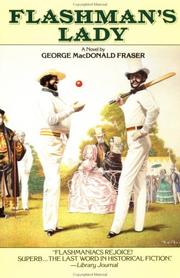
Sixth published (1977), ranging from cricket to Borneo and Madagascar. It introduces Flashman's wife Elspeth as a major presence — a tonal shift worth experiencing in sequence.
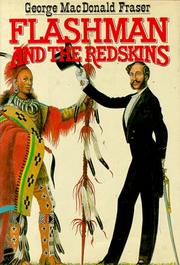
Seventh published (1982), split between the California Gold Rush and the Battle of Little Bighorn. The long gap from the previous book reflects Fraser's real-world pause; reading it here honours that rhythm.
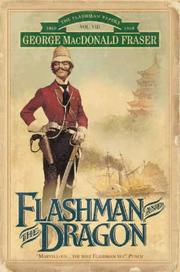
Eighth published (1985), set during China's Taiping Rebellion — one of history's least-known catastrophes. Fraser's footnotes are at their most illuminating here, rewarding a reader already comfortable with his method.
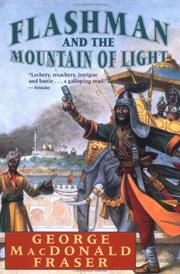
Ninth published (1990), covering the First Anglo-Sikh War and the Koh-i-Noor diamond. Continues the later-career pattern of Fraser choosing less-familiar Victorian conflicts.

Tenth published (1994), built around John Brown's raid on Harpers Ferry. Fraser returns to American history with full mastery; best appreciated after the earlier American-set volumes.
The Final Papers
IntermediateRead the last two published novels and understand how Fraser closed — or left open — the series, and reflect on Flashman's complete arc.
▸ Study plan for this stage
Pace: 6–8 weeks total: Weeks 1–3 cover "Flashman and the Tiger" (roughly 20–25 pages/day across its three novellas — "Flashman and the Tiger," "The Road to Charing Cross," and "Sahib"); Weeks 4–7 cover "Flashman on the March" (~25 pages/day); Week 8 is reserved for reflection, review, and completing all e
- The novella format of 'Flashman and the Tiger' as a structural departure — three self-contained 'extracts' rather than one continuous memoir, and what this signals about Fraser's late-series choices
- Flashman's encounter with Sherlock Holmes in 'Flashman and the Tiger': the collision of fictional universes and what it reveals about Flashman's self-image and unreliability as a narrator
- 'The Road to Charing Cross' as a meditation on the Franco-Prussian War and Flashman's aging cynicism — his detachment from causes he once at least pretended to serve
- 'Sahib' as a retrospective on the Indian Mutiny, revisiting themes from 'Flashman in the Great Game' and forcing the reader to measure how Flashman — and Victorian Britain — have changed
- Flashman on the March and the Abyssinian Campaign of 1868: Emperor Tewodros II (Theodore) as one of the series' most complex antagonists, neither purely villain nor hero
- Fraser's use of the Abyssinian setting to interrogate imperial adventure at the moment of its apparent triumph — the campaign is a British 'success,' yet the novel is saturated with ambivalence
- The question of closure: how Fraser leaves Flashman's fate and character deliberately unresolved, resisting a redemptive arc while also softening nothing about his protagonist
- Flashman's complete arc across the Papers — coward, survivor, accidental hero, aging rogue — and what the final two books confirm or complicate about that identity
- How does the three-novella structure of 'Flashman and the Tiger' change your relationship to Flashman as a narrator compared to the full-length novels — does fragmentation make him more or less trustworthy?
- In 'Flashman and the Tiger,' what does Fraser achieve by placing Flashman alongside Sherlock Holmes, and how does each man's legend comment on the other's?
- By the time of 'Flashman on the March,' Flashman is in his mid-forties. How does Fraser use the Abyssinian campaign to explore the theme of an aging imperial adventurer, and does Flashman show any genuine development as a person?
- Emperor Tewodros II is portrayed with considerable complexity in 'Flashman on the March.' How does Fraser use him to challenge or complicate the reader's assumptions about the British imperial project?
- Looking across both books, does Fraser provide a satisfying sense of closure for the series, or does the open-endedness feel intentional — and what does your answer say about the nature of Flashman as a character?
- How do the three 'extracts' in 'Flashman and the Tiger' individually and collectively revisit the series' major themes (cowardice, survival, imperial myth-making, and the unreliable memoir)?
- Narrative map: Create a one-page timeline placing all three 'Flashman and the Tiger' extracts alongside the full novels chronologically by in-world date. Annotate where each fits in Flashman's life and note any thematic echoes with earlier books in the series.
- Character dossier — Tewodros II: After finishing 'Flashman on the March,' write a 400–600 word profile of Emperor Tewodros from Flashman's perspective, then rewrite it from a neutral historian's perspective. Compare the two versions and note where Flashman's bias distorts or illuminates.
- The Holmes encounter close-read: Reread the 'Flashman and the Tiger' title novella and annotate every moment where Flashman's self-presentation seems calculated for the reader's benefit. Write a one-paragraph argument for whether Flashman admires, envies, or simply tolerates Holmes.
- Series retrospective essay: Write a 600–800 word essay answering the question: 'Does Flashman change?' Use specific evidence from 'Sahib,' 'The Road to Charing Cross,' and 'Flashman on the March' as your primary sources, and contrast with at least one earlier book you have read in the curriculum.
- Closure debate: Stage a written debate with yourself — one paragraph arguing Fraser successfully closes the series with these two books, one paragraph arguing the ending is deliberately and productively unresolved. Conclude with your own verdict and reasoning.
- Historical context check: Choose one event from 'Flashman on the March' (e.g., the storming of Magdala, the death of Tewodros) and spend 30–45 minutes reading a short non-fiction account of it. Write a bullet-point list of where Fraser is historically faithful and where he takes creative liberties, and reflect on how those choices serve the novel's themes.
Next up: Completing these final two books equips the reader with a full view of Flashman's arc and Fraser's authorial intentions, providing the foundation needed for any subsequent stage focused on critical synthesis, comparative literary analysis, or deeper historical research into the Victorian campaigns that shaped the entire series.
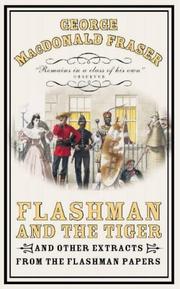
Eleventh published (1999), a collection of three shorter adventures including the Zulu War and a duel with Bismarck. The anthology format signals Fraser winding down; it reads best when you know the full cast of characters.
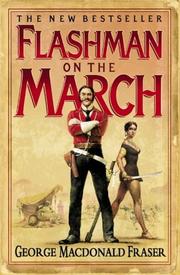
The twelfth and final published novel (2005), set during the British Expedition to Abyssinia. Fraser's last word on Flashman — poignant to read knowing it was his farewell to the character.
Historical Sequence & Fraser's Own Voice
ExpertRe-approach the series in Flashman's in-universe chronological order and read Fraser's non-fiction to fully understand his historical method, allowing a second, richer reading of the entire canon.
▸ Study plan for this stage
Pace: 8–10 weeks total: Weeks 1–5 for "The Steel Bonnets" (~30–35 pages/day, including note-taking pauses for genealogical charts and battle maps); Weeks 6–10 for "Quartered Safe Out Here" (~20–25 pages/day, with deliberate slow reading of dialect passages and Fraser's reflective interludes).
- Fraser as historian vs. Fraser as novelist: how his scholarly rigor in 'The Steel Bonnets' — meticulous sourcing, structural argumentation, use of primary records — directly underpins the texture of the Flashman novels' historical set-dressing
- The Border Reiver culture as a case study in Fraser's historical method: understanding how he reconstructs a largely illiterate, oral, and violent society from fragmentary legal and ecclesiastical records, and what that tells us about his tolerance for moral ambiguity in his fiction
- The concept of 'living history' — Fraser's insistence in 'The Steel Bonnets' that the Reivers were not romantic outlaws but pragmatic survivors, mirroring his refusal to romanticize Flashman or Victorian imperialism
- Fraser's personal voice as primary source: 'Quartered Safe Out Here' is itself a historical document, and the reader must hold two lenses simultaneously — Fraser the memoirist reconstructing memory, and Fraser the historian interrogating the reliability of that memory
- The 9th Border Regiment and the Burma campaign as a microcosm of the 'ordinary soldier' perspective Fraser consistently privileges over the great-man narrative — a direct counterweight to Flashman's self-aggrandizing officer-class viewpoint
- Dialect, vernacular, and voice as historical evidence: Fraser's faithful rendering of Cumbrian dialect in 'Quartered Safe Out Here' parallels his use of period-authentic slang and idiom throughout the Flashman Papers, both serving as markers of authenticity and social class
- Moral seriousness beneath the entertaining surface: Fraser's unflinching account of combat, death, and the ethics of killing in 'Quartered Safe Out Here' reveals the gravity that underlies even the most comic Flashman episodes set in similar theaters of war
- The tension between nostalgia and clear-eyed historical judgment — Fraser mourns his comrades and their world in 'Quartered Safe Out Here' while refusing sentimentality, the same balance he strikes when depicting the British Empire in the Flashman novels
- How does Fraser's methodology in reconstructing Border Reiver society in 'The Steel Bonnets' — his use of warden records, clan genealogies, and legal depositions — compare to the footnoting apparatus he employs in the Flashman novels? What does this continuity reveal about his unified historical philosophy?
- Fraser argues in 'The Steel Bonnets' that the Reivers operated within their own coherent moral and social code despite appearing lawless to outsiders. How does this argument illuminate his characterization of morally compromised protagonists elsewhere in his work?
- In 'Quartered Safe Out Here', Fraser explicitly wrestles with the fallibility of personal memory as historical evidence. What specific techniques does he use to signal uncertainty, and how does this self-awareness complicate or enrich his authority as a historian?
- How does Fraser's portrayal of the rankers — the ordinary Cumbrian soldiers — in 'Quartered Safe Out Here' challenge or complicate the officer-class, public-school perspective that dominates the Flashman Papers? Is this a contradiction in his worldview or a deliberate tension?
- Fraser's account of the atomic bomb debate among his section in 'Quartered Safe Out Here' is one of the most discussed passages in the book. What does his handling of that moment reveal about his views on historical judgment applied retrospectively to people of a different era — a theme central to reading Flashman?
- Having read both books, how would you characterize 'Fraser's voice' as distinct from 'Flashman's voice'? Where do they converge, and where does the distance between author and narrator become most visible?
- Comparative annotation exercise: Select one chapter from 'The Steel Bonnets' that describes a specific raid or violent episode and write a one-page analysis of Fraser's narrative choices — what he emphasizes, what he omits, and how he signals his own moral position. Then identify a Flashman episode set in a comparable context (a colonial skirmish, a cavalry action) and note whether the same author
- Genealogy and geography mapping: Using the clan charts and border maps in 'The Steel Bonnets', construct your own annotated map of the Anglo-Scottish border marking at least six major Reiver families, their territories, and two or three key raid routes. This spatial exercise trains the same kind of geographical literacy Fraser assumes in the Flashman novels' campaign narratives.
- Voice transcription and analysis: Choose three pages of Cumbrian dialect dialogue from 'Quartered Safe Out Here' and write a 'translation' into standard English, then write a reflection on what is lost in that translation — rhythm, social identity, humor, trust. Apply the same exercise to a passage of period slang from a Flashman novel of your choice to see Fraser's consistent linguistic philosoph
- Memory reliability journal: After finishing 'Quartered Safe Out Here', write a 500-word personal reflection on an event you witnessed that you know others remember differently. Use Fraser's own framework — what details feel certain, which are reconstructed, where emotion may have distorted sequence — to interrogate your own account. This builds empathy for Fraser's historiographical honesty.
- Debate preparation — the atomic bomb passage: Re-read Fraser's account of his section's reaction to Hiroshima in 'Quartered Safe Out Here' and prepare a structured argument both defending and challenging Fraser's implicit position. Then consider: how would Flashman, as a fictional Victorian soldier, have responded to an equivalent moral controversy in his own era? Write a one-page comparison.
- Synthesis essay: After completing both books, write a 750–1000 word essay titled 'What Fraser Believes About History' drawing exclusively on evidence from 'The Steel Bonnets' and 'Quartered Safe Out Here'. Identify at least four consistent principles and predict how each one shapes a re-reading of the Flashman Papers as a whole.
Next up: Having internalized Fraser's historical method and personal moral framework through his non-fiction, the reader is now equipped to undertake a chronological re-reading of the Flashman Papers themselves — hearing Flashman's voice not as an end in itself but as a carefully constructed instrument through which Fraser's fully understood historical philosophy operates at every turn.
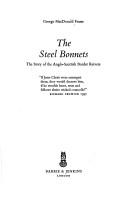
Fraser's acclaimed non-fiction history of the Anglo-Scottish Border Reivers shows the same meticulous research and vivid narrative voice behind the Flashman novels — essential for understanding the historian beneath the satirist.
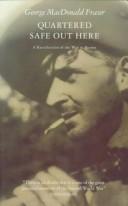
Fraser's memoir of his own service in Burma in WWII reveals the real soldier's sensibility — fear, dark humour, loyalty — that animates Flashman's voice. Reading this reframes every Flashman battle scene.
Discussion
Keep reading
Paths that share books, cover the same subject, or open a related topic.