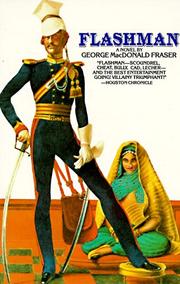
Start with Flashman from the Flashman Papers 1839-1842, the 1969 first volume, which takes the bully expelled in chapter one of a Victorian school novel and sends him to the retreat from Kabul. It is the book that establishes the voice — an old man in the 1900s cheerfully confessing to a lifetime of cowardice, fraud and adultery — and every later volume assumes you have met him.
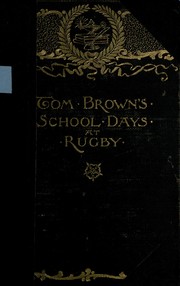
Do not start with Tom Brown's School Days. It is the source of the character, Fraser tips his hat to it constantly, and it is a genuinely tedious read for most modern readers: an earnest Victorian tract about muscular Christianity in which Flashman appears for a few chapters and is expelled. Read it afterwards out of curiosity, or not at all. Fraser tells you everything you need in the first four pages.
Publication order versus chronological order
This is a real dispute, because Fraser wrote the adventures out of sequence. The books published latest include some of the earliest events in Flashman's life, so a chronological reader ends up with a very different sequence from a publication reader.
The case for chronological order: you watch Flashman age in a straight line, and a few running gags about earlier campaigns land in the right place.
The case for publication order, which is the recommendation here: Fraser wrote each book knowing what he had already published, so the callbacks, the escalating self-awareness and the footnotes are all calibrated for it. The early volumes are also the tightest, and starting with a late-published book means starting with a weaker one. There is no cliffhanger structure to protect — every volume is a self-contained campaign — so nothing breaks either way, but publication order gives you the better experience.
The order
- Flashman from the Flashman Papers 1839-1842 — the First Anglo-Afghan War
- Royal Flash — a Ruritanian romp, and the weakest of the early run
- Flash for freedom! — the Atlantic slave trade
- Flashman at the charge — the Charge of the Light Brigade and Central Asia
- Flashman in the Great Game — the Indian Rebellion of 1857, and the best book in the series
- Flashman's Lady — Borneo and Madagascar
- Flashman and the redskins — the American West, in two halves decades apart
- Flashman and the Dragon — the Taiping Rebellion and the sack of the Summer Palace
- Flashman and the mountain of light — the First Anglo-Sikh War
- Flashman and the Angel of the Lord — John Brown at Harpers Ferry
- Flashman and the tiger — a collection of three shorter pieces rather than a novel
- Flashman on the March — Abyssinia, and Fraser's last
The honest warnings
The books are narrated by a racist, misogynist coward who is proud of it, and Fraser's satirical intent does not neutralise the content — whether the joke lands or curdles is genuinely contested, and readers split on it. Fraser's own later political commentary is also disputed. It is worth knowing this before book one rather than being ambushed in book three, particularly in Flash for freedom! and Flashman and the redskins.
The other warning is quality drift. The first five are the strongest; the later volumes are looser and more anecdotal, and Flashman and the tiger is a stories collection rather than a novel, so it reads as a step down if you take it as book eleven of twelve.
Where to stop
After Flashman in the Great Game you have read the best of the series, and stopping there is entirely reasonable. If you want to keep going, treat the rest as a menu and pick by campaign — the volumes are independent.
For Fraser without Flashman, The Steel Bonnets is his serious history of the Anglo-Scottish border reivers, and Quartered Safe Out Here is his memoir of fighting in Burma, which is the best thing he wrote and nothing like the novels.
Follow the full ordered path here: Flashman Reading Order: Where to Start.
Ready to learn something deeply?
Build a reading path — free