The difficulty with this subject is that the outcome is so familiar it distorts the beginning. Readers who know the creeds tend to read the first three centuries as a slow unveiling of what was always there, which is not how it looked to anyone living through it. There were many Christianities, the boundaries between them were argued rather than given, and the canon was assembled over generations.
The second difficulty is that this literature is written from a particular angle. Almost everything below is historical-critical scholarship, which treats the sources as human documents and reaches conclusions that differ, sometimes sharply, from what churches teach. That is worth knowing going in. It is a description of a scholarly conversation, not a verdict on anyone's faith, and the scholars in it disagree with each other as much as with anyone else.
How a small sect became a large one
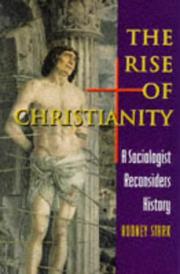
The Rise of Christianity by Rodney Stark asks a question historians had mostly waved at: how does a movement go from a few thousand people to millions? Stark answers with sociology — growth rates, networks, epidemics, the position of women — and it is a bracing way to start. His arithmetic and his model have real critics, and you should read it as an argument rather than a finding.
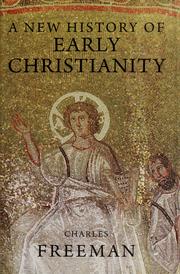
A new history of early Christianity by Charles Freeman is the general narrative to read alongside it, covering the first four centuries with more attention to the political context and to how much was genuinely contingent.
Paul, and the first generation
Paul by Paula Fredriksen re-reads the apostle as a Jew writing to gentiles within a thoroughly Jewish frame, rather than as the founder of a new religion. It is the most useful single correction to how Paul is usually taught, and it is short.
The arguments before there was an orthodoxy
How Jesus Became God by Bart D. Ehrman traces how claims about Jesus's status developed and escalated in the earliest decades. Lost Christianities, by the same author, is the survey of the movements that lost — Ebionites, Marcionites, various gnostic groups — and of the texts they read.
The gnostic Gospels by Elaine Pagels is the book that put the Nag Hammadi texts in front of general readers, and its reading of them as a suppressed alternative has been enormously influential and heavily criticised since. Read it, then read Ehrman against it; the disagreement is instructive and neither side has conceded.
The Canon of the New Testament by Bruce Manning Metzger is the standard technical account of how twenty-seven books became the New Testament and dozens of others did not. It is drier than the rest of this list and it is the reference you will keep.
When Jesus Became God by Richard E. Rubenstein covers the Arian controversy and Nicaea as narrative history. Despite the similar title it is not a rival to Ehrman's book — different century, different question.
Victory, and the world it inherited
The triumph of Christianity by Bart D. Ehrman covers the conversion of the empire and what it cost. The world of late antiquity, AD 150-750 by Peter Brown is the book that changed how the whole period is periodised, and it is brief enough to read in a weekend.
Augustine of Hippo, Brown's biography, remains the standard life of the figure who shaped Western Christianity more than anyone after Paul. Through the eye of a needle, also Brown, is the late masterwork on wealth, poverty and the church in the Western empire, and it is long — treat it as the destination of this path rather than something to hurry.
If the wider religious-history context is what you want next, browse related reading paths before committing to the Brown volumes.
Follow the full ordered path here: The Early Christian Church: Books to Read, in Order.