The Eagle of the Ninth Reading Order: Where to Start with Rosemary Sutcliff
Rosemary Sutcliff's Roman Britain books are not a series in the ordinary sense. They are a chain of loosely linked novels spanning four hundred years, from the second century to the Saxon settlement, connected by descent and by a single flawed emerald signet ring that passes down one family — so a character in one book is the several-times-great-grandchild of a character in the last, and there is no continuing cast at all. That structure means the order matters for a different reason than usual: what accumulates is not plot but the sense of a province being lost by degrees. This path reads the five ring novels in their internal chronology, then the surrounding Roman and pre-Roman books that fill in the same world.
The ring, and Roman Britain at its height
BeginnerStart the chain with the two books set while Rome still holds the province, and see the device that links the whole sequence.
▸ Study plan for this stage
Pace: Two to three weeks for the pair. The Silver Branch is 231 pages and reads in a few evenings. The length of The Eagle of the Ninth is not reliably recorded here — the catalogue record we hold is a school edition issued with a German-market vocabulary apparatus and a deliberately restricted word list,
- The flawed emerald signet ring as the only connective tissue in a sequence with no continuing cast
- Descent rather than plot as the linking principle: each protagonist is the several-times-great-grandchild of the last
- Marcus's journey north of the Wall as the frame Sutcliff uses for a lost legion and a lost father
- Roman Britain at its confident height, which every later book in the chain is measured against
- The breakaway British empire under the usurper Carausius, and the first clear sign the province is coming apart
- Sutcliff's method: a small personal problem set inside a large historical one, with the history never explained to the reader directly
- What is Marcus actually looking for north of the Wall, and does the eagle turn out to be the answer?
- How does Sutcliff convey the political situation without a single passage of exposition? Find one example.
- What has changed about Britain between the two books, and how do you know — what is on the page rather than stated?
- The Silver Branch is the more conspiratorial of the two. What does a plot about usurpation let Sutcliff show that a frontier adventure cannot?
- Why does a sequence linked only by an object need to be read in order at all?
- Note every appearance of the ring, however brief. In some books of this chain it is a single sentence, and finding it is the reader's job rather than the author's.
- After The Silver Branch, write a two-line description of the province's condition. Repeat the exercise after every stage — the decline is the sequence's real story and no single book contains it.
- Pick one scene in The Eagle of the Ninth and note what Sutcliff tells you about the Roman army through action rather than description.
- Check the edition before you buy. The record behind this listing is a graded school reader with a restricted vocabulary rather than the full novel, and the two are not the same reading experience.
Next up: The province is established at its strongest and shown beginning to fracture, which is the baseline the next three books dismantle.
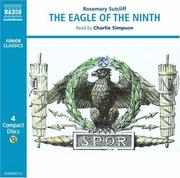
The 1954 novel that starts everything: an invalided centurion goes north of the Wall to recover the lost eagle of his father's legion. Read it first — the ring belongs to Marcus, and every later book inherits it. Note that the catalogue record we hold is a school edition issued with a German vocabulary apparatus; the text is Sutcliff's novel.
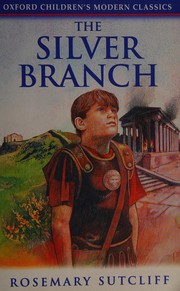
Set roughly 130 years later under the usurper Carausius, with two of Marcus's descendants caught in a British breakaway empire. It is the shortest and most conspiratorial of the chain, and it establishes that the province is already coming apart.
The lights going out
BeginnerFollow the sequence through the end of Roman Britain and into the Saxon settlement, which is what the chain has been building toward.
▸ Study plan for this stage
Pace: Five to six weeks for 997 pages, unevenly distributed: The Lantern Bearers is 252 pages and Dawn Wind 265, but Sword at Sunset is 480 and is Sutcliff's adult novel rather than one written for young readers — it is longer, denser and considerably harder in what it puts on the page. Give it three week
- The withdrawal of the legions as an event happening to individuals rather than to a province
- Aquila's desertion as a choice to stay with a country that is being abandoned, and the cost the book makes him pay for it
- Artos the Bear as a Romano-British cavalry commander — no Round Table, no magic, and the Arthur legend at its most stripped
- Sword at Sunset as the bridge between Sutcliff's children's and adult work, and what changes when the audience does
- The British defeat at Aquae Sulis and a Saxon England that is no longer being contested
- What accumulates across the chain: not plot but the sense of a province lost by degrees
- The ring passing into a world that no longer knows what it signified
- What exactly does Aquila lose by staying, and does the book present the choice as right?
- Sword at Sunset is written for adults. Name three things it does that The Lantern Bearers could not.
- How does Sutcliff's Artos differ from the Arthur of the legend, and which of the differences is doing the most work?
- By Dawn Wind, what is left of Rome in Britain — materially, and in what people believe?
- The sequence has no continuing characters. What is it that actually continues?
- Read The Lantern Bearers and Sword at Sunset with no gap between them; the second was written as a continuation and loses force if it is treated as a separate book.
- Track the ring through all three. Its appearances get shorter and stranger, and by Dawn Wind the object outlasts any memory of what it meant.
- Update the two-line description of the province you started in stage one. Comparing the two versions is the single clearest way to see what four hundred years of a loosely linked chain has been doing.
- Compare a battle scene in Sword at Sunset with one in The Eagle of the Ninth and note what the adult novel is permitted to show.
Next up: With the chain complete from Rome's height to the Saxon settlement, the surrounding novels can be read for range rather than for sequence.
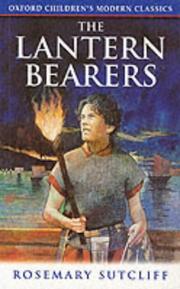
The last legions leave and Aquila deserts to stay behind. It won the Carnegie Medal, it is the bleakest book Sutcliff wrote for young readers, and it is the centre of the whole sequence — read it third, in place.
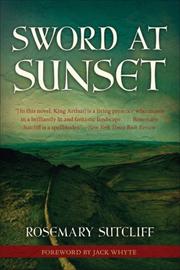
Her adult novel, and the direct continuation of The Lantern Bearers: Artos the Bear as a Romano-British cavalry commander, with no Round Table and no magic. It sits between The Lantern Bearers and Dawn Wind and is the bridge between her children's and adult work.

After the British defeat at Aquae Sulis, a boy survives into a Saxon England that is no longer contesting anything. It closes the chain, and the ring's journey with it, so it must be read last of these five.
The rest of Roman and pre-Roman Britain
IntermediateRead the surrounding novels that share the world without carrying the ring, and see the range of Sutcliff's Britain.
▸ Study plan for this stage
Pace: Six to eight weeks for 1,070 pages across five short novels — Frontier Wolf 202, The Mark of the Horse Lord 253, Outcast 229, Song for a Dark Queen 179 and Warrior Scarlet 207 — none of them long, all of them denser than their page counts suggest. A book a week is comfortable. Order matters less her
- Frontier Wolf's native scouts, and the sequence's recurring interest in Romans who go over to the people they garrison
- Displacement as Sutcliff's core subject — belonging to two peoples and being cast out by both
- The Mark of the Horse Lord's impersonation plot and the ending it forces, which is why it sits outside the children's chain
- The British side of the conquest in Song for a Dark Queen, told largely by Boudicca's harper rather than by a Roman
- Warrior Scarlet's Bronze Age Britain as the deep background: Sutcliff's method with no Roman scaffolding at all
- A boy who cannot make his kill, and physical difference as a subject Sutcliff returns to across the whole body of work
- How the outliers change the shape of the ring novels by showing what else this world contains
- Frontier Wolf is barely a ring book. Does it belong in the sequence, and what is the argument either way?
- What does The Mark of the Horse Lord's ending do that the children's novels systematically avoid?
- Song for a Dark Queen tells the conquest from the British side. What does that reframe in the books you read earlier?
- Outcast and The Eagle of the Ninth both turn on a man belonging to two peoples. Why is Outcast so much harsher?
- Warrior Scarlet has no Rome in it. What survives of Sutcliff's method without it?
- List the ways each of these five protagonists is an outsider, then compare the list with Marcus and Aquila. The pattern is the author's signature and it is easier to see across five books than across two.
- Read Song for a Dark Queen immediately after any of the Roman-viewpoint books and note which specific assumptions it makes visible.
- Take one page of Warrior Scarlet and one of Sword at Sunset and compare the prose. Two thousand years apart in setting, and the same writer's rhythm underneath.
- Decide, in writing, which of these five you would add to the ring chain if you were rebuilding the reading order. Frontier Wolf is the conventional answer and it is worth arguing with.
Next up: The world has been shown at its full range, which leaves only the two books that stretch it past the Saxons and compress the whole occupation into one volume.

A disgraced young officer commanding native scouts on the northern frontier in the fourth century. It is usually counted a ring book on the strength of a single mention, and it is the best of the outliers — read it first of these.
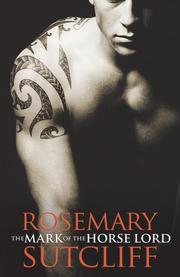
A freed gladiator impersonating a Caledonian king, and the novel Sutcliff readers most often name as her finest. It has the hardest ending she ever wrote, which is why it sits here rather than in the children's chain.
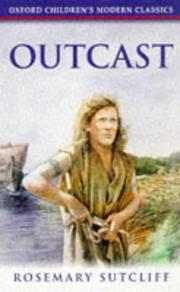
A Roman child raised by a British tribe, then cast out by both — the same displacement the ring novels circle, told at its most brutal, including a stretch in a galley. Second-century, so it belongs early in the world's chronology.

Boudicca's rising, told largely by her harper, which puts the conquest itself on the page for the first time in this path. Read it for the British side of the world the other books take as settled.
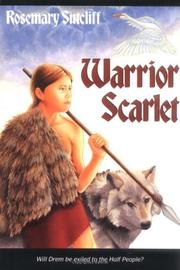
Bronze Age Britain, long before Rome — a boy with a withered arm who cannot make his kill. It is the deep background to everything else here and a good place to see Sutcliff's method without any Roman scaffolding.
Two more, for the long view
IntermediateFinish with the books that stretch the world forward past the Saxons and that survey the whole Roman occupation in one volume.
▸ Study plan for this stage
Pace: Two to three weeks for 384 pages — The Shield Ring at 225 and The Capricorn Bracelet at 159, the two shortest books on the path. Read The Shield Ring first: Norse Cumbria holding out against the Normans, set long after Dawn Wind and the furthest forward Sutcliff carried this loose sequence. Then The
- The last-defenders shape applied to Norsemen rather than Romano-Britons, which shows it was never about Rome
- How far forward the loose sequence reaches, and why it stops where it does
- Six generations in one short volume: the ring books' structure compressed to its skeleton
- Radio origins and what that does to the prose — shorter scenes, more voice, less landscape
- Minor work read deliberately, and what a slight book can make visible about a major sequence
- The whole chain in retrospect: four hundred years, one object, no continuing characters
- What does The Shield Ring keep from the Roman books, and what does it prove was never Roman in the first place?
- The Capricorn Bracelet does in one volume what the ring novels do across five. What is lost in the compression, and is anything gained?
- Where can you hear the radio origins in The Capricorn Bracelet's prose?
- Having read the whole path, what is the sequence actually about? Answer without using the word Rome.
- If you were recommending four of these books to someone who would never read the rest, which four and in what order?
- Write the final version of the two-line province description you have been updating since stage one, then read all the versions together. That document is the sequence's arc, and it exists nowhere else.
- Read The Capricorn Bracelet in one sitting and mark where each of its six stories would sit against the novels you have read. It is a map of the whole path.
- Compare the ending of The Shield Ring with the ending of Dawn Wind. Same shape, different people, centuries apart — and deciding whether that is repetition or argument is the last useful thing this path asks of you.
Next up: This is the end of the path: the ring chain, the surrounding novels and the two long-view books together cover the whole of Sutcliff's Britain.
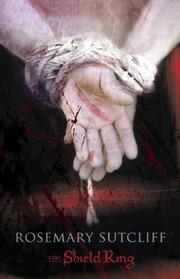
Norse Cumbria holding out against the Normans, centuries after Dawn Wind, and the furthest forward Sutcliff carried this loose sequence. Read it to see the same last-defenders shape applied to a completely different people.
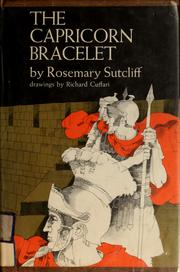
Six linked stories following one family across the whole Roman occupation, originally written for radio. It is minor, but it is the clearest single statement of the descent-through-generations idea the ring books express at novel length — a fitting last book on this path.
Discussion
Keep reading
Paths that share books, cover the same subject, or open a related topic.