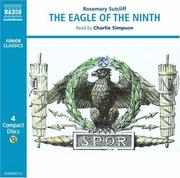
Start with the title book, The Eagle of the Ninth itself — the 1954 novel in which an invalided Roman centurion goes north of the Wall to recover the lost eagle of his father's legion. Read it first because the signet ring that links the whole sequence belongs to Marcus, and every later book inherits it.
One warning before you buy. The only catalogue record we hold for the first book is The Eagle of the Ninth. 1400 Grundwörter. — a school edition issued for the German market with a controlled vocabulary apparatus of roughly 1,400 headwords. The text of a graded reader is not the text of the novel, and the physical details on that record describe the schoolbook rather than Sutcliff's book. The only alternative record is a three-in-one omnibus that duplicates volumes already on this path. Check the edition before you order: what you want is an ordinary trade edition of the novel.
Why the order matters here
These are not a series in the ordinary sense. They are a chain of loosely linked novels spanning four hundred years, from the second century to the Saxon settlement, connected by descent and by a single flawed emerald signet ring passed down one family. A character in one book is the several-times-great-grandchild of a character in the last, and there is no continuing cast at all. What accumulates across the chain is not plot but the sense of a province being lost by degrees, which is why reading them in internal chronology rather than publication order is the right call — publication order would scramble that decline into nonsense.
The five ring novels, in chain order
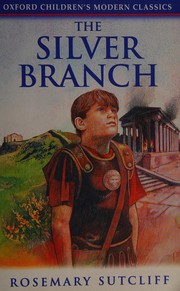
The Silver Branch is set roughly 130 years later under the usurper Carausius, with two of Marcus's descendants inside a British breakaway empire. It is the shortest and most conspiratorial of the five, and it establishes that the province is already coming apart.
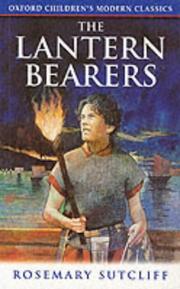
The Lantern Bearers is the centre of the sequence: the last legions leave, and Aquila deserts to stay behind. It won the Carnegie Medal and it is the bleakest book Sutcliff wrote for young readers. Sword at Sunset is her adult novel and the direct continuation — Artos the Bear as a Romano-British cavalry commander, with no Round Table and no magic, and considerably more violence and sexual content than the children's books. It sits between The Lantern Bearers and Dawn wind, and it is the bridge between her two bodies of work. Dawn wind closes the chain after the British defeat at Aquae Sulis, with a boy surviving into a Saxon England that is no longer contesting anything.
The surrounding books
Frontier wolf follows a disgraced young officer commanding native scouts on the fourth-century northern frontier. It is usually counted a ring book on the strength of a single mention, and it is the best of the outliers, so read it first of these. The mark of the Horse Lord is a freed gladiator impersonating a Caledonian king, and the novel Sutcliff readers most often name as her finest; it also has the hardest ending she ever wrote. Outcast is a Roman child raised by a British tribe and then cast out by both, told at its most brutal, including a long stretch chained in a galley. Song for a dark Queen gives Boudicca's rising, largely through her harper, and puts the conquest itself on the page. Warrior scarlet goes back to Bronze Age Britain and a boy with a withered arm who cannot make his kill — the deep background to all of it.
The long view
The shield ring follows Norse Cumbria holding out against the Normans, centuries after Dawn wind, and is the furthest forward Sutcliff carried the sequence. The Capricorn bracelet is six linked stories following one family across the whole Roman occupation, originally written for radio. It is minor, but it states the descent-through-generations idea plainly, which makes it a fitting last book on the reading path.
Where to stop
After Dawn wind. The chain is complete there, and everything after is the same world rather than the same story.
Ready to learn something deeply?
Build a reading path — free