Rosemary Sutcliff books in order: where to start with the Roman Britain novels
The Dolphin Ring sequence is one of the great achievements of British historical fiction, and it is loosely linked on purpose: the books are separated by decades or centuries, connected only by a flawed emerald signet ring passed down through one family from Roman Britain to the Norman conquest. Read them in internal chronological order, which is very nearly publication order, then the other Roman Britain novels, then the pre-Roman and post-Roman books. The last stage covers the classical retellings and Sutcliff's own memoir.
Start here: the Dolphin Ring, Roman Britain
BeginnerRead the three novels at the heart of the sequence, in the order the ring passes down.
▸ Study plan for this stage
Pace: 739 pages across three short novels — The Eagle of the Ninth 256, The Silver Branch 231, The Lantern Bearers 252 — and the whole stage takes about three weeks at an unhurried pace. These were published for young readers and are correspondingly compact, but the prose is dense and the sentences are lo
- The Dolphin Ring as a physical object linking books separated by generations, doing the work a series bible would otherwise do
- Loose linkage on purpose: each novel is complete, and the connection is inheritance rather than plot
- Frontier Britain written from the point of view of people with divided loyalties rather than conquerors
- The wounded or disabled protagonist, present from the first novel and recurring throughout the body of work
- Sutcliff's landscape prose as characterisation — place doing what interior monologue does elsewhere
- The end of Roman Britain treated as a loss experienced by individuals rather than a date
- What does Marcus actually recover in The Eagle of the Ninth, given that the eagle itself solves nothing?
- How does The Silver Branch use the ring differently from the first novel?
- Why does Aquila stay, and what does the novel think of the choice?
- How does Sutcliff signal the passage of generations without a chronicle's apparatus?
- Which of the three is the best novel, and is it the same as the one you would recommend first?
- Track the ring's ownership across the three books and note what each holder is like; the sequence is a family argument conducted through an object.
- Mark one long landscape passage in each novel and note what it tells you about the character standing in it.
- List what each protagonist has lost before the novel begins. The pattern is the whole sequence in miniature.
- Check the edition you are buying against the title on the cover; the school-edition record makes this stage the one place a wrong copy is easy to order.
Next up: With Rome gone and Aquila's choice made, the sequence follows the ring into the Britain the legions left behind.
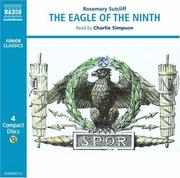
The book to start with, and Sutcliff's most famous: a wounded centurion going north of the Wall to recover his father's lost legionary eagle. Note for buyers — the record our catalogue holds is a school edition prepared for German-language readers, with a junk title string; the novel is the 1954 original and any standard edition is the one to get.
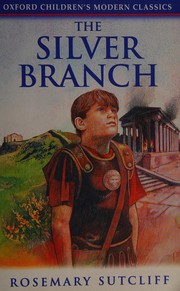
Two generations later, in the Britain of Carausius. Shorter and tighter than The Eagle of the Ninth, and the ring is now doing real narrative work.
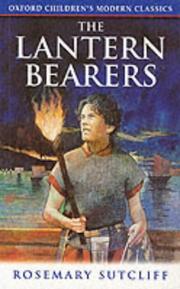
The last Roman troops leave Britain and Aquila deserts to stay. Her Carnegie Medal winner and the emotional peak of the whole sequence — read it third and not before.
The ring carries on: Saxon and Norse Britain
BeginnerFollow the sequence past Rome, including the adult novel that sits at its centre.
▸ Study plan for this stage
Pace: 970 pages across three, and much less even than the previous stage: Sword at Sunset 480, Dawn wind 265, The shield ring 225. Sword at Sunset is nearly twice the length of either companion and is the one adult novel in the sequence — first-person, written without the compression Sutcliff used for you
- One adult novel inside a sequence written for children, and the specific things the adult register unlocks
- First-person narration in Sword at Sunset against the third person of every other volume
- Arthur demilitarised of legend: cavalry, supply and a failing coalition instead of a round table
- Post-Roman Britain as a series of receding lines, with each novel further from the world of the first stage
- The last holdout as a recurring situation, resolved differently in Dawn wind and The shield ring
- The ring closing — what the object has come to mean by the last book
- What does first-person narration let Sword at Sunset show that the children's novels could not?
- How does Sutcliff's Arthur differ from the legendary one, and which elements does she keep?
- What does Dawn wind do with its opening battlefield, and how long does the novel let it govern the book?
- Is The shield ring an ending or a stopping point? Argue from its last pages.
- Across six books, has the ring accumulated meaning or simply changed hands?
- Compare a battle scene in Sword at Sunset with one in The Lantern Bearers and describe what the adult register changes.
- Note every point in Sword at Sunset where Arthur makes a logistical rather than a heroic decision.
- In Dawn wind, mark how many pages pass before the protagonist speaks to anyone, and consider what the silence is doing.
- Write down what you think the sequence is finally about, now that the ring has reached its last holder.
Next up: With the linked sequence finished, the standalone Roman novels can be read in any order and show what Sutcliff did without the ring.
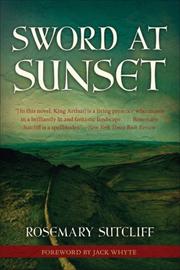
Arthur as a Romano-British cavalry commander, narrated in the first person, written for adults rather than children. A direct sequel to The Lantern Bearers and the most substantial book Sutcliff wrote.

Britain after the final Saxon victory, following a boy left alive on the battlefield. The bleakest opening in the sequence and one of its best books.
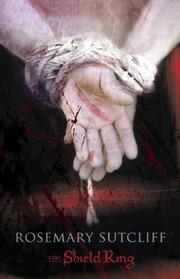
The Norse of the Lake District holding out against the Normans. The last book of the sequence chronologically, and it closes the ring.
The other Roman Britain novels
BeginnerRead the Roman books outside the Dolphin Ring, which need nothing else read first.
▸ Study plan for this stage
Pace: 684 pages across three short novels — Frontier wolf 202, The mark of the Horse Lord 253, Outcast 229 — and about three weeks. None requires anything else read first, and Frontier wolf at 202 pages is frequently recommended as an alternative entry point to the whole body of work, so a reader who boun
- Standalone construction: the same world and method with no inheritance device to carry it
- The disgraced officer given a second command, which is Sutcliff's most reliable plot engine
- Impersonation and assumed identity in The mark of the Horse Lord, and the price the novel makes the protagonist pay
- An ending that refuses consolation in a book published for children, and what that assumes about the reader
- Endurance rather than triumph as the recurring shape of the Roman novels
- Length as constraint — 202 to 253 pages, with no room for a subplot
- Why is Frontier wolf so often recommended as a starting point? Name what it does more accessibly.
- What does The mark of the Horse Lord's ending achieve that a softer one would lose?
- How does Outcast keep 229 pages of misfortune from becoming monotonous?
- What do all three protagonists have in common, and is it the same thing that links the Dolphin Ring books?
- Is Sutcliff writing for children in these books in any sense other than length?
- Read the last chapter of The mark of the Horse Lord and then write the ending a cautious publisher would have asked for; the comparison is the point.
- List the disgraces, exiles and second chances across the three novels and see how varied the same structure can be.
- In Outcast, mark the point at which the protagonist's endurance becomes the subject rather than the obstacle.
- Pick the novel you would give a twelve-year-old and the one you would not, and write one sentence explaining each choice.
Next up: Having read the Roman books, the pre-Roman and post-Roman novels show Sutcliff working where the documentary record almost disappears.

A disgraced young officer commanding native scouts on the northern frontier. The most purely enjoyable of the Roman novels and frequently recommended as an alternative entry point.
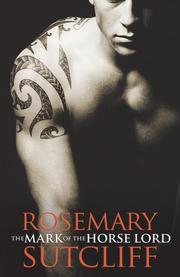
A gladiator impersonating a Dalriad king. Sutcliff's hardest and most adult children's novel, with an ending she refused to soften; often named her finest work.
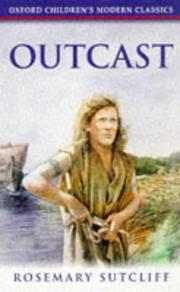
A Roman-raised British boy sold into galley slavery. The cruellest book she wrote and a good measure of how little she condescended to young readers.
Before Rome, and after the legions
IntermediateRead the Bronze Age and Dark Age novels, where Sutcliff works with far less documentary evidence.
▸ Study plan for this stage
Pace: 653 pages across three — Warrior scarlet 207, Song for a dark Queen 179, The Shining Company 267 — and about three weeks, the lightest full stage on the path. Song for a dark Queen at 179 pages is the shortest novel here and the most formally experimental, told largely through a harper rather than t
- Writing where the record is thin, and the different licence that gives a historical novelist
- Disability written from inside by an author who lived it, without turning the book into a lesson
- The harper as narrator in Song for a dark Queen, and how an oral form changes what can be told
- Boudicca handled with anger rather than the Roman sympathies visible elsewhere in the work
- The Gododdin turned into a novel — a surviving poem as the only source, and what has to be built around it
- Doomed expedition as a structure: the reader knows the outcome from the first chapter
- How does Warrior scarlet avoid making Drem's arm the whole of his character?
- What does the harper's narration let Song for a dark Queen withhold or emphasise?
- Where do Sutcliff's sympathies sit in the Boudiccan revolt, and how does that compare with the Roman novels?
- Given that The Shining Company's outcome is known from the outset, where does its tension come from?
- Does thinner evidence produce freer novels or vaguer ones? Argue from a specific book.
- List everything Warrior scarlet shows Drem doing physically, and note how much of the characterisation is carried by it.
- Read the opening of Song for a dark Queen aloud; the harper's rhythm is audible and it is the reason for the form.
- Find a translation of the Gododdin and read a few stanzas before The Shining Company, then note what Sutcliff invented to hold it together.
- Compare the three protagonists here with the three in the previous stage and describe what changes when the sources run out.
Next up: With the fiction read across four centuries, the retellings and the memoir explain where the recurring figures came from.
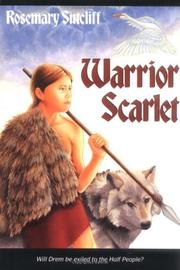
Bronze Age Britain and a boy with a withered arm who must kill a wolf to join the men. Her own polio is plainly behind it, and it is the most personal of the early books.

Boudicca, told largely through her harper. Formally the most experimental thing Sutcliff attempted and much angrier than her Roman sympathies elsewhere would suggest.
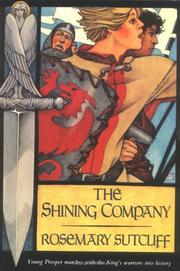
The Gododdin, the earliest surviving British poem, turned into a novel about three hundred men riding to certain death at Catraeth. Late Sutcliff at full strength.
The retellings, and the life
IntermediateFinish with her classical retellings and the memoir that explains the whole body of work.
▸ Study plan for this stage
Pace: The shortest stage on the path: 272 pages for both — Black Ships Before Troy 128 and Blue remembered hills 144 — and a few evenings. Black Ships Before Troy is her prose Iliad, illustrated, written for young readers and not embarrassing for an adult; its companion volume covering the Odyssey follows
- Retelling as a distinct craft: keeping the Iliad's shape while cutting it to 128 pages
- Illustration as part of the text in Black Ships Before Troy rather than decoration
- A memoir as a key rather than a life story — 144 pages that reframe a whole body of work
- Immobility and stories told aloud as the origin of a career spent writing physical action
- The wounded protagonist traced from the memoir back through every stage of this path
- Reading biography last, so the novels are met on their own terms first
- What does Black Ships Before Troy keep from the Iliad, and what does it have to lose at 128 pages?
- How does Sutcliff handle the Iliad's violence for a younger readership without falsifying it?
- Which specific novels does the memoir change most, and in what way?
- Is it better to read Blue remembered hills first or last? Make the case against the order used here.
- Having read all fourteen books, what is the single subject Sutcliff kept returning to?
- Read one episode of Black Ships Before Troy against the corresponding passage in a full Iliad translation and list the compression decisions.
- After the memoir, reread the first chapter of Warrior scarlet and note what you now see in it.
- Write down the recurring protagonist type in one sentence, then test it against all five stages of this path.
- Decide which three of the fourteen you would keep, and say whether the memoir changed the list.
Next up: This path covers fourteen of a much larger output; the natural continuation is the companion Odyssey volume and her Arthurian retellings rather than another sequence.

Her prose Iliad for young readers, illustrated by Alan Lee. The best introduction to Homer for a child and not embarrassing for an adult; the Odyssey volume, The Wanderings of Odysseus, follows it.
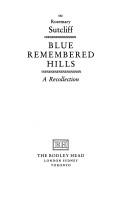
Her memoir: Still's disease from the age of two, a childhood largely spent immobile, and a mother who read her the Norse myths aloud. Read it last — it makes the recurring wounded protagonists impossible to unsee.
Discussion
Keep reading
Paths that share books, cover the same subject, or open a related topic.