Dublin Murder Squad Reading Order and Guide
Tana French's six Dublin Murder Squad novels are linked, not serialised: each one is narrated by a different detective, and that narrator is usually a minor or unlikeable figure from the previous book, now given the microphone. So there is no ongoing plot to lose, but reading in publication order matters a great deal — half the pleasure of each book is recognising the person telling it and knowing exactly how unreliable they are. Read all six in order, then the three standalones, which drop the squad entirely and are arguably where she got better.
Start Here
BeginnerRead the first two novels and understand the hand-off structure — how a secondary character in book one becomes the narrating consciousness of book two.
▸ Study plan for this stage
Pace: 4 to 5 weeks for about 1,040 pages. In the Woods is long and the middle third is slow — give it two to three weeks and do not push through it in a weekend. The Likeness over two weeks. Leave a few days between them; the second book's narrator needs distance from the first book's ending.
- The single most important thing to know before starting: these six novels are LINKED, not serialised. Each one is narrated by a different detective, and that narrator is usually a secondary or actively unlikeable figure from the previous book, now handed the microphone. A reader expecting to follow
- There is no ongoing case, no arc plot and no cliffhangers between volumes. What carries over is people. You meet someone through a narrator who dislikes them, and then you spend the next book inside their head
- Read in publication order anyway, and read all six. Half the pleasure of each book is recognising the narrator and knowing in advance exactly how unreliable they are and why
- The second most important thing, and the one that makes people throw the book across the room: In the Woods has two mysteries, and the older one is never solved. Rob Ryan was found as a child in a wood with blood in his shoes and his two friends gone, and the novel does not explain what happened to
- The present-day murder in In the Woods is solved. Only the 1984 disappearance is left open
- Rob Ryan is a liar and tells you so. French's narrators habitually withhold from the reader as well as from their colleagues, and the withholding is a characterisation device rather than a trick
- The Likeness requires a large suspension of disbelief up front: Cassie Maddox goes undercover as a murder victim who was her physical double and was living under an identity Cassie herself invented. Accept the premise in the first twenty pages or the book will not work for you. Most readers who acce
- French's real subject is not detection. It is obsession, class, and the way people build a self out of a place they cannot go back to
- Rob Ryan is an unreliable narrator. Where does he lie to the reader specifically, rather than to the other characters?
- In the Woods leaves the 1984 disappearance unsolved. What would the book lose if it explained it?
- The Likeness turns on a group of postgraduates living in a house together. What is the house doing in that novel, and why does it need to be a house rather than a flat?
- Cassie appears in book one and narrates book two. How much of what you thought you knew about her came from Rob's account of her?
- Both novels end with a friendship destroyed. Is that the mystery plot's consequence or its actual subject?
- Before starting, accept that book one's central mystery stays open. Deciding this now is the practical difference between finishing the series and abandoning it
- Keep a one-line note on every secondary detective who irritates you. One of them narrates the next book
- Mark the passages in In the Woods where Rob tells you he is unreliable. He does it more than once and readers forget
- Read the first twenty pages of The Likeness deciding actively whether you will accept the premise. Half-accepting it ruins the novel
- After book two, write down what you now think of Rob. It should be different from what you thought at the end of book one
Next up: You have the hand-off structure and the house style; the middle two books apply both to a subject French turns out to care about even more than she cares about murder.
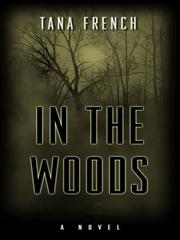
Rob Ryan investigates a child's death in the wood where his own two friends vanished in 1984. Start here. Fair warning that has to be given: one of its two mysteries is deliberately never solved, and readers who are not told this in advance often quit the series over it.
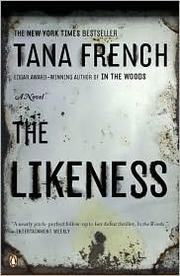
Cassie Maddox, Rob's partner in book one, goes undercover as a murder victim who looks exactly like her. The premise requires enormous goodwill and the book earns it — most readers' favourite, and unreadable in its full force without In the Woods.
The Middle of the Squad
BeginnerMove into the two books where French swaps psychological gothic for class, property and the wreckage of the Celtic Tiger.
▸ Study plan for this stage
Pace: 4 weeks for about 930 pages. Faithful Place over two weeks, Broken Harbor over two. These are the most propulsive novels in the series and you may well go faster. Broken Harbor is the bleakest of the six, so do not read it straight after a bad week.
- Faithful Place is narrated by Frank Mackey, the undercover boss who was a minor and slightly monstrous presence in The Likeness. Getting inside him is the series' clearest demonstration of what the hand-off structure is for
- It sends Frank back to the working-class Dublin street he escaped at nineteen, when a suitcase turns up in a derelict house. The family scenes are the best writing in the series and are genuinely hard to read
- Broken Harbor is narrated by Mick Kennedy, called Scorcher, who appears in Faithful Place as a rule-following prig. He is the squad's most successful detective and the book systematically dismantles him
- Its setting is a half-built ghost estate abandoned when the Celtic Tiger economy collapsed, and the novel is explicitly about what the crash did to people who did everything they were told
- Class is French's constant subject and these two books are where it is most direct: Frank cannot go home, Scorcher cannot admit where he came from, and both books treat property as the thing that ruins Irish families
- Broken Harbor is published as Broken Harbour in some editions. Same book
- Both novels resolve their murders cleanly. If the open ending of In the Woods worried you, these are the reassurance that French can close a case when the story wants it closed
- Note that our catalogue lists an audiobook narrator as a co-author on Broken Harbor. The novel is Tana French's alone
- Frank Mackey was written as an antagonist in The Likeness. What does French have to do in the first chapter of Faithful Place to make you follow him?
- What does Faithful Place say about leaving the place you came from, and does it think escape is possible?
- Scorcher's whole identity rests on procedure. Where does the case make procedure impossible, and what does he do?
- The ghost estate is a real feature of post-crash Ireland. How much of Broken Harbor's horror is supernatural in feel and economic in cause?
- Both narrators are men who have remade themselves. What does French think that costs?
- Which of these two solutions is more satisfying as a mystery, and which is more satisfying as a novel?
- Reread Frank's scenes in The Likeness before starting Faithful Place. The contrast is the whole experiment
- Note every reference to a house, mortgage or deposit across both books. Property is the series' recurring engine and the density is startling once you look
- In Broken Harbor, track how long Scorcher goes before admitting something to the reader that he has already worked out
- Write two sentences on what each narrator wants the reader to think of him. It differs from what he wants his colleagues to think
Next up: The hand-off has now run four times and you can predict its mechanics, which is exactly when French uses it on the two detectives least like the ones you have followed so far.
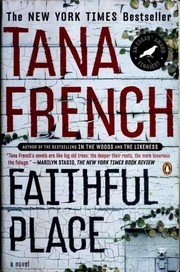
Frank Mackey, Cassie's undercover handler, dragged back to the inner-city family he escaped. The tightest plot of the six and the one to hand to someone who claims not to like literary crime.
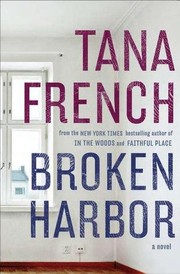
Scorcher Kennedy, the smug rival from Faithful Place, on a family annihilation in a half-built ghost estate. Published in Ireland as Broken Harbour. The bleakest book she has written and the clearest statement of her real subject: the story people tell themselves about their own life, and what happens when it stops holding.
The Last Two
IntermediateFinish the squad with the boarding-school novel and the closing book, which finally lets a woman inside the squad room narrate.
▸ Study plan for this stage
Pace: 4 weeks for around 1,000 pages. The Secret Place over two weeks — its structure is the hardest in the series and slows most readers down. The Trespasser over two. Read them back to back; The Trespasser is the closest thing to a direct sequel in the six.
- The Secret Place is narrated by Stephen Moran, the ambitious young detective from Faithful Place, and it is set in a girls' boarding school where a boy from the neighbouring school was killed
- Its structure is the series' most ambitious: the present-day interviews run across a single day, interleaved with chapters following the girls in the year before the murder. The two timelines converge rather than alternate for effect
- It is also the one book with a supernatural element that is never explained away, which divides readers sharply. Some find it a bold move, others think it breaks the series' rules
- Antoinette Conway arrives here as Moran's prickly, isolated partner, and she narrates the final book. She is the first woman to narrate since Cassie in book two and the first to narrate from inside the squad room rather than from undercover
- The Trespasser is about a mundane-looking domestic killing that the squad wants closed fast, and about what it is like to work in a room where everyone has decided you do not belong
- It is the most claustrophobic of the six and the closest French comes to a workplace novel. The murder investigation is almost secondary to the question of whether Conway is being sabotaged or is paranoid
- The Trespasser closes the sequence and French has written no seventh Dublin Murder Squad novel. It is not a cliffhanger and it does not promise more
- Our catalogue lists an audiobook narrator as a co-author on The Trespasser. The novel is French's alone
- The Secret Place splits its narration between an adult detective and a group of teenage girls. Which timeline is doing the real work?
- The supernatural element is never accounted for. Does the series earn that, given five previous books of strict realism?
- Moran is transparently ambitious and says so. How does that change what you trust in his account?
- In The Trespasser, is Conway right about the squad, and how long does the novel keep you genuinely unsure?
- Conway and Cassie are the only two women to narrate. Compare how the squad treats each of them
- As an ending to six books, does The Trespasser close anything, and does it need to?
- In The Secret Place, keep track of which of the eight girls is in which clique. The book expects you to and does not remind you
- Note every point where Moran's ambition affects an investigative decision
- In The Trespasser, keep a list of the evidence for and against Conway's suspicion. The balance shifts several times and rereading the list at the end is the book's best trick
- After finishing, write a paragraph ranking all six narrators by how much they lied to you
Next up: The squad is finished, and the standalones show what French does when she stops needing a police force at all.

Stephen Moran and Holly Mackey — Frank's daughter, aged eight in Faithful Place — inside a girls' boarding school. Divisive because of its teenage voices; read it fifth and the payoff for Frank's arc is the reason to stay with it.

Antoinette Conway, Stephen's partner and the squad's only woman, on a case everyone insists is boring. The last squad novel and the angriest — it is about the workplace as much as the murder.
The Standalones
IntermediateFollow French out of the squad room into three unconnected novels that keep the psychology and drop the police procedure.
▸ Study plan for this stage
Pace: 6 to 7 weeks for about 1,560 pages. The Witch Elm at 650 pages is the longest and slowest thing she has written — give it three weeks and do not fight the pace. The Searcher over two weeks, The Hunter over two. The last two must be read in that order.
- These three drop the Dublin Murder Squad entirely. No recurring characters, no squad room, and in two of them barely any police procedure at all
- The Witch Elm is narrated by Toby, a charming, lucky young man who is badly beaten in a burglary and then has to reassemble himself while a skull turns up in his family's garden. It is the most divisive book French has written and the one people abandon most often
- Its subject is luck and privilege: whether a person who has always been fortunate can know anything true about themselves. The slowness is the argument, since Toby's account keeps failing to cohere. Published in some editions as The Wych Elm
- The Searcher moves to rural County Galway and follows Cal Hooper, a retired Chicago policeman who wanted quiet and is instead adopted by a local teenager whose brother has vanished. It is deliberately shaped like a western
- The Hunter is a direct sequel to The Searcher — same village, same people, a couple of years on, with Trey's father coming back. These two are the only genuinely sequential novels in French's whole output and reading The Hunter first would spoil both
- The Galway books are quieter, warmer and better controlled than anything in the squad series, and several readers who bounced off the later squad novels consider these her best work
- Across all three, the police procedure that structured the squad books is replaced by community: who knows what, who is owed what, and what a village will decide to do without involving the guards
- The Witch Elm is slow on purpose. What is Toby's narration failing to do, and how long does the novel wait before you notice?
- What does French gain by narrating from a man who has never had to notice anything?
- The Searcher is built like a western. Name three western conventions it uses and one it refuses
- Trey is the most important character in both Galway books and narrates neither. Why does French keep her at a distance?
- The Hunter revisits the same village. What does the sequel say about whether Cal's intervention in The Searcher was right?
- Having read all nine books, has French got better, or only different?
- Read The Witch Elm knowing the pace is the point. Deciding this in advance is the difference between finishing it and abandoning it at page 200
- Read The Searcher and The Hunter in order, with a short gap. Do not read The Hunter first
- Track how much of The Searcher's information comes through conversation in a pub. It is nearly all of it, and it is the technique the squad books could not use
- Write half a page comparing the endings of In the Woods and The Hunter — the first refuses resolution, the last chooses it
- Rank all nine novels and note whether your top three are squad books or standalones. The split is informative
Next up: That is the complete Tana French, and the obvious next steps are other literary crime writers working the same seam of place and voice, or back to In the Woods for a reread now that you know how she withholds.

Her first novel narrated by a suspect rather than a detective — a charmed young man whose luck runs out, and a skull in a tree. Published in Britain as The Wych Elm. Read it first of the standalones: it is the bridge out of the series.

A retired Chicago cop restoring a cottage in the west of Ireland gets asked to find a missing boy. A western in everything but name, and the biggest change of register in her work.
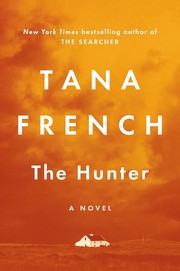
The direct sequel to The Searcher, with the same village and a drought. Read it immediately after — these two are the only genuinely serialised pair in her whole bibliography, and the right place to finish.
Discussion
Keep reading
Paths that share books, cover the same subject, or open a related topic.