The Defense Industry: The Best Books on Military Contracting, in Order
Defence contracting is a market with one buyer, a handful of sellers, contracts written to reimburse cost rather than reward efficiency, and a requirements process that can outlast the threat it was written for. This path builds the system from its wartime origins, then examines procurement itself — the cost growth, the requirements fights, and the rare programmes that delivered — before turning to the prime contractors and to the privatisation of war and intelligence. It ends on the current argument: whether an industry organised to build a small number of exquisite platforms can produce what the next war would actually need.
How the system was built
BeginnerUnderstand where a permanent arms industry came from — it is a post-1940 invention, not a natural feature of a state — and get the two oldest criticisms of it on the table before the technical material. Note that stage one is deliberately three different standpoints on the same institution.
▸ Study plan for this stage
Pace: About three weeks for 727 pages, though the distribution is extreme: Baime's The Arsenal of Democracy is 360pp, Hartung's Prophets of war is 316pp, and Butler's War is a racket is 51pp — a pamphlet you can read in one sitting. Take Baime first, over ten days: narrative business history of a wartime
- A permanent arms industry as a post-1940 invention rather than a natural feature of a state
- Industrial mobilisation: converting civilian mass production to weapons, and what it required
- The employment footprint as a political asset, and how a contractor builds one
- The revolving door and the lobbying relationship, documented at one company across decades
- The oldest critique — that war is conducted for profit — in its original form and what evidence it offers
- Reading an admiring history and a hostile one about the same institution
- What did wartime mobilisation actually require of a civilian manufacturer, and what did the state supply?
- What is Butler's argument, and what evidence does he give for it? What does he assert without evidence?
- How does Hartung document the political relationships he describes, and what kind of source is each?
- What did the government-contractor relationship look like before 1940, and what changed permanently?
- Where do Baime's and Hartung's accounts of the same industry conflict, and where do they simply not overlap?
- List the specific state supports Baime describes and mark which still exist in some form.
- Take three of Butler's claims and check each against what Hartung documents. Record where the pamphlet is supported and where it is not.
- Map one prime contractor's facilities against the political districts they sit in, using Hartung's material.
- Write half a page on which of these three books is a survey, which is an argument, and which is both.
Next up: The relationship is now established; the next stage is the contracting mechanism through which it actually operates.

Ford's Willow Run bomber plant and the industrial mobilisation of 1941-45, which is where the modern relationship between the government and large manufacturers begins. Narrative business history and admiring in tone; read it for the founding case that mass production could be applied to weapons.

The 1935 pamphlet by a highly decorated Marine general arguing that war is conducted for corporate profit — the ur-text of every subsequent critique. Very short, entirely polemical, and worth reading in the original because it is so often invoked second-hand.
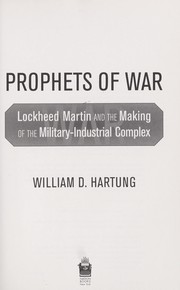
A corporate history of Lockheed Martin from the 1930s bailout to the F-35, and the best single account of how one prime contractor's lobbying, employment footprint and political relationships work. Hartung directs an arms-control policy programme and writes as a critic; the documentary record is solid.
Procurement as a machine
IntermediateGet inside the actual mechanism: cost-plus contracting and why it removes the incentive to economise, requirements creep, the political economy of spreading subcontracts across congressional districts, and testing that is run by the people who want the programme to pass. Also see the counter-case — programmes that delivered fast and cheap, and what conditions they needed.
▸ Study plan for this stage
Pace: Seven weeks. Three lengths are recorded — The Pentagon wars at 306pp, Coram's Boyd at 412pp and Skunk Works at 370pp, 1,088 pages between them — while our catalogue holds no page count for the Augustine volume, listed under its earlier title Augustine's Laws and Major System Development Programs; al
- Cost-plus contracting and the precise sense in which it removes the incentive to economise
- Requirements creep, and the difference between a requirement and a preference
- Subcontract distribution across political districts as a survival strategy for a programme
- Developmental versus operational testing, and what happens when the tester reports to the programme
- Augustine's extrapolations as a diagnosis: what they claim about cost growth and unit numbers
- The Fighter Mafia's reform argument — simpler, cheaper, more numerous — and the objections to it
- The conditions a fast, cheap programme needed: a small team, real authority, a customer who would sign
- A participant's account with a grievance, and how to extract the mechanism from the complaint
- Explain cost-plus contracting and say exactly where the incentive to control cost is meant to come from.
- What did Burton try to test, who resisted, and on what grounds?
- What is the reform case Boyd and his circle made, and what is the strongest objection to it?
- What conditions did the Skunk Works programmes have that a normal programme does not?
- Which of Coram's claims have been disputed, and does the reform argument depend on them?
- Does Augustine's diagnosis identify a fixable problem or an inevitable one? Argue it.
- Take one current major programme and reconstruct its cost history, marking each increase against the mechanisms this stage describes.
- Write out the testing chain Burton describes as an organisation chart, and mark every point where independence breaks.
- List the conditions Skunk Works enjoyed and score a normal programme against each one.
- Apply Augustine's extrapolation to a real unit-cost series and see how well it fits. Show your working.
- Separate, in Burton's book, what he witnessed from what he inferred about motives.
Next up: Contracting shapes what gets built; the next stage follows the money out of the buildings that build things and into services, security and analysis.
The former Lockheed Martin chief executive's satirical laws of aerospace management, including the famous extrapolation that one aircraft will eventually consume the entire defence budget. An insider's diagnosis, which is what makes it devastating; the catalogue holds the earlier edition titled Augustine's Laws and Major System Development Programs.
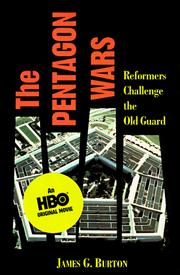
An Air Force colonel's first-hand account of trying to run live-fire survivability tests on the Bradley Fighting Vehicle against institutional resistance. A participant's account with a grievance, and the clearest illustration in print of how testing and requirements get captured.

The biography of John Boyd and the Fighter Mafia, whose reform campaign produced the F-16 and the intellectual case against gold-plated procurement. Hagiographic in places and disputed by aviation historians on several claims; read it for the reform argument, which is the point.

The insider account of Lockheed's U-2, SR-71 and F-117 programmes, and the best available description of what a small team with real authority and few reporting requirements can deliver. The necessary counterweight: it shows the failures elsewhere are organisational, not inevitable.
The contractors and the privatisation of war
IntermediateFollow the money out of the Pentagon and into companies. Logistics support, base operations, security and even intelligence analysis are now largely contracted, which changes accountability, cost visibility and the political constraint on using force. All four books here are critical accounts by reporters or scholars; read them for the documented mechanics rather than the verdicts.
▸ Study plan for this stage
Pace: Eight weeks for 1,428 pages, and all four are critical accounts by reporters or scholars — read them for the documented mechanics rather than for their verdicts. Singer's Corporate Warriors (354pp) first, despite not being the shortest, because it is academic and measured and supplies the taxonomy t
- A taxonomy of private military firms — provider, consultant, support — and why the distinctions matter legally
- What outsourcing does to state control over the use of force
- The revolving door as a documented sequence of appointments rather than an insinuation
- The accountability gap: which law applies to a contractor, in which jurisdiction, under which contract
- Cost visibility — why a contracted service is harder to price and compare than an in-house one
- Contracted intelligence analysis and the specific oversight problem it creates
- Political constraint: how contracting changes the visible cost of using force
- Use Singer's taxonomy to classify each firm the other three books describe.
- What legal regime applied to contractors in the incidents Scahill documents, and what did not?
- Trace one person through the revolving door in Briody's account, naming each post and date.
- What share of intelligence work is contracted, on Shorrock's evidence, and how did he establish it?
- How does contracting change the political cost of deploying force?
- Which of these four books is scholarship and which is adversarial reporting? What does each get right that the other cannot?
- Build a table of the firms named across all four books, classified by Singer's types, with the accountability regime for each.
- Reconstruct one contract from Scahill's or Shorrock's account: who awarded it, on what terms, and who could audit it.
- For Briody's central case, chart the appointments and holdings as a diagram from his dates.
- Write a page on what a government loses in cost visibility when a function is contracted, using examples from at least two of these books.
Next up: Having seen what the system builds and what it buys, the last stage is the argument over whether either can produce what a modern conflict requires.

The Carlyle Group and the revolving door between senior government office, private equity and defence holdings, with names and dates. The clearest single case study of the relationship the phrase military-industrial complex is trying to describe.
The founding scholarly study of the private military industry — a taxonomy of firm types and an analysis of what outsourcing does to state control of force. Academic and measured, which makes it the right frame to read the two reported books after it.

The investigation of the best-known private security contractor, its Iraq contracts and the accountability gap it operated in. Openly adversarial reporting; its factual core on contracts and incidents is what has held up. The catalogue record carries a Spanish translator in the author field.
The contracted intelligence industry — the share of the intelligence budget going to firms, and who staffs them. The least-covered corner of the subject and the one where the oversight problem is sharpest.
Can it build what the next war needs?
IntermediateFinish on the live argument. The industry consolidated into a handful of primes optimised for small numbers of expensive, long-cycle platforms, while the technologies that look decisive — autonomy, software, cheap mass, commercial space — come from companies with no interest in cost-plus contracting. Note that this is the fastest-dating material on the path: read for the structural argument, and expect the specific programmes and export-control details to be out of date.
▸ Study plan for this stage
Pace: Six weeks, and this is the fastest-dating material on the path — read for the structural argument and expect the specific programmes and export-control details to be out of date. Two lengths are recorded: Jacobsen's The Pentagon's Brain at 568pp and Brose's The Kill Chain at 161pp, 729 pages between
- State funding of high-risk research: what an agency of that kind can do that a contractor cannot
- Exquisite platforms versus cheap mass, and the industrial structure each requires
- Attritable systems, and what changes when losing a unit is acceptable
- Software and autonomy as procurement objects that cost-plus contracting handles badly
- Commercial suppliers with no interest in defence contracting terms, and why that is a structural problem
- Consolidation into a handful of primes, and the effect on competition and on surge capacity
- Checking a forecast: reading a decade-old prediction book against what actually happened
- A reform argument made by someone with a financial interest in the reform
- What can a research agency fund that a prime contractor will not, and why?
- State Brose's argument in three sentences. What would falsify it?
- Which of Wired for war's predictions were borne out, which were not, and which are still open?
- Why does cost-plus contracting handle software badly?
- What would have to change for a commercial technology company to sell into this system on normal terms?
- Where does Brose's own subsequent position affect what he emphasises?
- Score every prediction in Wired for war as borne out, not borne out, or still open, with a source for each verdict.
- Take Brose's argument and write the strongest defence of the current acquisition system against it.
- For one technology Jacobsen covers, trace the funding chain from agency to contractor to fielded system.
- Check every legal, budgetary or programme fact in this stage against the present, and record which have changed.
- Write 1,000 words connecting the contracting mechanics of stage two to the capability argument here, citing at least four books on the path.
Next up: You can now read a defence-procurement story — a cost overrun, a new programme, a contractor scandal — and identify the contracting mechanism, the political economy and the author's position behind it.
A history of DARPA from nuclear testing through Vietnam-era counterinsurgency research to autonomy, based on interviews and declassified material. Jacobsen is a reporter rather than a defence analyst and some of her sourcing has been challenged; the institutional history of how the state funds risky research is the reason to read it.
The first serious general treatment of military robotics, written when armed drones were still novel. Now partly historical, and useful for exactly that: you can check which of its predictions the following fifteen years bore out.

A former Senate Armed Services staff director's argument that the acquisition system cannot produce the networked, attritable systems a peer conflict demands. The sharpest current statement of the reform case, written from inside the process and with an obvious interest in the outcome — Brose went to a defence-technology company. Not to be confused with Andrew Cockburn's separate book Kill Chain, which is about drone targeting.
Discussion
Keep reading
Paths that share books, cover the same subject, or open a related topic.