Cosmere Reading Order: Where to Start with Brandon Sanderson
The Cosmere is Brandon Sanderson's interconnected fantasy universe spanning multiple series, each with its own world, magic system, and characters — yet all secretly linked by hidden figures, shared metaphysics, and crossover events. This curriculum starts with the most accessible entry points, builds through the two flagship series (Mistborn and Stormlight Archive), and then rewards the reader with the deeper connective tissue — the crossovers, novellas, and meta-narrative that tie the whole universe together.
The Perfect Entry Point
BeginnerGet hooked on Sanderson's style — his 'hard' magic systems, his plotting, and his world-building — with a standalone story that quietly introduces Cosmere metaphysics without overwhelming you.
▸ Study plan for this stage
Pace: 10–12 weeks total (~25–30 pages/day): spend roughly 3–4 weeks on The Final Empire, 3–4 weeks on The Well of Ascension, and 3–4 weeks on The Hero of Ages. Read at a relaxed pace — these are long novels and the plotting rewards attention, so resist the urge to skim.
- Allomancy as a 'hard' magic system: every power has explicit, learnable rules, costs, and limits — notice how Sanderson introduces and then stress-tests those rules across all three books
- Feruchemy and Hemalurgy as the other two Metallic Arts — each obeys its own internal logic, and together the three form a complete, interlocking system whose full shape only becomes clear in The Hero of Ages
- The Lord Ruler as a mystery before he is a villain — The Final Empire teaches you to read Sanderson's 'reveals' by withholding the truth about his origin until the moment it recontextualizes everything
- Kelsier's philosophy of hope and sacrifice vs. Vin's arc of trust — the emotional throughline that makes the magic and politics feel personal
- The mists and the Deepness — introduced as atmosphere in The Final Empire, escalated to existential threat in The Well of Ascension and The Hero of Ages, and ultimately revealed as a Cosmere-level force (Preservation)
- Shards of Adonalsium: Preservation and Ruin — The Hero of Ages names and dramatizes the two Shards present on Scadrial, providing your first concrete introduction to the Cosmere's metaphysical backbone
- Sanderson's plotting structure: each book uses a 'con/heist' or 'siege/survival' frame to escalate stakes while paying off setups planted books earlier — track his foreshadowing deliberately
- The role of religion and prophecy as unreliable narration — the Terris prophecies and the Hero of Ages myth are intentionally corrupted, teaching you to question in-world texts throughout the Cosmere
- By the end of The Final Empire, can you explain the three Metallic Arts (Allomancy, Feruchemy, Hemalurgy) in plain language, including what makes each one 'hard' by Sanderson's own definition?
- How does Sanderson use the epigraphs (the chapter-opening quotes) differently in each of the three books, and what does each set of epigraphs ultimately reveal about its narrator?
- What is the significance of the mists changing behavior across the trilogy, and how does The Hero of Ages reframe everything the reader was told about them in the first two books?
- Trace Vin's arc of trust from her introduction in The Final Empire through her final choice in The Hero of Ages — what does her journey argue about the relationship between power and vulnerability?
- How do Preservation and Ruin function as Shards of Adonalsium, and why does their conflict require a mortal 'vessel' — what does this tell you about how Shards work in the broader Cosmere?
- Sanderson plants the resolution of The Hero of Ages in details present as early as The Final Empire — identify at least two examples of this long-range foreshadowing and explain how they pay off.
- Keep a 'Magic System Ledger': as you read, maintain a running document with three columns — Allomancy, Feruchemy, Hemalurgy. Every time a new rule, metal, or limitation is introduced or broken, log the page and book. By The Hero of Ages you should have a near-complete rulebook built entirely from your own notes.
- Epigraph Detective: before reading each chapter's body text, read only its epigraph and write one sentence predicting what it reveals about its source. After finishing each book, re-read all epigraphs in sequence and write a short paragraph (150–200 words) on how the full picture differs from your predictions.
- Character Motivation Map: draw a simple diagram for the main cast of each book (Kelsier, Vin, Elend, Sazed, TenSoon, etc.) with arrows showing who trusts whom and why. Update it at the end of each major plot act — the map will visually capture how Sanderson shifts alliances and betrayals.
- The 'What Did I Miss?' Re-read Sprint: after finishing The Hero of Ages, go back and re-read Chapter 1 of The Final Empire and the final chapter of The Hero of Ages back-to-back. Write a one-page reflection on what details in the opening chapter now carry meaning you couldn't have seen the first time.
- Shard Primer Essay: write a 300–400 word informal essay (no outside sources — books only) explaining Preservation and Ruin in your own words: what they want, why they conflict, and what their resolution implies about the nature of gods in this universe. This forces you to synthesize The Hero of Ages before moving forward.
- Sanderson's 'Three Laws' Self-Check: look up Sanderson's Three Laws of Magic (a short public essay he has written) and then evaluate Allomancy against each law using only evidence from the trilogy. Does the system satisfy all three? Where does it bend them? This bridges craft awareness to your reading experience.
Next up: Completing the Mistborn trilogy gives you a fully internalized model of how Sanderson builds hard magic, plants Shards, and rewards patient readers — the exact toolkit you'll need to recognize Stormlight's far more complex systems and Cosmere connections without being lost.

Book 1 of Mistborn, this is widely considered THE ideal Cosmere starting point: a complete, satisfying heist story with a brilliantly explained magic system (Allomancy) that teaches you how Sanderson builds worlds. It also introduces the Cosmere's core theological conflict — a dark god who won — which echoes across the entire universe.

Book 2 of Mistborn Era 1, it deepens the lore of the Shards (the universe's fundamental powers) and raises the stakes established in The Final Empire. Reading it here keeps momentum and completes the essential first arc.

The conclusion of Mistborn Era 1, this book pays off every mystery seeded in books 1 and 2 and delivers one of Sanderson's most celebrated endings. It also makes the Cosmere's 'Shard' system explicit for the first time, giving you the vocabulary you'll need for everything that follows.
The Stormlight Archive — The Heart of the Cosmere
BeginnerDive into Sanderson's magnum opus — a massive, epic series that is the narrative and thematic center of the entire Cosmere. You'll understand the Shards, Investiture, and the looming inter-universe conflict at a much deeper level.
▸ Study plan for this stage
Pace: 12–16 weeks total: ~4–5 weeks per book at roughly 25–35 pages/day. These are among the longest novels in the Cosmere (each 1,000+ pages), so a sustainable pace matters more than speed. Suggested breakdown — Weeks 1–5: The Way of Kings; Weeks 6–10: Words of Radiance; Weeks 11–16: Oathbringer. Budget
- The Ten Shards of Adonalsium on Roshar — specifically Honor (Tanavast), Cultivation, and Odium (Rayse) — and how their Splintering or survival shapes the world of Roshar
- Stormlight and Investiture: how Stormlight is the primary manifestation of Investiture on Roshar, how it is gathered (highstorms), stored (gemstones), and used by Radiants and Fabrials
- The Knights Radiant and the Nahel Bond: the symbiotic bond between humans and spren that grants Surgebinding powers, and why the Radiants broke their oaths in the Recreance
- The Five Oaths (Ideals) of the Knights Radiant: each Order swears progressively deeper Ideals that unlock greater power, as demonstrated through Kaladin (Windrunners), Shallan (Lightweavers), and Dalinar (Bondsmiths)
- Spren as Splinters of Honor and Cultivation: understanding that spren are fragments of Shardic power given sentience, and that the Nahel Bond is itself a form of Investiture transfer
- The Desolations, the Heralds, and the Oathpact: the ancient cycle of demonic invasion (Fused/Voidbringers) held at bay by the ten Heralds through a divine pact with Honor, and how the breaking of that Oathpact by the Heralds set the stage for the True Desolation
- Dalinar's Visions and the Stormfather: how Honor's remnant consciousness communicates through highstorm visions, Dalinar's role as a potential Bondsmith, and the significance of 'Unite Them'
- Odium as the primary Cosmere antagonist: his goal to Splinter all other Shards and remain the sole divine power, his imprisonment on Braize, and the looming Everstorm as the herald of the True Desolation
- By the end of The Way of Kings, Kaladin has sworn the Third Ideal of the Windrunners. What are the first three Ideals, and what personal truth did swearing each one require of him?
- What is the Recreance, and what revelation in Words of Radiance (hinted at and later confirmed in Oathbringer) explains why the Knights Radiant abandoned their oaths and shattered their Shardblades?
- How does Shallan's Lightweaving differ mechanically from Kaladin's Gravitation/Lashing Surgebinding, and what does each reveal about the nature of their respective spren bonds (Pattern vs. Sylphrena)?
- What is Odium's relationship to the other Shards present on Roshar — Honor and Cultivation — and what is the current status of each Shard by the end of Oathbringer?
- Dalinar experiences visions during highstorms throughout all three books. Who is sending these visions, what is their purpose, and how does Dalinar's acceptance of his past in Oathbringer change his Bondsmith abilities?
- What is the Everstorm introduced at the end of Words of Radiance, how does it differ from a natural highstorm, and what does its arrival mean for the return of the Fused and the True Desolation?
- Shard Tracker Journal: After each book, write a one-page summary of each active Shard on Roshar (Honor, Cultivation, Odium) — their current Vessel or status, their apparent goals, and any evidence of their influence on events. Update it as new information emerges across all three books.
- Radiant Order Chart: Build a reference table with columns for Order name, known member(s) from these books, their two Surges, and the Ideals sworn on-page. Fill it in as you read and note which Orders remain mysterious by Oathbringer's end.
- Kaladin vs. Dalinar Character Arc Comparison: Write a short essay (300–500 words) comparing how Kaladin and Dalinar each confront their personal failures across the trilogy. Focus on how swearing Radiant Ideals is tied to psychological acceptance rather than just power gain.
- Cosmere Connection Log: Each time a character, object, or concept seems to hint at events or worlds beyond Roshar (e.g., Hoid's appearances and cryptic dialogue, references to Shards beyond Roshar, the term 'Worldhopper'), log the page/chapter and your best guess at its significance. This primes your Cosmere awareness for later stages.
- Reread the Dalinar flashback chapters in Oathbringer with a focus on the Thrill (Nergaoul) and write a brief analysis of how Odium uses emotion as a weapon — connect this to Odium's Shardic Intent of 'Passion/Hatred' and what it implies about his broader Cosmere strategy.
- Timeline Reconstruction: After finishing Oathbringer, sketch a rough timeline of Roshar's history covered across the three books — from the Desolations and the Oathpact, through the Recreance, to the present-day True Desolation. Identify at least three moments where a character's actions in the present directly mirror or invert a historical event.
Next up: Completing these three books gives you a deep, grounded understanding of Shards, Investiture, and the Cosmere's central conflict, making you ready to explore the wider universe — other Shardworlds, other magic systems, and the threads that tie everything back to Roshar's unfolding war against Odium.
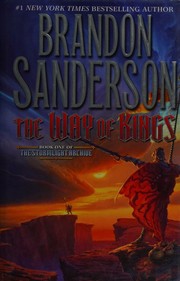
Book 1 of The Stormlight Archive and Sanderson's most ambitious work. It introduces the world of Roshar, the Stormlight magic system (Surgebinding), and the overarching Cosmere threat. Having finished Mistborn Era 1, you'll immediately recognize shared concepts and feel the thrill of a larger universe clicking into place.
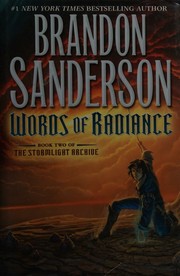
Book 2 of Stormlight, it massively expands the cast, the lore, and the stakes. A pivotal character who bridges the Mistborn and Stormlight worlds appears more prominently here — a key Cosmere crossover moment you'll recognize from your Mistborn reading.
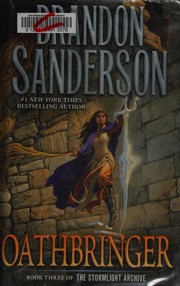
Book 3 of Stormlight, this is where the Cosmere's inter-series mythology becomes undeniable — the history of the Shards, the Shardholders, and the true nature of the conflict are laid bare. Essential before moving to the crossover stage.
Bridging the Worlds — Novellas & Era 2
IntermediateRead the shorter works that explicitly connect the series and introduce the Cosmere's secret protagonist. Then modernize your Mistborn knowledge with Era 2, which is set centuries later and is rich with crossover payoff.
▸ Study plan for this stage
Pace: 10–13 weeks total: Week 1–3 — Arcanum Unbounded (~20–25 pages/day, including the in-world essays for each system); Week 4–6 — The Alloy of Law (~30 pages/day, a breezy read but pause after each chapter to track crossover details); Week 7–13 — Rhythm of War (~40–45 pages/day, the longest and densest
- Hoid (Wit) as the Cosmere's secret through-line — tracking his appearances and agenda across Arcanum Unbounded and Rhythm of War
- The Cosmere's shared physics: Investiture, Shards, and how each planetary system's magic is a local expression of the same underlying force, as explained in the Arcanum Unbounded system essays
- The Scadrian timeline jump — how the Final Empire's collapse (Era 1) produced the industrialized, gun-toting world of The Alloy of Law centuries later, and what survived (Allomancy, Feruchemy, the Survivor's religion)
- Twinborn mechanics — the combination of Allomancy and Feruchemy in a single person, introduced in The Alloy of Law, and how it expands the magic system's design space
- The Fused and the Singers — Rhythm of War reframes the Stormlight conflict by giving the 'enemy' a full culture, history, and legitimate grievance, complicating the hero/villain binary
- Navani's scientific arc — her work on fabrials and the discovery of Warlight/Voidlight fusion represents Roshar's in-world scientific method and mirrors the Cosmere theme of mortals mastering Investiture
- Raboniel and the nature of Odium's forces — her complexity as a Fused who seeks an end to the war challenges assumptions built in earlier Stormlight books
- Rhythm of War's tower siege as a structural device — the split narrative (Kaladin trapped below, Shallan/Adolin in Shadesmar, Dalinar/Navani above) and how each thread advances a distinct Cosmere-level question about Investiture, identity, and Connections
- After reading the Arcanum Unbounded system essays, can you explain in your own words how Allomancy, Feruchemy, and Surgebinding are all expressions of the same Cosmere-wide force — and what makes each planet's magic feel distinct?
- How does The Alloy of Law demonstrate that a Shard's Intent can reshape an entire civilization over centuries — what has Harmony's dual nature (Preservation + Ruin) done to Scadrial's society, religion, and magic by the time of Waxillium Ladrian?
- What is Hoid doing in each book of this stage, and what do his actions — taken together — suggest about his overarching goal?
- How does Rhythm of War recontextualize the Fused and the Singers relative to how they were presented in earlier Stormlight books, and why does this matter for understanding Odium's Shard?
- What does Navani's discovery about the combination of Warlight and Voidlight reveal about the nature of Investiture, and how does it connect to the broader Cosmere principle that Shards can be Splintered, merged, or manipulated?
- By the end of this stage, who is the Cosmere's 'secret protagonist,' what do you know about their history, and what open questions remain about their endgame?
- Hoid Tracker: Keep a running log — one entry per book — of every confirmed or suspected Hoid appearance. For each entry note: his alias, what he does, what he seems to want, and what he could NOT have known without traveling between worlds. Compare your log entries across all three books at the end.
- Magic System Rosetta Stone: After finishing the Arcanum Unbounded essays, draw a single diagram mapping Allomancy, Feruchemy, and Surgebinding onto the shared Cosmere framework (Investiture source → access method → effect). Annotate it with one concrete scene from The Alloy of Law and one from Rhythm of War that illustrates each concept.
- Era 1 → Era 2 Change Log: List 10 specific things that changed between the end of the original Mistborn trilogy (as summarized in Arcanum Unbounded's Scadrial essay) and the world of The Alloy of Law — covering religion, technology, geography, and magic — then hypothesize which changes were driven by Harmony's deliberate intervention.
- Raboniel Character Brief: Write a one-page character brief for Raboniel as if you were briefing someone who had only read the earlier Stormlight books. Cover her goals, her moral complexity, and the specific scenes in Rhythm of War that most challenged your assumptions about the Fused.
- Navani's Lab Notebook: After finishing Rhythm of War's fabrial/Warlight plotline, write 3–5 journal entries from Navani's perspective documenting her key experimental breakthroughs — in plain language, as if explaining to a non-scientist. This forces you to verify you actually understood the in-world science.
- Crossover Connections Map: Create a visual or written map of every moment in this stage where a character, object, or piece of lore explicitly references another Cosmere world. Circle the ones that were set up in Arcanum Unbounded and paid off in Rhythm of War — this primes you for the dense crossover payoff ahead.
Next up: This stage equips you with the Cosmere's shared physics, a firm grasp of Hoid's agenda, and the narrative sophistication to handle multiple-world crossovers — exactly the toolkit required for the final stage, where the series' threads begin to visibly converge and Hoid's centuries of scheming start to crystallize into open, on-page action.

A collection of Cosmere novellas and short stories (including Mistborn: Secret History and Edgedancer), this is the single best 'connective tissue' book in the universe. Secret History in particular recontextualizes the entire Mistborn Era 1 trilogy and reveals the Cosmere's hidden hand. Read it here, after Era 1 and early Stormlight, to get maximum payoff.

Book 1 of Mistborn Era 2, set 300 years after Era 1 in a world now resembling the Victorian/Wild West era. It's a lighter, faster read that shows how Sanderson's worlds evolve over time — and plants seeds for the Cosmere's future that pay off in Stormlight and beyond.

Book 4 of Stormlight, this is where the Cosmere's deepest secrets — the nature of Investiture, Cognitive Shadows, and the inter-universe antagonist — are explored most explicitly. Having read Arcanum Unbounded and Era 2 first gives you the full context to appreciate its revelations.
The Full Picture — Advanced Cosmere
ExpertComplete the Mistborn Era 2 trilogy, read the latest Stormlight capstone, and understand the Cosmere as a unified, intentional universe with a beginning, middle, and (planned) end.
▸ Study plan for this stage
Pace: 6–8 weeks total: Weeks 1–2 for The Bands of Mourning (~25–30 pages/day), with a 2–3 day reflection pause before transitioning; Weeks 3–7 for Wind and Truth (~35–40 pages/day given its length); Week 8 reserved for synthesis, re-reading key chapters, and completing exercises.
- The Southern Scadrians and expanded Allomantic/Feruchemical technology — understanding how Scadrial's magic has evolved and been industrialized beyond Elendel
- Ettmetal (harmonium) as a cross-system catalyst — its explosive interaction with water and its implications for inter-Shardic physics and future space-age travel
- Kelsier's shadow and the Set — recognizing that Kelsier's post-death machinations (as Thaidakar) are a Cosmere-wide thread, not merely a Scadrian subplot
- Autonomy and Bavadin as an active antagonistic Shard — Wind and Truth deepens the understanding of Shards acting through proxies and competing for influence across worlds
- The Rhythm of War aftermath and Dalinar's Choice — Wind and Truth resolves the arc of Dalinar Kholin and the contest of champions, showing how a single human decision can reshape a Shard's Intent
- Honor's Splinters and the nature of Bondsmiths — the mechanics of what it means to hold, rebuild, or reforge a Shard, and how Dalinar's journey embodies this at its most literal
- The Cosmere endgame scaffolding — both books plant explicit flags (the Bands as a power source for space-age Scadrial, Wind and Truth's epilogue threads) pointing toward Hoid's long game and the coming conflict with Odium/Rayse's successor
- Unifying the magic systems — recognizing Investiture as the single underlying currency of all Cosmere magic and how Bands of Mourning and Wind and Truth each showcase cross-system Investiture manipulation
- By the end of The Bands of Mourning, what has Wax learned about the Set's true backers, and how does this reframe the entire Mistborn Era 2 trilogy as a Cosmere-scale conspiracy rather than a local political thriller?
- What is ettmetal (harmonium), why is its behavior around water significant to Cosmere physics, and what does its existence imply about the future of Scadrian technology and inter-planetary travel?
- How does Wind and Truth resolve the contest of champions, and what are the immediate and long-term consequences for the Shard of Honor and the world of Roshar?
- In what ways does Dalinar's arc in Wind and Truth function as a meditation on the nature of a Shard's Intent — specifically, can a person 'become' a Shard without losing their humanity, and what evidence does the book provide?
- How do Hoid's appearances and actions in both The Bands of Mourning and Wind and Truth reveal his awareness of the Cosmere's macro-level stakes, and what do his choices suggest about his ultimate goal?
- After completing both books, how would you describe the Cosmere's overarching narrative structure — what is the 'beginning,' 'middle,' and planned 'end' that these two books collectively illuminate?
- Create a 'Cosmere Threat Board': map every faction or individual in The Bands of Mourning (the Set, the Southern Scadrians, Kelsier's agents) to their Cosmere-level allegiance, then extend the board with Wind and Truth's factions (Odium's forces, the Radiants, Autonomy's proxies). Draw lines of conflict and alliance to visualize the macro-war.
- Write a one-page 'Shard Dossier' for both Harmony (Sazed) and Honor/the Stormfather after Wind and Truth — document each Shard's current state, Intent, known Splinters, and how the events of these two books changed them. Compare the dossiers side by side.
- Conduct a 'Magic System Audit': list every instance of Investiture use across both books (Allomancy, Feruchemy, Surgebinding, Voidbinding, etc.) and annotate each with its Spiritual/Cognitive/Physical Realm mechanism. Identify at least two moments where magic from one system interacts with or mirrors another.
- Draft a timeline of Hoid's known appearances across all Cosmere books you have read, then annotate the entries from The Bands of Mourning and Wind and Truth with what new information each appearance adds to your understanding of his plan. Predict one thing he will do in a future book and justify it with textual evidence.
- Write a 500-word 'State of the Cosmere' essay as if you are a Worldhopper scholar writing in-universe after the events of Wind and Truth. Summarize the current balance of Shardic power, the greatest threats, and the most likely flashpoints — grounding every claim in specific scenes from the two books.
- Re-read the epilogues of both The Bands of Mourning and Wind and Truth back-to-back in a single sitting. Write a comparative analysis (bullet points are fine) of what narrative threads each epilogue deliberately leaves open, and hypothesize how they might connect in future Cosmere works.
Next up: Completing these two books gives the reader a panoramic view of the Cosmere's current state — its active Shards, its brewing inter-planetary conflicts, and Hoid's long game — providing the essential foundation for tackling future Cosmere releases (such as Mistborn Era 3, Stormlight 6, and the planned Hoid-centric novels) with full narrative and thematic context.
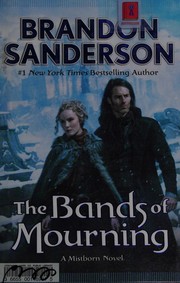
Book 3 of Mistborn Era 2, this novel contains some of the most explicit and jaw-dropping Cosmere crossover content of any book — artifacts and entities that connect directly to Stormlight and the wider universe. It's a must-read before Stormlight Book 5.

Book 5 of The Stormlight Archive and the conclusion of the first half of the series. This is the current culmination of the entire Cosmere narrative — every series you've read feeds into its events and revelations. Reading it last in this curriculum means you experience it with the full weight of the universe behind you.
Discussion
Keep reading
Paths that share books, cover the same subject, or open a related topic.