The Cazalet Chronicles Reading Order and Guide
The Cazalet Chronicles is Elizabeth Jane Howard's sweeping five-novel saga following an upper-middle-class English family from the late 1930s through the 1950s. This curriculum guides a beginner through all five novels in their chronological, publication order — the only way to fully experience the unfolding of characters, relationships, and history — with a brief contextual stage first to enrich the reading experience.
Setting the Scene: Context Before You Begin
BeginnerGain a feel for the English upper-middle-class world of the 1930s–50s and the domestic realist novel tradition, so the Cazalet world feels immediately vivid and grounded.
▸ Study plan for this stage
Pace: 6–8 weeks total: Weeks 1–3 cover "The Pursuit of Love" (~25–30 pages/day, including re-reading favourite passages); Weeks 4–8 cover "Slipstream" (~20–25 pages/day, allowing time to pause and reflect on Howard's memoir-style reflections).
- The English upper-middle-class domestic world of the 1930s–50s: its rituals, hierarchies, country houses, and unspoken codes of conduct, as vividly satirised in Mitford's Radlett household
- The domestic realist novel tradition: how everyday life — meals, marriages, children, drawing rooms — becomes the primary arena of drama and meaning
- Female interiority and limited agency: how both Mitford's Linda and Howard's memoir-self navigate desire, marriage, and selfhood within constrictive social structures
- The role of the narrator as insider-outsider: Fanny in 'The Pursuit of Love' observes the Radletts from a position of loving detachment — a lens that shapes what the reader sees and feels
- Class performance and social anxiety: how characters in 'The Pursuit of Love' signal, police, and occasionally transgress class boundaries through speech, dress, and marriage choices
- Autobiographical fiction vs. memoir: comparing Mitford's lightly fictionalised family portrait with Howard's direct autobiographical account in 'Slipstream' illuminates how writers transform lived experience into narrative
- The texture of period detail: how specific objects, fashions, domestic routines, and cultural references in both books anchor the reader in a precise historical moment
- Emotional realism: the way both authors render grief, longing, boredom, and joy with precision and wit, establishing the emotional register that defines the domestic realist tradition
- After reading 'The Pursuit of Love', how would you describe the atmosphere and daily rhythms of Alconleigh? What does Mitford's satirical affection for the Radletts reveal about the pleasures and absurdities of upper-middle-class English life?
- How does Fanny's narrative position as an observer — neither fully inside nor outside the Radlett world — shape the reader's experience of Linda's story? What does this technique share with the storytelling approach in the Cazalet Chronicles?
- In 'Slipstream', how does Elizabeth Jane Howard describe her own formation as a writer and a woman? What social and domestic pressures does she identify as both constraining and creatively generative?
- Comparing both books: what continuities do you notice between the world Mitford fictionalises and the world Howard lived through? Where do their portraits of mid-century English life converge or diverge?
- How do both authors use humour — irony, understatement, comic set-pieces — to handle painful or difficult material? What effect does this tonal balance have on the reader?
- What specific period details (houses, clothes, food, social rituals) in each book most powerfully evoked the era for you, and how do you expect those details to reappear or resonate in the Cazalet Chronicles?
- Keep a 'World-Building Notebook': as you read each book, jot down specific sensory and social details — a room's furnishings, a meal, a piece of clothing, a social rule — that make the period feel real. Aim for at least 10 entries per book, then review them side by side.
- Write a one-page character sketch of Linda Radlett from 'The Pursuit of Love' as if you were Fanny writing in her diary — then write a second sketch of the same character from an outsider's neutral perspective. Reflect on how the narrator's intimacy changes what we know and feel.
- After finishing 'Slipstream', identify three moments where Howard describes a domestic or social experience that directly parallels something in 'The Pursuit of Love'. Write a short paragraph for each, comparing how the fictional and autobiographical modes handle the same kind of experience.
- Create a simple timeline (a single A4 page or document) mapping the historical events mentioned or implied in both books — the approach of WWII, wartime life, post-war change — to build the chronological backbone you will need for the Cazalet Chronicles.
- Choose one scene from 'The Pursuit of Love' that you found emotionally resonant and re-read it slowly, annotating: What is said? What is left unsaid? What does the domestic setting contribute to the emotional meaning? This close-reading habit will be essential for the Cazalet Chronicles.
- Draft a short personal response (half a page) answering: 'What surprised me most about this world?' Drawing on both books, articulate what felt foreign and what felt unexpectedly familiar about upper-middle-class English life in this era.
Next up: Having absorbed the social textures, emotional register, and narrative conventions of the domestic realist tradition through Mitford and Howard, the reader is now primed to enter the Cazalet Chronicles themselves — recognising its world, trusting its mode, and equipped to appreciate how Howard transforms her own lived experience (encountered directly in 'Slipstream') into the richly populated fict
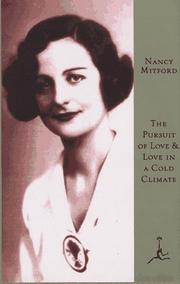
Mitford's comic, warm portrait of an eccentric English upper-class family in the interwar years is the perfect tonal warm-up — it shares the Cazalets' world of country houses, family dynamics, and social ritual, and is an easy, joyful read.
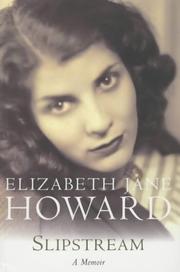
Howard's own memoir introduces you to her life, her voice, and the real experiences that fed directly into the Cazalet Chronicles — reading it first makes every novel richer and more personal.
The Chronicles Begin: Pre-War and the Gathering Storm
BeginnerMeet the full Cazalet family and their world in the summer of 1937, establishing the characters, relationships, and domestic rhythms that the entire saga depends on.
▸ Study plan for this stage
Pace: 8–10 weeks total: Weeks 1–5 for The Light Years (~30–35 pages/day, ~400 pages), Weeks 6–10 for Marking Time (~25–30 pages/day, ~370 pages); allow extra days at the end of each book for reflection and journaling.
- The Cazalet family hierarchy: understanding the three generations — the Brig and Duchy at the top, their four adult children (Hugh, Edward, Rachel, and Rupert) in the middle, and the sprawling cast of grandchildren below
- Home Place as the emotional and symbolic heart of the saga: the Sussex family home functions as a character in its own right, representing stability, tradition, and the last gasp of an Edwardian world order
- Gender and domestic constraint: Howard meticulously shows how women's lives — from the Duchy's quiet authority to Villy's frustrated ambitions and Rachel's self-sacrifice — are shaped and limited by the expectations of 1930s upper-middle-class English society
- The gathering political storm: the shadow of the coming war in Marking Time (set 1939–1941) intrudes on domestic life through rationing, evacuees, and the men's military service, forcing the family to adapt while trying to preserve normalcy
- The child's-eye perspective: several grandchildren (especially Louise, Clary, and Polly) serve as moral and observational lenses, noticing truths that adults suppress or ignore
- Class, money, and the family business: the Cazalet timber business underpins the family's social position, and tensions around money, inheritance, and class aspiration run beneath the polished surface of every gathering
- Secrets, silence, and repression: Howard establishes a pattern in both books where what is NOT said — affairs, grief, illness, sexuality — is as important as what is spoken aloud
- The rhythm of seasonal gathering: the recurring structure of the family assembling at Home Place for summers and holidays creates a novelistic rhythm that mirrors the reader's own growing familiarity with each character
- Can you name all four of the Brig and Duchy's adult children, identify their spouses, and describe at least one defining tension or unfulfilled desire for each?
- How does Home Place in Sussex function as more than just a setting in The Light Years — what does it represent for different family members, and which characters feel most and least at home there?
- In Marking Time, how does the onset of World War II change the daily domestic rhythms established in The Light Years — which characters are most disrupted, and which seem almost relieved by the upheaval?
- Howard gives significant interior access to the younger generation — Louise, Clary, and Polly in particular. What does each of these girls understand about the adult world around them, and what do they misread or remain blind to?
- Identify two or three major secrets or silences that run through both books. Who keeps them, who suspects them, and what is the cost of the concealment to the people involved?
- How does Howard use the passage of the seasons and the recurring ritual of family gatherings to structure both novels, and what does this cyclical form suggest about the nature of family life itself?
- Draw a Cazalet family tree by hand after finishing Part One of The Light Years, then revise and expand it as you read Marking Time — note how your understanding of relationships deepens with each addition
- Keep a 'Secrets & Silences' log: each time a character withholds information, deflects a conversation, or the narrator signals something left unsaid, jot down who is concealing what and your prediction of when (or whether) it will surface
- Write a one-page 'day in the life' character sketch from the point of view of one of the women — Villy, Rachel, or the Duchy — set during a Home Place summer weekend, drawing only on details Howard provides in The Light Years
- After finishing Marking Time, create a two-column comparison chart: list five aspects of daily Cazalet life from The Light Years (meals, routines, relationships, finances, ambitions) and note specifically how each has shifted or been disrupted by the war's arrival
- Choose one scene from each book in which a child and an adult are in the same space but clearly inhabiting different emotional realities. Write a short paragraph analysing what Howard achieves by holding both perspectives simultaneously
- Write a brief 'state of the family' essay (300–400 words) at the close of Marking Time, summarising where each of the four adult Cazalet siblings stands emotionally, maritally, and professionally — this will serve as your baseline document for the next stage
Next up: By mapping the full family constellation and absorbing the pre-war and early-war rhythms of Home Place, the reader has built the emotional baseline needed to feel the full weight of loss, change, and moral reckoning that the later chronicles will deliver as the war deepens and the Cazalet world is irrevocably altered.
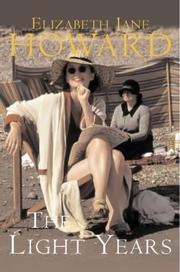
The first novel in the Chronicles, set in 1937–38, introduces all three generations of the Cazalet family at their Sussex home. Start here — every character, tension, and theme flows from this opening volume.
The second novel picks up as World War II begins, deepening the family's struggles and the younger generation's coming-of-age. It must follow The Light Years to make full emotional sense.
The War Years: Loss, Change, and Survival
IntermediateFollow the Cazalets through the heart of the war and its immediate aftermath, experiencing how conflict fractures and reshapes the family's world and values.
▸ Study plan for this stage
Pace: 8–10 weeks total: Weeks 1–5 for "Confusion" (~25–30 pages/day, ~340 pages), Weeks 6–10 for "Casting Off" (~25–30 pages/day, ~400 pages); allow extra days at the end of each book for reflection and journaling
- The psychological and emotional toll of prolonged wartime on domestic life, as seen through the Cazalet women and children navigating anxiety, grief, and uncertainty in 'Confusion'
- Coming-of-age under crisis: how Polly, Clary, and Louise each forge fragile identities while the structures of Cazalet family life visibly erode around them
- Gender, agency, and constraint: how the war paradoxically both expands and restricts women's freedoms, forcing characters like Louise and Clary into new roles they are ill-prepared for
- Loss as a recurring motif — of people (Rupert's disappearance, deaths in the family), of innocence, of the pre-war social order — and how different characters grieve or suppress grief
- The dissolution of the Cazalet patriarchal centre: the Brig's declining authority and health as a symbol of the old world crumbling in 'Casting Off'
- Post-war disillusionment and the difficulty of 're-entry': in 'Casting Off', returning characters (including Rupert) find that home and family have changed irrevocably, and reconciliation is painful
- Class, money, and the post-war redistribution of social power: how the Cazalets must adapt their expectations and lifestyle as the economic and political landscape shifts after 1945
- Howard's narrative technique of free indirect discourse and close third-person perspective as a tool for conveying the interior lives of multiple characters simultaneously across both novels
- In 'Confusion', how does Howard use the contrasting experiences of Polly, Clary, and Louise to show that there is no single 'wartime experience' — and what does each young woman's arc reveal about the limits placed on women of their class and era?
- Rupert's ambiguous fate haunts much of 'Confusion' — how does Howard sustain narrative tension around his disappearance, and how do different family members cope with not knowing?
- How does 'Casting Off' dramatise the idea that survival and return are not the same as recovery? Which characters struggle most with re-integration, and why?
- In what ways does the decline of the Brig in 'Casting Off' function as both a personal tragedy and a structural metaphor for the end of a particular kind of English family life?
- Howard depicts marriage in both novels as a site of disappointment, compromise, and occasional cruelty. Choose two marriages across the two books and analyse what they collectively argue about the institution.
- By the end of 'Casting Off', which characters have genuinely changed as a result of the war years, and which have merely been displaced? What evidence from the text supports your reading?
- Character grief map: After finishing 'Confusion', draw a diagram placing each major character at the centre of their own circle and annotate how they express (or repress) grief and loss. Compare the maps across generations — what patterns emerge about how the Cazalets handle pain?
- Parallel diary entries: Choose one pivotal event in either novel (e.g., news of Rupert, the end of the war in 'Casting Off') and write two short diary entries for the same event from the perspectives of two different characters. Focus on how their social position, gender, or age shapes what they notice and feel.
- Timeline of fracture: Build a chronological timeline across both books tracking key moments of family rupture (deaths, separations, revelations, returns). Annotate each event with a note on which character bears the greatest emotional burden and why.
- Close-reading exercise: Select one passage from 'Confusion' and one from 'Casting Off' in which Howard uses free indirect discourse to inhabit a character's interiority. Write a one-page analysis of each, focusing on what the technique reveals that direct narration could not.
- Post-war 'before and after' comparison: For three characters of your choice, write a brief character profile as they appear early in 'Confusion' and again at the close of 'Casting Off'. Identify the single most significant thing the war has taken from or given to each person.
- Thematic essay (500–700 words): Using evidence from both 'Confusion' and 'Casting Off', argue for or against the following statement: 'For the Cazalets, the end of the war represents not liberation but a more complicated kind of loss.'
Next up: Having witnessed the Cazalet world fracture and begin to reassemble in the aftermath of war, the reader is now positioned to explore how individual characters carry their wartime wounds forward into peacetime lives — the central concern of any subsequent stage focused on reconstruction, identity, and the long shadow of the 1940s on the generations that follow.
The third novel covers the mid-war years and is where Howard's storytelling deepens considerably — the characters face genuine moral and emotional complexity that rewards the investment made in the first two books.
The fourth novel brings the war to a close and follows the family into the late 1940s, a period of exhausted reinvention. The emotional payoff here depends entirely on having lived through the previous three volumes.
The Final Chapter: Resolution and Legacy
IntermediateComplete the saga with the fifth and final novel, bringing the Cazalet story to its full, hard-won conclusion and reflecting on what the whole sequence means as a unified work.
▸ Study plan for this stage
Pace: 3–4 weeks, ~25–30 pages/day — a measured, reflective pace suited to savoring a long-awaited conclusion and leaving time for journaling and retrospective thinking across the whole saga
- Resolution vs. closure: how Howard deliberately resists tidy endings, leaving characters in states of becoming rather than arrival
- The weight of accumulated time: how 'All Change' draws meaning from everything that came before, rewarding readers who have followed the Cazalets across decades
- Generational turnover: the torch passing from the wartime generation (the Brig, the Duchy, the brothers) to the grandchildren, and what is gained and lost in that transition
- Domestic life as historical record: how Howard uses the intimate textures of home, food, money, and routine to document mid-20th-century English life without ever writing 'history' directly
- Female endurance and late-life reckoning: the elder women's final assessments of their own lives, choices, and sacrifices, and what Howard says about the cost of femininity across a lifetime
- The Cazalet name as myth and burden: how family identity simultaneously sustains and constrains its members by the saga's end
- Elegiac tone and the art of the ending: Howard's prose style in 'All Change' — its autumnal register, its use of free indirect discourse — as a deliberate farewell
- The unified work: reading the five-novel sequence as a single, novelistic argument about love, war, class, and the passage of time
- By the end of 'All Change,' which characters have genuinely changed and which have remained trapped by their own natures — and what does Howard seem to be saying about the human capacity for transformation?
- How does Howard use the decline of the family timber business as a structural metaphor for the broader dissolution of the Cazalet world as it existed in the earlier novels?
- What is the emotional and thematic function of the deaths and losses in 'All Change'? Do they feel earned given the arc of the whole sequence?
- How does Clary's development across the entire saga culminate in 'All Change,' and in what ways does she serve as Howard's most autobiographical lens?
- Looking back across all five novels, what consistent argument — if any — does Howard make about marriage and romantic love? Does 'All Change' confirm, complicate, or overturn that argument?
- In what ways does 'All Change' function as both a standalone novel and as the final movement of a larger work — and where does it succeed or struggle on each count?
- Write a 'character obituary' for one major Cazalet figure — not necessarily someone who dies, but a retrospective account of who they were across all five novels, drawing evidence from 'All Change' as the final word on their arc.
- Create a timeline or visual map tracing a single theme (e.g., money and class anxiety, female autonomy, parent-child estrangement) from the first novel through 'All Change,' noting how Howard develops and transforms it at each stage.
- Draft a 1,000-word personal essay responding to the question: 'Is the Cazalet Chronicles ultimately an optimistic or a pessimistic work?' Use 'All Change' as your primary evidence but situate it within the whole sequence.
- Select one scene from 'All Change' that you found emotionally powerful and perform a close reading: annotate Howard's sentence-level choices — syntax, free indirect discourse, imagery — and explain how the style produces the emotional effect.
- Write a letter from one character to another that could plausibly have been written in the final pages of 'All Change' — inhabiting Howard's voice and the character's accumulated history to make it feel authentic.
- Compile a 'legacy list': identify five specific craft techniques Howard uses consistently across the saga and find one example of each in 'All Change,' then reflect in writing on what makes each technique distinctively hers.
Next up: Completing 'All Change' and reflecting on the Cazalet Chronicles as a unified work equips the reader with a sophisticated understanding of the multi-generational saga form, preparing them to encounter other long-sequence novelists — such as Anthony Powell, Olivia Manning, or Paul Scott — with the critical vocabulary and emotional stamina the form demands.

Written 18 years after Casting Off and published in 2013, this concluding volume follows the family into the 1950s. It is the most reflective and elegiac of the five, and its emotional weight is only fully felt after reading all that came before.
Discussion
Keep reading
Paths that share books, cover the same subject, or open a related topic.