The Bronze Age collapse: books to read, in order
Around 1200 BC a connected world of Egyptian, Hittite, Mycenaean, Assyrian and Cypriot states came apart in the space of a few decades, and historians still do not agree on why. This path starts with the two rival explanations — systems collapse and a military-technology revolution — then rebuilds the world that fell, kingdom by kingdom, because the collapse is unintelligible until you know what was actually connected to what. It closes on the aftermath and on collapse as a general phenomenon. The books contradict each other on purpose.
The event, and the disagreement about it
BeginnerKnow the sequence of destructions around 1200 BC, the candidate causes — Sea Peoples, drought, earthquake, trade failure, new weapons — and why no single-cause explanation has won.
▸ Study plan for this stage
Pace: Four to five weeks for two books of roughly 265 pages each. Cline goes quickly — ten days at 25 pages a sitting. Drews is a scholarly monograph and needs two to three weeks, read with the first book's site list beside you. Read them in this order and do not skip the second because you found the firs
- The event itself: across a few decades around 1200 BC, palace centres across the eastern Mediterranean were destroyed or abandoned — Ugarit, Hattusa, Mycenae, Pylos, Emar and dozens of others — and the Hittite empire, Mycenaean palace culture and the Ugaritic trading system did not return.
- 1177 B.C. — catalogued without its subtitle, The Year Civilization Collapsed — argues that no single cause did it: a tightly interconnected system failed under multiple simultaneous stresses. It is the standard popular entry point and supplies every site and kingdom you will meet later.
- Cline's system argument depends on the interconnection being genuinely load-bearing: tin for bronze came from far away, palace economies depended on redistribution, and elite legitimacy depended on imported goods. If any of those links is weaker than claimed, the argument weakens with it.
- The candidate causes on the table are drought, earthquake, internal revolt, the failure of long-distance trade, the Sea Peoples, and a change in warfare. Each has evidence and none accounts for the full geographic pattern on its own.
- The Sea Peoples are known mainly from Egyptian inscriptions describing Egyptian victories, which is a specific and limited kind of source. Whether they were a cause of the collapse, a symptom of it, or a category Egyptian scribes invented for varied groups is genuinely unresolved.
- Drews's The End of the Bronze Age makes the main rival case: that a change in infantry tactics and weaponry made chariot-based armies obsolete, and that raiders exploiting this could take palace states that had no answer to them.
- Drews's book predates the paleoclimate work — pollen cores and isotope records indicating a prolonged regional dry period — that has since become central to the debate. Reading him now means reading a strong argument built without evidence that later arrived.
- The two books contradict each other on purpose, and the disagreement is about method as much as facts: whether historical explanation should look for a mechanism or for a systemic failure. Nothing in this path resolves it.
- List the destruction sites Cline covers and mark which ones Drews's military argument can and cannot account for. Where does each explanation have gaps?
- What would count as evidence for Drews's thesis in the archaeological record, and does he supply it?
- Cline argues for multiple simultaneous stresses. Is that an explanation or a description of not having one? Make the case both ways.
- The Sea Peoples are attested chiefly in Egyptian victory inscriptions. What kind of source is that, and what can it and cannot it establish?
- How would the paleoclimate drought evidence, unavailable to Drews, change his argument if he accepted it? Would it replace his mechanism or supply a trigger for it?
- Which of the two books is more falsifiable, and does that make it better history?
- Build a table of every named site and kingdom in Cline with its fate — destroyed, abandoned, continued — and keep it for the rest of the path.
- Write 400 words stating Drews's argument in its strongest form and 400 stating Cline's, then a third paragraph naming the single piece of evidence that would most damage each.
- Take Cline's list of proposed causes and, for each, write one line on what evidence supports it and one on what it fails to explain.
- Draw the Egyptian Sea Peoples material out of Cline and Drews separately and compare how each uses the same inscriptions.
- Write a one-page account of the collapse that you would be willing to defend, and mark every sentence in it that is inference rather than evidence.
Next up: You now know what fell and why the explanations conflict; the next stage rebuilds the system itself, because the arguments only become testable once you know what was actually connected to what.
The standard popular entry point: an archaeologist arguing that no one cause did it and that a tightly interconnected system failed under multiple simultaneous stresses. Reads easily and gives you every site and kingdom you will meet later. Its catalogue record drops the subtitle, The Year Civilization Collapsed.

The main rival case: that a change in infantry warfare made chariot armies obsolete and let raiders destroy the palace states. A scholarly monograph, and read directly against Cline. Note that it is from 1993, before the paleoclimate evidence for a long regional drought became central to the debate.
The world that collapsed
IntermediateReconstruct the Late Bronze Age Near East as a working system of great kingdoms, diplomatic correspondence, gift exchange and vassal states — so that its failure is a loss of something specific rather than a vague catastrophe.
▸ Study plan for this stage
Pace: Ten to twelve weeks for roughly 1,240 pages. Van De Mieroop is about 340 pages of survey and should be read first, over three weeks, as the chronological spine. Podany at around 430 pages is far more readable than its length suggests — three weeks. Bryce's Hittite history is dense at about 465 pages
- Van De Mieroop's survey covers roughly 3000 to 323 BC and supplies the Mesopotamian, Syrian and Anatolian chronology that the collapse books simply assume. Use it as a spine and reference rather than reading it as narrative.
- The Late Bronze Age Near East worked as a system of great kingdoms — Egypt, Hatti, Assyria, Babylonia, Mitanni before its fall — that recognised each other as peers, alongside a layer of vassal states and independent trading cities like Ugarit.
- Brotherhood of Kings reconstructs that diplomacy from the Amarna letters and earlier correspondence: kings addressing each other as brothers across a thousand miles, negotiating marriages, complaining about gold shipments, and observing an elaborate protocol.
- Gift exchange between rulers was not ceremony detached from economics — it was how prestige goods and metals moved at the highest level, and it created obligations that held the system together.
- The bronze itself is the structural fact: copper and tin came from different and often distant sources, so every palace army in the region depended on long-distance supply. That dependency is the core of the systems-collapse argument.
- Vassalage treaties, sworn before gods and preserved in archives, defined obligations in writing. When the archives stop, so does most of what we can know — the absence of evidence after 1200 BC is partly an absence of the institutions that generated evidence.
- Bryce's Kingdom of the Hittites is the standard scholarly history of the empire whose disappearance is the sharpest single break in the whole collapse: a great power with a capital, an archive and a treaty network that simply ends.
- Reading Bryce after the surveys turns the Hittite collapse from an item in a list into a specific loss — a named dynasty, a known capital, a documented set of relationships, all of it stopping.
- What made a kingdom 'great' in Late Bronze Age diplomacy, and how do the letters show a ruler being told he is not one?
- Trace the supply of tin as far as the books allow. How much of the systems-collapse argument rests on how far you can trace it?
- What did the Amarna correspondence actually accomplish for the kings involved? Was the diplomacy substantive or performative?
- In Bryce's account, which Hittite institutions were most fragile, and does he think the end was internal, external or both?
- How much of what we know about this world comes from archives at a handful of sites? What does that concentration do to our picture?
- Having read the system's description, which of the collapse explanations from stage one now looks stronger, and what specifically changed your view?
- Draw a map of the great kingdoms and the main vassal and trading centres, from Van De Mieroop, and add each one's fate from your stage-one table.
- Pick five Amarna letters described in Podany and summarise what each king wanted and what he got. The pattern tells you how the system really worked.
- Write 300 words explaining the bronze supply chain in plain terms, then mark which links are attested and which are inferred.
- From Bryce, build a Hittite king list with the main events of each reign, ending at the last attested ruler. The abruptness is the point.
- Compare the way Van De Mieroop and Podany handle the same period. One is a survey and one is a narrative; note what each can say that the other cannot.
Next up: With the eastern system understood, the next stage follows the collapse west into its two best-documented theatres, one of which vanished and one of which survived diminished.
The standard undergraduate survey covering roughly 3000-323 BC. Use it as the spine: it supplies the Mesopotamian, Syrian and Anatolian chronology the collapse books assume you already have.

A very readable history of Near Eastern diplomacy built from the Amarna letters and earlier correspondence, showing kings addressing each other as brothers across a thousand miles. The best book for feeling what the international system was before it stopped.
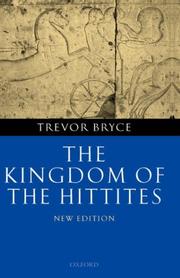
The standard scholarly history of the empire whose disappearance is the sharpest single break in the whole collapse. Dense and detailed; read it once the general surveys have told you where the Hittites sat.
The Aegean and Egypt
IntermediateFollow the collapse into its two best-documented western theatres — Mycenaean Greece, which vanished into an illiterate dark age, and Egypt, which survived but never recovered its reach.
▸ Study plan for this stage
Pace: Twelve to fourteen weeks for about 1,400 pages, and this stage is the heaviest reading on the path. Chadwick is short at around 200 pages — two weeks. The Oxford history of ancient Egypt is a multi-author reference of about 525 pages and should be read selectively, chiefly the New Kingdom and Third
- Chadwick was the co-decipherer of Linear B with Michael Ventris, and The Mycenaean World reconstructs Greek palace society from the tablets — inventories, personnel lists, offerings — which is a very particular kind of evidence for a very particular kind of state.
- The tablets survive because they were baked in the fires that destroyed the palaces. Almost everything known about Mycenaean administration is therefore a snapshot of the final year, which is a strange and important limitation.
- The book is now decades old and later scholarship has revised parts of its picture, particularly on Mycenaean political organisation and on how far the palaces controlled the wider economy. Read it as the clearest introduction, not as the current consensus.
- The Mycenaean collapse is the extreme case: palaces destroyed, Linear B abandoned, and Greece entering centuries with no writing at all. Whatever explanation you favour has to account for a literate society becoming illiterate.
- For Egypt, the New Kingdom and Third Intermediate Period chapters give the other side: Egypt survived, repelled the attacks recorded at Medinet Habu, and then lost its Levantine empire and much of its central authority anyway.
- The Medinet Habu reliefs and inscriptions supply the famous Sea Peoples imagery — ox-carts, feathered headdresses, sea battle — and they are a royal victory monument. Reading them as a monument first and a source second is the discipline this stage should build.
- Broodbank's Making of the Middle Sea reframes the collapse as one episode in a much longer Mediterranean story of connection and disconnection reaching back to the earliest human presence, which changes the scale at which the question makes sense.
- The most useful thing Broodbank does is make 'collapse' relative: connectivity in the Mediterranean has risen and fallen repeatedly, and the Late Bronze Age peak was unusually high, which may be why its fall looks unusually catastrophic.
- What can Linear B tablets tell you about Mycenaean society, and what are they structurally incapable of telling you?
- Greece lost writing entirely. Which of the stage-one explanations best accounts for that, and which struggle with it?
- The Medinet Habu material is a victory monument. What can it establish about the Sea Peoples, and what does it merely assert?
- Egypt survived the crisis and then declined anyway. Does that support or undermine the systems-collapse account?
- How does Broodbank's long-run framing change the question 'why did the Bronze Age collapse'? Does it dissolve the question or sharpen it?
- Compare the quality and type of evidence available for Mycenaean Greece and for Egypt. How much of the difference in what we can say is a difference in what survived?
- Summarise in 250 words what a Linear B tablet is and what a typical one records. Then write one line on each of three things the tablets cannot show.
- Read the Medinet Habu material as described in the Oxford history and write a paragraph separating what the inscriptions claim from what can be independently corroborated.
- Take Broodbank's account of Mediterranean connectivity and sketch a rough curve of connection over time, marking where 1200 BC sits.
- Add the Aegean and Egyptian sites to the table you built in stage one, with their evidence type — tablets, monuments, excavation — alongside their fate.
- Write 400 words on why the Mycenaean collapse looks more total than the Egyptian one, distinguishing what actually happened from what the surviving evidence lets us see.
Next up: You have now seen the collapse across the whole region; the last stage asks what followed it and whether 'collapse' is a useful category at all.

By the co-decipherer of Linear B, reconstructing Mycenaean society from the palace tablets. Still the clearest introduction to what the Greek palaces were, though it is from 1976 and later scholarship has revised parts of its picture.

A multi-author reference history; read the New Kingdom and Third Intermediate Period chapters for the Egyptian side, including the Sea Peoples inscriptions at Medinet Habu that supply the famous imagery.
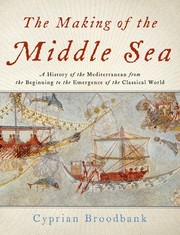
A large archaeological history of the whole Mediterranean to about 500 BC, which reframes the collapse as one episode in a much longer story of connection and disconnection. The most demanding book so far and the one that most changes the scale you think at.
After, and collapse in general
IntermediateFollow what actually happened in the centuries after 1200 BC, and test whether 'collapse' is a useful category at all.
▸ Study plan for this stage
Pace: Six to eight weeks. Cline's sequel is a shorter book and takes two to three weeks, read with your notes from stage one open, since it revises them. Tainter is about 250 pages and is theoretically dense — allow three to four weeks and read it slowly; the argument is compressed and the middle chapters
- Cline's sequel takes the centuries after 1200 BC and asks which societies recovered, which transformed into something different, and which simply did not return. It quietly revises some emphases of the first book, which is why it belongs at the end rather than immediately after it.
- The aftermath is not uniform: Assyria re-emerged as a major power, Phoenician cities flourished, Egypt persisted diminished, Greece went dark and then rebuilt with an alphabet borrowed from the Phoenicians rather than recovering Linear B.
- Iron replacing bronze is often stated as the cause of the collapse and is better understood as a consequence: iron ore is widely available where tin is not, so a world with broken long-distance supply had a reason to develop iron technology.
- Cline's sequel argues with the field rather than introducing it, so it is where you will see the current state of the disagreement — including how the drought evidence has been incorporated and contested.
- Tainter's Collapse of Complex Societies is the classic theoretical account: complex societies invest in complexity to solve problems, the marginal returns on further complexity eventually go negative, and collapse is a rational simplification rather than a catastrophe.
- Tainter's framing has a sharp implication worth sitting with — that collapse can be an adaptive response for the people involved, even where it looks like disaster from the outside and in the archaeological record.
- Tainter is not about the Bronze Age specifically and is abstract in places, but it is the frame inside which most of this debate is now conducted, including by writers who reject his conclusions.
- The category itself is contestable: some archaeologists argue 'collapse' overstates discontinuity and obscures the people who carried on, and reading Tainter alongside Cline's sequel is where you can weigh that.
- Which of Cline's original emphases does his sequel revise? Compare directly against the notes you made in stage one.
- State Tainter's thesis in your own words. What would a counterexample look like — a complex society that collapsed while marginal returns were still positive?
- Does Tainter's model fit the Late Bronze Age case? Test it against the Hittite and Mycenaean evidence specifically.
- Iron follows the collapse rather than causing it. What does that reordering do to the popular version of the story?
- Is 'collapse' a useful analytic category, or does it flatten very different outcomes across the region? Argue from the Egyptian and Mycenaean cases.
- After the whole path: what do you now think happened around 1200 BC, and which parts of your account are evidence and which are preference between frameworks?
- Reread your stage-one one-page account of the collapse and rewrite it now. Keep both versions and mark every change.
- Apply Tainter's model explicitly to the Hittite empire in 500 words, and note where the model requires evidence nobody has.
- Build a table of the main regions — Anatolia, Levant, Egypt, Aegean, Mesopotamia — with a column for what ended, what continued, and what was new within two centuries.
- Write 300 words on the strongest case that 'collapse' is the wrong word, using only material from this path.
- List every point on which Cline and Drews disagree, and mark which ones the later evidence has settled, which remain open, and which are disagreements about method rather than fact.
Next up: This closes the path: you can state the event, the rival explanations and the evidence behind each, and can read any new claim about the Bronze Age collapse against what is actually known.

Cline's own sequel, on which societies recovered, which transformed and which did not — and it quietly revises some of the first book's emphases. Read it only after the rest, since it argues with the field rather than introducing it.

The classic theoretical account, arguing that complex societies collapse when the marginal returns on further complexity go negative. Not about the Bronze Age specifically, and abstract in places, but it is the frame most of this debate is conducted inside.
Discussion
Keep reading
Paths that share books, cover the same subject, or open a related topic.