This subject rewards order because the field has no settled answer and the books are in open argument with each other. A reader who takes the first popular account as the story will not notice that it is one position among several, deliberately framed as such by its own author.
There is a second reason. The collapse is only interesting if you know what collapsed, and most people arrive knowing the Greeks and the Egyptians and nothing about the Hittites, the Mycenaean palace economy, or the diplomatic system that connected them. Read the event first if you like, but do not skip the world.
Start with the standard account
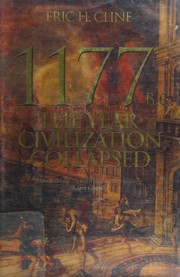
1177 B.C. by Eric H. Cline is where nearly everyone begins, and rightly. It is short, readable, and organised around a single argument: that no one cause explains the collapse, and that an interconnected system failed the way interconnected systems do — earthquakes, drought, migration, the interruption of trade, and internal rebellion compounding one another. Cline is honest that this is an interpretation.
After 1177 B. C. is his sequel, on what came next: the several centuries usually called a dark age, and which societies came through them and which did not. Read it after the first, not instead of it. Our catalogue records both under slightly different forms of the author's name; it is the same person.
Then the rival explanations
The End of the Bronze Age by Robert Drews is the serious counter-position, and it is the reason to read more than one book here. Drews argues for a specific military and technological cause — a change in the practice of warfare that made massed infantry effective against the chariot armies the palace states were built around. It is a single-cause explanation of exactly the kind Cline argues against, and it is argued carefully. Both remain in print, both are cited, and neither has been retired by the other.
Since Drews wrote, the palaeoclimate evidence for a prolonged drought in the eastern Mediterranean has strengthened considerably, which has pulled many specialists toward the systems account. That is a shift in the weight of evidence, not a verdict.
The collapse of complex societies by Joseph A. Tainter is not about this event at all. It is the general theory — that complex societies collapse when the marginal returns on additional complexity turn negative — and it is the framework a great deal of the later literature borrows from. Read it as a lens, and be aware that applying it to any particular case is contested.
Then the world that fell
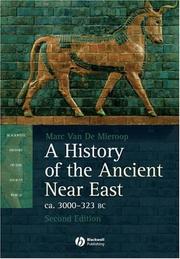
A History of the Ancient Near East by Marc Van De Mieroop is the reliable textbook backbone: Mesopotamia, Anatolia and the Levant across three thousand years, with the Late Bronze Age in proportion.
Brotherhood of kings by Amanda H. Podany is the delightful one — the diplomatic system itself, reconstructed from the letters that great kings sent each other about marriages, gold, physicians and gifts. It makes the interconnection Cline describes something you can feel rather than assert.
The kingdom of the Hittites by Trevor Bryce is the standard history of the empire that disappeared most completely. The Mycenaean world by John Chadwick is the classic account of Bronze Age Greece from the Linear B tablets, by one of the two men who deciphered them; it is old now and superseded in details, but it remains the clearest explanation of what those tablets actually tell us. The Oxford history of ancient Egypt by Ian Shaw covers the one major state that survived the crisis in recognisable form, which is itself a question worth asking.
The Making of the Middle Sea by Cyprian Broodbank is the widest frame of all — Mediterranean prehistory from the beginning to the classical world — and it is long, expensive and superb. Save it for last.
One honest caveat
The Sea Peoples appear in almost every popular account of this subject. The evidence for them is a small number of Egyptian inscriptions and reliefs, and who they were, where they came from and whether they were a cause or a symptom of the collapse are all genuinely open. Treat confident narratives about them with suspicion, including confident sceptical ones.
The full ordered path, stage by stage, is below.
Follow the full ordered path here: The Bronze Age Collapse: Books to Read, in Order.