One idea about this war did more damage than any other: that the Balkans had simply reverted to ancient ethnic hatreds, and that outsiders could therefore do nothing but wait it out. Western policymakers found it a congenial explanation, and it shaped the response for years. Almost the entire serious literature argues against it — the war was made by identifiable people making decisions in the late 1980s and early 1990s, using state media, and it can be traced.
That is why the order below starts with the breakup of Yugoslavia rather than with Bosnia. Read Bosnia first and the violence looks inexplicable. Read the breakup first and it looks like what it was: a political project with a strategy.
How Yugoslavia broke
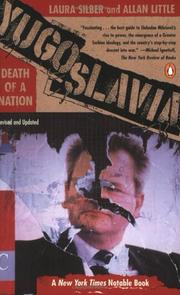
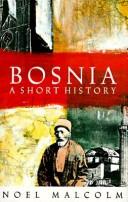
The fall of Yugoslavia by Misha Glenny is the reporter's version, written as it happened, still the quickest route into who was who. Yugoslavia by Laura Silber is the companion to the BBC documentary series and is built on interviews with nearly every principal involved; it is the best account of how the leaderships actually manoeuvred. Bosnia by Noel Malcolm supplies the deep history, and was written explicitly to demolish the ancient-hatreds story. Malcolm writes with a case to make and some specialists have contested his handling of the medieval and Ottoman material; his central historical argument about coexistence and about the recency of the nationalist framing is nonetheless widely accepted.
What the war was, from inside it
Love Thy Neighbor by Peter Maass and Seasons in hell by Ed Vulliamy are the two great correspondents' books, and Vulliamy's is the one that reported the camps in northern Bosnia. Both are written by people who abandoned any pretence of neutrality between the perpetrators and the killed, and they say so.
Safe area Goražde by Joe Sacco is comics journalism and one of the best books in the path in any format — Sacco spent months in the besieged enclave and draws what he was told, including the parts that contradict each other. Blood and vengeance by Chuck Sudetic follows a single extended family through the war and into Srebrenica, which is the only way most readers ever grasp the scale.
Srebrenica
Endgame by David Rohde is the reconstruction of the massacre by the reporter who first found the physical evidence and was imprisoned for it. Postcards from the grave by Emir Suljagić is the testimony of a survivor who worked as a UN interpreter in the enclave, and is a different kind of document entirely. The killings at Srebrenica in July 1995 were found to constitute genocide by the International Criminal Tribunal for the former Yugoslavia and by the International Court of Justice; denial of that finding remains politically active in the region, which is worth knowing before you read anything online about these books.
Like Eating a Stone by Wojciech Tochman follows the identification of remains years afterwards, and The Key to My Neighbor's House by Elizabeth Neuffer follows survivors through the question of what justice could possibly mean. Read them as a pair.
How it ended
To end a war by Richard C. Holbrooke is the memoir of the American diplomat who drove the Dayton negotiations. It is indispensable and it is a participant's account of his own achievement — the self-portrait is part of the text. Read it after the reporting, not before, so you can see what the settlement locked in as well as what it stopped.
Where to stop is a real question here. If you want the war itself, the path is complete at Dayton. If you want to understand Bosnia now, the argument about what Dayton created is a separate subject and a larger one.
Work through the full path in order and the sequence does something a single book cannot: it puts the political manufacture of the war before the atrocity, which is the order in which it happened.
Follow the full ordered path here: The Bosnian War: The Best Books to Read, in Order.
Ready to learn something deeply?
Build a reading path — free