Pearl Harbor has one of the most contested literatures of any single day in modern history, and the contest is almost entirely about intelligence. American codebreakers had penetrated Japanese diplomatic traffic; warnings of some kind existed; the attack still achieved complete surprise. Everything else — the blame assigned to the Hawaii commanders, the recurring claim that Washington knew and allowed it — descends from that gap.
Read the argument in the wrong order and it is easy to be captured by whichever version you meet first. The order below gives you the narrative, then the scholarship, then the Japanese decision-making, and only then the accusations, by which point you can weigh them.
Start with the day itself
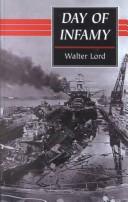
Day of Infamy by Walter Lord is the classic hour-by-hour narrative, built from hundreds of interviews with survivors on both sides. It is not analytical and does not pretend to be — it puts you on the ground, and it remains the most readable entry point sixty years on.
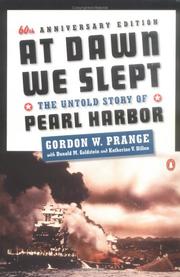
Then read At Dawn We Slept by Gordon Prange, which is the standard scholarly account and the product of decades of research in American and Japanese sources. It is long and it is the single most important book here. Prange treats the attack as a Japanese operation with its own planning history rather than only as an American failure, and his conclusions about the surprise remain the mainstream position.
Why Japan attacked at all
Japan 1941 by Eri Hotta is the essential complement, and the book most Anglophone readers are missing. Working from Japanese sources, Hotta reconstructs a decision-making process in which many senior figures privately expected to lose and nobody was willing to be the one who stopped it. It reframes the attack as the outcome of a political system rather than a strategic masterstroke.
Countdown to Pearl Harbor by Steve Twomey narrows to the final weeks and is particularly good on the intelligence picture as it looked from Hawaii at the time — which is a different thing from how it looks with the traffic assembled afterwards. Craig Nelson's Pearl Harbor is a broad modern narrative synthesis; it overlaps heavily with Lord and Prange, so treat it as an alternative to one of them rather than an addition.
The intelligence question, properly framed
Pearl Harbor; warning and decision by Roberta Wohlstetter is the intellectual centrepiece of this path and one of the most influential works ever written about intelligence failure. Her argument is that the warnings were real but were buried in a vastly larger volume of irrelevant and contradictory information — signal against noise — and that the failure was structural rather than conspiratorial. Read it slowly; the framework has been applied to every surprise attack since.
The accusations, and where scholarship stands
Two books put the contrary cases. Pearl Harbor betrayed by Michael Gannon argues that Admiral Kimmel and General Short were scapegoated for failures that belonged in Washington — a serious argument advanced by a serious historian, and one that has had partial success in the political arena. Infamy by John Toland goes considerably further, arguing that Roosevelt and his circle had advance knowledge and permitted the attack for political reasons.
It should be stated plainly rather than implied: the advance-knowledge thesis is rejected by the large majority of historians who have worked on the sources, including Prange, and the specific evidentiary claims Toland relies on have been contested in detail. The narrower Gannon argument about the treatment of the Hawaii commanders remains genuinely open. Read both, and read them last, so you are judging them against the record rather than forming the record from them.
Where the story goes next
The final books widen out beyond the attack. Pacific Crucible by Ian Toll opens the best modern narrative history of the Pacific naval war; Shattered sword by Parshall and Tully rebuilds Midway from Japanese records and, in the process, demolishes several long-repeated claims that originated with one Japanese officer's postwar account — including assertions about Pearl Harbor itself. The rising sun by John Toland and Eagle against the sun by Ronald Spector are the older single-volume histories of the war with Japan; Spector is the more analytical.
Follow the full reading path to keep the sequence intact.
Follow the full ordered path here: The Attack on Pearl Harbor: The Best Books to Read First.