Terra Ignota Reading Order: Where to Start
Terra Ignota is four books that behave like two. Too Like the Lightning and Seven Surrenders were written as a single novel and split by the publisher, so the first volume simply stops rather than ends; The Will to Battle and Perhaps the Stars then carry the story to its conclusion. There is no alternative order and no entry point other than the first page, so this path is about pacing and preparation rather than sequencing.
Start here: the novel that was cut in half
IntermediateGet through the deliberately disorienting opening and understand why volumes one and two must be read as one continuous book.
▸ Study plan for this stage
Pace: 6-8 weeks for the pair, and budget the first two of those for the opening 150 pages of Too Like the Lightning alone. This is a hard read and pretending otherwise sets you up to quit: the narrator writes in a mannered eighteenth-century pastiche, addresses you directly and argues with you, invents a
- Mycroft Canner is a convicted mass murderer serving a sentence as a public servant, and he is the only voice you get — every fact in the sequence arrives through someone with reasons to shape it
- The Hives: seven voluntary, non-geographic nations you choose at adulthood, which is the world's central political invention and the thing to get straight early
- Public religion is illegal and spiritual counsel is delivered one-to-one by sensayers — the reason a child who can perform miracles is a political emergency rather than a wonder
- Mycroft's pronouns are an argument, not a description: he genders characters by classical archetype, and the narrative repeatedly tells you he is doing this on purpose
- The eighteenth-century pastiche is load-bearing — Voltaire, Diderot and Sade are structural sources, not decoration, and the Sade material means volume two contains explicit sexual violence
- The seven-page 'set-set' and bash' vocabulary: family units, data-native humans, and the Cousins' service culture, all introduced without explanation and clarified by repetition
- Volumes one and two are one novel: the political conspiracy revealed in Seven Surrenders is what the entire first volume was quietly describing
- Who is Mycroft writing for, and what does his stated audience let him omit or over-explain?
- What are the seven Hives, and what does choosing one at adulthood actually commit you to?
- Why is Bridger a crisis for this civilisation rather than a miracle it could absorb?
- What is Mycroft's rule for assigning 'he' and 'she', and where does the text tell you he is breaking his own rule?
- By the end of Seven Surrenders, who has been running the world's stability, and at what price?
- What did Mycroft do, and how long does the novel make you wait to be told plainly?
- Keep a running glossary of the first fifty invented terms as you meet them. Everyone who finishes these books either did this or reread the opening.
- Do not look terms up online before Seven Surrenders — the wikis spoil the conspiracy directly. Tolerate not-knowing; the book is designed around it.
- After Seven Surrenders, reread the first thirty pages of Too Like the Lightning. Almost every reveal is visible there in plain sight.
- Whenever Mycroft addresses you as reader, note what he is trying to get you to accept at that moment.
- If you bounce off the first eighty pages, try reading them aloud. The prose is written for the ear and the pastiche clicks faster out loud.
Next up: With the conspiracy exposed and the world order broken, the sequence stops being a mystery and becomes a study of how a civilisation talks itself into war.

A twenty-fifth-century world of flying cars, voluntary nations and outlawed public religion, narrated by a convict in the style of an eighteenth-century philosophe. The first eighty pages throw invented vocabulary and pronoun games at you with no glossary; that is intentional. Have Seven Surrenders in hand before you start, because this book does not have an ending.
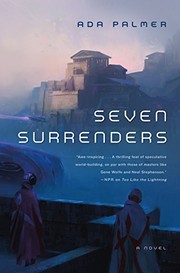
The second half of the same novel, resolving everything the first volume set up and detonating the world's political order. Read it immediately after, not months later.
The war
BeginnerFollow the sequence into its second movement, where the narration itself becomes a contested document.
▸ Study plan for this stage
Pace: 4-5 weeks. The Will to Battle is the slowest of the four and the volume where most readers stop, so plan for that rather than being surprised by it — the plot advances less per page and the argument advances more. About 25 pages a day; do not leave a long gap after Seven Surrenders, because this boo
- This is a book about the interval before a war, not a war — the tension is that everyone can see it coming and no institution can stop it
- Hobbes appears as an interlocutor Mycroft argues with directly; Leviathan's state-of-nature question is the volume's actual subject
- Thucydides supplies the shape: a fragile peace, a set of speeches, and an inevitability the participants keep denying
- The narration becomes a contested document — Mycroft's reliability, and even his identity as narrator, come under pressure from inside the text
- Achilles and the classical layer stop being ornamental and become plot
- Legitimacy after the reveal: with the hidden government exposed, every Hive has to justify its right to exist and none can
- Why the slowness is doing work — the book is enacting the deliberation it describes
- What is the specific case Mycroft argues against Hobbes, and does the novel side with him?
- Who is narrating, and where in this volume does that question stop being rhetorical?
- Which Hive's claim to legitimacy survives the reveal best, and why?
- What would have had to happen to prevent the war, and at what point did it become impossible?
- How does Palmer use the classical material to make a science-fiction war feel foreordained?
- List every character who tries to stop the war and what stops them. The list is the book's argument.
- Read the Hobbes passages twice — once as plot, once as essay. They are both.
- Note each place the text signals that the narrating voice has changed hands or been edited.
- If you stall here, skim your own stage-one glossary rather than restarting; the difficulty is momentum, not comprehension.
Next up: The war finally breaks, and the last volume both fights it and changes how it is being told.
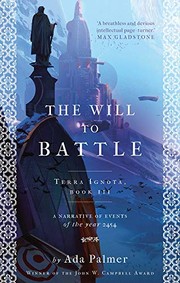
The slow slide into a war everyone can see coming and nobody can stop, structured around Hobbes and Thucydides. Slower and more argumentative than the first two, and the point at which readers either commit or stop.
The end
BeginnerFinish the sequence and see what the whole elaborate structure was built to do.
▸ Study plan for this stage
Pace: 6-8 weeks. Perhaps the Stars is the longest of the four at roughly 600 pages and contains a sustained formal experiment in its middle section that will slow you down — that is intended and it is the payoff for three volumes of setup. Do not leave a long gap before starting it; if more than a couple
- The formal experiment mid-book: the narration changes shape, and the change is the argument the whole sequence has been building toward
- The Odyssey replaces the Iliad as the structuring text once the war is underway
- Every question raised in volume one — Bridger, the Hives, the sensayers, Mycroft's crime — is answered, and several answers are deliberately unsatisfying in ways the text defends
- The sequence's real subject turns out to be who gets to narrate history and what that power costs
- Distributed narration: multiple hands on the manuscript, which retroactively reframes everything you accepted in volume one
- The ending's position on progress and the Enlightenment project, which is neither triumphant nor cynical
- Why the four books repay a full reread more than almost any recent SF sequence
- What does the mid-book formal shift do that ordinary narration could not have done here?
- Was Mycroft ever a reliable narrator, and does the ending require him to have been?
- What is the sequence's final answer about Bridger, and does it justify three volumes of buildup?
- Who wins the war, and does the novel treat that as the important question?
- Having finished, what was the eighteenth-century pastiche for?
- When the formal experiment starts, slow down rather than skimming — readers who push through it report the ending landing flat.
- Write a one-paragraph account of what Terra Ignota is about, then compare it to the one you would have written after volume one.
- Reread the opening chapter of Too Like the Lightning as the last thing you do. It reads as a different book.
- Note the passages where the text is openly unreliable rather than covertly so, and ask what changed to permit that.
Next up: With the fiction finished, the historian who wrote it is worth meeting directly.
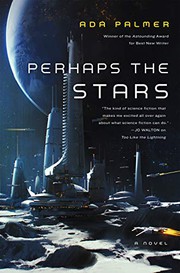
The longest book of the four and the conclusion, with a formal experiment in the middle that pays off three volumes of setup. It only works if the first three are reasonably fresh, so do not leave a long gap before it.
If you want more Palmer
BeginnerRead the historian underneath the novelist, which retrospectively explains most of Terra Ignota's preoccupations.
▸ Study plan for this stage
Pace: 3-4 weeks, and entirely optional — the novels are complete without it. Read it as nonfiction at whatever pace you read history, roughly 25 pages a day. Read it after Perhaps the Stars, never before.
- Palmer is a working historian of the Renaissance, and Inventing the Renaissance argues the period we picture was largely constructed after the fact
- The book's central move — that historical narratives are made by later people with agendas — is precisely Terra Ignota's anxiety about who writes history
- Where the novels' Enlightenment fixation comes from: the same scholarly interest in how a period gets branded as an age of light
- Reading a novelist's scholarship as source material rather than as trivia — the arguments here are visibly the arguments Mycroft has
- The difference between how Palmer handles evidence as a historian and how Mycroft handles it as a narrator, which is the whole joke of the sequence
- Why 'progress' is a contested word in both books, and what Palmer thinks it costs to believe in it
- What does Palmer say was invented about the Renaissance, and by whom?
- Where does her account of constructed history line up with Terra Ignota's distributed, contested narration?
- How does her professional handling of unreliable sources compare with Mycroft's?
- Does knowing her scholarship change your reading of the sequence's ending, or only explain it?
- What in the novels now looks like a historian's in-joke rather than worldbuilding?
- Mark every passage that could be a footnote to something Mycroft asserts.
- Write a short comparison of how each book treats a source it distrusts.
- Return to one Terra Ignota philosophical set-piece and reread it with Palmer's historiographical argument in mind.
Next up: This closes the path: the scholarship behind the sequence is the last piece, and there is nothing further to read in order.

Palmer is a professional historian of the Renaissance, and this is her argument that the period we imagine was largely constructed afterwards. Read after the novels: it makes clear where Terra Ignota's Enlightenment obsessions and its scepticism about historical narrative come from.
Discussion
Keep reading
Paths that share books, cover the same subject, or open a related topic.