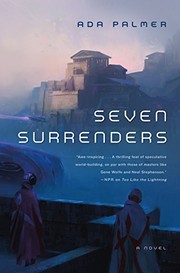
Start with Too Like the Lightning, and do not start it without Seven Surrenders already on the shelf. Volume one does not end — it stops mid-scene. The two were written as a single manuscript and split by the publisher for length, so treating them as one book is not a preference, it is what they are.
There is no second candidate for an entry point. The sequence is four volumes in strict publication order with no prequels, no side stories and no chronological alternative. The only real decisions are whether to start at all, and whether to finish.
The honest warning, up front
This is a hard read and pretending otherwise sets you up to quit around page eighty. The narrator writes in a mannered eighteenth-century pastiche, addresses you directly and argues with you. A whole political vocabulary arrives with no glossary. Gendered pronouns are assigned by the narrator's own theory rather than by the characters, and the text repeatedly tells you he is doing this on purpose.
Budget your first two weeks for the opening 150 pages alone, then 30 to 40 pages a day once you are through. Keep a running glossary of the first fifty invented terms; everyone who finishes these books either did that or reread the opening. And do not look terms up online before finishing Seven Surrenders — the wikis spoil the central conspiracy directly.
Two content notes that belong in an order guide rather than a review. Mycroft, the only voice you get, is a convicted mass murderer serving his sentence as a public servant. And the eighteenth-century sources here are structural rather than decorative — Voltaire, Diderot and Sade — which means volume two contains explicit sexual violence.
The first novel, in two volumes
Too Like the Lightning and Seven Surrenders.
The world runs on Hives: seven voluntary, non-geographic nations you choose at adulthood. Public religion is illegal and spiritual counsel is delivered one to one, which is why a child who can perform miracles is a political emergency rather than a wonder. The political conspiracy revealed in Seven Surrenders is what the entire first volume has been quietly describing, and almost every reveal is visible in plain sight in the first thirty pages once you know to look.
The war
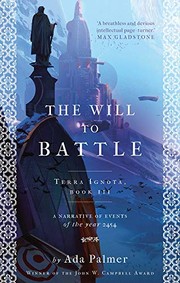
The Will to Battle is the slowest volume and the one where most readers stop. Plan for that rather than being ambushed by it: the plot advances less per page and the argument advances more, because the book is about the interval before a war rather than a war. Hobbes appears as an interlocutor Mycroft argues with directly; Thucydides supplies the shape. The slowness is doing work — the book enacts the deliberation it describes — but that is an explanation, not a promise you will enjoy it.
Do not leave a long gap after Seven Surrenders. This volume assumes the previous two are fresh.
The end
Perhaps the Stars is the longest at roughly 600 pages and contains a sustained formal experiment in its middle section that will slow you down. That is intended, and it is the payoff for three volumes of setup — the narration changes shape, and the change is the argument the whole sequence has been building toward. Every question raised in volume one is answered, and several answers are deliberately unsatisfying in ways the text defends.
If more than a couple of months have passed since The Will to Battle, reread its last fifty pages first.
Where to stop, and the one non-novel
Two honest stopping points exist. After Seven Surrenders you have a complete novel with a resolved conspiracy, and readers who bounce off the slowness of volume three lose less than they fear. After Perhaps the Stars you have the whole thing, and it is the version worth having.
Inventing the Renaissance is not a novel and not part of the sequence. Palmer is a working historian of the Renaissance, and the book argues that the period we picture was largely constructed after the fact — which is precisely Terra Ignota's anxiety about who gets to narrate history. Read it after Perhaps the Stars, never before, and only if you want to see the arguments Mycroft has being made by a historian in her own voice.
If you want other sequences with this much structure to them, the rest of the site is organised the same way.
Follow the full ordered path here: Terra Ignota Reading Order: Where to Start.