Tango Music and Dance: The Best Books to Read, in Order
Tango is two subjects with two literatures that only partly overlap: a body of recorded music made mostly between 1935 and 1955 by the orquestas típicas of Buenos Aires, and a social dance with its own codes, scenes and history. Books that serve one often serve the other badly, so every entry here says which it is for. The path starts with accessible cultural histories, moves to the origins on both sides of the Río de la Plata and the global craze of the 1910s, then to the music in detail, then to Piazzolla and what came after him, and ends with the dance itself and the sharpest scholarly arguments about what it means. Several important works exist only or primarily in Spanish, and one Spanish-language record turned up in our own resolution and was left off for that reason.
Getting inside it
BeginnerStart with three books that make tango legible from outside: what the dance feels like, where it came from, and what a person actually does when they fall into it. None of these is a technical account, and that is the point of the stage.
▸ Study plan for this stage
Pace: Two and a half months for 932 pages, and each of the three serves a different reader. Thompson's Tango is 384 pages — our record displays the bare title, and it is the Yale art historian's account of tango's African, Andalusian and criollo sources; four weeks. It argues for a much larger Black contr
- Tango as two subjects with two literatures: a body of recorded music, and a social dance with its own codes and history. Books that serve one often serve the other badly, and knowing which you are reading is the discipline of the whole path.
- Thompson's argument for African and Afro-Argentine contributions to tango's formation, made through choreographic and musical evidence, and the fact that the weight of those contributions is contested.
- The criollo and Andalusian streams, and the Río de la Plata port context in which they combined — established here and covered historically in the next stage.
- The embrace as the technical and social centre of the dance. Denniston explains what it does mechanically and why the dance is unthinkable without it.
- Improvisation and lead-and-follow: social tango is not a sequence of memorised figures but a real-time negotiation, which is why watching a stage performance misleads about what the dance is.
- The milonga as an institution — the social dance event with its own codes of invitation, floor movement and etiquette, which Kassabova describes from the inside.
- That a memoir is evidence of a particular kind: one person's decade, honestly reported, which conveys the texture of a subculture and does not establish anything general about it.
- What is Thompson's argument about tango's sources, what evidence does he use, and where do other accounts differ from him?
- What does the embrace do mechanically, on Denniston's account, and why does she treat it as the definition of the dance?
- What does it mean that social tango is improvised, and how does the lead-and-follow relationship actually work?
- What is a milonga, and what codes govern it?
- Which of these three books would you give to a musician, which to a prospective dancer, and which to neither?
- Watch footage of social tango at a milonga and then of a stage tango performance, and list the differences. Denniston's distinction becomes obvious in five minutes.
- As you read Thompson, note every claim about African contribution and the type of evidence offered for each — choreographic, musical, documentary. The distribution tells you where his case is strongest.
- Read Denniston's chapters on the embrace and then try holding the position with someone, without attempting to move. It is instructive and it takes two minutes.
- Take one milonga code Kassabova describes and find out whether it is observed at any event near you. The variation is itself a finding.
Next up: You know what the dance is and what it feels like to be inside it, which is the point to ask where it came from and what happened when it left.
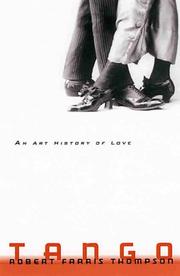
The Yale art historian's account of tango's African, Andalusian and criollo sources, arguing for a much larger Black contribution to its formation than the standard Argentine story allows. Our record displays the bare title 'Tango'; start here, and read the argument as a strong case rather than a settled one.
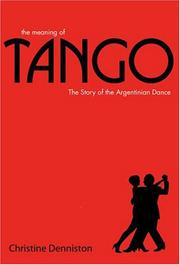
Written by a dancer and teacher, and the clearest available explanation of how the dance actually worked in the golden age — the embrace, the improvisation, why it is led rather than choreographed. This is the dance book of the opening stage; read it alongside Thompson's history.

A memoir of ten years spent chasing tango across Buenos Aires, Auckland and Europe, and honest about the obsession and the loneliness of milonga culture. Read it third, for what the subculture is like from the inside rather than from a scholar's seat.
Origins and the first global craze
BeginnerEstablish the history: the Río de la Plata port districts of the 1880s and 1890s, the crossing to Paris around 1912, and the sanitised ballroom tango that came back. Understanding that split explains almost every later argument about authenticity.
▸ Study plan for this stage
Pace: Five to six weeks for 471 pages, the shortest stage on the path and the one that explains most of the later arguments. Baim's Tango is 224 pages — our record displays the bare title, and this is the second book on this path so catalogued, the other being Thompson's in the previous stage, so check th
- The Río de la Plata origins in the port districts of Buenos Aires and Montevideo, among an immigrant and working-class population, in the 1880s and 1890s.
- That tango is a Río de la Plata form rather than a purely Argentine one, with Montevideo's contribution routinely under-credited in accounts written from Buenos Aires.
- The Paris crossing around 1912 and the international craze that followed, which made the dance respectable in Buenos Aires by first making it fashionable abroad.
- What ballroom adaptation did to it: standardised figures, an open hold, and a fixed sequence replacing improvisation — which is precisely what Denniston's account of the golden-age dance is written against.
- Baim's evidence base of period dance manuals and sheet music, which shows what was actually taught and sold rather than what was later remembered.
- The authenticity argument and its origin. Once a sanitised export version returned, every subsequent generation had two versions to choose between, and the choice became political.
- Tango's fortunes as a proxy for Argentina's. Winter's account ties the golden age, the long decline after the 1950s, the suppression under the dictatorship and the revival after 2001 to the country's political and economic history.
- What a journalist's history gives and does not give: access, narrative and living witnesses, without the archival apparatus Baim brings.
- Where and among whom did tango develop, and what is the evidence for the port-district account?
- What happened to the dance in Paris and in North American ballrooms, and what specifically was changed?
- How does Baim's use of dance manuals and sheet music change what can be established about the 1910s craze?
- How did the international craze affect tango's status in Buenos Aires itself?
- Trace tango's fortunes against Argentina's twentieth century from Winter. Which political events had direct effects on the music and the milongas?
- What is the authenticity argument actually about, and which side does each book on this stage take?
- Find images or descriptions of ballroom tango figures from a 1910s manual and compare them with footage of social tango today. The gap is what the craze produced.
- Build a timeline with tango on one line and Argentine political history on the other, from Winter. The correlations are striking and they are the argument.
- Take one piece of period sheet music Baim discusses and find a recording of the tune. Period publishing and period performance are not the same thing.
- Write a paragraph on what authenticity could mean for a dance with this history, and then check it against what Denniston and Winter each seem to assume.
Next up: The dance survived because of a body of recorded music, and the next stage is about learning to hear it.
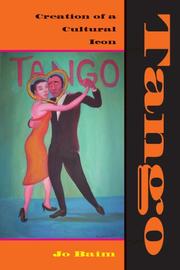
The most careful account of tango's early spread into Europe and North America and of what the dance was changed into on the way, using period dance manuals and sheet music. Our record displays the bare title 'Tango'; it is the best single source on the 1910s craze.
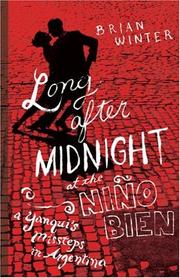
A journalist's account of learning tango in Buenos Aires that doubles as a history of Argentina's twentieth century — Perón, the dictatorship, the 2001 collapse — through the music. The best book for understanding why tango's fortunes track the country's.
The music
IntermediateThis stage is for listeners. Learn the golden-age orchestras as distinct artistic personalities — D'Arienzo, Troilo, Di Sarli, Pugliese — and why dancers still choose music by orchestra and singer rather than by song. Listen while you read; none of it works otherwise.
▸ Study plan for this stage
Pace: Two and a half to three months for 847 pages, and this stage is for listeners and does not work without recordings playing. Lavocah's Tango stories is 240 pages and is the right first music book: what to listen for, how the orquestas típicas differ from each other, and how the recordings are organis
- The orquesta típica: the standard ensemble of bandoneóns, violins, piano and bass, and the fact that the arrangement rather than the tune is what distinguishes one orchestra's version from another's.
- Why the same tango exists in many recordings and dancers care which one. The composition is shared; the reading is not, and the reading is what you dance to.
- The four canonical orchestras as personalities — D'Arienzo's insistent rhythm, Troilo's lyricism, Di Sarli's smoothness, Pugliese's dramatic contrasts — and the fact that these are recognisable by ear within a few bars.
- The singer as part of the identity. A given orchestra with a given vocalist is effectively a distinct entity, which is why recordings are catalogued that way.
- The tanda and the cortina: at a milonga, music is played in sets of three or four by one orchestra, separated by a non-tango break, which is the practical reason dancers learn orchestras.
- The three related rhythms danced at a milonga — tango, vals and milonga — which have different feels and different repertoires.
- Lavocah's practical orientation: he writes for people who will choose what to play or what to dance to, which is a different task from writing music history.
- Piazzolla's formation inside this tradition, playing in Troilo's orchestra before the break that the next stage covers, which is why the biography belongs here rather than there.
- What instruments make up an orquesta típica, and what does the bandoneón contribute that nothing else does?
- Take one tango recorded by several orchestras and describe how each treatment differs. What is the arranger deciding?
- Characterise D'Arienzo, Troilo, Di Sarli and Pugliese in one sentence each, and say what you would listen for to identify them.
- What is a tanda and why is it organised by orchestra rather than by composer?
- How do tango, vals and milonga differ rhythmically, and how would you tell them apart?
- What did Piazzolla learn inside the golden-age orchestras before he left them?
- Listen to the same tango in four recordings by different orchestras, back to back, twice. This single exercise does more than any chapter to teach the distinctions.
- Build a tanda of your own: four recordings by one orchestra with one singer, chosen to work as a set. Then explain each choice.
- Take one orchestra from Tango Masters and listen through its recordings in chronological order while reading the corresponding pages. The career shape becomes audible.
- Identify a dozen recordings by ear as tango, vals or milonga before checking. Getting this wrong at a milonga is the most common beginner's mistake.
- Read Azzi and Collier on Piazzolla's years with Troilo and then listen to a Troilo recording from that period. What he later rejected is present in what he was playing.
Next up: Piazzolla left the orchestras and made something the tango world would not dance to, which is the split the next stage is about.

The best English-language introduction to tango music for dancers: what to listen for, how the orquestas típicas differ, and how the recordings are organised. Short, practical and the right first music book.

Lavocah's deeper series on individual orchestras, going recording by recording through a bandleader's career. Read it after 'Tango Stories' and only for the orchestras you already want to know better — this is a study, not a survey.
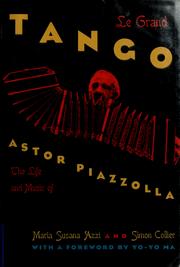
Azzi and Collier's biography of Astor Piazzolla, and the standard life in English, built on extensive interviews. Placed here as the bridge into the next stage: Piazzolla comes out of the golden-age orchestras before he breaks with them.
Piazzolla, and tango after the golden age
IntermediateFollow the split. Piazzolla's nuevo tango was rejected by much of the tango world as undanceable and is now the version most non-Argentines have heard; understand both the music and the resentment. Then look at what tango became once the state and the tourist economy took an interest in it.
▸ Study plan for this stage
Pace: Five to six weeks for 478 pages, both books short and both essential to understanding what tango became. Gorin's Astor Piazzolla is 260 pages — our record displays it under that title — and is Piazzolla in his own voice, from conversations recorded shortly before his death, on Gardel, on Nadia Boula
- What nuevo tango changed: harmonic language, extended forms, jazz and classical influence, and an intended audience seated rather than dancing.
- The undanceability objection, which is a practical rather than a snobbish complaint — music written for concert listening does not supply what a dancer needs, and dancers said so.
- Piazzolla's formation and his break, which are continuous: he had the orchestral training and then deliberately used it against the tradition that gave it to him.
- Nadia Boulanger's role in his development, and the well-known story of her telling him to write his own music rather than imitating European models, which he tells in his own words.
- Piazzolla's contempt for the traditionalists as he expresses it in the interviews, which is evidence about the dispute and also a party to it.
- That Piazzolla is the tango most non-Argentines have heard, which distorts the picture of the tradition for anyone coming from outside.
- Luker's subject: tango as heritage and export, sustained by cultural funding bodies, festivals and a tourist economy rather than by a living social dance culture alone.
- The uncomfortable implication of Luker's account, which is that a revived tradition is shaped by the institutions that revive it, and that the market for authenticity is itself a market.
- What specifically did Piazzolla change about tango's harmony, form and instrumentation?
- Why did dancers object to nuevo tango, and is the objection defensible on its own terms?
- How does Piazzolla characterise the traditionalists, and what should you discount in a participant's account of his own dispute?
- What did Boulanger tell him, on his own telling, and what did it change?
- What does Luker show about how contemporary tango in Buenos Aires is funded and organised?
- If a tradition is sustained by heritage funding and tourism, what does that change about it? Answer using Luker's evidence rather than intuition.
- Listen to a Piazzolla piece and a Troilo recording from stage three back to back, then try to imagine dancing to each. The objection explains itself.
- Read Gorin's interviews and mark every claim Piazzolla makes about other musicians. Then check two of them against Azzi and Collier.
- Trace one Piazzolla work back to a golden-age form it derives from. The continuity is stronger than the rhetoric on either side suggests.
- Take one institution Luker describes and find out what it currently funds. The gap between the policy language and the milonga is the book's subject.
- Write a paragraph on whether nuevo tango is tango, and note which of the arguments you use are musical and which are about who gets to decide.
Next up: The music has been argued over for seventy years, and the dance has an argument of its own that the music literature barely acknowledges.

Piazzolla in his own voice, from conversations recorded shortly before his death, on Gardel, Nadia Boulanger and his contempt for the traditionalists. Our record displays it as 'Astor Piazzolla'; read it directly after Azzi's biography, as the subject answering back.

An ethnography of tango in contemporary Buenos Aires as cultural policy, heritage and export product — funding bodies, festivals and the economics of a revival. The most current book on the path, and the least romantic.
The dance, and the arguments about it
BeginnerClose on the dance and on the hardest scholarship. One book teaches steps; the others ask what the embrace means, who it serves, and how tango's image was constructed for export. Read them together and note that the practical and the critical literatures rarely acknowledge each other.
▸ Study plan for this stage
Pace: Three months for 860 pages, and the four books here barely acknowledge each other's existence, which is itself the point. Paz and Hart's Gotta tango is 193 pages and is a practical instruction book for social tango — the walk, the embrace and the milonga codes explained by teachers who dance it; two
- The practical and the critical literatures as separate worlds. A manual and a critical ethnography of the same dance rarely cite each other, and reading both is the only way to see the whole subject.
- What a tango manual can and cannot do: it can describe the walk, the embrace, the basic elements and the milonga codes; it cannot supply the feedback of a partner and a teacher, which is where the dance is actually learned.
- The open-embrace and close-embrace split, which Merritt shows is a dispute about aesthetics, about bodies and about who the dance is for, not merely a difference of technique.
- Tango nuevo as a movement, with its own pedagogy and its own analysis of the dance's mechanics, and the traditionalist reaction to it — the same structure of dispute as the Piazzolla argument in the previous stage.
- Savigliano's central claim: that tango's passion was produced as an export commodity for European consumption, and that exoticism is constitutive of the form rather than an accretion on it.
- What that argument does to the reader's own pleasure in the dance, which Savigliano intends to unsettle rather than to dispel, and which is the reason to read her last among the critical books.
- Taylor's insistence that the dance carries Argentina's history of political violence in the body, argued through a fragmentary and autobiographical form rather than a conventional academic one.
- That form is an argument in Taylor's book. A fragmentary text with a flipbook in the margins is making a claim about memory that a linear account could not make.
- What can you learn about tango from a manual, and at what point does it stop being useful without a teacher?
- What is the open-embrace and close-embrace dispute actually about, on Merritt's evidence?
- How does the tango nuevo argument in the dance community parallel the Piazzolla argument in the music?
- State Savigliano's thesis precisely. What evidence does she use, and what would count against it?
- How does Savigliano's argument change how you read Thompson from stage one, or Kassabova's memoir?
- What is Taylor claiming about tango and political violence, and what does her fragmentary form contribute that a linear account could not?
- Take the walk as Paz and Hart describe it and work on it for twenty minutes with a partner. Then read their description again. The gap between the two is what a book cannot cover.
- Watch footage of open-embrace and close-embrace dancing and describe the difference in what each makes possible. Merritt's dispute is visible.
- Read Savigliano's chapter on exoticism and then reread a passage of Kassabova's memoir from stage one. Note precisely what has changed about how the memoir reads.
- Take one claim from Savigliano and test it against the historical evidence in Baim from stage two. Where they meet, the argument is strongest.
- Read Paper Tangos in one sitting, working the flipbook, and then write one page on what the form did that its content alone would not have.
- Write the one-page account of tango you would now give someone, separating what belongs to the music, what to the dance, and what to the history. Doing that separation is the whole path.
Next up: The path ends with the dance itself, which is the one part of this subject that cannot be reached from a book at all.
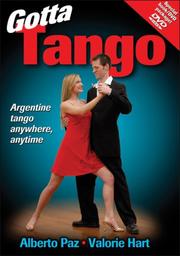
A practical instruction book for social tango, with the walk, the embrace and the milonga codes explained by teachers who dance it. Included so the dance is represented by an actual method rather than only by writing about the dance; it is a manual, not a study.

An ethnography of the tango nuevo movement in Buenos Aires and of the split between open-embrace and close-embrace dancers, written by a dancer and anthropologist. The best account of what the contemporary dance community actually argues about.
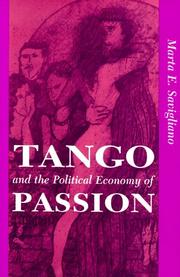
The major critical study, arguing that tango's passion was itself a commodity produced for European consumption and that exoticism is built into the form. Difficult and deliberately unsettling — read it last, and read it against the pleasure the rest of this path describes.

An anthropologist's fragmentary book on tango, memory and political violence in Argentina, written partly as autobiography and with a flipbook of a dancing figure in the margins. Formally strange and the right closing note: it insists that the dance carries the country's history in the body.
Discussion
Keep reading
Paths that share books, cover the same subject, or open a related topic.