Salsa and Latin Dance Music: The Best Books to Read, in Order
Salsa is a New York word for a Cuban music, played largely by Puerto Ricans, that then travelled back to Latin America and was reinvented in Cali and Caracas. This path follows that route: Cuban roots first, because the son, the rumba and the clave are where everything starts; then the long Latin presence in North American popular music; then salsa proper and the Fania era; then the return migration; and finally the two things books usually blur together — the music as a musician plays it, and the dance as a dancer does it, which are separate subjects with separate literatures. Several key works were written in Spanish and reach English readers in translation, and each entry says which.
Cuba, where it starts
BeginnerUnderstand the Cuban foundation: son, danzón, rumba, the African and Spanish streams that fed them, and above all the clave — the two-bar rhythmic key that everything in this music is organised against. Nothing later on this path makes sense without it.
▸ Study plan for this stage
Pace: Three months for 1,368 pages, and everything on this path depends on getting the clave straight here. Sublette's Cuba and Its Music is 688 pages covering the African and Iberian sources through to 1952, written by a musician who explains rhythm in a way non-musicians can follow; six to seven weeks a
- Clave as the organising principle: a two-bar rhythmic key, in three-two or two-three orientation, against which every other part in the ensemble is positioned. Getting this wrong is the standard beginner's error and it is audible.
- Son as the foundational form — its instrumentation, its structure moving from a sung section into an open call-and-response montuno, and its spread from eastern Cuba to Havana.
- Rumba as a distinct Afro-Cuban complex of drumming, song and dance, not to be confused with the ballroom rhumba the next stage covers.
- Danzón and the charanga instrumentation of flute and strings, which is a separate lineage from son and produces a different repertoire and a different dance.
- The African and Iberian streams and how they combine differently in different forms — the point of Carpentier's book, and the reason Sublette begins centuries before the music exists.
- Tumbao and montuno as the specific repeating figures the bass and piano play, which is what a musician means by the groove and what the guidebook in the final stage teaches directly.
- Carpentier's status as founding source. He is a novelist and a musicologist, writing in 1946 from Cuban archives, and later scholarship revises him without displacing him.
- That the genre names in Leymarie describe combinations of rhythm, instrumentation and dance rather than styles of composition, which is why a survey organised by genre is useful.
- What is clave, what are its two orientations, and what happens musically when a band crosses it?
- Describe the structure of a son, from the opening section through to the montuno. What changes at the transition?
- Distinguish rumba from danzón in instrumentation, rhythm and social setting.
- What does Carpentier establish that later writers depend on, and where has subsequent scholarship revised him?
- Take three genres from Leymarie and say what defines each: the rhythm, the ensemble or the dance?
- What is a tumbao and what is a montuno, and how do they relate to the clave?
- Find a recording of a classic son and clap the clave through it. If you lose it at the montuno, start again — this is the exercise the whole path rests on.
- Listen to one example each of son, danzón and rumba back to back and write down what distinguishes them by ear rather than by description.
- As you read Sublette, keep a running list of every rhythm he names with one recording attached to each. That list is more useful afterwards than any set of notes on the text.
- Read Carpentier's account of one form and then Sublette's account of the same form, noting what seventy years of scholarship added.
- Use Leymarie as an index: pick five genre entries, find a recording of each, and see whether you can hear what the entry describes.
Next up: The Cuban forms are in your ear, which is the condition for hearing what happened to them once they travelled north.

A vast, exhilarating history from the African and Iberian sources through to 1952, written by a musician who explains rhythm in a way non-musicians can follow. Start here and accept that it is long; there is no better account of how the clave came to organise an entire hemisphere's dance music.
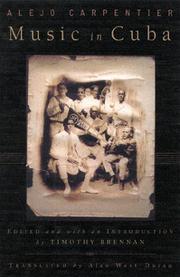
The 1946 study by one of Latin America's great novelists, the founding work of Cuban musicology and the source Sublette and everyone else builds on. Written in Spanish as 'La música en Cuba'; our record is Alan West-Durán's English translation with Timothy Brennan's introduction, which is the edition to read.
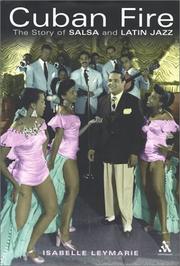
A genre-by-genre survey of Cuban dance music and its diaspora — mambo, chachachá, charanga, boogaloo — that works well as a reference once Sublette has given you the narrative. Read it third, for breadth rather than argument.
The music comes north
BeginnerTrace the Latin presence in North American popular music from the tango craze and the rhumba of the 1930s through the mambo era at the Palladium. The point of this stage is that salsa did not arrive in New York — it was assembled there, out of communities that had been playing for fifty years.
▸ Study plan for this stage
Pace: Two and a half months for 883 pages, all three serving the music and its social history rather than the dance. Roberts's The Latin tinge is 270 pages and goes first; three weeks, and it is the pioneering account of how Latin American music shaped jazz, rock and American popular song, tracing the hab
- The habanera figure as the earliest and most durable Latin element in North American popular music, audible in ragtime and in early jazz long before any Latin band was famous.
- The successive crazes — the tango of the 1910s, the rhumba of the 1930s, the mambo of the 1950s — each of which imported a simplified version of a living tradition and each of which left musicians behind when it passed.
- Ballroom rhumba as a commercial adaptation quite distinct from Cuban rumba, which is the clearest single case of what the crazes did to the forms they borrowed.
- The Puerto Rican musical community in New York between the wars, which Glasser shows working continuously across genres and languages, decades before salsa existed as a category.
- How the recording industry's racial categorisation shaped repertoire: what a musician was allowed to record depended on how the company classified them, which is a constraint on the historical record itself.
- The Palladium era and the mambo big bands, with Machito's ensemble bringing Cuban rhythm sections together with jazz arranging.
- Interview-based history as evidence. Salazar's material is recollection, decades after the fact, and it is both the richest source available for the period and one that needs the usual care.
- Why the assembled-in-New-York framing matters: it makes salsa a diasporic creation rather than an export, which is the argument the next stage is entirely about.
- Trace the habanera figure through Roberts's examples. Where does it appear that you would not have expected?
- What did each of the successive crazes take from the source tradition, and what did it discard?
- How did the recording industry's categories affect what Puerto Rican musicians in New York recorded, on Glasser's evidence?
- What was distinctive about Machito's ensemble, musically, and what did it combine?
- What kind of evidence is Salazar's book, and what should you be careful about when using it?
- State the case that salsa was assembled in New York rather than imported. What in this stage supports it?
- Listen to a ragtime piece Roberts identifies as carrying the habanera and locate the figure by ear. Then do the same in an early jazz recording.
- Compare a Cuban rumba recording with a 1930s ballroom rhumba side. Write down every difference; the list is what commercial adaptation does.
- Build a timeline of the New York scene from Glasser and Salazar together, marking musicians on one line and institutions on another.
- Listen to one Machito recording and identify which elements come from the Cuban rhythm section and which from big-band jazz arranging.
- Take one anecdote from Salazar and check it against Glasser's documentary account of the same period. Note whether it is corroborated, contradicted or simply unavailable elsewhere.
Next up: Fifty years of accumulated practice is the material out of which the thing actually called salsa was made in the 1960s.
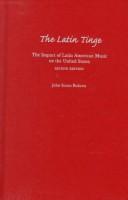
The pioneering account of how Latin American music shaped jazz, rock and American popular song, from the habanera in ragtime onward. The book that made the argument first, and still the clearest statement of it.
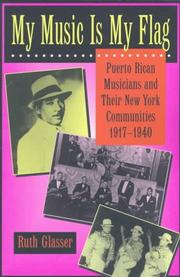
A historian's study of Puerto Rican musicians in New York between the wars, and of how migration, the recording industry and racial categorisation shaped what they were allowed to play. The essential social history behind the Palladium years.
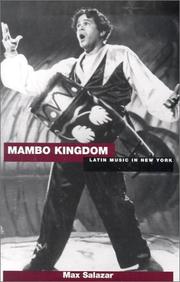
Salazar spent decades interviewing the musicians of the New York mambo scene, and this collects that reporting on Machito, Tito Puente, Tito Rodríguez and the dance halls. Anecdotal rather than analytical, and irreplaceable for the same reason.
Salsa itself
IntermediateGet to the thing named in the title: the New York music of the 1960s and 1970s, the Fania label, and the long argument about whether 'salsa' names a genre, a marketing category or a Puerto Rican claim on a Cuban tradition. That argument is unresolved and every book here takes a position in it.
▸ Study plan for this stage
Pace: Two and a half months for 791 pages, and every book here takes a position in an argument that is not settled. Flores's Salsa Rising is 260 pages and goes first; three weeks, and it is the history of New York Latin music from the 1960s generation onward and the strongest statement of salsa as a Puert
- The Fania era: a New York label that assembled a roster, a house band and a marketing category, and the extent to which the word salsa is that label's product.
- Flores's argument that salsa is a diasporic Puerto Rican creation, made from Cuban materials but shaped by a different community in a different city under different conditions.
- The counter-position, held by many Cuban musicians and writers, that salsa is son and its relatives under a commercial name, which is why the terminological argument carries real feeling.
- The 1960s and 1970s New York context — the boogaloo moment, the Latin soul crossover, and the neighbourhood and political conditions Flores places the music inside.
- Washburne's bandstand view: how the clave is negotiated in performance, what happens when a section crosses it, and how arrangements are actually put together and rehearsed.
- The economics of the working band — pay, personnel turnover, the club circuit — which explains far more about the recorded repertoire than aesthetics does.
- Interviews as evidence, and Padura's particular value: the musicians themselves take positions in the genre argument, and they do not agree with each other.
- That the disagreement is partly about credit and partly about nationality, which is why no book on this path is neutral and none pretends to be.
- State Flores's argument for salsa as a diasporic creation, and the strongest case against it.
- What did the Fania label actually do — musically, commercially and terminologically?
- What does Washburne show about how clave is handled in live performance that a listener would never learn from recordings?
- How do the economics of the working band shape what gets recorded and who plays on it?
- Take three of Padura's interviewees and set out where they disagree about what salsa is.
- Is salsa a genre, a marketing category or a claim? Defend an answer and say what would change your mind.
- Listen to a Fania-era recording and a Cuban son from stage one, then write down what is the same and what is not. That comparison is the whole terminological argument in audible form.
- Read Washburne's account of a rehearsal or a gig and then listen to a live salsa recording for the things he describes — crossed clave, arrangement cues, section entries.
- Chart the positions in the genre argument: for each book and each interviewee, what do they claim and what is their stake in it?
- Take one Padura interview and check its factual claims against Flores's history. Musicians' recollections and historians' chronologies do not always agree.
- Write a one-paragraph definition of salsa you would defend, then test it against three recordings from different decades and two of the positions in Padura.
Next up: A music made in New York became a Latin American music again, which is the part of the story the New York-centred books cannot tell.
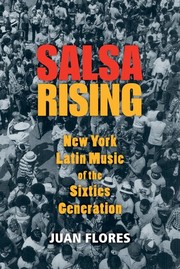
Flores's history of New York Latin music from the 1960s generation onward, and the strongest statement of salsa as a Puerto Rican and diasporic creation rather than a relabelled Cuban import. The pivotal book on this path — read it first in this stage.
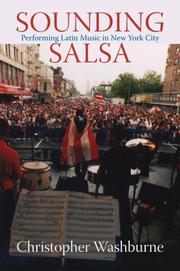
An ethnography by a trombonist who played the New York scene, covering how bands actually work, how the clave is negotiated in real time, and the economics of the gig. This is the book that serves the musician rather than the listener.

Interviews with the central figures — Rubén Blades, Papo Lucca, Juan Formell, Mario Bauzá — by the Cuban novelist, translated into English by Stephen Wilkinson and Alexis Romay. Originally published in Spanish as 'Los rostros de la salsa', so check that any edition you buy is the translation.
The music goes home again
IntermediateFollow salsa back south, where Cali in Colombia and Caracas built scenes as intense as New York's around records they did not make. The larger point is that a diasporic music's centre can move, and that audiences, not just musicians, make a tradition.
▸ Study plan for this stage
Pace: Three months for 1,035 pages. Waxer's Situating salsa is 350 pages, an edited collection on salsa's global geographies — Colombia, Venezuela, Puerto Rico, Japan, Britain — with chapters by most of the field's leading scholars; three to four weeks, and use it as a map rather than reading it as an arg
- Return migration as a real process rather than a metaphor: recordings made in New York became the basis of scenes in Cali and Caracas that then developed their own repertoires, dance styles and canons.
- Cali's particular route, in which record collectors, sound systems and dancers built a salsa culture around imported records long before the city produced significant bands.
- Audiences as makers of tradition. Waxer's Cali material is the strongest evidence on the path that what a scene listens to and dances to constitutes the tradition as much as what its musicians record.
- The specific Cali dance style, faster and with distinct footwork, which developed locally around records not made for it — a clear case of dancers reinterpreting a repertoire.
- Venezuela and the Caracas scene as the other major site, with its own institutions and its own claim on the music.
- Salsa's spread beyond the Americas, covered in the collection, which raises the question of what a scene needs in order to count as part of a tradition.
- Flores's long line from bomba and plena onward, which places salsa as one episode in a continuing Puerto Rican cultural formation rather than as an isolated genre event.
- How an edited collection differs as a source from a monograph: chapters by different scholars with different methods and no obligation to agree, which is useful for coverage and unreliable for argument.
- How did Cali become a salsa capital without a major local recording industry? Set out the mechanism.
- What does Waxer's evidence show about the role of collectors and dancers in constituting a tradition?
- How does the Cali dance style differ from New York practice, and what caused the divergence?
- Which other scenes does the collection cover, and what do they have in common with Cali?
- What does Flores's longer line from bomba and plena add to your understanding of salsa's place in Puerto Rican culture?
- If a music's centre can move, what makes a scene part of a tradition rather than an imitation of one?
- Take the collection's chapters and build a map of salsa scenes with a date and a mechanism of arrival for each. The pattern in the mechanisms is the finding.
- Find recordings of Cali-style dancing and New York-style dancing and describe the difference in tempo and footwork. Waxer's argument becomes visible in a few minutes.
- Trace one recording from its New York production to its reception in Cali using Waxer's account. That single chain is the return migration.
- Read Flores's chapters on bomba and plena and listen to examples, then listen to a salsa track from stage three for what carries over.
- Pick two chapters of the collection that use different methods on similar material and compare what each can show. Edited collections teach method well if read this way.
Next up: Everything so far has been history and ethnography, which leaves the two practical subjects the literature usually blurs together.

The essential edited collection on salsa's global geographies — Colombia, Venezuela, Puerto Rico, Japan, Britain — with chapters by most of the field's leading scholars. Use it as the map of where the music went.

Waxer's own ethnography of Cali, a city that became a world capital of salsa largely through record collectors and dancers before it had major bands of its own. The single best case study of the return migration the previous book surveys.
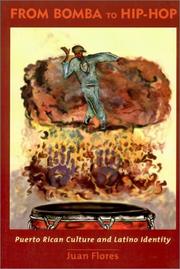
Flores on Puerto Rican culture in the United States across a century, placing salsa in a longer line that runs from bomba and plena to boogaloo and hip-hop. Read it last here, as the wider cultural frame for the music.
Playing it, and dancing it
IntermediateClose by separating two things the rest of the literature runs together. One book is a practical manual for a musician learning the piano montuno and the rhythm-section conventions; the other is about salsa as social dance — the styles, the scenes, the bodies. They serve different readers, and neither substitutes for the other.
▸ Study plan for this stage
Pace: Six to eight weeks for 348 pages, the shortest stage on the path and the one that separates two things the rest of the literature runs together. Mauleón's The Salsa Guidebook is 259 pages and is a method book, not a history: clave, montuno, tumbao, the roles of each instrument, with notation through
- The two literatures. Books for musicians teach patterns, notation and ensemble roles; books about dance describe styles, scenes and social codes, and almost none does both well.
- What a method book contains: the clave patterns written out, the piano montuno, the bass tumbao, the percussion parts and how they lock together, at a level of specificity no history offers.
- Instrument roles in a salsa rhythm section — piano, bass, congas, bongó, timbales — and the fact that each has a defined function relative to the clave rather than a free part.
- That notation is a starting point and not the thing itself. Feel, placement and the relationship to the clave are learned by playing with others, which the book says and cannot supply.
- Salsa as social dance, with regionally distinct styles that formed in identifiable clubs and scenes, and with lead-and-follow conventions rather than choreography.
- The dance floor as a site of transmission. Styles were developed and passed on socially, which is why club-by-club history is the appropriate form for it.
- The honest limit of a reading path here: history, ethnography and notation are all available in books; dancing is not, and no amount of reading substitutes for classes and practicas.
- That this limitation applies asymmetrically. A musician can genuinely make progress with Mauleón and an instrument; a dancer cannot make comparable progress with any book on this list.
- What are the roles of piano, bass and each percussion instrument in a salsa rhythm section, and how does each relate to the clave?
- What is a montuno and how is it constructed? Write one out.
- What does Mauleón's notation not capture, and how would you find out what is missing?
- How did distinct salsa dance styles form in specific New York clubs, and what does that say about how the dance is transmitted?
- Which books on this whole path serve the musician, which serve the dancer, and which serve neither?
- What can a reader realistically learn about the dance from books, and what can they not?
- Learn one piano montuno from Mauleón and play it against a recording until you can hold it through a montuno section without losing the clave.
- Write out the clave in both orientations and identify which one each of ten recordings uses. This is the single most useful thing a listener can practise.
- Read the dance material and then watch footage of the club styles it names, matching description to movement.
- Go to a class or a social dance once, then reread the dance chapters. The reading changes completely and the demonstration of that is the point.
- Take five recordings you have met across this path and identify, for each, whether it was made for dancers or for listeners. The answer is not always obvious and it explains a great deal about the arrangements.
Next up: The path ends by handing you an instrument or a dance floor, because everything remaining is done in a room rather than on a page.

The standard practical text for musicians: clave, montuno, tumbao, the roles of each instrument, with notation throughout. This is a method book, not a history — buy it only if you intend to play, and read the notation stage of it with an instrument to hand.

A Museum of the City of New York volume covering salsa as a danced and social practice as much as a recorded one, including how dance styles formed in specific clubs. Our record displays it with an ampersand as 'Rhythm & power'; it is the one item on this path that treats the dance floor as the subject.
Discussion
Keep reading
Paths that share books, cover the same subject, or open a related topic.