Start with Ned Sublette's Cuba and Its Music, and accept that it is 688 pages. There is no better account of how the clave — the two-bar rhythmic key everything in this music is organised against — came to structure an entire hemisphere's dance music, and Sublette is a musician who explains rhythm in a way non-musicians can follow. Nothing later on this list makes sense without the clave.
The order matters here because the subject is a migration. The music is Cuban in origin, was assembled into salsa in New York largely by Puerto Rican musicians, and then travelled back south, where Cali and Caracas built scenes as intense as New York's around records they did not make. Read it in that sequence and the long argument over what the word salsa names stops being confusing and becomes the point.
Cuba, where it starts
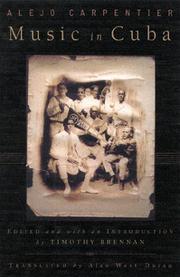
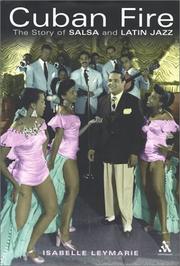
After Sublette, Alejo Carpentier's Music in Cuba is the 1946 founding work of Cuban musicology, written by one of Latin America's great novelists and the source everyone else builds on. It was written in Spanish as La música en Cuba; our record is Alan West-Durán's English translation with Timothy Brennan's introduction, which is the edition to read. Isabelle Leymarie's Cuban Fire is a genre-by-genre survey — mambo, chachachá, charanga, boogaloo — and works better as a reference after Sublette has supplied the narrative. All three serve the listener rather than either the player or the dancer.
The music comes north
John Storm Roberts's The Latin tinge is the pioneering account of how Latin American music shaped jazz, rock and American popular song, from the habanera in ragtime onward, and it is still the clearest statement of the argument. Ruth Glasser's My Music Is My Flag is a historian's study of Puerto Rican musicians in New York between the wars and of how migration, the recording industry and racial categorisation shaped what they were allowed to play — the social history behind the Palladium years. Max Salazar's Mambo Kingdom collects decades of his interviews with the musicians of the New York mambo scene, on Machito, Tito Puente and Tito Rodríguez; it is anecdotal rather than analytical, and irreplaceable for the same reason.
Salsa itself
Juan Flores's Salsa rising : New York latin music of the sixties generation is the pivotal book, and the strongest statement of salsa as a Puerto Rican and diasporic creation rather than a relabelled Cuban import. Read it first in this stage. Whether salsa names a genre, a marketing category or a claim on a tradition is genuinely unresolved, and every book here takes a position in it.
Christopher Washburne's Sounding Salsa is the one for the musician: an ethnography by a trombonist who played the New York scene, covering how bands actually work, how the clave is negotiated in real time, and the economics of the gig. Leonardo Padura's Faces of salsa is interviews with the central figures — Rubén Blades, Papo Lucca, Juan Formell, Mario Bauzá — by the Cuban novelist. It was published in Spanish as Los rostros de la salsa and reaches English through Stephen Wilkinson and Alexis Romay, so check that any edition you buy is the translation.
The music goes home again
Lise Waxer edited Situating salsa, the essential collection on salsa's global geographies — Colombia, Venezuela, Puerto Rico, Japan, Britain — with chapters by most of the field's leading scholars. Use it as the map. Her own The City of Musical Memory is the ethnography of Cali, a city that became a world capital of salsa largely through record collectors and dancers before it had major bands of its own, and it is the best single case study of that return migration. Note that our catalogue holds the two under slightly different author forms, Lise Waxer and Lise A. Waxer; they are the same scholar. Flores's From bomba to hip-hop closes the stage with the wider cultural frame, placing salsa in a line that runs from bomba and plena through boogaloo to hip-hop.
Playing it, and dancing it
The last stage separates two things the rest of the literature runs together, and they serve different readers. Rebeca Mauleon's The Salsa Guidebook is a method book for musicians: clave, montuno, tumbao and the role of each instrument, with notation throughout. Buy it only if you intend to play, and work through it with an instrument to hand. Rhythm & power, by Derrick León Washington, Priscilla Renta and Sydney Hutchinson, is a Museum of the City of New York volume and the one item here that treats the dance floor as the subject — how styles formed in specific clubs, and salsa as a social practice rather than a recorded one. At 89 pages it is an exhibition volume rather than a manual, and there is no step-by-step dance instruction on this path.
Every stage, with dates and lengths, is on the salsa and Latin dance music path.