Learn to surf: from whitewater to real waves
This curriculum takes a complete beginner from zero ocean knowledge to a competent, self-aware surfer across four progressive stages. Each stage builds on the last — starting with the culture and mindset of surfing, moving through practical technique and ocean science, then deepening into wave reading and physical conditioning, and finally embracing the long, honest journey of lifelong progression.
Foundations: Culture, Mindset & the Surfer's World
BeginnerUnderstand what surfing really is — its history, culture, and the honest reality of the learning journey — so you enter the water with the right expectations and genuine stoke.
▸ Study plan for this stage
Pace: 8–10 weeks total: Weeks 1–5 for "Barbarian Days" (~30 pages/day, ~320 pages), Weeks 6–10 for "The History of Surfing" (~25 pages/day, ~496 pages). Read in the morning or evening when you can reflect slowly — this stage is about absorption and inspiration, not speed.
- Surfing as a lifelong pursuit and identity, not just a sport — Finnegan's memoir shows how surfing shapes personality, relationships, and life choices across decades
- The concept of 'stoke' and intrinsic motivation — understanding why surfers are obsessed, and why that obsession is the fuel for enduring the steep learning curve
- Honest reckoning with the learning journey — Finnegan's candid accounts of fear, wipeouts, and humiliation normalize struggle and set realistic beginner expectations
- Surfing's Polynesian origins and cultural roots — Warshaw traces the sport back to ancient Hawaii, establishing that surfing carries deep spiritual and social meaning far older than the modern beach lifestyle
- The global spread and commercialization of surfing — how the sport traveled from Hawaii to California, Australia, and the world, and how that changed (and sometimes diluted) its culture
- Localism, surf culture hierarchies, and unwritten rules — both books illuminate the social dynamics of lineups, respect, and the gatekeeping that beginners will inevitably encounter
- The evolution of surfboard design and technology — Warshaw documents how changes in equipment (longboards to shortboards, the Shortboard Revolution) directly shaped what surfing looks and feels like
- Reading the ocean as a core surfer skill — both authors convey that understanding waves, tides, and swells is as fundamental as any physical technique
- After reading Finnegan's memoir, how would you describe surfing's role in his life beyond recreation — and what does that suggest about the mindset a committed beginner should cultivate?
- What were the cultural and spiritual dimensions of surfing in pre-colonial Hawaii as described by Warshaw, and why does that origin story matter to modern surf culture?
- How did the Shortboard Revolution of the late 1960s (covered in Warshaw) change who could surf, how surfing looked, and what was valued in the surf community?
- Finnegan describes numerous moments of fear, failure, and self-doubt across his surfing life. What strategies — mental or practical — did he use to push through them, and how can a beginner apply those lessons?
- How do both books portray the tension between surfing as a pure, countercultural pursuit and surfing as a commercialized global industry? Where do you personally stand on that tension?
- What unwritten rules and social codes of the lineup emerge across both books, and why is understanding them important before a beginner ever paddles out?
- Keep a 'Surf Journal' while reading: after each reading session, write 2–3 sentences on what surprised you, what intimidated you, and what excited you. This builds self-awareness about your own mindset before you hit the water.
- Watch 1–2 classic surf films (e.g., 'The Endless Summer' or 'Riding Giants') alongside your reading of Warshaw to visually anchor the historical eras and figures he describes — connecting the written history to moving images.
- Draw a simple hand-drawn timeline of surfing history as you progress through Warshaw: mark key moments (Hawaiian origins, Duke Kahanamoku's ambassadorship, the Gidget era, the Shortboard Revolution, the rise of the WSL). Revising it as you read reinforces retention.
- Visit a local beach or surf spot — don't surf yet, just observe. Watch the lineup for 30–60 minutes and try to identify the social dynamics, unwritten rules, and wave-reading behaviors described in both books. Write down your observations.
- Write a one-page personal 'Surfer's Manifesto': based on what you've read, articulate your own reasons for wanting to surf, your honest fears, and the kind of surfer you want to become. Revisit this at the end of the entire curriculum.
- Find and read one short interview or profile of a surfer from a different cultural background than Finnegan's (e.g., a Hawaiian, Brazilian, or South African surfer) and compare their relationship to surf culture with what you've read — this extends Warshaw's global perspective.
Next up: Having absorbed surfing's soul, history, and honest emotional landscape through Finnegan and Warshaw, the reader is now psychologically prepared — stoked but grounded — to move into the next stage, where the focus shifts from culture to the physical fundamentals: how waves actually work, how to read the ocean, and how to begin building real technique in the water.
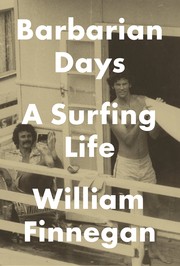
This Pulitzer Prize-winning memoir is the perfect first book — it captures the obsession, the struggle, and the lifelong nature of learning to surf with total honesty, setting realistic and inspiring expectations for the beginner.

The definitive, richly illustrated history of the sport by its foremost historian; reading this second gives you the cultural vocabulary, lineage, and reverence for the ocean that every surfer should carry before paddling out.
Getting to Your Feet: Technique, Safety & First Sessions
BeginnerLearn the practical mechanics of surfing — how to paddle, pop up, read a beginner wave, stay safe, and respect surf etiquette — so your first real sessions are productive and safe.
▸ Study plan for this stage
Pace: 6–8 weeks total. Week 1–3: Read "Surf Survival" by Andrew Nathanson (~20–25 pages/day), pausing after each chapter to take safety notes. Week 4–8: Read "Kook's Guide to Surfing" by Jason Borte (~15–20 pages/day), a slower pace to absorb technique diagrams, checklists, and etiquette rules — revisit s
- Ocean hazards and risk management: understanding rip currents, shore breaks, reef breaks, and how Nathanson's medical perspective frames injury prevention as a surfer's first responsibility
- Leash, board, and wetsuit safety: how Nathanson explains gear as life-saving equipment, not just accessories, and the correct way to use each piece
- The pop-up mechanics: Borte's step-by-step breakdown of the prone paddle position, the push-up transition, and landing in a balanced surf stance (feet parallel, knees bent, arms out)
- Paddling efficiency: Borte's guidance on body positioning on the board (nose just above water), cupped-hand stroke technique, and reading paddle timing relative to an incoming wave
- Wave selection for beginners: identifying whitewater (broken) waves vs. unbroken green waves, understanding wave energy and how Borte recommends beginners start in the soup
- Surf etiquette and the right-of-way rules: Borte's 'unwritten rules' — who has priority, never dropping in, not snaking, and communicating in the lineup
- Self-rescue and wipeout protocol: Nathanson's guidance on falling safely (flat, away from the board), protecting your head when surfacing, and never abandoning your board
- Reading a beginner beach: combining Nathanson's hazard-spotting approach with Borte's lineup-reading tips to choose the safest, most learnable stretch of water before paddling out
- According to Nathanson in 'Surf Survival,' what are the three most common causes of surfing injuries, and what practical steps does he recommend to mitigate each one before you even enter the water?
- How does Nathanson describe the correct procedure for escaping a rip current, and why does he emphasize staying calm and conserving energy over swimming directly to shore?
- Using Borte's instruction in 'Kook's Guide,' walk through each phase of the pop-up from lying prone to standing — what are the most common mistakes beginners make at each phase?
- What does Borte identify as the single most important etiquette rule in the lineup, and what are the consequences — social and physical — of violating it as a beginner?
- How do the two books complement each other: in what specific situations would you consult Nathanson's advice versus Borte's advice during a real session?
- Based on both books, what should a beginner's pre-session checklist look like — covering gear inspection, hazard assessment, warm-up, and lineup strategy?
- Dry-land pop-up drill: Using Borte's step-by-step instructions as your guide, mark a 'board outline' on the floor with tape and practice the pop-up 20 times per day for two weeks, filming yourself to check foot placement, stance width, and arm position against his descriptions.
- Rip current identification walk: Visit a local beach (or study photos/videos online if landlocked) and practice spotting rip currents using Nathanson's visual cues — discolored water, choppy surface, foam channels — before every session or as a weekly observation exercise.
- Safety gear audit: Following Nathanson's gear chapters, physically inspect your leash, board, fins, and wetsuit (or a friend's) and write a one-page checklist of what passed, what failed, and why each item matters for survival — not just performance.
- Etiquette role-play: Using Borte's right-of-way rules, draw or print a simple lineup diagram and work through 5–6 scenarios (two surfers paddling for the same wave, a surfer already riding, a paddler in the impact zone) — write down who has priority and why.
- Wave-watching journal: Spend 20–30 minutes at the beach (or watching surf footage) before or after reading each Borte chapter, logging observations: where waves break, which sections are whitewater, where beginners are surfing vs. advanced surfers, and one thing you'd do differently next session.
- First water session structured debrief: After your first or second real session in the water, write a one-page reflection answering: Which of Nathanson's hazards did you notice? Did you apply Borte's paddle timing? How did your pop-up feel vs. the dry-land drill? What one technique will you focus on next session?
Next up: Mastering the safety mindset from Nathanson and the foundational mechanics from Borte gives you the physical vocabulary and risk awareness needed to move confidently into the next stage, where you'll begin refining wave reading, trimming along the face, and developing your own surfing style beyond the whitewater.

Written by an emergency physician and surfer, this is the essential safety manual — covering wipeouts, rip currents, reef injuries, and ocean hazards — and should be read before you ever paddle out on your own.

A candid, practical, and humorous guide to beginner technique, etiquette, and gear that demystifies the unwritten rules of the lineup and the physical fundamentals of paddling and popping up.
Reading the Ocean: Waves, Weather & Water
IntermediateDevelop a working understanding of how waves are formed, how to read a break, and how tides, swell, and wind interact — so you can choose the right conditions and position yourself intelligently in the water.
▸ Study plan for this stage
Pace: 8–10 weeks total. Week 1–5: "Waves and Beaches" by Willard Bascom (~20–25 pages/day, 4–5 days/week) — read slowly and take notes on the physics chapters; revisit diagrams repeatedly. Week 6–10: "The Surfer's Guide to Waves, Coasts and Climates" by Tony Butt (~15–20 pages/day, 4–5 days/week) — read a
- Wave generation: how wind transfers energy to water to create swell — fetch, wind speed, and duration as the three drivers (Bascom, Ch. 1–3)
- Wave anatomy: wavelength, wave height, wave period, celerity, and the distinction between deep-water waves and shallow-water waves (Bascom)
- Wave transformation nearshore: shoaling, refraction, diffraction, and reflection — how a wave 'feels' the bottom and changes shape as it approaches the coast (Bascom)
- Breaking wave types: spilling, plunging, and surging breakers — what causes each and which is desirable for surfing (Bascom + Butt)
- Swell vs. wind swell: the difference in period, energy, and rideability, and why long-period groundswell produces cleaner, more powerful waves (Butt)
- Reading a break: how bathymetry (underwater topography — reefs, sandbars, points) shapes the wave, determines where it peaks, and dictates where to sit in the lineup (Butt)
- Tides and their effect on a break: how tidal stage (high, mid, low) changes water depth over a reef or sandbar and transforms the character of a wave from closeout to perfect to flat (Butt)
- Wind and its role at the break: offshore vs. onshore vs. cross-shore winds, and how wind direction grooms or destroys wave faces (Butt)
- After reading Bascom, can you explain in plain language why a wave with a longer period carries more energy and travels farther with less decay than a short-period wind swell?
- Using Bascom's treatment of refraction, why does a headland or underwater point focus wave energy, and why does a bay tend to produce smaller, more disorganized surf?
- Drawing on Butt, what combination of swell direction, swell period, wind direction, and tidal stage would you look for when checking a forecast for a beach-break vs. a reef-break?
- How does Butt describe the relationship between fetch and swell quality — and what does this mean practically for surfing spots that face a large open ocean vs. a semi-enclosed sea?
- After reading both books, can you walk through what physically happens to a 15-second groundswell from the moment it leaves a storm system until it breaks on a sandbar, referencing shoaling, refraction, and the effect of the tide?
- What does Butt identify as the key indicators in a surf forecast (period, height, direction, wind) and how would you prioritize them when deciding whether to paddle out?
- Forecast journaling: For 4 consecutive weeks, check a surf forecast (Surfline, Windguru, or Magic Seaweed) every morning. Write down swell height, period, direction, and wind. After each session (or observation from shore), record what the waves actually looked like and try to explain any gap between forecast and reality using concepts from Bascom and Butt.
- Break-reading sketch: Visit (or find aerial/satellite images of) two different breaks — ideally one beach break and one point or reef break. Sketch the underwater contours as best you can infer them, mark where you think the wave will peak based on Bascom's refraction principles, then compare to where surfers actually sit.
- Tide experiment: At the same break, observe (or surf) at three different tidal stages — low, mid, and high — and document how the wave changes in terms of power, shape, and where it breaks. Cross-reference your observations with Butt's discussion of tidal effects on specific break types.
- Swell-period comparison: Find two surf sessions (video or in person) at the same spot — one with short-period wind swell (under 8 seconds) and one with long-period groundswell (12+ seconds). List every observable difference in wave shape, speed, and power, then explain those differences using Bascom's wave energy and celerity concepts.
- Wind-effect observation: On a day with a defined wind direction, observe the wave faces at your local break and classify the wind as offshore, onshore, or cross-shore. Photograph or sketch the wave faces and annotate how the wind is affecting them, referencing Butt's framework.
- Concept translation drill: Choose any one chapter from Bascom that covers a physical concept (e.g., refraction or shoaling) and rewrite its core idea in 150 words as if explaining it to a fellow surfer with no science background — then test it by explaining it out loud at the beach.
Next up: By internalizing how waves are born, travel, and break — and by building the habit of reading forecasts and observing conditions critically — the reader is now equipped to move from understanding the ocean as a system to mastering the physical techniques and tactical decisions required to actually surf it effectively.

A classic of coastal science written accessibly for non-scientists; this book builds genuine intuition about how ocean waves are born, travel, and break — knowledge that directly improves your surfing decisions.

Written by a surfer-scientist, this book translates oceanography and meteorology directly into surf forecasting knowledge, teaching you to understand swell charts, wind patterns, and why certain breaks work on certain days.
Body, Board & Progression: Training for the Long Game
IntermediateBuild the physical conditioning, board knowledge, and deliberate practice framework needed to move from beginner to competent surfer — and understand why progression is measured in years, not weeks.
▸ Study plan for this stage
Pace: 3–4 weeks, ~20–25 pages/day — Surf Science is dense with physics and oceanography, so slower, deliberate reading with note-taking is recommended over rushing; re-read key chapters on wave mechanics and swell generation at least twice
- Wave formation and swell generation: how wind energy transfers into ocean swells that eventually become surfable waves
- Wave anatomy: understanding period, wavelength, frequency, wave height, and how these variables interact to determine wave quality and power
- Bathymetry and break types: how the ocean floor shape (reef, beach, point) transforms open-ocean swells into the specific breaking waves a surfer rides
- Wave energy and power calculations: why a doubling of wave height means a fourfold increase in energy, and what that means for board and body selection
- Swell forecasting fundamentals: reading isobars, storm fetch, swell direction, and period to predict what will arrive at a given break
- The physics of surfing: how buoyancy, drag, lift, and gravity interact on a surfboard, and how fin design and board rocker influence these forces
- Local oceanographic variables: tides, currents, and wind (onshore vs. offshore vs. cross-shore) and their practical effect on wave shape and rideability
- Deliberate progression mindset: using scientific understanding of waves and equipment to make informed, incremental decisions rather than guessing why sessions go well or poorly
- Given a swell forecast showing period, height, and direction, what can you predict about the likely wave quality at a beach break versus a reef break?
- Why does wave period matter more than wave height when assessing whether a swell will be powerful and well-organized?
- How does the shape of the ocean floor (bathymetry) cause a wave to 'break,' and why do different bottom contours produce different break characteristics?
- What physical forces act on a surfboard and rider during the take-off and bottom turn, and how do fin placement and board rocker influence those forces?
- How do tidal stage and wind direction independently affect the quality of a surf session, and how would you use that knowledge to time a session?
- In what ways does understanding surf science reframe 'progression' — shifting it from a vague feeling of improvement to a measurable, cause-and-effect framework?
- Swell journal: For two weeks, log daily forecasts (period, height, direction, wind) from a forecasting site, then compare your predictions to reported or observed conditions — use Butt's swell generation chapters as your reference guide
- Break anatomy sketch: Visit or research (via satellite/video) three different local breaks (beach, point, or reef if available) and draw a bathymetric sketch of each, annotating how the bottom contour produces the wave shape Butt describes
- Wave energy math: Using Butt's energy formulas, calculate the relative power difference between a 2 ft / 8-second wave and a 4 ft / 12-second wave — reflect on what that means for board volume and physical conditioning needs
- Tide & wind observation session: Surf or observe the same break at two different tidal stages and in two different wind conditions (even on separate days), and write a one-page comparison grounded in the physics from Surf Science
- Board physics audit: Examine your current board (or a board you have access to) and identify its rocker profile, fin setup, and rail shape — map each feature to a specific hydrodynamic principle from Butt's board physics sections
- Concept glossary: Build a personal 20-term glossary (e.g., fetch, period, refraction, diffraction, bathymetry, cavitation) with a one-sentence plain-English definition and a one-sentence 'why it matters in the water' note for each
Next up: Mastering the science of how waves form, break, and behave gives the intermediate surfer the analytical vocabulary and observational framework needed to tackle more advanced topics — such as reading complex lineups, surfing bigger or more powerful surf, and making precise equipment choices — which form the foundation of the next stage.
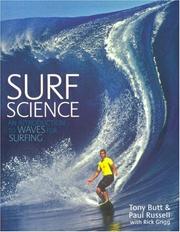
Butt's deeper technical companion dives into the physics of how boards interact with waves, giving you the scientific framework to understand equipment choices and refine your technique with intention.
Discussion
Keep reading
Paths that share books, cover the same subject, or open a related topic.