Learn snowboarding: from first day to confident rider
This curriculum takes a complete beginner from zero snowboard knowledge to confident, all-mountain riding across three carefully sequenced stages. Each stage builds on the last — first establishing safety, gear literacy, and basic movement, then developing linked turns and mountain awareness, and finally refining technique and tactical riding so the learner can handle varied terrain with control and style.
Linking Turns & Reading the Mountain
BeginnerProgress from isolated traverses to smooth, linked heel-to-toe turns, understand how slope angle and snow conditions affect riding, and begin reading terrain features to choose the right line.
▸ Study plan for this stage
Pace: 4–5 weeks total: Week 1–2 — Read "The Snowboard Book" by Lowell Hart (~20–25 pages/day), focusing on technique chapters covering traversing, edge control, and turn linking. Week 3–4 — Read "Snowboarding" by Bill Gutman (~15–20 pages/day), focusing on slope awareness, snow conditions, and terrain rea
- Heel-to-toe and toe-to-heel turn linking: understanding the fall line and how to flow continuously from one edge to the other without stopping, as detailed in Lowell Hart's progression-based instruction in The Snowboard Book
- Edge angulation and pressure control: how shifting body weight and angulating ankles/knees drives clean carving transitions between turns, per Hart's technique breakdowns
- The fall line and slope angle: recognizing how steeper terrain accelerates speed and demands earlier turn initiation, a concept reinforced across both Hart and Gutman
- Traversing as a foundation: using controlled traverses across the slope to manage speed and set up the next turn, as Hart establishes before introducing linked turns
- Reading snow conditions: distinguishing between packed powder, groomed runs, and variable snow, and adjusting stance and edge pressure accordingly — a practical focus in Gutman's Snowboarding
- Terrain features and line selection: identifying rollers, cat tracks, and natural transitions to choose a safe and efficient path down the mountain, as Gutman addresses for beginner-to-intermediate riders
- Body positioning and balance: keeping a centered, athletic stance with knees bent and arms relaxed to absorb terrain changes — emphasized by both Hart and Gutman as the non-negotiable foundation
- Speed management through turn shape: using rounder, longer-radius turns to bleed speed versus shorter, more direct turns to maintain momentum, a strategic concept introduced in both books
- After reading The Snowboard Book, can you explain in your own words why a traverse is the building block for a linked turn, and what body movements trigger the transition from heel edge to toe edge?
- How does slope angle change what you need to do with your turns? What adjustments does Lowell Hart recommend as terrain steepens?
- According to Bill Gutman's Snowboarding, how should a beginner rider modify their stance or edge pressure when moving from groomed hardpack to softer or variable snow?
- What does 'reading the mountain' mean in practice? Using Gutman's guidance, what specific terrain features should a beginner look for before choosing a line?
- How do turn shape and turn radius relate to speed control? Can you describe a scenario from either book where a rounder turn would be the safer choice?
- What are the most common mistakes beginner riders make when attempting to link turns for the first time, and how do Hart and Gutman suggest correcting them?
- Traverse-to-turn drill on a gentle green run: Practice a controlled heel-edge traverse, then initiate a toe-side turn using only ankle and knee angulation (no upper-body twisting), as Hart prescribes. Repeat 10 times each direction before attempting a full linked sequence.
- Linked-turn count challenge: On a groomed beginner slope, attempt to complete a full top-to-bottom run using only linked turns — no stopping or skidding to a halt. Count your successful links and aim to increase the number each session, tracking progress in a riding journal.
- Snow condition observation log: Before each session, physically touch and assess the snow (hardpack, groomed corduroy, slushy, wind-affected), write a one-sentence prediction of how it will affect your edges, then note after riding whether your prediction matched — directly applying Gutman's snow-reading framework.
- Terrain feature scouting walk: Before riding a new run, stand at the top and verbally identify (or sketch in a notebook) at least three terrain features — a roller, a flat section, a steeper pitch — and plan your line around them, as Gutman encourages for building mountain awareness.
- Turn-shape speed experiment: On the same slope, make one run using tight, short-radius turns and one using wide, round, long-radius turns. Note your speed and comfort level in each, then re-read the relevant sections in both Hart and Gutman to connect the physical experience to the written explanation.
- Video review session: Record yourself (phone propped on snow or a friend filming) completing 5–6 linked turns, then compare your body position frame-by-frame against the stance and movement descriptions in The Snowboard Book. Write down one specific correction to apply next session.
Next up: Mastering linked turns and terrain reading on groomed beginner slopes builds the edge control, balance, and mountain awareness that are the direct prerequisites for tackling more dynamic intermediate techniques — such as carving, riding off-piste, and handling variable or steeper terrain — which form the focus of the next stage.
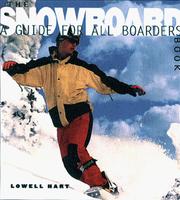
One of the most widely used instructional texts, it systematically bridges the gap between first turns and linked carving, with clear progressions and diagrams that make the mechanics of edge control intuitive.

Introduces mountain geography, reading snow, and understanding how terrain changes demand different riding decisions — building the situational awareness a progressing rider needs to move beyond groomed greens.
Whole-Mountain Confidence & Continued Progression
IntermediateRide the full mountain with confidence across varying terrain and snow types, refine carving technique, and develop a personal progression plan for continued improvement beyond the book.
▸ Study plan for this stage
Pace: 3–4 weeks, ~20–25 pages/day — "The Complete Snowboarder" by Jeff Bennett is a comprehensive but accessible guide; pace yourself to spend extra time on the terrain, snow-type, and carving chapters, re-reading technical sections before each on-mountain session.
- Whole-mountain terrain assessment — reading slope pitch, fall lines, and hazards across groomed runs, moguls, trees, and off-piste zones as described by Bennett
- Snow-type adaptation — adjusting stance, edge pressure, and speed for packed powder, crud, ice, slush, and fresh powder conditions covered in the book
- Refined carving mechanics — Bennett's breakdown of high-edge-angle turns, angulation, and pressure control to lay clean, skidless arcs on hardpack
- Advanced edge control and weight distribution — fine-tuning heel-side and toe-side edges through varied terrain transitions
- Speed management and line selection — choosing efficient, safe lines through variable terrain including steeps and natural features
- Freestyle fundamentals as a confidence tool — Bennett's introduction to jumps, jibs, and halfpipe as tools for developing board feel and body awareness transferable to all-mountain riding
- Gear optimization — Bennett's guidance on board selection, binding angles, and boot flex suited to intermediate-to-advanced all-mountain riding goals
- Building a personal progression plan — using Bennett's framework to self-assess weaknesses, set measurable goals, and structure future practice sessions independently
- According to Bennett, what are the key body mechanics adjustments required when transitioning from groomed hardpack to ungroomed or powder snow, and why do they matter?
- How does Bennett describe the difference between a skidded turn and a carved turn, and what specific technique cues does he provide to achieve a true carve at the intermediate level?
- What terrain-reading strategies does Bennett outline for safely and confidently navigating steeper or more complex mountain zones?
- How does Bennett recommend intermediate riders use freestyle elements (jumps, small features) to build overall board confidence, and what safety progressions does he suggest?
- What gear considerations does Bennett highlight for riders looking to expand their all-mountain capability, and how should binding angle and stance width be adjusted for different riding styles?
- Using Bennett's self-assessment framework, how would you identify your two biggest technical weaknesses right now, and what specific drills or practice methods does he recommend to address them?
- Terrain-type logging: Over 3 on-mountain sessions, ride at least four distinct terrain types (groomed, moguls, trees, open off-piste) and keep a written journal entry after each — note what Bennett's technique cues you applied, what worked, and what broke down.
- Carving drill — 'railroad tracks': On a moderate groomed run, execute 10 consecutive turns focusing solely on leaving two clean, parallel edge lines in the snow (no skid smear). Film yourself from behind if possible and compare your edge angles to Bennett's illustrated examples.
- Snow-condition adaptation challenge: Intentionally seek out one session on ice or hard-pack and one on soft/slushy snow in the same week. Before each, re-read Bennett's relevant snow-type section and write down three technique adjustments you plan to make; debrief afterward on what held up.
- Speed and line selection exercise: Pick a familiar run and ride it three times in a row — first prioritizing safety and control, second prioritizing efficiency and flow, third combining both. Reflect on how your line choices differed and map them against Bennett's line-selection principles.
- Freestyle confidence builder: Find a small, well-groomed jump or roller on the mountain. Using Bennett's progression steps, work up from a straight air to a basic method or nose grab over two sessions, focusing on take-off edge and landing absorption rather than trick complexity.
- Personal progression plan document: After finishing the book, write a one-page riding plan that includes: your current level self-assessment (using Bennett's criteria), two specific technical goals, three drills to practice, a timeline of 4–6 weeks, and a definition of what 'success' looks like for each goal.
Next up: Mastering whole-mountain confidence and carving refinement through Bennett's framework gives the rider the technical vocabulary, self-assessment habits, and terrain versatility needed to pursue specialized advanced disciplines — such as backcountry riding, competitive freestyle, or deep-powder freeride — in any subsequent stage of study.
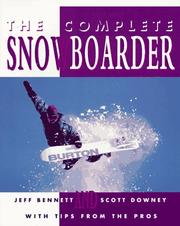
A canonical, comprehensive reference that consolidates everything — advanced carving, off-piste riding, moguls, and fitness — giving the newly confident rider a single authoritative source to deepen every skill.
Discussion
Keep reading
Paths that share books, cover the same subject, or open a related topic.