Learn skateboarding: balance, basics & first tricks
This curriculum takes a complete beginner from zero skateboarding knowledge to confident trick execution and deep cultural literacy, in four progressive stages. Each stage builds on the last — starting with gear and safety fundamentals, moving through core technique, then advancing into trick progression, and finally immersing the learner in the rich history and culture that gives skating its identity.
Foundations: Gear, Safety & First Rides
BeginnerUnderstand how to choose the right board and components, stay safe, and confidently stand, balance, and push on a skateboard for the first time.
▸ Study plan for this stage
Pace: 4–5 weeks total. Week 1–2: Read "Skateboarding: Book of Tricks" by Steve Badillo — focus only on the introductory chapters covering board anatomy, components, and foundational stance (~15–20 pages/day, revisiting diagrams and photos). Week 3–5: Read "Skateboarder's Start-Up" by Werner, Doug cover to
- Board anatomy: deck, trucks, wheels, bearings, grip tape — what each part does and how they interact
- Choosing the right setup: deck width, wheel hardness, and truck tightness for a beginner rider
- Protective gear essentials: helmet fit, knee pads, elbow pads, and wrist guards — when and why to wear them
- Proper foot positioning: regular vs. goofy stance and how to determine your natural stance
- The correct way to stand on a stationary board: weight distribution, bent knees, and low center of gravity
- The push: how to kick-push with your back foot while balancing on your front foot, then return to riding stance
- The foot brake: dragging the back foot to slow down and stop safely
- Skate environment awareness: choosing safe, smooth surfaces and understanding skatepark etiquette for beginners
- What are the five main components of a skateboard, and what role does each play in how the board rides and turns?
- How do you determine whether you ride regular or goofy, and why does it matter for every technique described in both books?
- According to the foundational guidance in these books, what protective gear is non-negotiable for a first-time rider, and how should each piece fit?
- Describe the step-by-step mechanics of a proper push: foot placement before, during, and after the kick, and where your weight should be throughout.
- What adjustments can a beginner make to their trucks and wheels to make the board more stable and forgiving while learning to balance?
- What are the key differences between a beginner-friendly practice surface and a hazardous one, and what skatepark behaviors should a new skater be aware of?
- Gear audit: Before your first ride, physically identify every component on a real or borrowed skateboard — deck, trucks, wheels, bearings, grip tape — using the diagrams in Badillo's 'Book of Tricks' as a reference checklist.
- Stance test: Use the 'push from behind' or 'sliding socks' method described in Werner's 'Skateboarder's Start-Up' to confirm your natural stance (regular or goofy), then practice standing on a stationary board on carpet or grass for 5 minutes daily until it feels natural.
- Static balance drill: Place your board on a patch of grass or a piece of carpet to prevent rolling, and practice standing in your riding stance for 60-second intervals, focusing on bent knees, relaxed shoulders, and even weight distribution across both feet.
- Push & glide session: On a smooth, flat surface (an empty parking lot or quiet path), practice 10 consecutive push-and-glide repetitions, consciously returning your pushing foot to riding position after each kick, as coached in 'Skateboarder's Start-Up'.
- Foot-brake practice: While rolling at a slow, comfortable speed, practice dragging your back foot to a complete stop. Repeat 15–20 times in a single session until stopping feels instinctive rather than panicked.
- Gear-up habit: Every single practice session — no exceptions — put on helmet, wrist guards, knee pads, and elbow pads before stepping on the board. Use this stage to make protective gear a non-negotiable ritual, reinforcing the safety-first philosophy emphasized in both books.
Next up: Mastering stable balance, a confident push, and a reliable foot brake gives you the physical foundation and safety awareness needed to begin learning the directional control, turning, and introductory trick mechanics that the next stage will build upon.

Badillo's widely-used beginner guide starts from absolute zero — board anatomy, protective gear, and stance — giving the new skater the vocabulary and safety mindset needed before anything else.

Werner's Start-Up Sports series is renowned for its clear, photo-driven instruction; this volume walks beginners through choosing a complete setup and drilling the foundational movements of pushing, stopping, and turning.
Core Technique: Balance, Movement & the Ollie
BeginnerDevelop reliable balance and body control on the board, and land a consistent ollie — the single most important building block for all street and park skating.
▸ Study plan for this stage
Pace: 6–8 weeks total. Week 1–3: Read "The Skateboard" by Ben Marcus (~20–25 pages/day), absorbing the history, anatomy of the board, and foundational riding philosophy. Week 4–8: Read "Skateboarding: Legendary Tricks 2" by Steve Badillo (~10–15 pages/day, slower pace to study photo sequences and trick br
- Board anatomy and component function — how trucks, wheels, bearings, and deck shape directly affect balance and control, as grounded in Marcus's breakdown of skateboard hardware
- Stance fundamentals — regular vs. goofy, foot placement, and weight distribution as the non-negotiable foundation for every technique that follows
- The physics of balance on a moving board — understanding center of gravity, micro-adjustments, and how speed affects stability
- Pushing, stopping, and turning — the everyday locomotion skills Marcus contextualizes within skateboarding's broader culture and progression
- The ollie as a foundational movement — Badillo's step-by-step breakdown of the pop, slide, and jump sequence that makes the ollie the gateway trick
- Body mechanics of the ollie — the relationship between back-foot pop, front-foot slide, and simultaneous jump timing as illustrated in Badillo's photo sequences
- Reading trick photography — using Badillo's multi-frame sequences to mentally rehearse movements before and after physical practice
- Skate culture and mindset — Marcus's historical and cultural framing of skateboarding as a discipline requiring patience, repetition, and creative problem-solving
- According to Marcus's 'The Skateboard,' how do the individual components of a board (deck concave, truck tightness, wheel hardness) each influence a beginner's balance and control?
- What does Marcus's cultural and historical context reveal about the mindset and patience required to progress through foundational skateboarding skills?
- Using Badillo's breakdown in 'Legendary Tricks 2,' describe the three distinct physical phases of an ollie — what does each foot do, and when?
- What are the most common errors in ollie execution that Badillo identifies, and what body-mechanic corrections does he prescribe for each?
- How does Badillo's use of sequential photography help a reader understand trick timing, and how can you apply that reading method to self-diagnose your own attempts?
- How do the balance and movement fundamentals covered in Marcus's book serve as direct prerequisites for the ollie technique Badillo teaches?
- Board familiarity drill: Before skating, handle your board off the ground — spin the wheels, adjust truck tightness, and identify every component Marcus names. Write a one-paragraph note on how your specific setup might affect your balance.
- Stationary balance challenge: Stand on your board on carpet or grass for 5-minute sessions, practicing weight shifts heel-to-toe and nose-to-tail without moving. Log which adjustments feel most natural in your stance.
- Locomotion circuit: In a flat, open area, practice pushing, gliding, foot-braking, and kick-turning for 20 minutes per session, 3×/week during the Marcus reading weeks. Focus on smooth, controlled movements rather than speed.
- Ollie visualization exercise: Before each skate session during the Badillo weeks, open the book to the ollie photo sequence and study it for 2–3 minutes. Mime the motion standing still, narrating each phase aloud (pop, slide, jump, level, land).
- Stationary ollie practice: On grass or carpet, drill the ollie motion 20–30 times per session with no rolling. Focus exclusively on the pop-and-slide timing Badillo describes before adding forward movement.
- Rolling ollie progression: Once the stationary ollie feels consistent, move to slow rolling attempts on smooth pavement. Film yourself from the side, then compare your freeze-frames directly against Badillo's photo sequences to identify specific corrections.
Next up: Mastering balance, board control, and a reliable ollie — the mechanical and cultural foundation laid by Marcus and Badillo — gives the skater the stable platform and air-awareness needed to begin rotating, flipping, and combining tricks in the next stage of intermediate technique.

Marcus blends technique explanation with context, helping the learner understand WHY skating moves work the way they do — building intuition that makes the ollie and weight-shifting click faster.
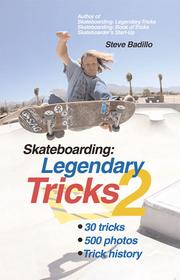
A natural follow-up to Badillo's first book, this volume breaks down the ollie and its direct descendants (kickflip, heelflip) with step-by-step photo sequences, bridging beginner balance work into real trick execution.
Trick Progression: Street, Park & Ramp
IntermediateExpand the trick repertoire beyond the ollie into flip tricks, grinds, and ramp/transition skating, and understand how to structure a personal practice session.
▸ Study plan for this stage
Pace: 2–3 weeks, ~20–25 pages/day — Tony Hawk's autobiography is a fast, engaging read; pace yourself to pause and reflect on the skating milestones and practice habits described in each chapter before moving on.
- Trick progression as a mindset: Hawk's career arc illustrates how skaters systematically build from foundational moves (ollies, early grabs) toward increasingly complex flip tricks, grinds, and aerial maneuvers — each trick unlocking the next
- Ramp and transition skating fundamentals: Hawk's deep focus on vert skating demonstrates how pumping, dropping in, carving, and controlling speed on a ramp are distinct skills from street skating that require dedicated practice
- The anatomy of a grind: Through Hawk's descriptions of 50-50s, 5-0s, nosegrinds, and more, readers learn how weight distribution, approach angle, and board positioning determine whether a grind locks in or slides out
- Flip tricks and body mechanics: Hawk's accounts of learning kickflips, heelflips, and their variations highlight the role of foot placement, flick timing, and visual focus (spotting the board) in consistent execution
- Structuring a personal practice session: Hawk implicitly models deliberate practice — warming up with comfortable tricks, drilling a specific new trick in focused repetitions, and ending on a confidence-building make — a framework readers can extract and apply
- Falling, fear management, and commitment: A recurring theme in Hawk's story is that committing fully to a trick (rather than half-attempting it) is both safer and more effective; understanding how to manage fear is treated as a core skill
- Terrain awareness — street vs. park vs. ramp: Hawk's experiences across contests, backyard ramps, and street spots show how reading and adapting to different terrain types is essential for a well-rounded skater
- The role of community and observation: Hawk repeatedly credits watching other skaters (Stacy Peralta, Steve Caballero, etc.) as a primary learning tool, underscoring video study and skate-session observation as legitimate practice methods
- Based on Hawk's progression described in the book, what sequence of ramp skills must a skater typically master before attempting aerial tricks on vert, and why does order matter?
- How does Hawk describe the mental and physical difference between committing to a trick versus bailing — and what practical lesson can you draw from this for your own sessions?
- What does Hawk's account of contest skating reveal about how to structure a run that flows logically from simpler tricks to more complex ones?
- Using examples from the book, how does Hawk adapt his approach when skating an unfamiliar ramp or street spot, and what does this suggest about terrain-reading skills?
- How does Hawk's description of his practice habits (repetition, progression, rest) map onto a structured personal session plan you could use today?
- Which specific grind or flip trick breakthroughs does Hawk describe in the most detail, and what technical cues or adjustments does he identify as the key to finally landing them?
- **Trick Mapping Exercise:** After finishing the book, create a hand-drawn or digital 'trick tree' that mirrors Hawk's progression — starting from the ollie at the root and branching out into the flip tricks, grinds, and ramp maneuvers he describes. Annotate each branch with the prerequisite trick that unlocks it.
- **Session Blueprint:** Write out a 90-minute personal skate session plan inspired by how Hawk structures his practice: a 15-min warm-up (comfortable tricks), a 45-min focused drill block (one new trick), a 20-min creative free-skate, and a 10-min cool-down (confidence tricks). Execute it at least twice and journal the results.
- **Grind Isolation Drill:** Choose one grind Hawk describes (e.g., 50-50 on a curb or low ledge). Spend three separate sessions doing nothing but approach lines, lock-in attempts, and slide-outs for that single grind — logging how your weight distribution and angle change with each attempt.
- **Video Study — Observe & Annotate:** Watch a 5–10 minute skate clip (contest run or street part) and annotate it as if you were Hawk narrating his own run: identify the trick order logic, terrain choices, and any visible commitment vs. hesitation moments. Compare your notes to Hawk's contest descriptions in the book.
- **Fear Ladder:** List 5 tricks or obstacles that currently intimidate you, ranked from least to most scary. Using Hawk's commitment philosophy from the book, attempt the lowest-fear item in your next session with a deliberate 'full commit or don't go' rule. Document what changes when hesitation is removed.
- **Terrain Journal:** Over two weeks, skate at least one street spot, one skatepark bowl/park course, and one ramp (or bank). After each session write a half-page reflection comparing how your body position, speed management, and trick selection had to change — connecting your observations back to Hawk's terrain-specific descriptions in the book.
Next up: Mastering the trick vocabulary and session-structuring principles from Hawk's story gives you the personal repertoire and deliberate-practice habits needed to move into the next stage, where the focus shifts to contest strategy, skate culture, and building a longer-term skater identity.
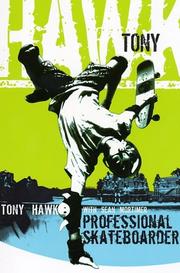
Hawk's autobiography doubles as an insider's technical and motivational guide — reading how the world's most famous skater approached learning and progressing tricks gives intermediate learners a powerful mental framework for their own practice.
Culture & History: The Soul of Skating
IntermediateUnderstand the full arc of skateboarding history — from 1950s sidewalk surfing to modern street culture — and appreciate the art, music, and subculture identity that make skating more than a sport.
▸ Study plan for this stage
Pace: 6–8 weeks total: Weeks 1–4 for "The Answer Is Never" (~25–30 pages/day, reading reflectively and journaling), Weeks 5–8 for "Disposable" (~20–25 pages/day, pausing frequently to study individual graphics and their cultural context)
- The evolutionary arc of skateboarding from 1950s 'sidewalk surfing' through the Z-Boys era, the boom-bust cycles of the 1970s–80s, and the rise of modern street skating — as lived and narrated in Weyland's personal, literary account in 'The Answer Is Never'
- Skateboarding as a countercultural identity, not merely a sport — how skaters have historically defined themselves in opposition to mainstream athletic culture, a theme Weyland explores through memoir, road trips, and community portraits
- The role of the skate magazine ecosystem (especially Thrasher) as the primary vehicle for transmitting skate culture, slang, aesthetics, and values across generations — central to understanding the world Cliver's art inhabited
- Skateboard graphic design as visual language: how Sean Cliver's work in 'Disposable' documents the evolution of deck art from simple logos to complex, provocative, and often subversive imagery that encoded skate culture's values
- The relationship between skateboarding and adjacent subcultures — punk music, graffiti, DIY zine culture, and street art — and how those cross-pollinations shaped skating's aesthetic identity as shown across both books
- The economics and politics of the skate industry: how small rider-owned companies, board graphics, and sponsorship shaped (and were shaped by) skate culture's anti-establishment ethos, as chronicled in 'Disposable'
- Memory, nostalgia, and authenticity in skate culture — both Weyland and Cliver grapple with what it means to preserve and transmit a subculture's history without sanitizing it
- The geographic spread of skateboarding — from California's pools and ditches to global street spots — and how place and environment have always been inseparable from skate identity
- According to Weyland's narrative in 'The Answer Is Never,' what social and geographic conditions in 1950s–60s California gave birth to skateboarding, and how did those roots shape the culture's DIY, outsider identity for decades afterward?
- How does Weyland use his own biography and road-trip structure in 'The Answer Is Never' to argue that skateboarding is a way of life rather than a hobby or competitive sport — and do you find that argument convincing?
- In 'Disposable,' how does Cliver trace the shift in skateboard graphic design from functional branding to full-blown subversive art, and what does that shift reveal about the maturation of skate culture's self-awareness?
- Both 'The Answer Is Never' and 'Disposable' engage with the tension between underground authenticity and commercial co-optation. How does each author/artist navigate or resolve that tension differently?
- What role did specific skate companies and their graphic identities (as documented in 'Disposable') play in creating regional and stylistic 'tribes' within the broader skate community?
- After reading both books, how would you define 'skate culture' to someone who has never stepped on a board — and which images, stories, or arguments from these two books would you use as evidence?
- **Timeline Wall:** As you read 'The Answer Is Never,' build a running visual timeline (paper or digital) marking key eras, events, and cultural shifts Weyland describes. After finishing 'Disposable,' annotate the same timeline with corresponding graphic/design moments Cliver documents — look for where the two narratives overlap or diverge.
- **Graphic Analysis Journal:** Choose 10 deck graphics from 'Disposable' that span different decades. For each, write a short paragraph (5–7 sentences) analyzing: What visual style is used? What cultural references does it draw on? What does it say about the moment in skate history it came from?
- **Comparative Essay (500–700 words):** Write a response to this prompt — 'Weyland tells skate history through stories; Cliver tells it through images. Which approach gives you a more complete understanding of the culture, and why?' Use specific examples from both books.
- **Soundtrack Mapping:** Weyland references music throughout 'The Answer Is Never.' Compile a playlist of bands/genres he mentions and listen while re-reading key passages. Then find 3–5 deck graphics in 'Disposable' that feel visually connected to that same music — write a brief note explaining each connection.
- **Local Skate History Interview:** Talk to at least one skater in your area (any age) and ask them: when they started, what drew them in, and what skate media (magazines, videos, graphics) shaped their identity. Compare their story to the arc described in Weyland's book — what's universal, what's local?
- **'Soul vs. Industry' Debate Prep:** Using evidence from both books, prepare a 5-minute verbal argument for *both* sides of this question: 'Commercial growth has destroyed skate culture's soul' (pro) vs. 'Commercial growth allowed skate culture to survive and spread' (con). Articulating both sides will sharpen your understanding of the central tension in both texts.
Next up: By grounding you in skateboarding's cultural DNA — its history, visual language, and subcultural values — this stage gives you the essential context needed to understand the technical and stylistic evolution of skating itself, so the next stage's focus on technique, progression, and skating's athletic dimensions will feel rooted in meaning rather than abstracted from it.
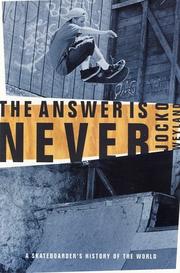
Weyland's literary memoir-meets-history is the most critically acclaimed prose account of skateboarding's subculture; reading it first gives the learner an emotional and cultural anchor for the history that follows.

Cliver, a legendary board graphic artist, traces the visual and artistic history of skating through deck art — revealing how aesthetics, identity, and rebellion shaped the culture decade by decade.
Discussion
Keep reading
Paths that share books, cover the same subject, or open a related topic.