Stephanie Plum Reading Order: Where to Start
Janet Evanovich made the reading order easy on purpose: the numbered novels count up from One for the Money, so the sequence is never in doubt. What is in doubt is where to stop, since the series runs past thirty volumes and the formula settles early. This path takes the first dozen or so in order, flags the between-the-numbers holiday novellas as genuinely optional, and is honest about where the returns start diminishing.
Start here: the first three
BeginnerMeet Stephanie, Morelli, Ranger and Grandma Mazur, and find out whether the Trenton comic-crime voice is for you.
▸ Study plan for this stage
Pace: A week, comfortably. These are 300-page comic mysteries with very short chapters and a lot of white space; most readers do one in an evening and two on a weekend. Read them in numbered order, which the titles make impossible to get wrong. Set your expectations correctly at the outset and you will en
- The premise in one line — an unemployed lingerie buyer with no relevant skills becomes a bail bond enforcement agent because her cousin owes her a favour — and the fact that incompetence is the engine of the comedy, not a flaw to be outgrown
- The Burg as a closed world: Trenton's Italian and Hungarian neighbourhood, where everyone knows everyone, funerals are social events, and your mother hears about your day before you get home
- Grandma Mazur, who becomes the series' comic centre in book two, and the funeral-home set pieces that are the most reliable laugh Evanovich has
- Joe Morelli as the childhood-history option and Carlos Ranger as the unknowable option, established as a triangle in the first three books and sustained deliberately for the next thirty
- Lula joining permanently in Three to Get Deadly, completing the ensemble — after this the cast does not meaningfully change again
- One for the Money as the outlier: a genuinely tight thriller plot with real menace, tighter than anything that follows, and the reason the series got taken seriously at the start
- The running gags being installed on purpose — the destroyed cars, the hamster, the doughnuts, the Buick — each of which will recur in almost every subsequent volume
- Why is One for the Money a better mystery than the two that follow, and what does the series trade away to get funnier?
- What does the Burg do for the books that a generic city could not?
- What does each of Morelli and Ranger represent, and why is it structurally necessary that Stephanie never chooses?
- By the end of book three the full cast is in place. Name the six people the rest of the series runs on and what each is for.
- Which of the running gags is doing real work and which is filler? You will be testing this answer for another eleven books.
- Write down the beats of book two on one line each. You have just written the outline of the next twenty-eight novels, and having it on paper makes the pleasure a knowing one rather than a disappointed one.
- Note how Evanovich handles violence — it happens, people die, and the tone snaps back within a page. Deciding early whether that switch works for you will tell you how far down this path to go.
- Keep a tally of Stephanie's destroyed vehicles starting from book one. It is the series' oldest joke and the count is genuinely funny by book ten.
- Read the first chapter of book one aloud. The voice is the entire proposition and fifteen minutes is enough to know if it is yours.
Next up: The cast is assembled and the formula is visible, which is the exact point at which the next four books put it to work at full strength.

An unemployed lingerie buyer blackmails her cousin into a bounty-hunting job and goes after the cop she slept with in high school. Book one, unambiguously, and the tightest plot in the series — it was written as a standalone crime novel before it became a franchise.
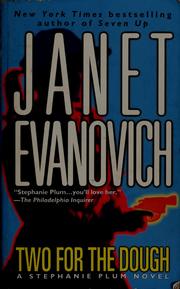
Grandma Mazur moves to the centre of the comedy and the funeral-home set pieces begin. The series finds its actual register here.
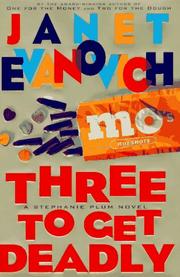
A beloved local ice-cream man skips bail. Lula joins the cast permanently, completing the ensemble the rest of the books run on.
The run that hooks people
BeginnerRead the stretch where the comedy, the cases and the Morelli-versus-Ranger triangle are all working at once.
▸ Study plan for this stage
Pace: Two weeks. Books four through seven are the stretch most long-term fans name as the peak, and they are best read consecutively — the comedy compounds when the running jokes are fresh in mind. Four to Score, High Five, Hot Six and Seven Up were published a year apart in the late nineties, and the ser
- Peak ensemble comedy in Four to Score, where the supporting cast rather than the plot carries the book and Sally Sweet arrives
- High Five's ending, the most argued-about page in the series, which refuses to resolve the triangle and establishes that it never will be resolved
- Hot Six inverting the premise by making Ranger the skip, which is the most page time he gets anywhere in thirty books and the best look at him the series offers
- Seven Up as the last novel where the mystery is as strong as the jokes — after this the case is reliably the weakest element
- Comic crime as a genre with rules: the danger has to be real enough to drive the plot and cartoonish enough not to break the tone, and this stretch is where Evanovich holds that line best
- The Trenton supporting characters proliferating — every book now adds an eccentric who may or may not return, and the hit rate is high in these four
- Why the triangle must stay open: resolving it would end the series, and the books are honest enough about this that Stephanie says so herself
- What actually happens at the end of High Five, and why does Evanovich stage it the way she does?
- Hot Six is the best Ranger book. What does the series learn about him, and what does it deliberately withhold?
- In Seven Up, does the mystery hold up on its own terms? Try to summarise the plot without mentioning a joke.
- Which of these four is funniest, and is it the same as the one with the best plot?
- The triangle is now permanent by design. Does knowing that make the romantic thread more enjoyable or less?
- Read these four with no other fiction in between. The series rewards immersion and punishes gaps, because the humour depends on accumulated familiarity.
- After High Five, write down what you want to happen with Morelli and Ranger. Keep it — the last stage of this path is partly about what the series does with that wish.
- Pick the single funniest scene in the four and work out why it lands. It will almost certainly involve Grandma Mazur, Lula, and a setting where they should not be.
- Note the first time a plot element feels recycled from an earlier book. In this stretch it should be hard to find, which is the measurable definition of a peak.
Next up: You have seen the formula at full power, so the next four books are the place to watch it become visible from the inside — including one where the series says so out loud.
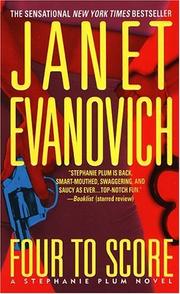
Introduces Sally Sweet and pushes the ensemble comedy further than the plot. Most fans point to this stretch as the peak.
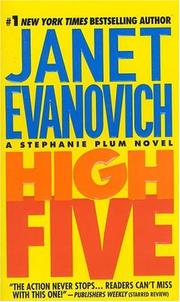
A missing uncle, a very short mystery and the most argued-about ending in the series, which deliberately refuses to resolve the triangle.
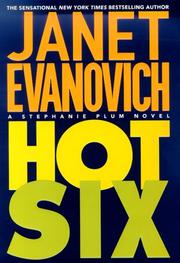
Ranger is the skip, which flips the premise and gives him the most page time he gets anywhere.
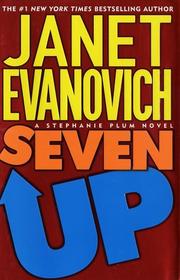
An elderly fugitive and a genuinely good mystery. The last book where the case is as strong as the comedy.
Into the double digits
BeginnerKeep going through the books where the formula is locked in but still fresh, and start noticing the repetition.
▸ Study plan for this stage
Pace: Two to three weeks, and this is where a slower pace starts to help. Books eight through eleven are still enjoyable and still numbered unmistakably, but the pattern is now fully locked and reading four in a row can flatten them. Alternate with something else if you notice the plots blurring. To the N
- Hard Eight going darker than the series usually permits, with a custody case and a villain who is genuinely unpleasant rather than comic
- To the Nines taking Stephanie out of Trenton to Las Vegas, one of the very few real changes of scene in the whole run, and a useful demonstration of how much the Burg was carrying
- Ten Big Ones moving the romance further than the five books around it, largely by stranding Stephanie in Ranger's apartment
- Eleven on Top as the series commenting on itself: Stephanie quits bounty hunting, tries ordinary jobs, and the book is effectively about whether the formula can be escaped
- Diminishing returns as a readable phenomenon — the jokes are the same jokes, and whether that is comfort or fatigue is a genuine matter of taste rather than a defect
- The stakes problem: after ten books the reader knows nobody central will be seriously harmed, and Evanovich stops pretending otherwise
- The audiobook question, which becomes practical here — many long-term readers switch to audio around this point because the voice-driven comedy survives distraction better than the plots do
- Hard Eight is nastier than its neighbours. Does the tone survive it, and does Evanovich adjust anything to compensate?
- What does Las Vegas give To the Nines, and what does the book lose by leaving Trenton?
- Eleven on Top has Stephanie reject the premise of her own series. What conclusion does it reach, and was any other conclusion possible?
- At what point in these four did you start reading for the characters rather than the case? Name the book.
- If you handed a friend one book from this stage, which would it be, and would you tell them to read the previous seven first?
- Read the back-cover summaries of books eight through eleven and try to match each to its plot without checking. Struggling is not a failure of memory; it is the honest state of the series at this point.
- In Eleven on Top, list the jobs Stephanie tries and what goes wrong in each. It is a good comic structure and it is the closest the series comes to a thesis.
- Deliberately take a week off after Ten Big Ones and notice whether you miss it. That reaction is the best data you have for how far to go.
- Update your destroyed-vehicle tally. It should be absurd by now, which is the joke working exactly as intended.
Next up: The formula is now fully exposed, which is the right condition for the last stage, where the long arc makes its final real move and you decide what to do about the twenty-odd books beyond it.
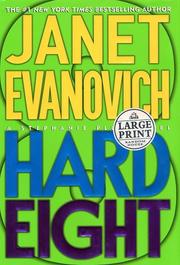
A custody case that turns nastier than the series usually allows, with a memorable villain.
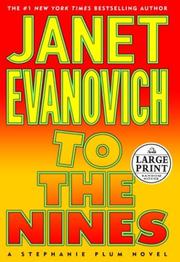
A visa-fraud plot that takes Stephanie out of Trenton and to Las Vegas, one of the few real changes of scene.
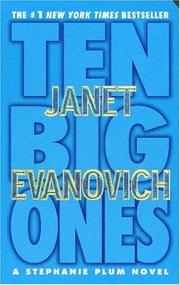
A gang war and an extended stay in Ranger's apartment. The romance thread advances here more than in the five books around it.
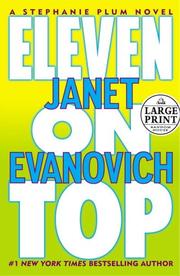
Stephanie quits bounty hunting and tries ordinary jobs. Read it as the series commenting on its own formula, which is the most self-aware it ever gets.
Where it settles, and the between-the-numbers books
IntermediateFinish the core run, understand where the holiday novellas fit, and make an informed decision about the remaining twenty-odd volumes.
▸ Study plan for this stage
Pace: Two weeks for the two numbered novels, plus a couple of evenings for the novellas if you want them. Read Twelve Sharp and Lean Mean Thirteen in order. Then handle the between-the-numbers books, which are the one genuine ordering question in an otherwise numbered series: Visions of Sugar Plums is a C
- Twelve Sharp as the last book that moves the long arc, opening Ranger's backstory and giving the triangle its most substantial development in a decade
- Lean Mean Thirteen as a competent, enjoyable, entirely representative Stephanie Plum novel — and the point at which representative becomes the whole description
- Where the numbering stops meaning sequence: from roughly book fourteen onward the novels can be read in any order or dipped into at random, because nothing carries forward
- The between-the-numbers novellas as a separate product — holiday-length, fantastical, and deliberately outside the continuity, which is why they are placed at the end of this path rather than at their nominal chronological slots
- The honest arithmetic of the series: more than thirty numbered novels exist, this path takes fourteen, and the remaining twenty-plus are the same book done again with affection
- Comfort reading as a legitimate category — the later Plums are good at being exactly what they are, and the failure mode is expecting development, not enjoying repetition
- A clean stopping point matters more in a series with no ending than in one with a planned conclusion, which is why Twelve Sharp is the recommendation
- What does Twelve Sharp reveal about Ranger, and why does the series wait twelve books to do it?
- After Lean Mean Thirteen, can you identify anything unresolved that a later book would have to address? The answer is the argument for stopping.
- Do the novellas belong to the same series? Compare the supernatural helper in Visions of Sugar Plums with anything in the numbered books.
- Is a formula series that never develops a failure or a genre with different criteria? Answer using these fourteen books as evidence.
- Look back at what you wrote after High Five about wanting the triangle resolved. Given what the series has done since, do you still want it?
- Stop after Twelve Sharp if you want the most satisfying shape, or after Lean Mean Thirteen if you want a full sense of the settled formula. Deciding in advance is better than drifting to book twenty-two and resenting it.
- Read one of the novellas and one numbered novel in the same week. The comparison makes clear why the novellas are optional in a way no summary can.
- Write a one-paragraph review of the series as a whole. Judging comic crime on its own terms is a genuinely useful reading skill and this is a good place to practise it.
- If you want to keep going, do not start at fourteen and grind. Pick up whichever later title has a premise that amuses you, read it standalone, and treat the series as a shelf rather than a queue.
Next up: This is the end of the path. Fourteen books give you the whole of what Stephanie Plum has to offer — the tight first novel, the funny peak, the self-aware middle, and the last real move in the long arc — and everything beyond it is optional by the series' own design.

Ranger's backstory finally opens up. This is the last book that meaningfully moves the long arc, and a clean place to stop with a complete experience.
Stephanie's ex-husband disappears and she is the suspect. Enjoyable, but the pattern is now fully set, and from here the numbers can honestly be read in any order or dipped into at random.
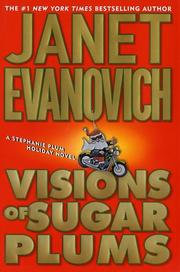
The first between-the-numbers novella, a Christmas story with a faintly supernatural helper. It sits between books eight and nine but is skippable: it is not required by anything and the light fantasy element is unlike the rest of the series.
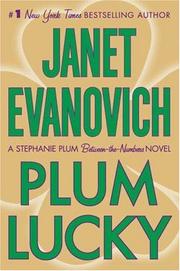
The holiday novellas continue with Grandma Mazur, a bag of money and a man who thinks he is a leprechaun. Short, self-contained, and worth reading only if you want the complete run — none of the numbered books depend on them.
Discussion
Keep reading
Paths that share books, cover the same subject, or open a related topic.