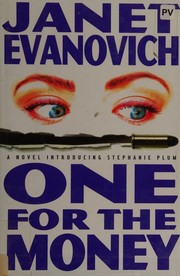
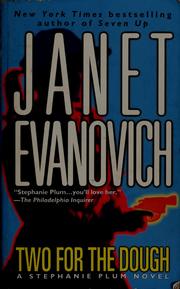
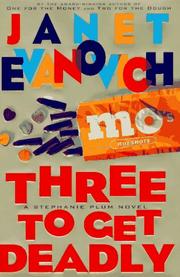
Start with One for the Money. The titles count, so nobody gets the sequence wrong, but plenty of readers get talked into starting somewhere in the middle on the grounds that this is a formula series and the formula is the same everywhere. That advice is half right and still bad. The first three books install a cast that then never meaningfully changes, and the jokes you will be reading for another eleven volumes are funny in proportion to how well you know the people making them.
There is a second reason to start at the beginning. One for the Money is the outlier of the whole run: a genuinely tight thriller plot with real menace, tighter than anything that follows, and the reason the series got taken seriously at the start. It is the best mystery here and the least representative book on the shelf, which makes it a strange place to end up rather than begin.
Set expectations correctly and you will enjoy the whole path more. This is a formula series, deliberately and openly, and the formula is the product. Nobody reads book twenty for the mystery.
The first three
One for the Money, Two for the dough, Three to Get Deadly.
An unemployed lingerie buyer with no relevant skills becomes a bail bond enforcement agent because her cousin owes her a favour, and her incompetence is the engine of the comedy rather than a flaw she outgrows. The Burg — Trenton's Italian and Hungarian neighbourhood, where funerals are social events and your mother hears about your day before you get home — is the closed world everything happens inside. Grandma Mazur becomes the comic centre in book two. Lula joins permanently in Three to Get Deadly, after which the ensemble is complete.
The love triangle is also installed here: Joe Morelli as the childhood-history option, Ranger as the unknowable one. It is sustained deliberately for the next thirty books, and Stephanie says so herself.
The run that hooks people
Four to score, High Five, Hot Six, Seven Up. This is the stretch long-term fans name as the peak and it should be read consecutively, because the comedy compounds when the running jokes are fresh.
Four to score is peak ensemble comedy, carried by the supporting cast rather than the plot. High Five ends on the most argued-about page in the series, which refuses the triangle and establishes that it will never be resolved. Hot Six inverts the premise by making Ranger the skip, and is the best look at him the series ever offers. Seven Up is the last novel where the mystery is as strong as the jokes.
Into the double digits
Hard eight, To the nines, Ten Big Ones, Eleven on Top. Slow down here — the pattern is now fully locked, and four in a row can flatten them.
Hard eight goes darker than the series usually permits. To the nines leaves Trenton for Las Vegas, one of very few real changes of scene, and demonstrates how much the Burg was carrying. Eleven on Top is the most interesting book of the stage for reasons that have nothing to do with its mystery: Stephanie quits bounty hunting and tries ordinary jobs, and the novel is effectively about whether the formula can be escaped.
Where it settles, and the novellas
Twelve Sharp is the last book that moves the long arc, opening Ranger's backstory and giving the triangle its most substantial development in a decade. Lean Mean Thirteen is a competent, enjoyable, entirely representative entry — and representative becomes the whole description from here.
Then the one genuine ordering question in an otherwise numbered series. Visions of sugar plums is a Christmas story that sits between books eight and nine; Plum Lucky is one of the later between-the-numbers novellas. This path places both at the end rather than at their nominal slots, because they are short, self-contained, skippable, and their light supernatural element sits oddly against the realism of the main books. No numbered novel requires either.
Where to stop
Stop after Twelve Sharp if you want the arc, or after Lean Mean Thirteen if you want one more. More than thirty numbered novels exist and the series is still going; the remaining twenty-plus are the same book done again with affection, and from roughly book fourteen they can be read in any order or dipped into at random because nothing carries forward.
That is not a complaint. Comfort reading is a legitimate category and the later Plums are good at being exactly what they are — the failure mode is expecting development, not enjoying repetition. A clean stopping point simply matters more in a series with no ending. If you want something with an actual destination next, have a look through the other paths.
Follow the full ordered path here: Stephanie Plum Reading Order: Where to Start.