Stanislaw Lem Reading Order: Where to Start
Lem wrote in Polish, and the English editions vary a great deal in quality and route — some were translated indirectly, and the difference between versions of the same book can be large, so it is worth checking which edition you have before blaming the author for a flat sentence. As for order, there is no continuity to respect: the sensible sequence is by mode. Start with the one novel everybody knows, then the comic and satirical fiction, then the sombre first-contact novels, and finally the fake reviews and the philosophy, which assume you already find his jokes funny.
Start With Solaris
IntermediateRead the novel that states Lem's central idea — that a genuinely alien mind might be permanently unintelligible to us.
▸ Study plan for this stage
Pace: 1-2 weeks for 229 pages, but read it slower than the length suggests: roughly half the book is lectures, library scenes and summaries of a fictional scientific literature, and skimming those is skipping the argument. Before you buy, check what your edition was translated from. Lem wrote in Polish, a
- A sentient ocean covering a planet responds to a research station's probing by producing physical copies of the scientists' dead
- Lem's central idea, stated most clearly here: a genuinely alien mind may be permanently unintelligible to us, and contact may be impossible in principle rather than in practice
- Solaristics - the invented century of failed scholarship about the planet - is the novel's best joke and its most serious argument about how science handles what it cannot explain
- The visitors are not ghosts and not punishment; the refusal to explain their purpose is the novel's discipline
- Kelvin's guilt is the emotional engine, but Lem consistently subordinates psychology to epistemology
- This is the book he is famous for and the clearest single statement of a theme every other book on this path approaches from a different angle
- The film adaptations foreground the romance; Lem publicly objected to that emphasis, and the novel is much colder than its screen reputation
- What does the ocean want, and what is the strongest evidence available in the text either way?
- Why does Lem spend so many pages summarising a fictional scientific literature?
- What is Kelvin's actual moral position regarding his visitor, and does the novel resolve it?
- How does Solaris argue that contact might be impossible rather than merely difficult?
- If you have seen either film, what has been added that the novel refuses?
- Read the solaristics chapters carefully rather than skimming them. They are the book's argument and most readers who find Solaris slow are finding those pages slow.
- Check your edition's copyright page for what language it was translated from. It takes one minute and it changes what you can fairly conclude about the prose.
- Write down every hypothesis about the ocean the novel offers, then note which one it endorses. The answer is none, and that is the point.
- After finishing, write 200 words on what would count as successful contact. Every later Lem book on this path is a different attempt at the same question.
Next up: With the central idea in hand, the next stage introduces the other half of Lem - the satirist and fabulist, who is nothing like the author of this book.

A sentient ocean that answers a research station's probing by resurrecting its scientists' dead. The book he is famous for, and the clearest single statement of the theme every other book here approaches from a different angle.
The Comic Lem
IntermediateMeet the satirist and fabulist, who is at least half of what he was, and who is nothing like the author of Solaris.
▸ Study plan for this stage
Pace: 4-5 weeks. The Cyberiad is 325 pages of self-contained fables and is best read two or three at a time rather than straight through - the verbal density is exhausting in bulk and the jokes blur. The two Ijon Tichy books are lighter and go faster. Translation matters more here than anywhere else in th
- The Cyberiad is a cycle of fables about two robot constructors who build machines to solve absurd problems, told in the register of a medieval romance
- Lem was a comic writer at least as much as a philosophical one, and readers who know only Solaris have met half of him
- The comedy is intellectual: the jokes are about logic, probability, engineering and the pretensions of scholarship
- Ijon Tichy is a Munchausen of space, and his voyages include the most famous time-loop story in science fiction
- The Futurological Congress is Tichy in a hallucinogenic satire on a chemically pacified future, and it is where the comedy turns genuinely bleak
- Reading the sunnier books before the dark one is deliberate: the Congress's horror depends on knowing the register it is corrupting
- The wordplay is the substance rather than the surface - a machine that makes things beginning with a particular letter is a joke that only exists in language
- What are the Cyberiad fables actually satirising - technology, scholarship, or the ambitions of reason itself?
- How does the medieval-romance diction change the effect of stories about robots?
- What does the time-loop story do that a straightforward paradox story would not?
- At what point does The Futurological Congress stop being funny, and is the shift controlled?
- How much of what you enjoyed in this stage do you think is Lem and how much is the English rewriting? Can you tell?
- Read one Cyberiad fable aloud. The invented vocabulary and mock-heroic rhythm are performance writing and the page undersells them.
- Find a passage of dense wordplay and try to imagine what the Polish must have done. It is the most direct way to appreciate what a translator of this material has to accomplish.
- Read no more than three fables in a sitting. The Cyberiad is the book most often abandoned out of surfeit rather than difficulty.
- After The Futurological Congress, list what it satirises. It is more specific about pharmaceutical politics and managed consent than its reputation as a drug comedy suggests.
Next up: You have now met the two extremes of Lem's range, and the straighter science fiction in the next stage sits between them - conventional adventures carrying the same ideas.
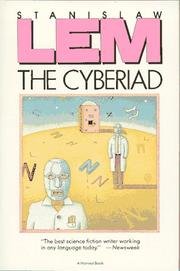
Fables about two robot constructors who build machines to solve absurd problems. Verbally dazzling, extremely funny, and the best demonstration that Lem was a comic writer as much as a philosophical one.

The voyages of Ijon Tichy, a Munchausen of space, including the famous time-loop story. Lighter than The Cyberiad and a natural companion to it.

Tichy again, in a hallucinogenic satire on a chemically pacified future. The point where the comedy turns genuinely bleak, so read it after the sunnier two.
The Space Novels
IntermediateRead the straighter science fiction, where the ideas are delivered inside conventional adventure structures.
▸ Study plan for this stage
Pace: 4-5 weeks. These are the most conventionally structured novels on the path and the easiest to read - actual plots, actual crews, actual jeopardy. Two practical notes. First, the listing for the first novel in this stage carries a marketplace-style title with a date appended; it is the ordinary novel
- The cruiser novel is the most conventionally exciting thing Lem wrote and the easiest to recommend to a sceptical reader
- Evolved machine swarms as an alien intelligence with no mind to speak to - the Solaris problem posed in a form that can shoot back
- Necroevolution - non-biological things evolving under selection pressure - is a genuinely original idea and the novel's real payload
- Pirx is a competent, unheroic spaceman dealing with malfunctions and ambiguous machines, and the stories are warmer and more procedural than anything else here
- The Pirx stories repeatedly turn on whether a machine's behaviour indicates intent, which is Lem's theme at workplace scale
- Return from the Stars is about an astronaut coming home to an Earth that has surgically removed aggression from its population
- That novel asks whether safety is worth what it costs, and is the most emotionally direct book Lem wrote
- This stage shows Lem working inside genre conventions rather than against them, which is useful context for how deliberately he abandons them elsewhere
- How does the machine swarm differ from the ocean of Solaris as a model of the alien?
- What is necroevolution, and why does Lem think it is more plausible than an alien civilisation?
- What makes Pirx a good protagonist for stories about ambiguous machines?
- In Return from the Stars, what has been lost along with the aggression, and does Lem think the trade was worth it?
- Do these books lose anything by being conventionally plotted, or do the conventions carry the ideas better?
- Note every point in the Pirx stories where a machine's behaviour could be either a fault or a decision. The ambiguity is the entire form and it recurs constantly.
- Compare the alien in the cruiser novel with the ocean in Solaris. Writing two paragraphs on the difference clarifies what Lem thought unintelligibility actually was.
- Read Return from the Stars alongside your own view of a risk-free society. It is the most argumentative of the three and it wants a reader who disagrees.
- Check the copyright page of each of these editions for the translation route. Having done it once for Solaris, doing it consistently builds the habit this author requires.
Next up: The genre novels have taken the first-contact question as far as adventure structures allow, and the next stage is where Lem drops the structures and pursues it to the end.
A cruiser investigates a lost ship and finds evolved machine swarms. The most conventionally exciting Lem novel and the easiest to recommend to a sceptical reader.
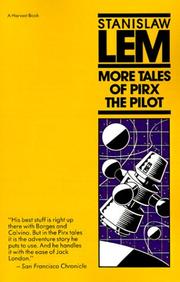
Linked stories about a competent, unheroic spaceman dealing with malfunctions and ambiguous machines. Warmer and more procedural than anything else here.

An astronaut comes back to an Earth that has surgically removed aggression from its population. A quieter novel about whether safety is worth what it costs.
The Sombre Novels
IntermediateTake on the difficult books about the limits of knowledge, which are the deepest thing he did.
▸ Study plan for this stage
Pace: 6-8 weeks for three demanding books. His Master's Voice is 239 pages and is essentially a scientific memoir with almost no action; read it slowly and expect long stretches of argument. Fiasco is his last novel and the bleakest, and it takes its time. Memoirs Found in a Bathtub is 204 pages and the m
- His Master's Voice is the Solaris argument made rigorous: scientists fail to decode a signal from space, and the novel becomes an essay on how much of any interpretation is projection
- The narrator is a mathematician writing in retrospect, and his self-suspicion is the book's method
- Lem is arguing that we cannot distinguish a message from noise without assuming what the sender is like, which is the deepest version of his theme
- Fiasco is the summary verdict: humanity finally achieves contact and destroys what it contacts, largely through its own certainty
- Reading Fiasco last among the novels is right - it reads as the final answer to a question the earlier books kept asking
- Memoirs Found in a Bathtub is set inside an underground bureaucracy where every document may be a forgery and every person may be an agent
- That book is also a political novel written from inside a surveillance state, and the paranoia is not merely formal
- These three are the deepest thing Lem did and the least entertaining; the difficulty is the content rather than an obstacle to it
- What exactly do the scientists in His Master's Voice fail at, and is the failure epistemic or moral?
- How does the retrospective narrator's self-suspicion function as an argument rather than a mood?
- What causes the disaster in Fiasco, and how much of it is technological versus dispositional?
- Is Memoirs Found in a Bathtub about bureaucracy, about interpretation, or about a specific political system?
- Taken together, do these books make a claim about knowledge or only about aliens?
- In His Master's Voice, list each interpretation of the signal in the order it is proposed. The sequence is an argument about how science actually proceeds and it is easy to lose.
- Write down what you think the signal is, then note what in the text supports it. The book is engineered to make you do exactly what its scientists do.
- Read Memoirs Found in a Bathtub in short sittings. It has no forward momentum by design and long sessions produce fatigue rather than comprehension.
- After Fiasco, revisit your definition of successful contact from the first stage. Lem spent a career narrowing the space in which that phrase means anything.
Next up: The fiction has now taken the argument as far as it goes, and the last stage is where Lem abandons fiction's furniture entirely and states the position directly.

Scientists fail to decode a signal from space, and the novel becomes an essay on how much of any interpretation is projection. Solaris's argument made rigorous, which is why it comes after it.

His last novel, and the bleakest possible answer to the first-contact question. It reads as the summary verdict on everything the earlier books tested.

A Kafkaesque nightmare inside an underground bureaucracy where nothing can be verified. The most formally difficult of the novels and a good test of how far you want to follow him.
The Experiments And The Philosophy
IntermediateFinish with the books that abandon fiction's furniture entirely, and with the non-fiction that underlies all of it.
▸ Study plan for this stage
Pace: 5-6 weeks for about 740 pages (A Perfect Vacuum 256, Summa Technologiae 488). A Perfect Vacuum is a collection of reviews of books that do not exist, including a review of itself, and reads best a piece at a time - each is a self-contained joke and an idea. Summa Technologiae is a genuine philosophi
- A Perfect Vacuum reviews imaginary books, which lets Lem develop an idea to its conclusion without writing the novel around it
- The form is a joke about criticism and also a genuine efficiency - the reviews contain more ideas per page than the novels
- Reviewing itself inside itself is the collection's defining move and its clearest statement about self-reference
- Summa Technologiae is a 1964 treatise on where technology is heading, written before almost all of the technology it discusses existed
- It anticipates virtual reality, machine evolution, nanotechnology and the engineering of biology, and does so as argument rather than prophecy
- The treatise is the intellectual source of most of the fiction: read it last and you will recognise the origin of nearly every novel on this path
- Lem thought of himself as a philosopher who wrote fiction, and this stage is where that self-assessment becomes checkable
- Both books assume you already find his jokes funny and already care about his questions, which is why they are the final stage rather than the first
- What does the imaginary-review form let Lem do that a story could not?
- Which of the non-existent books would you most want to read, and what does that tell you about what the reviews are actually delivering?
- What is the central argument of Summa Technologiae about the relationship between technological and biological evolution?
- Which of its predictions has aged best, and which was wrong in an interesting way?
- Having finished the path, is Lem a novelist with philosophical interests or a philosopher who used fiction? Does the distinction hold?
- Read the self-reviewing piece in A Perfect Vacuum twice. It is the collection's thesis and the second pass is where the recursion resolves.
- For Summa Technologiae, keep a list of predictions and mark each one as arrived, partially arrived, or wrong. It is the most useful reading aid the book has.
- Pick one novel from earlier in this path and find its argument in the treatise. The correspondence is close and finding it yourself is the payoff for the reading order.
- Write your own reading order for Lem in five lines, and say plainly what you would tell someone about editions and translation routes. That warning is the most practically useful thing this path can leave you with.
Next up: The path closes here; the natural continuations are Lem's remaining fiction, or the philosophy of mind and information theory his treatise was arguing with sixty years early.

Reviews of books that do not exist, including a review of A Perfect Vacuum. Delightful if you already know his range, baffling as an introduction.

His 1964 philosophical treatise on where technology is heading, which anticipated virtual reality, nanotechnology and machine evolution. Non-fiction and demanding, and the intellectual source of most of the fiction above.
Discussion
Keep reading
Paths that share books, cover the same subject, or open a related topic.