Squash fundamentals: the best books to learn the court game
This curriculum takes a beginner squash player from zero knowledge to tactically sharp competitor across four progressive stages. Each stage builds on the last — starting with how the game works and basic stroke mechanics, moving through court movement and shot variety, then into match tactics and mental performance, and finally into advanced coaching frameworks used by elite players.
Foundations: Understanding the Game
BeginnerUnderstand the rules, court, basic strokes (drive, serve, boast), and the fundamental principles of squash so you can play your first rallies with purpose.
▸ Study plan for this stage
Pace: 4–5 weeks, ~20–25 pages/day (approximately 140–175 pages total across both books)
- The squash court layout, dimensions, lines, and how they define play zones and scoring areas
- The fundamental rules of squash including scoring systems, service rules, and rally conduct
- The grip, stance, and footwork foundation that underpin all strokes
- The four basic strokes: drive, serve, boast, and drop—their mechanics, purposes, and when to use them
- The principle of court positioning and how to move efficiently to maintain the T-position
- Tactical fundamentals: how to construct points, control the center court, and pressure your opponent
- The relationship between stroke selection and court geometry in building rallies with purpose
- What are the key dimensions and lines of a squash court, and what role does each play in the game?
- How does the squash scoring system work, and what are the rules for serving and winning points?
- What is the correct grip, stance, and footwork for executing squash strokes effectively?
- How do you execute a drive, serve, boast, and drop, and when should you use each stroke in a rally?
- Why is the T-position important, and how do you move to and from it efficiently?
- How do you construct a rally with purpose by combining strokes and court positioning to pressure your opponent?
- Shadow practice: Perform 10–15 minutes daily of grip, stance, and footwork drills without a ball to build muscle memory
- Court walk-through: Spend 15 minutes on court identifying all lines, zones, and the T-position, then practice moving to the T after imaginary shots
- Serve practice: Execute 20–30 serves from both service boxes, focusing on consistency and placement rather than power
- Wall drills: Hit 50 forehand drives and 50 backhand drives against the front wall, aiming for a consistent target zone
- Boast and drop practice: Hit 20 boasts and 20 drops against the front wall, focusing on height, depth, and control
- Rally construction: Play 5–10 practice rallies with a partner or coach, consciously applying one new tactical principle per rally (e.g., moving to T, controlling the center, or varying stroke selection)
Next up: This stage equips you with the rules, mechanics, and foundational tactics needed to play purposeful rallies; the next stage will build on these basics by developing consistency, speed, and advanced tactical patterns to compete effectively.
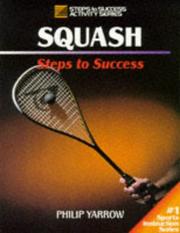
The ideal first book for a beginner — it breaks down every core stroke and movement pattern into clear, illustrated steps. Reading this first gives you the vocabulary and mental models needed for everything that follows.
A highly practical, drill-based companion that reinforces the foundational strokes introduced in Steps to Success, with particular attention to the straight drive and basic court positioning.
Match Tactics, Strategy & the Mental Game
IntermediateBuild a complete match-play toolkit: game plans, reading opponents, managing pressure, winning tight fifth games, and developing the mental resilience to compete consistently.
▸ Study plan for this stage
Pace: 4–5 weeks, ~25–30 pages/day with 2–3 dedicated practice sessions per week on court
- Game analysis and opponent profiling: identifying playing styles, strengths, weaknesses, and tendencies to exploit
- Tactical shot selection: when and why to use attacking, defensive, and positioning shots based on match situation
- Court positioning and movement patterns: controlling the T, anticipating opponent movement, and managing space efficiently
- Pressure management and mental resilience: staying composed in tight situations, managing fatigue, and maintaining focus through five-game matches
- Game plans and match preparation: developing pre-match strategies, adapting in real time, and executing under competitive stress
- Winning tight fifth games: pacing, energy management, psychological momentum, and decision-making when stakes are highest
- Reading the match in real time: adjusting tactics mid-match based on what's working, what isn't, and opponent adjustments
- How do you systematically analyze an opponent's playing style, and what specific weaknesses should you look for before a match?
- What is the relationship between court positioning and tactical shot selection, and how does controlling the T change your options?
- How should your game plan differ when playing an aggressive opponent versus a defensive one, and when should you abandon your plan?
- What mental and physical strategies help you maintain composure and decision-making quality in the fifth game of a match?
- How do you read your opponent's patterns during a match and adjust your tactics in real time without losing focus?
- What role does energy management play in winning tight matches, and how should pacing differ in the first game versus a fifth-game decider?
- Opponent profiling: Watch or play against 2–3 different opponents and document their preferred shots, court positioning, weaknesses, and patterns; create a one-page tactical summary for each
- Game plan development: Write out a detailed pre-match game plan for an upcoming match, including primary tactics, contingency adjustments, and mental cues to stay focused
- Tactical shot drills: Practice 3–4 specific shot sequences (e.g., attacking the backhand, moving opponent side-to-side, defensive recovery) that align with McKenzie's tactical principles
- Court positioning practice: Spend 15–20 minutes per session focusing solely on T-position control, anticipation footwork, and movement efficiency without worrying about shot quality
- Pressure simulation: Play practice matches or games where you deliberately practice staying composed during tight points (e.g., 10–10 in a game); review your decision-making afterward
- Fifth-game simulation: Play or practice a full five-game match at 80–90% intensity, focusing on pacing and energy management; analyze where you lost composure or made poor tactical choices
- Live match analysis: After playing a match, review key points and identify 2–3 tactical adjustments you could have made; compare against your pre-match game plan
Next up: This stage equips you with a complete tactical and mental framework for competitive match play; the next stage will deepen your ability to execute these strategies at the highest level by refining technical consistency, advanced court craft, and championship-level mental conditioning.

McKenzie's second major work shifts focus from drills to match strategy, covering how to construct rallies, exploit weaknesses, and adapt tactics mid-match — the natural progression from his earlier workshop book.
Discussion
Keep reading
Paths that share books, cover the same subject, or open a related topic.