Learn Mandolin: Best Method Books in Order
This curriculum takes a complete beginner from first picking up the mandolin through solid foundational technique, chord vocabulary, and a growing repertoire of tunes. Each stage builds directly on the last — starting with posture, picks, and basic notation, then layering in chords and rhythm, and finally expanding into a rich tune collection and more nuanced technique.
First Steps: Holding the Instrument & Reading Music
BeginnerUnderstand how to hold the mandolin, use a pick correctly, read basic tablature and standard notation, and play simple single-note melodies.
▸ Study plan for this stage
Pace: 2–3 weeks, ~15–20 pages/day, with daily 20–30 minute practice sessions
- Proper mandolin posture and grip: sitting position, arm angle, and how to hold the instrument securely without tension
- Pick technique: correct grip, angle of attack, downstroke and upstroke mechanics, and developing consistent rhythm
- Reading standard musical notation: treble clef, note names on the staff, rhythmic values, and basic time signatures
- Understanding mandolin tablature: string numbers, fret numbers, and how tab relates to standard notation
- The mandolin's tuning and string layout: standard GDAE tuning and the relationship between strings
- Playing single-note melodies: finger placement on the fretboard, fretting technique, and coordinating pick and fretting hand
- Basic rhythm and timing: counting beats, understanding quarter notes, eighth notes, and half notes in simple time signatures
- How should you sit and position your mandolin to maintain proper posture and avoid tension or injury?
- What is the correct way to hold a pick, and how does pick angle affect the sound and control of your playing?
- How do you read a note on the treble clef staff, and what are the note names on the lines and spaces?
- How does mandolin tablature work, and how do you correlate tab numbers with actual frets and strings on the instrument?
- What is standard GDAE tuning, and how do you identify each string on the mandolin?
- How do you fret a note cleanly and play a simple single-note melody with proper pick technique and timing?
- Practice the proper sitting position and mandolin hold for 5 minutes daily without playing, focusing on relaxed shoulders and correct arm angle
- Perform pick-grip exercises: hold the pick correctly and practice slow downstrokes and upstrokes on a single string for 10 minutes, aiming for consistent tone and angle
- Identify and name all notes on the treble clef staff (lines and spaces) using flashcards or written drills for 5–10 minutes daily
- Read simple tablature exercises from the book, playing each tab line slowly and deliberately to coordinate pick and fretting hand
- Tune your mandolin daily using the standard GDAE tuning (with a tuner if available) and practice identifying each string by ear and sight
- Play the single-note melodies and simple songs from the book, starting at a slow tempo and gradually increasing speed while maintaining accuracy
- Practice counting beats aloud while playing simple rhythmic patterns to internalize timing and develop steady rhythm
Next up: This stage establishes the physical and foundational reading skills needed to progress to playing chords and more complex melodies, setting the stage for developing finger dexterity and understanding harmonic structures.
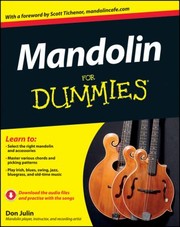
The most accessible entry point available — covers anatomy, tuning, pick technique, and basic notation in plain language. Read this first to demystify the instrument entirely.
Chords & Rhythm: Building the Harmonic Foundation
BeginnerLearn essential open and movable chord shapes, develop solid strumming and chop rhythm technique, and understand how chords fit together in common keys.
▸ Study plan for this stage
Pace: 4–5 weeks, ~15–20 pages/day with daily practice sessions (30–45 minutes of chord work and rhythm drills)
- Open chord shapes and their fingering patterns on the mandolin neck
- Movable barre chord shapes and how to transpose them across the fretboard
- Chord families and relationships within major and minor keys
- Strumming and chop rhythm techniques for clean, articulate chord transitions
- Common chord progressions (I–IV–V, ii–V–I, vi–IV–I–V) and their harmonic function
- Reading chord diagrams and understanding fret positions, string assignments, and muting
- Switching between chords smoothly with minimal finger movement and timing accuracy
- What are the finger positions for the most common open chord shapes (G, D, A, Em, Am, C) on mandolin, and how do they differ from guitar voicings?
- How do movable barre chords work, and what are the advantages of learning them for transposing and playing in different keys?
- What is the I–IV–V progression, and why is it fundamental to understanding chord relationships in major keys?
- How do you execute a clean chord transition, and what role does finger positioning and timing play in reducing noise and gaps?
- What is the difference between strumming and chop rhythm technique, and when would you use each in a song?
- Given a chord diagram from the Chord Finder, can you identify which fingers go on which frets and strings, and predict the resulting sound?
- Daily open chord drills: practice fingering G, D, A, Em, Am, and C shapes without looking at the fretboard, aiming for clean sound and consistent finger placement
- Chord transition practice: play two-chord pairs (e.g., G–D, D–A, Am–Em) in 4/4 time, switching every 4 beats, then every 2 beats, then every beat, focusing on smooth handoffs
- Movable chord shapes: learn one barre chord shape (e.g., F-shape or Bm-shape) and practice moving it up and down the fretboard in half-step increments
- Rhythm technique drills: practice downstroke-only strumming, then add upstrokes, then introduce chop rhythm (muted strokes) on a single chord for 5 minutes daily
- Chord progression playthrough: select 3–4 progressions from the Chord Finder (e.g., I–IV–V–I in G, or vi–IV–I–V in Am) and play them repeatedly at a steady tempo (60–80 BPM)
- Chord diagram transcription: pick 5 unfamiliar chords from the Chord Finder each week, diagram them on paper, then play them to internalize the shapes visually and aurally
Next up: Mastering these foundational chords and rhythm techniques equips you with the harmonic and rhythmic vocabulary needed to tackle full song arrangements, where you'll apply these shapes and techniques in real musical contexts with melody, tempo changes, and stylistic variations.

A comprehensive, clearly illustrated chord reference organized for quick lookup — use it as your daily chord dictionary as you work through this stage.
Technique & Style: Tremolo, Scales, and Ornamentation
BeginnerDevelop tremolo, slides, hammer-ons, pull-offs, and scale patterns that give your playing expression and fluency across the neck.
▸ Study plan for this stage
Pace: 4–5 weeks, ~15–20 pages/day with daily practice integration
- Tremolo picking technique and hand positioning for sustained, even tone
- Major and minor scale patterns across all positions on the mandolin neck
- Slide, hammer-on, and pull-off mechanics and musical applications
- Ornamentation techniques (trills, grace notes, turns) and their stylistic contexts
- Connecting scale patterns to create fluent movement across the entire fretboard
- Muscle memory development through systematic, position-by-position practice
- Translating scale knowledge into melodic phrasing and expression
- What is the correct hand position and pick angle for executing a clean tremolo, and how does it differ from regular strumming?
- Can you play major and minor scales in at least three different positions on the mandolin neck?
- How do slides, hammer-ons, and pull-offs differ technically, and when would you use each in a musical phrase?
- What are the key ornamentation techniques covered in the book, and how do they enhance melodic expression?
- How can you use scale patterns to improvise or embellish a simple melody?
- What is the relationship between tremolo technique and maintaining rhythmic consistency in fast passages?
- Practice tremolo picking on single notes for 5–10 minutes daily, focusing on even tone and consistent rhythm at varying tempos (60–120 BPM)
- Work through each major scale pattern in the book, playing one position per day, then combining positions to traverse the full neck
- Practice slides between adjacent notes, then incorporate them into simple melodies from the book
- Execute hammer-ons and pull-offs in isolation, then integrate them into scale runs and melodic phrases
- Play ornamentation patterns (trills, grace notes) slowly at first, then gradually increase tempo while maintaining clarity
- Combine tremolo with scale passages to develop fluency and expression simultaneously
- Record yourself playing scales and tremolo exercises to identify inconsistencies in tone and timing
- Transpose learned scale patterns to different keys to deepen fretboard knowledge and muscle memory
Next up: This stage equips you with the foundational technical vocabulary and fretboard fluency needed to tackle repertoire-based learning, where you'll apply tremolo, scales, and ornamentation to actual songs and styles.

A compact, visual reference for scales and modes across the entire neck — pair it with Tribe's technique exercises to understand where and why to use each scale.
Repertoire: Tunes, Songs & Jam Session Readiness
BeginnerBuild a real-world repertoire of folk, bluegrass, and traditional tunes, and gain the confidence to play along with others at a beginner jam session.
▸ Study plan for this stage
Pace: 4–6 weeks, ~15–20 tunes/week, 30–45 minutes daily
- Reading and interpreting lead sheets and chord charts from a fakebook format
- Recognizing common tune structures (AABB, ABAC, etc.) and how they repeat
- Understanding the relationship between melody, chords, and rhythm in traditional tunes
- Identifying and playing common folk, bluegrass, and traditional tune patterns on mandolin
- Adapting fiddle-oriented melodies to mandolin fingering and technique
- Building muscle memory for frequently-used chord progressions and melodic phrases
- Understanding tempo, timing, and how to follow a tune through multiple repetitions
- How do you read a lead sheet from The Fiddler's Fakebook, and what information does it provide about melody, chords, and structure?
- What are the most common tune structures you encounter in the book, and how do you navigate repeats and endings?
- How do you adapt a fiddle tune written for fiddle to work on the mandolin, considering range and fingering?
- Can you identify and play at least 10 tunes from the book with correct melody, basic chord changes, and appropriate tempo?
- What are the key rhythmic and stylistic differences between folk, bluegrass, and traditional tune genres in the book?
- How do you prepare a tune for playing in a jam session, including knowing when to play melody vs. rhythm?
- Daily: Select 2–3 tunes from the book and practice reading the lead sheet without playing, identifying the structure, chord progression, and any repeat signs or endings
- Weekly: Learn and memorize 3–4 new tunes from the book, focusing on clean melody playing and basic chord accompaniment
- Practice transposing 2–3 tunes into different keys to build flexibility and understand how chords and melody shift together
- Record yourself playing a tune, then listen back to check for timing accuracy, smooth chord transitions, and consistent tempo
- Create a personal 'tune card' for 5 tunes: write out the structure, key chords, any tricky passages, and stylistic notes
- Play along with recordings or backing tracks (if available) of tunes from the book to develop timing and jam-readiness
- Practice switching between melody and rhythm roles on the same tune to prepare for jam session participation
Next up: Mastering these foundational tunes and fakebook-reading skills prepares you to explore more advanced repertoire, develop personal arrangements, and confidently contribute to ensemble playing in the next stage.

The single most widely used collection of traditional fiddle tunes — essential for any mandolin player since the repertoires overlap almost entirely. Start learning tunes here that you'll hear at every jam.
Discussion
Keep reading
Paths that share books, cover the same subject, or open a related topic.