Best Books on Murals and Street Art (in Order)
This curriculum builds from a solid historical and cultural grounding in muralism and street art, through close study of key artists and movements, and into the technical and compositional craft of working at large scale. Because the learner starts at an intermediate level, the path skips pure introductions and moves quickly into substantive critical and practical territory, with each stage unlocking the vocabulary needed for the next.
Roots & Movement History
IntermediateUnderstand the dual lineage of muralism — from the Mexican muralists through to the birth of graffiti and street art as a global movement — so that later artist studies and technique discussions have a rich historical context.
▸ Study plan for this stage
Pace: 4–5 weeks, ~40–50 pages/day. Week 1: Gastman (Days 1–5); Week 2: Gastman completion + Lewisohn start (Days 6–12); Week 3: Lewisohn completion (Days 13–18); Week 4: McCormick (Days 19–25); Week 5: Review and synthesis (Days 26–28).
- Mexican muralism (1920s–1940s) as the ideological and aesthetic foundation for public art activism, emphasizing social justice and community engagement
- The emergence of graffiti in New York City (1970s–1980s) as a distinct youth-driven movement separate from but influenced by muralism's ethos
- The distinction between commissioned muralism and uncommissioned/trespassing street art, and how this tension defines the movement's identity
- Key figures and crews that shaped early graffiti and street art (from Gastman and McCormick), including their stylistic innovations and philosophical positions
- The global spread of street art from New York and other urban centers, creating regional variations and a worldwide counter-culture
- The relationship between graffiti as territorial marking and artistic expression, and how it evolved into fine art recognition
- Street art's engagement with public space, legality, and the politics of visibility in urban environments
- The role of documentation (photography, books, media) in legitimizing and spreading street art culture
- How did the Mexican muralist movement of the early 20th century establish principles that later influenced graffiti and street art culture?
- What were the social and economic conditions in 1970s New York that gave rise to graffiti as a distinct movement, and how did it differ philosophically from earlier muralism?
- Who were 3–4 pivotal figures or crews in early graffiti history (per Gastman), and what specific innovations or styles did they introduce?
- What is the significance of the 'trespass' concept in street art, and how does McCormick's book distinguish between commissioned and uncommissioned urban art?
- How did street art spread globally, and what regional variations emerged as the movement moved beyond New York?
- What role did documentation and media play in transforming graffiti from a localized phenomenon into an international art movement?
- Create a visual timeline (digital or paper) mapping Mexican muralism (1920s–1940s) → NYC graffiti (1970s–1980s) → global street art (1990s–2000s), noting key figures and stylistic shifts from each book.
- Select one artist or crew featured in Gastman's or McCormick's work; research and write a 500-word profile explaining their contribution to the movement and how their work reflects the dual lineage of muralism and graffiti.
- Photograph or document 5–10 pieces of street art in your local area; annotate each with observations about whether it appears commissioned or uncommissioned, its style, and which historical movement or artist it echoes based on what you've learned.
- Create a comparison chart contrasting the ideologies, methods, and goals of Mexican muralists (per Lewisohn's context) versus early NYC graffiti writers (per Gastman), then note where they align.
- Read one chapter from each book focusing on a specific geographic region or time period; write a synthesis essay (800–1000 words) explaining how street art evolved differently in that context.
- Curate a 10–15 image presentation (from the books or online sources) that tells the story of street art's journey from Mexican muralism to global movement, with captions explaining each image's historical significance.
Next up: With a solid grasp of how muralism and graffiti emerged, intersected, and spread globally, you are now prepared to study individual artists and movements in depth, and to analyze the specific techniques, styles, and regional schools that define contemporary street art practice.
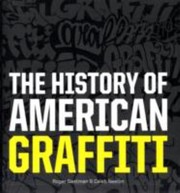
A sweeping, rigorously documented chronicle of graffiti's evolution from New York subway cars to a worldwide phenomenon; establishes the timeline and key figures that the rest of the curriculum references.
Bridges the gap between graffiti culture and the gallery-recognized street art movement, giving the learner a critical framework for understanding how the form gained legitimacy and international reach.

Curated by leading critics and packed with primary voices, this volume deepens the historical narrative by centering the outlaw ethic and the tension between public space and artistic freedom.
Key Artists in Depth
IntermediateStudy the vision, process, and cultural impact of the movement's most influential practitioners, building a mental library of artistic strategies and intentions to draw on when analyzing or creating work.
▸ Study plan for this stage
Pace: 8–10 weeks, ~40–50 pages/day, with 2–3 days between books for reflection and exercises
- Banksy's subversive approach: anonymity as artistic strategy and how constraint breeds creativity
- Shepard Fairey's graphic design roots and the evolution from street art to mass-produced iconography (OBEY campaign)
- Os Gemeos' narrative-driven, character-based visual language and their integration of fine art with street practice
- The relationship between artistic intention and public interpretation—how meaning shifts when work enters the street
- Process documentation: how these artists document, archive, and control their legacy through books and imagery
- Cultural impact through repetition and branding: Fairey's OBEY as a case study in symbol-making and co-option
- Collaboration and community: how each artist engages with local contexts, crews, and audiences
- The tension between accessibility and authorship: balancing street art's democratic impulse with artistic vision
- What role does anonymity play in Banksy's artistic practice, and how does it differ from Fairey's and Os Gemeos' approaches to attribution and visibility?
- How does Shepard Fairey's background in graphic design shape the OBEY campaign, and what does the evolution from street art to mass production reveal about his artistic goals?
- Describe Os Gemeos' visual language: what recurring characters, themes, or techniques define their work, and how do these connect to their cultural context?
- How do these three artists use their books to control narrative around their work, and what does this reveal about the relationship between street art and documentation?
- What strategies do Banksy, Fairey, and Os Gemeos use to engage with their local communities and audiences, and how does this shape the meaning of their work?
- Compare how each artist balances the ephemeral nature of street art with the desire to create lasting cultural impact.
- After reading Wall and Piece, create a visual analysis of three Banksy works: identify the subversive message, the technique used, and the intended audience. Note how anonymity affects your interpretation.
- Trace the OBEY symbol through Fairey's book: map its evolution from street stickers to fine art to commercial products. Write a short reflection on how repetition changes meaning.
- Collect 5–8 images of Os Gemeos characters from their book and create a visual glossary: identify recurring characters, color palettes, and narrative themes. Annotate what each reveals about their artistic vision.
- Comparative exercise: select one work by each artist addressing a similar theme (e.g., politics, identity, community). Analyze how their different processes and intentions produce different visual and cultural outcomes.
- Create a mock 'artist statement' for each of the three artists based on their books, synthesizing their stated intentions, process, and cultural goals. Compare these to see how each frames their own practice.
- Document a local street art piece (photograph, sketch, or written description) and analyze it through the lens of one of these three artists: What strategies from Wall and Piece, OBEY, or Os Gemeos do you see? What is the artist's likely intention?
- Design a small street art intervention (sketch or mock-up) that combines a technique or philosophy from at least two of these artists. Write a brief statement explaining your choices and intended impact.
Next up: This stage builds a deep understanding of how individual artistic vision translates into cultural movements, preparing you to examine how street art functions within broader historical, political, and commercial systems in the next stage.
Banksy's own compilation of his work is essential primary source material; reading it after the historical stage lets the learner situate his irony and stencil-based practice within the broader tradition.
Fairey's retrospective traces the evolution of his propaganda-inspired aesthetic and wheat-paste methodology, illustrating how a single conceptual idea can scale into a global visual language.

This monograph on the Brazilian twin duo expands the learner's frame beyond North American and European street art, showcasing how folkloric narrative and large-scale color theory operate at the mural scale.
Technique & Material Practice
IntermediateAcquire a working knowledge of the core tools, surfaces, and methods — spray paint, stencils, wheat paste, brushwork — used by muralists and street artists, grounded in both practical instruction and professional insight.
▸ Study plan for this stage
Pace: 4–5 weeks, ~25–30 pages/day, with 2–3 dedicated practice days per week for hands-on exercises
- Spray paint chemistry and can mechanics: propellant systems, pigment composition, and how pressure and nozzle design affect application
- Surface preparation and selection: assessing substrates (concrete, brick, metal, wood) for adhesion, durability, and aesthetic outcomes
- Stencil design and cutting techniques: creating clean, durable stencils and understanding layering strategies for multi-color work
- Wheat paste formulation and application: mixing adhesives, preparing surfaces, and executing large-scale paste-ups with proper technique
- Brush and hand-painting techniques: control, pressure variation, and blending methods for detail work and finishing
- Color theory and mixing in street art: understanding pigment behavior on different surfaces and achieving desired hues with spray and brush
- Safety protocols and material handling: proper ventilation, protective equipment, and responsible chemical use
- Professional workflow and planning: sketching, scaling, surface testing, and execution strategies used by established muralists
- What are the key differences between spray paint propellant systems, and how do they affect paint application and finish quality?
- How do you assess and prepare different surfaces (concrete, brick, metal, wood) before applying spray paint, stencils, or wheat paste?
- What are the steps for designing and cutting an effective stencil, and how can you layer multiple stencils for complex multi-color compositions?
- How do you mix and apply wheat paste, and what are the advantages and limitations of paste-up as a street art technique?
- What brush techniques and pressure variations are essential for achieving detail, blending, and finishing effects in mural work?
- How do pigment behavior and color mixing differ when working with spray paint versus brush application on various substrates?
- Conduct a hands-on spray paint test on multiple substrate samples (concrete, brick, metal, cardboard): document nozzle pressure, distance, and finish quality for each surface
- Design and cut 3–4 stencils of increasing complexity (simple geometric, multi-layer, detailed figurative) and test them on practice surfaces with different spray techniques
- Mix and apply wheat paste on poster-sized paper or cardboard; practice brush techniques for smooth, bubble-free application and document drying times
- Create a color-mixing reference chart by blending spray paints and brushes on sample boards, noting pigment behavior and opacity on different surfaces
- Execute a small-scale multi-technique mural (12–24 inches) combining spray paint base, stencil overlay, and brush detail work on a prepared surface
- Document a professional muralist's workflow by photographing or sketching the stages of surface prep, sketch transfer, spray application, and finishing touches (in-person or via video study)
Next up: This stage equips you with the technical mastery and material literacy needed to move into the next stage—understanding composition, style development, and the cultural and artistic contexts that transform technique into meaningful street art practice.

A technique-focused survey of artists who work primarily in aerosol, covering material properties, layering, and finish — the right entry point before moving to more complex compositional challenges.

Brings an academic lens to how technique and site interact, helping the learner think critically about why certain methods are chosen for certain urban surfaces and contexts.
Discussion
Keep reading
Paths that share books, cover the same subject, or open a related topic.