Watch soccer smarter: tactics & the beautiful game
This four-stage curriculum takes a beginner from loving the game to understanding it at a professional level. It begins with the human and cultural story of soccer to build passion and context, then introduces tactical vocabulary, before diving into the deep mechanics of formations and pressing systems, and finally zooming out to the economics and geopolitics that explain why the modern game looks the way it does.
The Love of the Game — Context & Culture
BeginnerUnderstand what makes soccer the world's game: its history, culture, and emotional power. Build the narrative foundation before touching tactics.
▸ Study plan for this stage
Pace: 4–5 weeks total (~20–25 pages/day): spend the first 2 weeks on "Fever Pitch" (roughly 250 pages) and the final 2–3 weeks on "How Soccer Explains the World" (roughly 260 pages), reading at a relaxed beginner pace with reflection time built in.
- Soccer as emotional identity: Hornby's 'Fever Pitch' shows how supporting a club is not a hobby but a core part of self — obsession, loyalty, and heartbreak are features, not bugs.
- The fan's perspective as a lens: Before understanding tactics, understanding *why* the game matters emotionally is the essential foundation for all deeper learning.
- Soccer as a global mirror: Foer's 'How Soccer Explains the World' uses club and national teams as case studies to reveal how globalization, tribalism, nationalism, and economics play out on the pitch.
- Tribalism and identity politics in fandom: Foer demonstrates that fan culture — ultras, hooligans, club ownership — reflects the deepest social tensions of each society.
- The game's universality vs. local flavor: Soccer is the world's game precisely because each culture reshapes it in its own image — Brazilian flair, English grit, Italian cynicism — while the rules stay the same.
- Economics and power in the modern game: Foer introduces how money, media, and globalization are transforming club football, creating tension between local roots and global commerce.
- Narrative as a way into sport: Both books prove that stories — personal, political, cultural — are the entry point to understanding any sport before its technical details.
- Soccer's resistance to Americanization: Foer's exploration of why soccer struggled to take hold in the U.S. reveals what makes the sport structurally and culturally distinct from other major sports.
- After reading 'Fever Pitch,' how would you explain to someone who has never followed a sports team why Nick Hornby's obsession with Arsenal is a rational emotional response rather than mere irrationality?
- Foer uses soccer clubs as windows into broader social and political forces. Pick one chapter from 'How Soccer Explains the World' and explain: what does that club or fan culture reveal about its country or region?
- Both Hornby and Foer write about soccer from a non-tactical perspective. What do they collectively argue is the *real* source of soccer's global power — and do you agree?
- How does Foer's concept of soccer and tribalism challenge or complicate the idea that sport 'brings people together'?
- Hornby writes from the intimate, personal scale; Foer writes from the geopolitical scale. How do these two perspectives complement each other as a foundation for understanding the game?
- Based on both books, how would you describe the relationship between a soccer club and the community it represents — and how has globalization put that relationship under stress?
- **The Fan Diary:** While reading 'Fever Pitch,' keep a short daily journal (3–5 sentences) mirroring Hornby's format — connect a moment from your own life to a sports memory or a match you watch during this stage. This builds the habit of linking emotion to the game.
- **Club Culture Deep-Dive:** Choose one club featured in Foer's book (e.g., FC Barcelona, Lazio, Celtic). Spend 30–60 minutes researching its history, fan culture, and social context online. Write a one-page summary of how Foer's portrayal matches or surprises you.
- **Watch a Match with Foer's Lens:** Watch one full soccer match (live or recorded) and instead of focusing on tactics, take notes purely on the *cultural signals* — crowd behavior, commentary tone, team identity, kit colors and symbols. Write a short paragraph on what the match 'says' beyond the scoreline.
- **The 'Why Soccer?' Essay:** After finishing both books, write a 300–400 word personal response to the question: 'Why is soccer the world's game?' Draw explicitly on at least one idea from each book.
- **Globalization Scorecard:** Using Foer's framework, pick a current top-flight club (any league) and research: Where are its players from? Who owns it? Where does its money come from? Compare this to its local/historical roots. Note the tensions Foer would recognize.
- **Conversation or Discussion Post:** Share your biggest takeaway from either book with one other person — a friend, a forum, or a study group. Articulate in plain language what surprised you most about soccer's cultural power. Teaching it forces clarity.
Next up: Having absorbed *why* soccer matters — its emotional grip, cultural identity, and global stakes — the reader is now primed to ask *how* it is actually played and won, making the move into tactical and strategic study feel purposeful rather than abstract.

A perfect entry point — Hornby's memoir captures the obsessive fan's relationship with football, making the emotional stakes of the game viscerally real before any tactical study begins.

Connects soccer to politics, identity, and globalization across continents, giving the beginner a macro-level understanding of why the game matters so differently in different places.
Foundations — Tactical Vocabulary & Thinking
BeginnerAcquire the core language of tactics — formations, roles, phases of play — and learn to watch a match analytically rather than just emotionally.
▸ Study plan for this stage
Pace: 8–10 weeks total: Weeks 1–4 on "Mixer" (~25–30 pages/day, reading in short daily sessions); Weeks 5–10 on "Inverting the Pyramid" (~20–25 pages/day, slightly slower pace to absorb the deeper historical and tactical analysis). Set aside one "review day" per week with no new reading — use it for exerc
- Formations as living systems, not rigid blueprints — Cox's central argument in Mixer that positional labels obscure how players actually move and interact
- The role of the 'mixer' archetype: direct, physical, vertical play as a legitimate and historically influential tactical philosophy
- Positional fluidity vs. positional discipline — understanding when and why teams sacrifice structure for movement
- Phases of play: in-possession, out-of-possession, and transitions (pressing triggers, counter-press, counter-attack)
- The evolution of the 4-4-2 and its dominance in English football, as traced through both books, and why it eventually gave way to other shapes
- Wilson's core thesis in Inverting the Pyramid: tactical history is a continuous dialectic — every innovation provokes a counter-innovation
- Key historical formations and their contexts: the WM (Herbert Chapman's Arsenal), Total Football (Ajax/Netherlands), catenaccio (Italian defensive systems), and the pressing game (Sacchi's Milan)
- Reading a match analytically: identifying team shape in and out of possession, spotting pressing traps, tracking a single player's movement off the ball
- After reading Mixer, can you explain what Cox means by 'mixing it' and why he argues this style deserves more tactical respect than it typically receives from modern analysts?
- How does Inverting the Pyramid define the relationship between a team's formation and its underlying tactical philosophy — and why does Wilson insist the two are not the same thing?
- Trace the evolution of one formation (e.g., the 4-4-2) across both books: where did it come from, what problems did it solve, and what vulnerabilities eventually exposed it?
- What is 'Total Football' as described by Wilson, and what specific positional and physical demands does it place on players compared to more rigid systems?
- Using the vocabulary from both books, how would you describe the tactical identity of a team that plays a high defensive line, presses aggressively, and uses a target forward — in terms of shape, phase behavior, and player roles?
- Both Cox and Wilson use historical match examples to make their arguments. Pick one match or era from each book and explain what tactical lesson the author draws from it.
- 'Freeze-frame' exercise while watching any live or recorded match: pause at kick-off and every 10 minutes, sketch the approximate positions of all outfield players on a blank pitch diagram. Note the shape in possession vs. out of possession — do they match?
- Build a personal 'tactical glossary' as you read: every time Cox or Wilson introduces a term (e.g., 'false nine,' 'pressing trap,' 'libero,' 'regista'), write it in your own words with the page reference and a real-world example from the book.
- After finishing Mixer, watch one match featuring a team with a physical, direct style (e.g., a lower-league English side or a long-ball-oriented team). Write a one-page 'Cox-style' tactical appreciation — argue the merits of their approach without dismissing it.
- After finishing Inverting the Pyramid, draw a hand-drawn timeline of the formations Wilson covers, annotating each with: the era, the key innovator/team, the problem it solved, and the weakness that led to the next evolution.
- Pick any 15-minute passage of play from a match and track a single player (ideally a central midfielder or a striker) exclusively — ignore the ball when necessary. Log every movement, every position taken, every pressing action. Then describe their role using vocabulary from both books.
- Write a 300-word 'scouting report' on a team of your choice using only the tactical vocabulary acquired in this stage. Share it with a friend or post it online and invite feedback on clarity and accuracy.
Next up: By internalizing the historical arc from Wilson and the positional nuance from Cox, the reader now has the vocabulary and analytical eye needed to engage with more advanced tactical literature that examines specific systems, coaching methodologies, and in-game decision-making in granular detail.

Cox traces the tactical evolution of the Premier League from 1992 to the present in plain language, making formations and positional shifts accessible to a complete tactical beginner.

The definitive history of football formations — read after The Mixer so the reader already has intuition for modern shapes before tracing their historical roots back to the 19th century.
Going Deeper — Systems, Pressing & Coaching Philosophy
IntermediateUnderstand the 'why' behind specific tactical systems — pressing, positional play, gegenpressing — and how elite coaches build a team identity around a philosophy.
▸ Study plan for this stage
Pace: 6–8 weeks total: Weeks 1–3 cover "Soccernomics" (~25–30 pages/day, reading analytically and noting data-driven arguments about team identity and decision-making); Weeks 4–8 cover "Pep Guardiola" by Perarnau (~20–25 pages/day, slower pace to absorb detailed tactical descriptions, training session bre
- Data vs. intuition in tactical decision-making — how Soccernomics challenges conventional football wisdom with evidence, reframing how we evaluate systems and coaches
- Club identity and the 'network effect' — how geography, culture, and institutional knowledge shape a team's long-term tactical DNA (Soccernomics)
- Positional play (Juego de Posición) — Guardiola's foundational belief that controlling space and numerical superiority off the ball is more important than controlling the ball itself (Perarnau)
- Gegenpressing as a philosophy, not just a tactic — the immediate counter-press after losing possession as a deliberate, trained system of belief about when and where to win the ball back (Perarnau)
- The role of the coach as architect — how Guardiola at Bayern used pre-season, individual player conversations, and micro-adjustments mid-season to embed a collective identity (Perarnau)
- High defensive line and compactness — the spatial logic behind why Guardiola pushes his defensive block high, the risks it creates, and how pressing upfield mitigates those risks (Perarnau)
- Adaptation vs. dogma — Soccernomics shows statistically that rigid tactical dogma fails; Perarnau shows how Guardiola constantly adapts his system to personnel, opponent, and context — both books converge on flexibility as elite intelligence
- Winning the ball in dangerous zones — the tactical geometry of pressing traps, overloads in wide areas, and how Guardiola's Bayern used structured pressing triggers (Perarnau)
- According to Soccernomics, what does the data say about the relationship between managerial tactics/philosophy and long-term club success — and how does this challenge or support what Perarnau shows us about Guardiola's impact at Bayern?
- How does Guardiola define 'positional play' in Perarnau's account, and why does he consider it distinct from simple possession football? What spatial principles underpin it?
- Perarnau documents Guardiola's pressing system in detail — what are the key 'triggers' that signal Bayern players to initiate a press, and how are these trained on the practice pitch?
- Soccernomics argues that most clubs make poor decisions because they rely on tradition and gut feeling. What specific examples from Guardiola's tenure in Perarnau's book illustrate a more analytical, evidence-based approach to team-building?
- How does Guardiola's use of a high defensive line connect logically to his pressing philosophy? What would break down if one element were removed?
- Both books touch on the tension between a coach's philosophy and the players available. How does Perarnau show Guardiola resolving this tension at Bayern, and what does Soccernomics suggest about the structural limits of any single coach's influence?
- **Pressing Trigger Map:** After finishing Perarnau's pressing chapters, draw a top-down pitch diagram. Mark the zones where Guardiola's Bayern initiated the press, label the triggers (e.g., back-pass to goalkeeper, poor touch by opponent), and annotate which players had which pressing responsibilities. Compare it to a real Bayern 2013–14 match on YouTube.
- **Soccernomics Myth-Busting Log:** As you read Soccernomics, keep a running list of at least 8 'conventional wisdoms' the book debunks with data. For each one, write one sentence on how it connects to a tactical or philosophical idea you encounter later in Perarnau.
- **Positional Play Grid Exercise:** Using Guardiola's positional play principles from Perarnau, design a simple 5v5 rondo or positional game on paper (or on a pitch if you have access). Define the zones, the rules that enforce positional discipline, and the coaching cues you would use — then reflect on how it trains the concepts Perarnau describes.
- **Comparative Coach Profile:** Write a 400–500 word profile of Guardiola as a 'thinking coach,' drawing evidence from both books — use Soccernomics' analytical framework to evaluate the claims Perarnau makes about Guardiola's effectiveness. Where does the data support the narrative? Where might it complicate it?
- **Match Analysis — Philosophy in Action:** Pick one Bayern Munich match from the 2013–14 Bundesliga season (widely available on YouTube). Watch it with Perarnau's book open to your notes. Pause every time you see a pressing trigger, a positional overload, or a high-line defensive moment. Log at least 10 specific instances and match them to passages in the book.
- **'Why Behind the Why' Reflection Journal:** After completing both books, write a one-page personal answer to: 'What is football intelligence, and how do elite coaches systematically build it into a squad?' Cite specific moments from Perarnau and at least one data argument from Soccernomics to support your answer.
Next up: Mastering the 'why' behind pressing, positional play, and coaching philosophy here builds the conceptual vocabulary needed to study in-game tactical decision-making and player roles in more granular detail — the natural next step toward understanding how individual positions and in-match adjustments execute these broader systems.
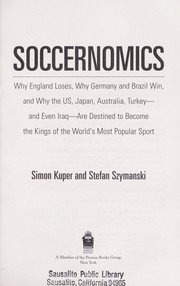
Uses data and social science to demolish myths about how clubs win, bridging the gap between gut-feel tactics and evidence-based thinking before the reader goes deeper into coaching philosophy.

An inside account of Guardiola's methods at Bayern Munich, detailing positional play, pressing triggers, and in-game adjustments — essential for understanding the dominant modern tactical school.
Mastery — Economics, Power & the Modern Game
ExpertSynthesize tactical understanding with the economic and political forces that shape which teams can implement which systems, and why the global game is structured as it is.
▸ Study plan for this stage
Pace: 6–8 weeks total: Weeks 1–4 on "Club" (~25–30 pages/day, allowing time for reflection on financial/political chapters); Weeks 5–7 on "The Expected Goals Philosophy" (~20–25 pages/day with pauses to work through statistical concepts); Week 8 reserved for synthesis, cross-book comparison, and completin
- The political economy of elite football clubs — how ownership models, debt structures, and revenue streams (matchday, broadcast, commercial) directly constrain or enable tactical ambition, as explored in 'Club'
- How the Premier League's financial architecture (broadcast deals, parachute payments, Financial Fair Play) creates structural inequality that determines which clubs can sustain high-pressing or possession-based systems over multiple seasons
- The relationship between squad depth, wage bills, and tactical flexibility — why 'Club' reveals that a manager's system is often a negotiation with the boardroom as much as with the players
- The philosophical and mathematical foundations of Expected Goals (xG) as presented in 'The Expected Goals Philosophy' — shot quality over shot quantity, and why traditional statistics misrepresent football reality
- How xG and related metrics (xA, post-shot xG, xG chains) give analysts and coaches a language to evaluate process vs. outcome, separating luck from genuine tactical effectiveness
- The tension between data-driven recruitment and traditional scouting, and how clubs with smaller budgets (as contextualized across both books) use analytics as a competitive equalizer
- How modern football intelligence integrates qualitative tactical observation with quantitative models — neither 'Club's' power-structure lens nor Tippett's statistical lens is sufficient alone
- The concept of market inefficiency in player valuation and how clubs exploit analytical blind spots to punch above their financial weight
- After reading 'Club', can you explain how a specific club's ownership structure or financial model has visibly shaped the tactical identity it has been able to sustain — or forced it to abandon?
- What does 'The Expected Goals Philosophy' argue is fundamentally wrong with using goals scored/conceded as the primary measure of a team's performance, and what does xG reveal that raw scorelines hide?
- How do the economic realities documented in 'Club' interact with the analytical frameworks in 'The Expected Goals Philosophy' — for example, how might a data-led recruitment strategy be the rational response to financial constraints?
- What are the key limitations of xG models that Tippett himself acknowledges, and how should a tactically literate reader weigh those limitations when analyzing a team's style of play?
- Using both books together, how would you assess whether a mid-table club's defensive low-block is a genuine tactical philosophy or a financial inevitability imposed by squad quality and budget?
- How has the globalization of football capital — as traced in 'Club' — accelerated or distorted the spread of specific tactical systems around the world?
- 'Club' Financial Audit Exercise: Pick one club featured prominently in 'Club' and build a one-page profile mapping its ownership model → revenue structure → transfer policy → tactical system. Identify at least two moments where financial decisions visibly forced a tactical compromise or enabled a tactical leap.
- xG Match Audit: Using a freely available xG data source (e.g., Understat or FBref), select a match and reconstruct the xG timeline. Then write a 300-word analysis in the style of Tippett's framework — arguing whether the result reflected the underlying process or was a statistical outlier.
- Cross-Book Synthesis Essay (500–700 words): Argue for or against the following proposition — 'In the modern game, a club's tactical identity is determined more by its balance sheet than by its manager.' Use specific evidence from both 'Club' and 'The Expected Goals Philosophy'.
- Recruitment Brief: Imagine you are a data analyst at a financially constrained club (budget in the bottom third of your league). Using the principles from 'The Expected Goals Philosophy', draft a one-page recruitment brief for one position — defining which underlying metrics you would prioritize and why they represent value the market is underpricing.
- Tactical-Economic Case Study Debate: Choose a famous managerial 'failure' (a coach sacked despite good football) and use 'Club's' economic lens to argue it was a structural/financial failure, then use Tippett's xG philosophy to assess whether the underlying performance data actually supported the sacking.
- Concept Map: Draw a visual diagram connecting at least 8 terms across both books (e.g., broadcast revenue → squad depth → pressing intensity → xG allowed → league position → club valuation). Annotate each link with a one-sentence explanation of the causal or correlational relationship.
Next up: By fusing the power-and-money framework of 'Club' with the analytical rigour of 'The Expected Goals Philosophy', the reader is now equipped to engage with cutting-edge football research and coaching literature — the natural next step is applying this integrated lens to live tactical analysis, advanced data science in sport, or the emerging literature on football governance and its future.

Reveals how the Premier League was built as a commercial product, showing how money, broadcasting rights, and ownership structures determine the tactical ambitions clubs can realistically pursue.

Introduces the analytics revolution — xG, pressing metrics, and data-driven recruitment — giving the advanced reader the quantitative lens that now sits alongside tactical intuition in elite football.
Discussion
Keep reading
Paths that share books, cover the same subject, or open a related topic.