Best Books on Shinto, in Reading Order
This curriculum moves from accessible introductions to kami and shrine life, through the rich historical entanglement of Shinto and Buddhism, into the politically charged era of State Shinto, and finally into rigorous scholarly treatments of Shinto's role in contemporary Japan. Each stage builds the conceptual vocabulary — kami, matsuri, honji suijaku, kokka Shinto — needed to read the next with full comprehension.
Foundations: Kami, Shrines, and the Shinto World
BeginnerGrasp the core concepts of Shinto — kami nature, shrine architecture, ritual practice, and the basic worldview — so that later historical and political complexity has a firm foundation.
▸ Study plan for this stage
Pace: 4–5 weeks, ~25–30 pages/day (approximately 150 pages per week across both books)
- Kami as sacred essence and presence: understanding kami not as gods in the Western sense but as manifestations of natural and spiritual power that pervade all things
- Shinto cosmology and the Shinto worldview: the relationship between the material and spiritual realms, and humanity's place within a sacred natural order
- Shrine architecture and sacred space: how shrine design (torii, inner sanctum, purification areas) reflects Shinto theology and facilitates communion with kami
- Ritual practice and purification (misogi): the role of ritual as a means of maintaining spiritual cleanliness and establishing right relationship with kami
- The concept of matsuri (festivals) and communal worship: how festivals serve as occasions for community renewal and gratitude to kami
- Shinto ethics and daily practice: the integration of Shinto principles into everyday life, including respect for nature and social harmony
- The relationship between Shinto and Japanese culture: how Shinto has shaped and been shaped by Japanese identity and values
- What is a kami, and how does the Shinto understanding of kami differ from the Western concept of 'god'?
- Describe the basic layout and symbolic elements of a traditional Shinto shrine and explain what each component represents theologically.
- What is the significance of purification (misogi) in Shinto practice, and how does it relate to the concept of spiritual cleanliness?
- How do matsuri (festivals) function in Shinto religious life, and what role do they play in the relationship between humans and kami?
- Explain the Shinto worldview: how do Shinto teachings understand the relationship between the natural world, humans, and the spiritual realm?
- How are Shinto principles and practices integrated into daily Japanese life and ethics?
- Create a detailed diagram of a Shinto shrine layout (based on descriptions in both books) labeling each architectural element and explaining its theological significance.
- Write a 2–3 page reflection on how the concept of kami might apply to natural places or objects you encounter in your own environment; consider what 'sacred presence' might mean in practice.
- Research and document a specific matsuri (festival) mentioned in either book; write a 1–2 page analysis of how it embodies the Shinto principles you've learned.
- Practice a simple purification ritual (such as ritual hand-washing or mindful cleansing) based on Shinto principles described in the books, and journal about the experience and its spiritual significance.
- Create a comparison chart: list key Shinto concepts from Yamakage and Ono side-by-side, noting where they emphasize the same ideas and where their presentations differ.
- Interview or survey 2–3 people (if possible) about their understanding of Shinto or Japanese spirituality; compare their responses to the foundational concepts from the books and reflect on common misconceptions.
Next up: This stage establishes the theological and practical foundations of Shinto—the nature of kami, sacred space, and ritual—providing essential context for understanding how these core concepts have evolved through Japanese history, been contested in different periods, and intersected with political and social movements.

Written by a practicing Shinto master, this is the most accessible and authentic insider introduction to kami theology, shrine ritual, and spiritual practice. It gives the reader the lived vocabulary of Shinto before approaching academic treatments.
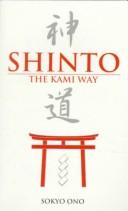
A concise classic written specifically to introduce Shinto to non-Japanese readers, covering kami, shrines, festivals, and ethics. Its brevity and clarity make it the perfect second read to consolidate and expand on Yamakage's foundations.
History and Entanglement: Shinto and Buddhism
IntermediateUnderstand how Shinto developed historically, how it fused with and later separated from Buddhism (shinbutsu shūgō and shimbutsu bunri), and what that long dialogue means for Japanese religion as a whole.
▸ Study plan for this stage
Pace: 6–7 weeks, ~40–50 pages/day. Breen's "Shinto in History" (~300 pages) over weeks 1–2, then Teeuwen's "Buddhas and Kami in Japan" (~350 pages) over weeks 3–5, with weeks 6–7 reserved for review, synthesis, and exercises.
- Shinto as a constructed category: how 'Shinto' emerged as a distinct religious identity only in response to Buddhism and modernity, not as a primordial tradition
- Shinbutsu shūgō (syncretic fusion): the centuries-long theological and institutional merger of Buddhist and Shinto practices, where kami were understood as manifestations of Buddhas and bodhisattvas
- The kami-Buddha relationship: how Buddhist cosmology incorporated kami into a hierarchical framework, and how this shaped Japanese religious practice
- Shimbutsu bunri (separation): the Meiji-era policy and ideology that forcibly disentangled Buddhism and Shinto for political and nationalist purposes
- Institutional entanglement: how temples, shrines, and priesthoods became intertwined economically, theologically, and organizationally during the syncretic period
- Regional and temporal variation: how shinbutsu shūgō manifested differently across regions and time periods, and was never monolithic
- The long dialogue: how the interaction between Buddhism and Shinto shaped both traditions and remains central to understanding Japanese religion today
- What does Breen argue about the origins of Shinto as a category, and how does this challenge the idea of Shinto as an ancient, unchanging tradition?
- Explain the theological logic of shinbutsu shūgō: how did Buddhist thinkers justify the worship of kami within a Buddhist framework?
- What were the major phases of Buddhist-Shinto interaction from the Nara period through the Edo period, according to Teeuwen?
- How did shimbutsu bunri (the Meiji separation) reshape both Buddhist and Shinto institutions, and what were its political motivations?
- What does Teeuwen mean by the 'kami-Buddha complex,' and how did it structure Japanese religious life?
- How did the syncretic period create institutional dependencies between temples and shrines, and what were the consequences of forced separation?
- Timeline mapping: Create a detailed chronological chart of key moments in Buddhist-Shinto interaction (e.g., early kami-Buddha syncretism, major theological developments, Meiji separation) using evidence from both Breen and Teeuwen.
- Theological analysis: Write a 2–3 page explanation of how a specific kami (e.g., Inari, Hachiman) was incorporated into Buddhist cosmology, citing examples from the texts.
- Regional comparison: Select two regions discussed in Teeuwen and compare how shinbutsu shūgō manifested differently in each; explain what accounts for the variation.
- Primary source annotation: Locate and annotate 2–3 primary source excerpts (provided or found) that illustrate the kami-Buddha relationship or the logic of syncretism; explain what each reveals.
- Meiji separation case study: Trace how a single temple-shrine complex was affected by shimbutsu bunri policies; analyze the institutional, theological, and economic consequences.
- Synthesis essay: Write a 4–5 page essay arguing how understanding shinbutsu shūgō and shimbutsu bunri is essential to interpreting modern Japanese religion and society.
Next up: This stage establishes the historical and theological foundations of Japanese religion, preparing you to explore how Shinto and Buddhism continue to coexist, compete, and influence contemporary Japanese spirituality, culture, and identity in the modern period.

An edited volume of leading scholars tracing Shinto's evolution from ancient times through modernity. Reading it now gives the learner a chronological spine on which to hang everything that follows.
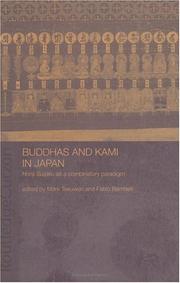
The definitive scholarly treatment of honji suijaku — the syncretic theory that kami are local manifestations of buddhas. This book explains the centuries-long fusion and the 1868 forced separation, which is essential for understanding State Shinto.
State Shinto: Ideology, Empire, and Separation
IntermediateUnderstand how the Meiji state constructed 'State Shinto' as a national ideology, its role in Japanese imperialism and World War II, and the postwar Allied-mandated separation of religion and state.
▸ Study plan for this stage
Pace: 8–10 weeks, ~25–30 pages/day. Allocate 5–6 weeks for Hardacre's "Shintō and the state, 1868-1988" (~350 pages), then 2–3 weeks for Skya's "Japan's holy war" (~300 pages). Build in 1 week for review and synthesis.
- The Meiji state's deliberate construction of State Shinto as a tool for nation-building and legitimizing imperial authority, separating it from folk and sectarian Shinto
- The ideological mechanisms through which Shinto was weaponized to justify Japanese imperialism and territorial expansion in Asia
- The role of Shinto mythology and emperor worship in mobilizing the population for total war during World War II
- How State Shinto functioned as a quasi-religious state ideology that blurred the line between religion and politics
- The postwar Allied Occupation's Shinto Directive (1945) and its mandate to separate religion from state, dismantling State Shinto
- The continuities and ruptures in Shinto's relationship to the state before, during, and after 1945
- How Hardacre and Skya differ in their periodization and emphasis: Hardacre's long institutional view versus Skya's focus on wartime ideology and mobilization
- How did the Meiji government use Shinto to consolidate national identity and legitimize the emperor's authority, and what role did the separation of kami worship from Buddhism play in this process?
- What were the key ideological and institutional mechanisms through which State Shinto was constructed, and how did these differ from pre-Meiji Shinto practice?
- How did State Shinto ideology justify Japanese imperialism and the concept of a 'holy war' in the Pacific War, according to Skya's analysis?
- What was the Shinto Directive, and how did it attempt to dismantle State Shinto in the postwar period? What were its successes and limitations?
- How do Hardacre's institutional and legal analysis and Skya's ideological and cultural analysis complement each other in explaining State Shinto's rise and fall?
- What evidence do Hardacre and Skya present for the continuity of Shinto nationalism after 1945, and what does this suggest about the effectiveness of postwar separation of religion and state?
- Create a timeline mapping the major institutional shifts in Shinto's relationship to the state from 1868–1988, using Hardacre's chapters as anchors; annotate with key laws, edicts, and policy changes.
- Analyze primary source excerpts (provided in Hardacre's appendices or referenced in Skya) that illustrate State Shinto ideology—e.g., imperial rescripts, military propaganda, shrine directives—and write a 2–3 page essay on how they construct the emperor and nation.
- Compare Hardacre's and Skya's treatment of a specific period (e.g., 1930s–1945) by creating a Venn diagram of their overlapping and divergent arguments, then write a short synthesis explaining the differences in scope and method.
- Trace the concept of 'emperor worship' (tennō suhai) through both books: how is it defined, mobilized, and dismantled? Create an annotated outline showing its evolution.
- Write a 3–4 page policy analysis of the Shinto Directive: what did it mandate, what did it assume about the relationship between religion and state, and what unintended consequences does Hardacre identify in the postwar period?
- Conduct a close reading of Skya's argument about how Shinto mythology (e.g., the Kojiki narrative of divine descent) was weaponized for wartime mobilization; create a diagram showing the chain of reasoning from myth to military ideology.
Next up: This stage establishes the historical and ideological foundations of State Shinto's rise and fall, preparing you to examine contemporary debates over Shinto's role in modern Japanese nationalism, religious freedom, and the ongoing tensions between secular governance and Shinto practice in postwar Japan.

The canonical scholarly account of how the modern Japanese state invented, institutionalized, and ultimately dismantled State Shinto. Hardacre's analysis is rigorous yet readable and is the essential text for this stage.

Focuses on the radical Shinto ultranationalist ideology that drove Japan toward war, providing the ideological and political depth that complements Hardacre's institutional history.
Modern Shinto: Scholarship, Identity, and Living Practice
ExpertEngage with cutting-edge scholarly debates about what Shinto is today — its invented traditions, its role in Japanese identity, its global spread, and its place in contemporary religious life.
▸ Study plan for this stage
Pace: 8–10 weeks, ~40–50 pages/day (with 2–3 days/week for reflection and exercises)
- Shinto as an invented tradition: how modern scholars deconstruct the notion of an 'ancient' Shinto and trace its deliberate construction during the Meiji period and beyond
- State Shinto and ultranationalism: the historical entanglement of Shinto with Japanese imperial ideology, militarism, and wartime nationalism
- Postwar disestablishment and secularization: how the separation of Shinto from state control reshaped religious practice and identity after 1945
- Shinto's role in constructing Japanese national and cultural identity: the use of Shinto symbols, mythology, and ritual in defining 'Japaneseness'
- Contemporary Shinto practice and diversity: the range of modern Shinto expressions—from shrine worship to new religious movements—and what practitioners actually do and believe today
- Globalization and transnational Shinto: how Shinto ideas, aesthetics, and practices circulate beyond Japan and are adapted in diaspora and international contexts
- Scholarly methodology: how historians and religious studies scholars analyze Shinto through textual, anthropological, and institutional lenses
- How does Hardacre argue that Shinto is an 'invented tradition,' and what historical processes does she identify in its construction?
- What was the relationship between Shinto and the Japanese state from the Meiji period through World War II, and how did this shape modern Shinto?
- How did the postwar disestablishment of Shinto (the separation of Shinto from state control) change the nature of Shinto practice and belief?
- What role does Shinto play in contemporary Japanese identity and nationalism, and how does Hardacre distinguish between invented and lived dimensions?
- How does Hardacre characterize the diversity of modern Shinto practice, and what are the main forms of Shinto engagement today?
- What evidence does Hardacre present for Shinto's global circulation and adaptation, and what does this reveal about religion in the modern world?
- Create a timeline mapping Hardacre's key historical turning points in Shinto's development (Meiji, prewar, wartime, postwar, contemporary), noting how Shinto's definition and role shifted at each stage
- Analyze a primary source (shrine document, wartime propaganda, or postwar religious law) that Hardacre discusses, and write a 2–3 page analysis of how it reflects the scholarly debates she presents
- Interview or survey 3–5 people (if possible, including Japanese nationals or diaspora members) about their understanding of Shinto, and compare their responses to Hardacre's account of how Shinto is understood and practiced
- Create a comparative chart of different modern Shinto expressions (shrine Shinto, sect Shinto, folk Shinto, new religious movements) based on Hardacre's descriptions, noting their origins, practitioners, and contemporary relevance
- Write a 4–5 page critical essay addressing one of Hardacre's central arguments—e.g., 'To what extent is Shinto truly an invented tradition, and what are the limits of this framework?'
- Map out a specific Shinto shrine or practice (real or hypothetical) and explain how Hardacre's scholarly framework would help you understand its history, current function, and role in Japanese identity
Next up: This stage equips you with a sophisticated, historically grounded understanding of how Shinto has been constructed, contested, and lived in the modern world—preparing you to either pursue deeper specialization in particular Shinto movements, examine Shinto's relationship to other Japanese religions (Buddhism, folk religion, new religious movements), or explore comparative questions about how relig

Hardacre's magnum opus — a comprehensive, single-volume history from ancient origins to the present day. Having read the earlier stages, the learner can now absorb this dense synthesis as a capstone that ties every thread together.
Discussion
Keep reading
Paths that share books, cover the same subject, or open a related topic.