Shinto is unusually hard to introduce because the scholarly and the popular accounts describe different objects. The popular account presents an ancient, continuous indigenous religion of kami, shrines, and purification. The historical account holds that "Shinto" as a unified, separate religion is a relatively recent construction — that for most of Japanese history kami worship and Buddhism were institutionally entangled, and that separating them was a deliberate nineteenth-century project of the Meiji state.
Both accounts are describing real things. The practices at a shrine are genuinely old; the category that groups them is younger than it looks. This reading order deliberately gives you the insider view first, then the historical argument that complicates it, because meeting the critique without knowing the practice leaves you with a thesis and no subject.
The accessible introductions
Start with The Essence of Shinto by Motohisa Yamakage, written from inside the tradition. It presents kami, purification, the structure of ritual, and the spiritual anthropology behind them as a practitioner understands them. Read it as a statement of belief and practice rather than as history — it is the best available answer to "what does this feel like from within".
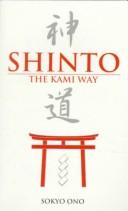
Then Shinto, the Kami way by Sokyo Ono is the short standard introduction, decades old and still the most efficient orientation in English: shrines, priesthood, festivals, offerings, and the basic vocabulary. Between these two you will be able to walk into a shrine and understand what is happening.
The historical complication
Shinto in history, edited by John Breen and Mark Teeuwen, is where the picture gets more interesting. It is a collection of scholarly essays on the ways kami worship has been organised, interpreted, and reinvented across periods — and it makes clear how much of what looks timeless is the product of specific historical moments.
Buddhas and kami in Japan by Mark Teeuwen and Fabio Rambelli is the essential book on honji suijaku, the framework in which kami were understood as local manifestations of Buddhist deities. For most of Japanese history this was the ordinary way of seeing things, and understanding it dissolves the assumption that Shinto and Buddhism were ever tidy alternatives.
The state, the war, and the argument
Shintō and the state, 1868-1988 by Helen Hardacre is the standard scholarly treatment of how the Meiji government separated kami worship from Buddhism, reorganised shrines, and built what is usually called State Shinto — and what happened to that structure after 1945. It is careful about the limits of state control, which matters because the topic attracts sweeping claims.
Japan's holy war by Walter Skya makes a much stronger argument: that a radical form of Shinto ultranationalist political thought was central to Japanese wartime aggression. It is a genuinely contested book. Some scholars find its account of the ideological through-line persuasive; others argue it overstates the coherence and reach of that ideology relative to military, economic, and imperial factors. Read it as a strong position in a live debate rather than as a settled conclusion, and read Hardacre first so you can see where they diverge.
Close with Hardacre's Shinto, her comprehensive single-volume history from prehistory to the present. It is long and it is the right ending: by that point you will have the practice, the syncretic background, and the state history, and the synthesis will read as argument rather than as summary.
If the political-ideology strand interests you most, the political science path continues in that direction. Follow the full path to read these in order.
Follow the full ordered path here: Reading Your Way into Shinto: The Books, in Order.