Best Books to Become a Scrum Master (in Order)
This curriculum takes a beginner from zero Agile knowledge to a confident, certification-ready Scrum Master in four progressive stages. Each stage builds on the last: first you absorb Agile thinking, then master the Scrum framework itself, then develop the human-centered facilitation and coaching skills that separate great Scrum Masters from average ones, and finally you learn how to lead and scale teams at an organizational level.
Agile Foundations
BeginnerUnderstand the Agile mindset, values, and principles — the 'why' behind Scrum — so that the framework rules you study next feel logical rather than arbitrary.
▸ Study plan for this stage
Pace: 4–5 weeks, ~25–30 pages/day. Start with "The Agile Samurai" (2 weeks, ~20 pages/day), then "Scrum" by Jeff Sutherland (2–3 weeks, ~30 pages/day). Allow 2–3 days between books for reflection and note consolidation.
- The Agile Manifesto and its four core values (individuals and interactions, working software, customer collaboration, responding to change)
- The twelve Agile principles and how they challenge traditional waterfall thinking
- The iterative and incremental mindset: delivering value in small, frequent cycles rather than big-bang releases
- Self-organizing teams and the role of trust, autonomy, and shared ownership in Agile environments
- The Scrum framework as a concrete implementation of Agile: roles (Product Owner, Scrum Master, Development Team), ceremonies (Sprint Planning, Daily Standup, Sprint Review, Sprint Retrospective), and artifacts (Product Backlog, Sprint Backlog, Increment)
- Empiricism and transparency: using inspection and adaptation to reduce risk and uncertainty
- The Sprint as a time-boxed container for experimentation and feedback, not just task execution
- Why Agile works: psychological safety, feedback loops, and the cost of delay in software delivery
- What are the four values of the Agile Manifesto, and why does 'individuals and interactions' come before 'processes and tools'?
- Explain the difference between Agile as a mindset and Scrum as a framework. How does understanding the mindset first make Scrum rules feel less arbitrary?
- Describe the three Scrum roles and their core responsibilities. Why is a self-organizing team essential to Scrum's success?
- What is a Sprint, and why is time-boxing critical to the Agile approach? How does it enable faster feedback?
- How do the Scrum ceremonies (Planning, Daily Standup, Review, Retrospective) embody the Agile principle of 'inspect and adapt'?
- Why does Agile prioritize 'responding to change' over 'following a plan'? Give a concrete example from your own experience or the books.
- Write a one-page personal manifesto: identify your own four values as a professional and explain how they align with (or challenge) the Agile Manifesto. Share with a peer or mentor.
- Create a visual comparison chart: traditional waterfall vs. Agile/Scrum. For each phase (planning, execution, delivery, feedback), note the key differences and why Agile's approach reduces risk.
- Conduct a 'Sprint simulation': organize a small group (3–5 people) to plan and execute a tiny project (e.g., design a one-page website, plan a team event) in a 1-week 'Sprint.' Run all four ceremonies and document what you learn about self-organization and feedback.
- Interview a practicing Scrum Master or Agile team member (in person or via email). Ask: 'How did learning the Agile mindset change the way you work?' and 'What's one Scrum rule that didn't make sense until you understood the 'why'?' Summarize their response.
- Reflect on a past project (work, school, or personal). Rewrite its plan using Agile principles: break it into 1–2 week Sprints, identify a 'Product Owner,' define a Definition of Done, and list what ceremonies you would have run.
- Read and annotate the Agile Manifesto and twelve principles (freely available online). For each principle, write one sentence: 'This matters because...' and one sentence: 'In Scrum, this shows up as...'
Next up: With a solid grasp of *why* Agile exists and how Scrum embodies those values, you're ready to dive into the *how*—mastering the specific practices, ceremonies, and techniques that Scrum Masters use daily to coach teams, remove blockers, and foster continuous improvement.

A friendly, illustrated introduction to Agile thinking that explains the values and practices in plain language — the perfect first book for a complete beginner before touching Scrum specifics.

Written by Scrum's co-creator, this narrative-driven book explains WHY Scrum was invented and how it works at a conceptual level, building strong intuition before you study the formal framework.
The Scrum Framework — Certification Core
BeginnerMaster the official Scrum rules, roles, events, and artifacts at the depth required to pass the PSM I or CSM certification exam and apply the framework on a real team.
▸ Study plan for this stage
Pace: 8–10 weeks, ~40–50 pages/day (mix of reading and active note-taking). Week 1–3: "Essential Scrum" (core framework); Week 4–6: "Essential Scrum" (advanced topics); Week 7–10: "Scrum" by Verheyen (depth and nuance), with 2–3 review/practice exam days per week starting week 5.
- The three Scrum roles (Product Owner, Scrum Master, Development Team) and their distinct accountabilities and interactions
- The five Scrum events (Sprint Planning, Daily Standup, Sprint Review, Sprint Retrospective, Sprint itself) and their timebox, purpose, and outcomes
- The three Scrum artifacts (Product Backlog, Sprint Backlog, Increment) and their transparency and inspection mechanisms
- The definition of Done and how it ensures quality and predictability in incremental delivery
- Sprint goal formulation and how it guides team focus and decision-making throughout the Sprint
- Empirical process control (transparency, inspection, adaptation) as the foundation of Scrum's effectiveness
- Common anti-patterns and pitfalls in Scrum implementation and how to recognize and correct them
- The Scrum Master's servant-leadership role versus command-and-control management, and how to coach teams and organizations
- What are the three Scrum roles, and what is each role's primary accountability? How do they interact during a typical Sprint?
- Describe the five Scrum events in order. For each, explain its timebox, who attends, and what the expected outcome is.
- What is the definition of Done, and why is it critical to the Scrum framework? How does it differ from acceptance criteria?
- How do the three Scrum artifacts (Product Backlog, Sprint Backlog, Increment) support transparency and empirical process control?
- What is a Sprint goal, and how should it be used to guide the Development Team's work and decision-making?
- Explain the difference between a Scrum Master and a traditional project manager. What are the key servant-leadership behaviors?
- What are three common Scrum anti-patterns (e.g., Scrum Master as taskmaster, Product Owner absence, skipped retrospectives), and how would you address each?
- How does Scrum's empirical approach (transparency, inspection, adaptation) differ from predictive planning, and when is each appropriate?
- Create a detailed one-page reference guide for each Scrum event (timebox, attendees, purpose, outcomes) using only the definitions from Rubin and Verheyen; use this as a study aid for certification prep.
- Role-play a Sprint Planning meeting with 2–3 peers: one as Product Owner, one as Scrum Master, one as Development Team member. Identify and correct deviations from the framework as described in the books.
- Write a 'definition of Done' for a real or hypothetical team project; justify each item using concepts from Essential Scrum (e.g., quality, transparency, risk reduction).
- Document a Sprint goal for a sample product backlog; explain how it constrains and guides the team's Sprint Backlog creation and daily decisions.
- Conduct a mock Daily Standup with peers, then debrief: Did it stay within the 15-minute timebox? Did it focus on the Sprint goal and blockers? Compare your execution to Verheyen's guidance on servant-leadership.
- Analyze a case study or real team scenario (from your own experience or a provided example) and identify 2–3 Scrum anti-patterns; propose corrections grounded in the books.
- Take a full-length PSM I or CSM practice exam (e.g., from Scrum.org or official CSM prep); review wrong answers against the relevant chapters in both books to close gaps.
- Create a 'Scrum Master coaching playbook': for 5 common team challenges (e.g., unclear Sprint goal, incomplete definition of Done, Product Owner unavailable), write a servant-leadership response using Verheyen's principles.
Next up: This stage equips you with the official Scrum rules and mental models needed to pass certification and run a compliant team; the next stage will deepen your ability to scale Scrum across multiple teams, handle organizational dynamics, and adapt the framework to complex real-world contexts.
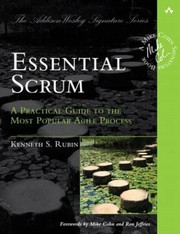
The most comprehensive and clearly structured guide to the Scrum framework; read this as your primary certification study text — it covers every role, event, and artifact with practical depth.

A concise, authoritative companion aligned with the official Scrum Guide; read it after Essential Scrum to consolidate and verify your understanding of the exact framework language used in exams.
Facilitation & Coaching Skills
IntermediateDevelop the human-centered skills — running great meetings, asking powerful questions, and coaching individuals — that make a Scrum Master an effective servant-leader rather than just a process enforcer.
▸ Study plan for this stage
Pace: 12–14 weeks, ~25–30 pages/day (approximately 3 weeks per book with overlap for integration)
- Coaching as a core Scrum Master responsibility: shifting from directive management to empowering questions and reflection
- The Coaching Agile Teams model: establishing safety, creating awareness, and building competence through structured coaching conversations
- Facilitator neutrality and core values: managing group dynamics while remaining impartial and committed to transparency, choice, and valid information
- The Skilled Facilitator's diagnostic approach: identifying and addressing defensive routines and group assumptions that block effective collaboration
- Nonviolent Communication (NVC) framework: observing without judgment, expressing needs clearly, and making requests that honor both self and others
- Active listening and powerful questioning techniques: using curiosity and reflection to help teams and individuals discover their own solutions
- Building psychological safety: creating conditions where team members feel safe to speak up, take risks, and be vulnerable
- Emotional intelligence in servant leadership: recognizing and managing emotions (yours and others') to strengthen relationships and team performance
- What is the difference between directive management and coaching, and why does a Scrum Master need both?
- Describe the Coaching Agile Teams model and explain how you would use each phase (establishing safety, creating awareness, building competence) in a real team situation.
- What are core values in facilitation, and how do they help a Scrum Master remain neutral while still influencing outcomes?
- How does the Skilled Facilitator's approach to identifying defensive routines help unblock team collaboration?
- Explain the four components of Nonviolent Communication and give an example of how you would apply NVC to a difficult conversation with a team member.
- What are powerful questions, and how do they differ from advice-giving or problem-solving? Give three examples relevant to Scrum Master scenarios.
- How do you create psychological safety in a team, and what role does a Scrum Master play in sustaining it?
- Reflect on a recent conflict or misunderstanding you witnessed or experienced. How would you have approached it differently using the frameworks from these three books?
- Weekly coaching practice: Conduct one structured coaching conversation with a colleague, team member, or peer using the Coaching Agile Teams model. Document the conversation (with permission) and reflect on which phase was most challenging.
- Facilitation observation: Attend or watch a recording of a team meeting (retrospective, standup, or planning session). Identify one defensive routine or unspoken assumption using Skilled Facilitator concepts. Write a brief analysis of how you would intervene.
- NVC role-play: Partner with a peer and role-play three scenarios: (1) giving critical feedback, (2) addressing a missed commitment, (3) resolving a resource conflict. Use the NVC framework and switch roles.
- Powerful questions journal: For one week, write down three powerful questions you asked in meetings or conversations. Reflect on how each question opened up thinking versus closed it down.
- Listening audit: Record yourself (audio or notes) in a meeting or conversation. Afterward, count how much time you spent listening vs. talking, and identify moments where you interrupted or offered solutions instead of asking clarifying questions.
- Psychological safety assessment: Use a simple survey or observation to assess psychological safety in your team or a team you observe. Identify 2–3 concrete actions a Scrum Master could take to strengthen it.
- Integrated case study: Write a 2–3 page narrative of a challenging team situation (real or realistic). Analyze it through all three lenses: coaching (Adkins), facilitation (Schwarz), and NVC (Rosenberg). Propose a response using all three frameworks.
- Peer feedback circle: Facilitate a small group discussion where peers give you feedback on your coaching and facilitation style using the frameworks from the books. Ask for specific examples and listen without defending.
Next up: This stage equips you with the relational and conversational tools to influence and support people; the next stage will focus on systemic and organizational change—using these coaching and facilitation skills to drive continuous improvement, remove impediments at scale, and align teams with organizational strategy.
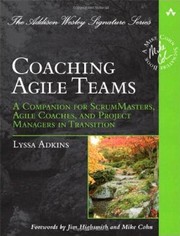
The definitive book on the Scrum Master as coach and facilitator; it directly addresses the mindset shift from 'manager' to 'servant-leader' and is widely recommended alongside CSM/PSM preparation.
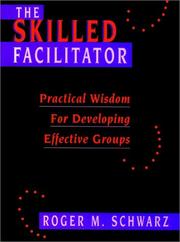
Provides deep, transferable facilitation theory and techniques that elevate your ability to run Sprint ceremonies and difficult team conversations — read after Adkins to add rigorous method to the coaching mindset.

Equips the Scrum Master with a powerful language for resolving conflict and building psychological safety — essential human skills that no framework book covers but every team situation demands.
Leading High-Performing Teams
ExpertLearn how to grow a team's maturity, navigate organizational impediments, and scale Agile thinking beyond a single team — the mark of a senior Scrum Master.
▸ Study plan for this stage
Pace: 8–10 weeks, ~40–50 pages/day (with reflection time). Week 1–3: Lencioni (~200 pages); Week 4–6: Derby (~150 pages); Week 7–10: Larman (~250 pages).
- The five dysfunctions (absence of trust, fear of conflict, lack of commitment, avoidance of accountability, inattention to results) and how to diagnose and remediate each in your team
- Trust as the foundation of team health—how to build psychological safety and model vulnerability as a leader
- Retrospectives as a structured, continuous improvement mechanism for team maturity and organizational learning
- The role of the Scrum Master in facilitating difficult conversations and surfacing team dysfunction without solving problems for the team
- Scaling Agile across multiple teams: dependencies, coordination patterns, and organizational structure in LeSS (Large-Scale Scrum)
- Organizational impediments vs. team impediments—recognizing when the problem lies outside the team and how to navigate upward
- Metrics and transparency in large-scale environments: how to maintain visibility without creating silos or command-and-control dynamics
- What are the five dysfunctions of a team, and how would you diagnose which dysfunction is most prevalent in a struggling team you're coaching?
- How does Lencioni define trust, and what specific behaviors must a Scrum Master model to build psychological safety in a team?
- What is the difference between a retrospective that generates insights and one that generates action, and how do you design retrospectives to move teams from dysfunction to maturity?
- Describe the role of the Scrum Master in a retrospective: when should you facilitate, when should you stay silent, and when should you intervene?
- In a large-scale Scrum environment (LeSS), how do you identify whether a problem is a team-level issue, a cross-team dependency issue, or an organizational impediment?
- What are the key structural and coordination patterns in LeSS, and how does the Scrum Master's role change when scaling from one team to multiple teams?
- Conduct a Five Dysfunctions team assessment (from Lencioni's assessment tool or framework) on a real team you work with; document findings and identify the root dysfunction driving the others.
- Design and facilitate a retrospective using one of Derby's formats (Start-Stop-Continue, Sailboat, or another from the book); record what insights emerged and what concrete actions the team committed to.
- Run a follow-up retrospective 2–3 sprints later to measure whether actions from the previous retro were completed and what new impediments surfaced; reflect on team maturity progression.
- Map out all dependencies and handoffs across 2–3 teams in your organization; identify which are structural (LeSS-related) and which are organizational impediments that need escalation.
- Create a one-page organizational impediment log: list 3–5 impediments blocking team progress that are outside the team's control; for each, identify the stakeholder to engage and your escalation strategy.
- Facilitate a cross-team sync or dependency-planning session using LeSS principles (e.g., Product Owner Sync, Scrum of Scrums); document how you maintained transparency without creating bottlenecks.
Next up: This stage equips you to diagnose and heal team dysfunction at scale, preparing you for the next level: coaching leaders and organizations through systemic Agile transformation, where you'll apply these team-building skills to shape culture and strategy across the enterprise.
A business fable that reveals the root causes of team failure; Scrum Masters who understand these dysfunctions can diagnose and fix team problems at their source rather than treating symptoms.
The go-to practical guide for designing and facilitating retrospectives that drive real improvement — the single most powerful Scrum event a Scrum Master owns, covered here in full depth.

Introduces LeSS, one of the leading frameworks for scaling Scrum across multiple teams; reading this last gives you the organizational perspective needed to grow into a senior or enterprise Scrum Master role.
Discussion
Keep reading
Paths that share books, cover the same subject, or open a related topic.