Saul Bellow Reading Order: Where to Start
Bellow won the Nobel, three National Book Awards, and a Pulitzer, and readers still routinely start with the wrong book — usually Augie March, whose six hundred exuberant pages have ended more Bellow projects than they have begun. This path starts with the short novel Seize the Day, then takes the mid-career run of Augie March, Herzog, and Humboldt's Gift that the reputation actually rests on, and finishes with the late short fiction and the biography.
The way in
IntermediateGet the Bellow voice — the high-low mix of street talk and metaphysics — in the two books where it arrives fastest
▸ Study plan for this stage
Pace: 2 weeks. Seize the Day is 126 pages covering a single day — read it in one sitting if you can, then reread the last three pages the following morning. Henderson the Rain King is 341 pages and comic; 35 pages a night gets you through in ten days.
- The Bellow voice: street talk and metaphysics inside the same sentence, and a narrator who is simultaneously a fool and a philosopher
- Seize the Day's compression — one day, a few city blocks, one father-and-son failure — and the drowning image that closes it
- Tommy Wilhelm as the archetype: the Bellow protagonist is a man being taken advantage of who half knows it and cannot stop it
- Dr Tamkin as the first of the great Bellow confidence men, a type that recurs through the entire career
- Henderson's comic quest, with an Africa invented rather than researched on purpose, and the refrain of wanting as its engine
- Bellow's own favourite among his books was Henderson; the exuberance is the point, and the shorter novel read first is what licenses it
- Money, fathers and self-deception — the three subjects nearly everything later returns to
- What does Tamkin want from Wilhelm, and how much does Wilhelm actually know?
- What happens in the last two pages of Seize the Day, and why is it not simply a defeat?
- What is Henderson's wanting for, and does the novel ever answer it?
- How does Bellow's comedy work — find the point where a sentence turns from grand to ridiculous and say what the turn does.
- Which of the two books tells you more about what Bellow is for?
- Read Seize the Day in one sitting, then read only its final scene again the next morning. The whole book depends on that ending landing.
- Copy out three sentences that mix registers — a philosophical clause landing in slang, or the reverse. That mix is the entire style.
- Track every sum of money mentioned in Seize the Day. Bellow's spiritual crises are always denominated.
- If Henderson made you laugh, note where; if it did not, note where you lost patience. Either answer predicts how you will get on with Augie March.
Next up: You now have the voice in your ear at short length, which is exactly what the six-hundred-page books require and exactly what readers who start with them lack.

A hundred-odd pages covering one terrible day in Tommy Wilhelm's life, and the most efficient introduction to everything Bellow does. Start here rather than with the big novels; if this does not work for you, nothing later will.

The comic African quest novel, Bellow's own favorite among his books and the funniest thing he wrote. Second because the exuberance is easier to enjoy once the shorter novel has set the register.
The breakthrough novels
IntermediateRead the two books that made Bellow's reputation and be able to say what the loose picaresque of one has to do with the interior monologue of the other
▸ Study plan for this stage
Pace: 6–7 weeks. The Adventures of Augie March is 536 pages with no plot to pull you forward — pace it deliberately at ~30 a night for three weeks and treat each episode as a self-contained unit, because drifting is the real danger here. Herzog's 352 pages are denser but far better shaped: two weeks at 25
- Augie's opening sentence as a declaration of independence for American prose, and the loose picaresque form that declaration licenses
- Picaresque means no plot: episodes accumulate, characters arrive and vanish, and there is no destination. Knowing that in advance is the difference between finishing and stalling
- The Chicago material — Depression, family, the immigrant Jewish city — as the first sustained treatment of that world in high American literature
- Herzog's unsent letters, written to the living, the dead and the famous, as a formal solution to the problem of dramatising a mind
- The move from Augie's outward sprawl to Herzog's inward compression: the same energy, held under pressure
- Herzog's comedy of humiliation — the cuckoldry, the courtroom, the gun that never goes off
- Bellow's women: this is where the standing objection to his work is strongest. Read the wives and lovers critically and form your own view, because the argument is not going away
- What does Augie's opening sentence promise, and does the book deliver on it?
- Name three episodes of Augie March and say what each adds. If none of them add anything, what is the book doing instead?
- Why letters? What can Herzog say in them that dialogue or narration could not?
- What does Herzog actually do about his situation, and what does the anticlimax mean?
- On the evidence of these two books, is the charge against Bellow's portrayal of women sustained? Argue it either way with quotations.
- Read Augie March's first paragraph aloud, then the first paragraph of Seize the Day. Same writer, opposite strategies.
- Keep an episode log for Augie — one line each. It converts shapelessness into something you can hold, and reveals the shape that does exist.
- Take one of Herzog's letters and rewrite it as a scene with another character present. What Bellow avoided by choosing letters becomes obvious immediately.
- Note the point at which Augie March lost or held you, then read the equivalent point in Herzog. The comparison explains why the second book took the prizes.
Next up: With the two books the reputation rests on behind you, the later novels can be read as arguments rather than as introductions — which is how they were written.
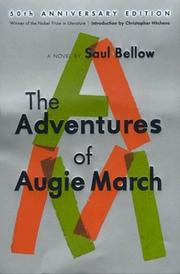
The 1953 novel that broke American prose open with its opening sentence and never lets up. Placed third overall rather than first precisely because its length and shapelessness defeat readers who have no feel for Bellow yet.
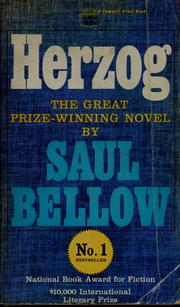
A cuckolded academic writing unsent letters to the living and the dead — his most complete fusion of comedy, grief, and intellectual history. Read it after Augie March; it is the same energy under pressure and control.
The major later novels
IntermediateFollow Bellow into the argumentative late-career books, including the Pulitzer winner and the one that still starts fights
▸ Study plan for this stage
Pace: 6–7 weeks. Mr. Sammler's Planet is 313 pages and argumentative — 25 a night for under two weeks, though it is worth pausing over the passages that irritate you. Humboldt's Gift is 487 pages and much warmer: three weeks. The Dean's December is 312 pages and the coldest of the three; allow two weeks,
- Sammler as a Holocaust survivor judging New York at the end of the 1960s — the point where Bellow's cultural politics turn openly combative
- The pickpocket sequence and the university lecture scene: the two most-argued passages in Bellow, and the ones the case against him is usually built from. Read them closely rather than second-hand
- Humboldt's Gift as an elegy for a ruined poet and for the idea that America has any use for poets — comedy and grief in one book
- Citrine's Chicago hustlers as the confidence-man type from Seize the Day grown into an entire social world
- The Dean's December's two-city structure, holding two failing systems side by side, with the polemic much closer to the surface than the fiction
- The late method generally: the novel used as a vehicle for cultural argument, which is either the maturity of the work or its degeneration depending on whom you ask
- The prizes as context — the Pulitzer and then the Nobel arrived exactly as his politics were making him unfashionable
- What is Sammler's actual objection to the 1960s, and how much of it does the novel endorse?
- What does the pickpocket scene do, and why has it stayed controversial?
- What does the dead poet represent to Citrine, and what is the gift of the title?
- How does The Dean's December use its two cities, and does the comparison hold up?
- Ranked as novels rather than as arguments, in what order do these three fall, and why?
- Read the lecture scene in Mr. Sammler's Planet twice, then write out the strongest possible case for the position you disagree with. This stage is worth little otherwise.
- Read Humboldt's Gift immediately after Sammler; the move from sourness to warmth is the best evidence that the late Bellow is more than a polemicist.
- Find one passage of pure comedy in each of the three novels. How scarce it is in The Dean's December is the diagnosis.
- Write 300 words on whether a novel is a legitimate place to make the arguments Bellow makes here. You will need the answer when you get to the biography.
Next up: Having taken the argumentative Bellow at full length, you can see what the late novellas achieve by cutting nearly all of it away — and what the biography makes of the man who wrote both.

A Holocaust survivor's disgusted survey of 1960s New York, and the point where Bellow's cultural politics turn combative. Read it first here, and read it critically — much of the argument about Bellow starts with this book.
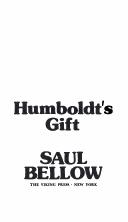
The Pulitzer winner, a comic elegy for the poet Delmore Schwartz and for the idea that America has any use for poets. Second because it answers Sammler's sourness with something much warmer.
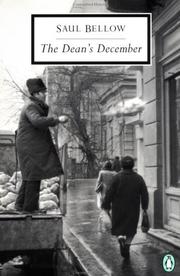
Chicago and Bucharest set against each other in the coldest of his major novels. Placed last in this stage as the least essential of the three, worth reading once the others have earned your patience.
The late short fiction and the life
IntermediateRead the compressed late Bellow, where the novels' machinery is stripped down to novella length, and place the career against the biography
▸ Study plan for this stage
Pace: 5–6 weeks. Something to Remember Me By is 222 pages holding three novellas — one per sitting. Ravelstein's 240 pages read in a week. James Atlas's biography is 686 pages: ~30 a night for three weeks, and it is the part of this stage to spread out rather than binge.
- Compression as late style: the title novella does in sixty pages what Herzog does in three hundred, and many readers rate it above the novels
- The Chicago winter of that novella — a boy, a corpse, a stolen set of clothes — as the purest instance of Bellow's comedy of humiliation
- Ravelstein as a portrait of a close friend published after his death, and the ethical problem it created: how much of a friend's private life belongs to the novelist
- Ravelstein's second subject is the narrator's obligation to write about the dead at all, which makes it a fitting close to a career built on real people lightly disguised
- Atlas is cool toward his subject — severe about the marriages, the politics and the treatment of friends. Read it as a case being made rather than a neutral account
- The accusation the biography sharpens: that Bellow converted the people around him into material without their consent
- The question this path finally leaves you with — whether the voice justifies the use he made of the people who supplied it
- What does the title novella keep from the novels, and what does it cut?
- What does Ravelstein reveal about its subject, and should it have?
- What is the narrator of Ravelstein worried about, and how does that worry structure the book?
- Where is Atlas hardest on Bellow, and is the judgement supported by what you have read?
- Having finished the path, which three Bellow books would you keep, and which would you drop?
- Read the title novella and then Seize the Day again. Forty years apart, a single day each, and the comparison is the clearest measure of what changed.
- Read Ravelstein and then Atlas's chapters on the same man, back to back — fiction and record on one subject.
- Mark three places where Atlas's verdict conflicts with your own reading. That list is what you actually got out of this path.
- Write out the reading order you would now give a friend, and justify the first book. Almost nobody keeps the order they started with.
Next up: That is the career from the shortest book to the longest — enough to make the case for Bellow, or against him, in your own words.

Three late novellas, including the title story, which many readers rate above anything in the big novels. Read them once you know the long books, so you can see what he chose to cut.
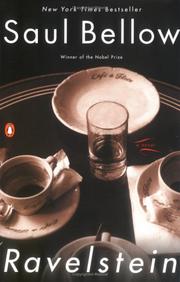
His last novel, published at eighty-four, a portrait of his friend Allan Bloom and a book about how to write about someone who has died. A quiet, strange ending to the career, and best read as one.
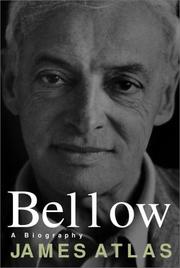
The first full biography, controversial for its coolness toward its subject and still the standard entry point to the life. Read it last, when you have enough of the fiction to argue back.
Discussion
Keep reading
Paths that share books, cover the same subject, or open a related topic.