Sally Rooney Reading Order: Where to Start
Sally Rooney has published four novels, and unusually for a contemporary writer they genuinely reward being read in publication order — each book takes the argument of the last one and pushes it somewhere less comfortable. This path runs straight through the sequence, starting with the two early novels that made her name and moving into the later, formally stranger work. A short piece of standalone fiction closes it out for readers who want everything.
The two early novels
BeginnerMeet Rooney's core method — dialogue-driven, email-and-text-saturated, emotionally exacting prose about power between people who cannot say what they want — and understand why these two books are usually read as a pair
▸ Study plan for this stage
Pace: 3 weeks. Conversations with Friends is 321 pages and Normal People 304 - about 625 pages, and both read far faster than the count suggests because the prose is spare and dialogue-heavy. Ten days each at ~30 a night. Read them back to back with no gap; the second book is a revision of the first and t
- The Rooney method: dialogue-driven, email-and-message-saturated prose that reports speech and withholds interiority, so what people cannot say becomes the substance
- Punctuation stripped back - no quotation marks - which flattens speech into narration and removes the usual signal for where a scene begins
- Power as the constant subject: class, money, age, beauty and articulacy as currencies people spend on each other without acknowledging it
- Frances in Conversations with Friends as a narrator who intellectualises her own harm, and the gap between her analysis and her behaviour
- Normal People refining the same machinery into tight third person across two consciousnesses, with the recurring misunderstanding as the engine
- The Marianne and Connell structure - four years, alternating perspectives, and a series of failures to say one plain sentence
- Class in an Irish town versus class at Trinity, and how the same two people swap social position by changing rooms
- Why the pair are read together: the debut builds the machine and the second book runs it at higher precision, which is easier to see in this order
- What does dropping quotation marks actually do to how you read a conversation?
- Frances narrates her own damage with great fluency. Where does the novel show her being wrong about herself?
- In Normal People, name the specific moment where one plain sentence would have changed everything. Why can neither of them say it?
- How does the class relationship between Marianne and Connell invert between school and Trinity, and what does the inversion cost each of them?
- Which of the two is the better novel, and which is the better introduction? They may not be the same answer.
- Take one page of dialogue and reinsert quotation marks. Then read it again and note exactly what has changed in pace and distance.
- In Conversations with Friends, mark every email and message. The written text is where these characters are most honest and the distribution shows it.
- Track who has power in each Marianne and Connell scene and write it in the margin. The reversals are frequent and are the plot.
- After both books, list what Normal People does that the debut could not. That list is what the ordering of this stage exists to produce.
Next up: You now know the machinery well enough to recognise it being deliberately dismantled, which is exactly what the later books do to it.

The debut, and the sharper of the two early novels about what class and money do to intimacy. Read it first because Normal People refines the same machinery, and the refinement is easier to see if you have watched it being built.

The book most people arrive through, and the most straightforwardly moving thing she has written: two people over four years, told in tight third person with the punctuation stripped back. If you would rather start here than with the debut, that is a defensible choice, but read Conversations with Friends immediately after rather than skipping it.
The later, stranger novels
IntermediateSee Rooney turn the same material outward — toward faith, politics, work and grief — and read the more formally experimental prose that the early novels only hinted at
▸ Study plan for this stage
Pace: 5 weeks. Beautiful World, Where Are You is 352 pages, alternating narrative chapters with long essayistic emails - two weeks, and read the emails properly rather than skimming to get back to the plot, since skimming them is refusing the book's argument. Intermezzo is 454 pages and the slowest thing
- Beautiful World's alternating structure: novelistic chapters observed from an almost camera-like exterior, interleaved with emails where the characters think at length
- The exterior narration as a formal choice with a claim behind it - the reader is denied interiority in the chapters and handed too much of it in the emails
- The book openly arguing with its own genre, asking whether novels about relationships deserve attention while the world is what it is, and refusing to settle the question
- Alice as an obvious self-portrait and the risk Rooney takes by putting a famous young novelist inside the novel
- Faith and religious seriousness entering the work here, treated as a genuine intellectual option rather than a symptom
- Intermezzo's brothers, ten years apart, after their father's death - grief as the first subject Rooney has treated that is not primarily about a couple
- Peter's clipped, fragmentary interior voice as the most stylistically ambitious prose of her career, and its debt to modernist stream of consciousness
- The trajectory: each book takes the previous book's argument and pushes it somewhere less comfortable, which is why publication order genuinely matters here
- What does the exterior narration of Beautiful World withhold, and what does the email form give back?
- Is the self-critique in Beautiful World genuine or is it pre-emptive defence? Argue from the emails themselves.
- How does Rooney write about religious belief without either endorsing or diagnosing it?
- In Intermezzo, how does Peter's fragmentary voice differ from Ivan's, and what does the contrast establish about each brother?
- Grief rather than romance is Intermezzo's centre. Does the method built in the first two books still work on it?
- Read three consecutive Beautiful World email exchanges on their own. They form a coherent essay and reading them that way clarifies what the novel chapters are doing in contrast.
- Mark the moments in Beautiful World where the narration suddenly does get inside a character. They are rare and deliberate.
- Take one page of Peter's sections in Intermezzo and rewrite it in the plain prose of Normal People. What is lost is the measure of the ambition.
- Write one sentence per novel naming the argument each book is making, in publication order. The sequence should read as a single developing thought.
- Note where Intermezzo stops feeling like a Rooney novel. That boundary is the most interesting thing in her recent work.
Next up: With all four novels read in sequence, the short fiction becomes legible as the method in miniature rather than as a minor offcut.

Alternates conventional narrative chapters with long essayistic emails between two friends, and openly argues with the idea that novels about relationships matter at all. Read it third because it is partly a self-critique of the two books before it.
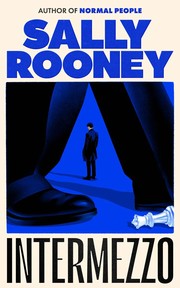
Two brothers after their father's death, written in the most stylistically ambitious prose of her career, with one narrator's sections given a clipped, fragmentary interior voice. Placed last because it assumes you already trust her, and because it is the least like the books that made her famous.
The short fiction
BeginnerRead the one piece of Rooney's short work published as a standalone book, and see the method compressed to its smallest working form
▸ Study plan for this stage
Pace: One evening. Mr Salary is 48 pages - a single short story issued as a slim standalone volume, and an hour's reading at most. Read it in one sitting immediately after Intermezzo, while the full range of the novels is available for comparison.
- The method compressed: a woman, an older man she lives with, an unspoken arrangement, and almost nothing explained - everything the novels do at length is already here
- Economy as the story's whole technique - a novel's worth of backstory carried in a handful of exchanges
- The Rooney power dynamic in its purest form: dependency, money and age difference, with the imbalance stated by circumstance rather than by anybody naming it
- Illness and impending death handled with the flat affect that makes Rooney's emotional writing land, an early version of what Intermezzo does at scale
- How little Rooney's core interests changed between the earliest short fiction and the fourth novel, and how much the prose did
- The short form as a diagnostic: with no room for structure, what remains is voice and pressure
- What does Mr Salary leave unexplained, and how does it make the omission feel deliberate rather than withheld?
- Which of the four novels does this story most resemble, and in what specific respect?
- Would the story work expanded to novel length? Name what would have to be added and whether adding it would help.
- Reading it last rather than first: what did the novels teach you to notice here that you would otherwise have missed?
- Across all five books - has Rooney's subject changed, or only her means of approaching it?
- Read Mr Salary in one sitting, then immediately reread its final page. The ending is the whole story and it is easy to read past.
- Write the two-paragraph backstory the story implies but never states. Reconstructing it shows how much is being carried by implication.
- Line up the opening paragraph of Mr Salary against the opening of Intermezzo. Five or six years apart, the change in ambition is measurable in a single page.
- Write your own recommended Rooney order for a friend who has only seen the television adaptations, and say where you would depart from this path.
Next up: This closes the path - four novels in publication order plus the short fiction that shows the method at its smallest working size, which is the whole of Rooney's published book-length work to date.

An early short story about a woman and the older man she lives with, issued as a slim standalone volume. An hour's reading at most, and a useful coda: everything the novels do at length is already here in miniature.
Discussion
Keep reading
Paths that share books, cover the same subject, or open a related topic.