Ruth Rendell Reading Order: Where to Start
Ruth Rendell wrote in three distinct strands and mixing them up is why new readers bounce off her: the Inspector Wexford police procedurals, the standalone psychological crime novels published under her own name, and the slower, denser novels she wrote as Barbara Vine. They are genuinely different books, and this path keeps the strands separate. It opens with a standalone rather than a Wexford, because the standalones are where her reputation actually lives, then gives each strand its own sequence.
Start With a Standalone
BeginnerUnderstand what Rendell does that other crime writers do not — tell you the killer on page one and make it unbearable anyway.
▸ Study plan for this stage
Pace: 2 weeks. A Judgement in Stone is 192 pages and A Demon in My View 188 — both are short and both are read faster than you intend, because Rendell's standalones generate a dread that makes putting the book down feel worse than continuing. A week each is realistic; a weekend each is what actually happe
- ⚠️ FIRST, THE THING THAT CONFUSES NEW READERS: Ruth Rendell wrote in three strands and they are genuinely different books. The Inspector Wexford police procedurals, the standalone psychological novels under her own name, and the slower, denser novels published as BARBARA VINE. A reader who picks up
- This stage is strand two — the Rendell-signed standalones — and it opens the path because this is where her reputation actually lives, not in the police procedurals she is best known for
- A Judgement in Stone names the murderer and her motive in its first sentence, and then spends the novel showing how it became inevitable. There is no whodunit and no suspense about the outcome
- That is the technique of the whole strand: suspense generated by inevitability rather than by uncertainty. You know what is coming, you can see the small misunderstandings assembling it, and you cannot stop it
- Its subject is class as much as murder. An illiterate housekeeper in a cultured middle-class household, and a family whose kindness is inseparable from their condescension — Rendell is precise about how English class humiliation actually operates
- A Demon in My View is narrated substantially from inside a disordered mind: a quiet lodger, a shop-window dummy he keeps in the cellar, and a new tenant in the house who happens to share his name
- Rendell's method there is the same and the effect is different — she never explains her killer from outside, and never offers a psychiatric label. You are simply inside the logic, and the logic works
- Both books are under 200 pages. The compression is deliberate; the standalones are built to be taken in one or two sittings and lose pressure if they are spread out
- A Judgement in Stone tells you everything in the first sentence. Why is it still unbearable? Name the mechanism that replaces suspense.
- What is Eunice's actual grievance, and how many chances does the novel give the Coverdales to notice it?
- Is the family cruel? Rendell is careful here, and the answer determines what the book is about.
- In A Demon in My View, how does the name coincidence work as a plot device, and how does Rendell make coincidence feel like fate rather than contrivance?
- Neither novel offers a diagnosis of its killer. What is Rendell refusing to do, and what does the refusal achieve?
- Compare the two openings. What does each promise the reader, and does she keep both promises?
- Read the first sentence of A Judgement in Stone, then stop and predict how the book will generate tension. Checking your prediction against the actual method is the fastest introduction to Rendell.
- Track every small missed communication in A Judgement in Stone. The murder is assembled entirely out of them and listing them shows the engineering.
- In A Demon in My View, mark the point where you stopped being outside the lodger's head. It happens early and most readers do not notice it happening.
- Write two sentences on what a Rendell standalone is. You will use it to distinguish this strand from the other two for the rest of the path.
Next up: With the standalone method understood, the Wexford books read as what they are — a much lighter proposition from the same writer, and worth knowing as a separate thing rather than as a disappointment.
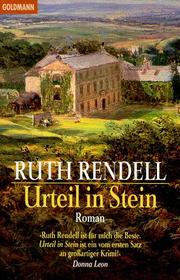
Opens by naming the murderer and her motive in the first sentence, then spends the novel showing you how it became inevitable. Start here: it is short, it is the most famous first line in British crime, and it defines the whole standalone strand.

A quiet lodger, a shop dummy in the cellar, and a new tenant who shares his name. Read second — same method, and it shows how consistently she works from inside a disordered mind rather than outside it.
The Wexford Books, From the Beginning
BeginnerMeet the Kingsmarkham police procedurals, which are the lightest of the three strands and can be read in publication order.
▸ Study plan for this stage
Pace: 5 weeks. From Doon with Death (188 pages), A New Lease of Death (249), Some Lie and Some Die (192) and Shake Hands Forever (216) — these are short, conventional police procedurals and go down at a book a week comfortably. ⚠️ A New Lease of Death is published in the United States as Sins of the Fathe
- This is strand one: Chief Inspector Reg Wexford of Kingsmarkham, a fictional Sussex town, across a series that ran to more than twenty books over fifty years
- These are the LIGHTEST of the three strands and the most conventional — proper detective novels with an investigation, suspects and a solution, which is exactly what the standalones are not
- From Doon with Death was Rendell's first published novel and it is dated: the plotting is neat, the social attitudes are of 1964, and the solution turns on something the book treats as more shocking than a modern reader will. Read it as an origin rather than as a recommendation
- The real series is the argument between Wexford — liberal, curious, self-questioning — and his subordinate Mike Burden, who is conservative, moralistic and frequently wrong in ways that are never simply mocked. Their disagreement carries fifty years of English social change
- A New Lease of Death has Wexford reopening a conviction he is no longer confident about, and it is the first sign that this series will be about doubt rather than deduction
- Some Lie and Some Die puts a body in a quarry during a rock festival, which lets Rendell set Wexford's small-town instincts against 1973. It is one of the best of the early run and the first where the social observation outclasses the mystery
- Shake Hands Forever is where the series stops being cosy: Wexford becomes convinced of a man's guilt, cannot prove it, and lets the obsession damage him professionally
- Read four and you have the strand. There is no need to read all twenty in order — the books are self-contained, the continuity is domestic rather than plot-driven, and this path deliberately jumps ahead after these
- What is the Wexford and Burden disagreement actually about? State each man's position in his own terms rather than as liberal versus conservative shorthand.
- From Doon with Death treats its solution as a revelation. What has changed since 1964, and does the novel survive the change?
- In A New Lease of Death, what makes Wexford doubt an old conviction? Notice that the doubt is temperamental before it is evidential.
- How does Some Lie and Some Die use the festival? What does Rendell see in 1973 that a straight procedural would miss?
- In Shake Hands Forever, what does the obsession cost Wexford, and is he right? The book is careful not to reward him for being right.
- Set any of these beside A Judgement in Stone. What is Rendell doing here that she refuses to do in the standalones?
- Read these four in order over five weeks and resist the urge to continue chronologically. The path jumps deliberately and reading the twenty in sequence is a much larger commitment than it appears.
- Note the year of each book and what it observes about English life. The series is a fifty-year social record and the early volumes are where the baseline is set.
- Keep a note of every time Burden is right. It happens more than the series' reputation suggests and it is what stops him being a stooge.
- After Shake Hands Forever, write a paragraph on what kind of detective Wexford is. You will test it against the mature series in the next stage.
Next up: Skipping twenty years forward shows what the series became once Rendell trusted it to carry real social subject matter.

The first Wexford and her first published novel: a dull housewife murdered, and a cache of inscribed books. Dated, but it establishes Wexford and Burden, whose long argument is the real series.

Wexford's second case, revisiting an old conviction he is no longer sure of. Published in the United States as Sins of the Fathers, and the first sign the series will be about doubt rather than deduction.

A body in a quarry during a rock festival, which lets Rendell set Wexford's small-town conservatism against 1973. One of the best of the early run.
Wexford becomes convinced of a man's guilt and cannot prove it, and the obsession costs him. Read it fourth; it is where the series stops being cosy.
Late Wexford
IntermediateSkip ahead to the mature series, where the cases carry the social subject matter of the 1990s.
▸ Study plan for this stage
Pace: 2 weeks. Simisola is 366 pages, nearly twice the length of the early Wexfords, and the extra pages are social observation rather than plot — 25 pages a day over a fortnight. You can jump straight here from the previous stage: the series is self-contained enough that missing the intervening books cos
- Simisola is the best of the late Wexford novels and the one to read if you only read one. It is the clearest demonstration of what the series became after thirty years
- The case begins with the disappearance of the daughter of a Black doctor who is Wexford's own GP, and it takes in unemployment, domestic servitude and the assumptions made about who a missing young Black woman is
- Its central move is to make Wexford — the liberal, decent, self-questioning detective the reader has been trusting for thirty years — confront his own assumptions and get things wrong because of them
- That is why it works: the series had spent decades establishing Wexford's good faith, so a book about the limits of good faith has somewhere to fall from
- It is also structurally a proper detective novel, which is worth saying — Rendell does not abandon the form to make the point, and the investigation is fairly clued
- The book was written in the mid-1990s and its picture of British race and class relations is of that moment. Read it as a novel doing something unusual for its time and genre rather than as a current account
- Length is the other change: the mature Wexfords are half as long again as the early ones, and the additional space goes to the world around the case rather than to the case itself
- Having read four early books and one late one, you have the strand's whole trajectory, which is the point of the jump rather than a shortcut through it
- What does Wexford assume, and at what point does the novel make him see it? Be specific — the book turns on a particular error.
- How does the case connect unemployment, domestic service and the disappearance? Rendell is building an argument about who becomes invisible.
- Does making the detective wrong weaken the series' central figure, or is that the point of having spent thirty years establishing him?
- Compare the pacing with Some Lie and Some Die. Where do the extra 170 pages go?
- The novel is thirty years old. What in it has dated, and what has not? Answer both halves honestly.
- Having read five Wexfords, what holds the series together across fifty years — Kingsmarkham, Wexford, or the argument with Burden?
- Read the first fifty pages, then write down your assumptions about what happened to the missing woman. Comparing them to Wexford's is the exercise the novel is built to run.
- Note where the investigation stalls and why. In this book the obstacles are social rather than evidential.
- Set Simisola's opening beside From Doon with Death's. Thirty years of the same author on the same detective is legible in two pages.
- Decide whether you want more Wexford. If yes, the series is long and reasonably consistent from here; if not, you have lost nothing, because the next strand does not depend on it.
Next up: Two strands down, the third is the one most readers never reach — and it is where the best writing in this whole path is.
A missing Black doctor's daughter, and Wexford forced to notice his own assumptions. The best late Wexford and the one to read if you only read one — the series is self-contained enough to jump here.
The Barbara Vine Novels
IntermediateMove to the third strand: longer, slower books about family secrets uncovered decades later, written under a pseudonym she used deliberately for a different kind of novel.
▸ Study plan for this stage
Pace: 9 weeks. A Dark-Adapted Eye (304 pages), A Fatal Inversion (320), The House of Stairs (288) and Asta's Book (458) — roughly two weeks each, three for the last. ⚠️ These are much SLOWER than anything else in this path and should not be read at Rendell-standalone speed: they are reconstructions, they
- Barbara Vine was a pseudonym Rendell adopted deliberately, so that a reader picking up a Vine would know they were getting a different kind of novel. It was an honest signal rather than a disguise, and the fact that she was Rendell was never hidden
- The Vine books are longer, slower and denser, and their form is almost always the same: a narrator in the present reconstructing a family catastrophe from decades earlier, out of letters, diaries, memory and what people will not say
- The crime is usually known from the start. What is withheld is the WHY, and the reconstruction is the plot — which makes them closer to A Judgement in Stone in philosophy than to the Wexford books, at four times the length
- A Dark-Adapted Eye has a niece reconstructing why her aunt was hanged for murder in the 1950s, and it is the correct entry to the strand. Start here rather than anywhere else in it
- A Fatal Inversion is widely rated the best of the Vines: bodies found in the animal cemetery of a country house where a group of young people spent one summer ten years before, told from the points of view of people with very different reasons to lie
- The House of Stairs is the most claustrophobic — a woman living under an inherited risk of a terminal condition, a house full of hangers-on in 1960s London, and a friendship that ended with someone in prison
- Asta's Book is the most intricate structure Rendell ever built: a Danish immigrant's diaries kept in London across decades, a missing child, a murder trial, and a granddaughter editing the diaries who discovers what they conceal
- All four are about the middle-class English family as a machine for keeping secrets, and the recurring insight is that the secret is usually protecting the reputation of someone already dead
- In A Dark-Adapted Eye, what is Faith actually trying to find out, and what does she settle for? The reconstruction is deliberately incomplete.
- In A Fatal Inversion, how do the three perspectives differ in what they conceal? The novel's design is that each narrator is protecting something different.
- Why set A Fatal Inversion in one summer ten years earlier? What does the interval do that a present-tense narrative could not?
- In The House of Stairs, how does the inherited medical risk shape every choice the narrator makes? It is the engine of the book rather than its background.
- In Asta's Book, what do the diaries conceal, and how does Rendell use the act of editing them as a plot device?
- Across all four: what makes a Vine a Vine rather than a Rendell? Name three formal differences.
- Read these at half the speed of the standalones. The single most common failure with the Vines is reading them like thrillers, and they punish it by becoming confusing rather than tense.
- For each novel, keep a two-column note: what the narrator knew at the time, and what they know now. That gap is the form.
- In Asta's Book, note the date of each diary entry as you go. The chronology is the puzzle and following it passively does not work.
- After A Fatal Inversion, write down who you think is most responsible. Then find the passage that lets each of the others off, because Rendell supplies one for everybody.
- Write a paragraph comparing a Vine to A Judgement in Stone. They are the same author solving the same problem — inevitability without suspense — at completely different lengths.
Next up: All three strands are now clear, which is the right point to go back to the standalones and see how far she was willing to push them.
A niece reconstructs why her aunt was hanged for murder in the 1950s. The first Vine and the correct entry to the strand — start here rather than anywhere else in it.

Bodies found in the animal cemetery of a house where a group of students spent one summer ten years earlier. Widely rated the best Vine; read second.
A woman with an inherited terminal risk, a house full of hangers-on, and a friendship that ended in prison. The third of the early Vines and the most claustrophobic.
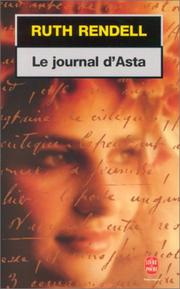
A Danish immigrant's diaries in London, a missing child and a murder trial, uncovered by her granddaughter. Published in the United States as Anna's Book. Read it fourth — it is the most intricate structure Rendell ever built.
Back to the Standalones
BeginnerReturn to the Rendell-signed psychological novels once you know all three strands, and see where the run continues.
▸ Study plan for this stage
Pace: 2 weeks. Live Flesh is 272 pages and reads fast, but it is genuinely nasty and worth pacing — 25 pages a day rather than a weekend. This stage is short by design: it is a return to strand two at its hardest, and a signpost rather than a survey. ⚠️ Content note: the novel concerns a convicted rapist
- This closes the loop back to the strand the path opened with, now that you can place it against the Wexfords and the Vines and see what it does that neither of them will
- Live Flesh has a man released from prison for rape befriending the policeman he shot and crippled during his arrest, and inserting himself into the policeman's life and marriage
- It is the nastiest and the best of the later standalones. Rendell narrates substantially from inside Victor's head without ever endorsing him, and without offering the reader a comfortable distance
- The technique is the one from A Demon in My View pushed as far as she took it: no diagnosis, no explanation, no authorial condemnation, just a coherent point of view that happens to belong to someone dangerous
- What makes it more than an exercise is that Victor is genuinely pitiable in places, and the novel makes you feel it and then refuses to let that count for anything
- It is also very precisely observed about London, employment, lodgings and the mechanics of being a released prisoner with nowhere to go — Rendell's social specificity is doing real work under the psychology
- ⚠️ THIS IS WHERE THE PATH STOPS, AND THE STRAND DOES NOT. The Rendell-signed standalones simply continue: The Bridesmaid, The Keys to the Street and Thirteen Steps Down are all worth picking up, and can be read in any order because none of them is connected to the others
- The same is true of the other two strands — more than twenty Wexfords, and a dozen or so Barbara Vine novels beyond the four here. This path is an entry to a very large body of work rather than a complete account of it
- How does Rendell make you understand Victor without asking you to forgive him? Locate the technique rather than describing the effect.
- Why does he seek out the policeman he crippled? The novel gives a reason and it is not the obvious one.
- Where does the book make you feel sympathy, and what does it do with that sympathy immediately afterwards?
- Compare Live Flesh with A Demon in My View. What has Rendell learned in the intervening decade about writing from inside a disordered mind?
- Having read all three strands, which is her real achievement? Make the case for the one you did not expect to choose.
- Which strand would you now recommend to a new reader, and would you still open with A Judgement in Stone?
- Mark every passage where Victor's account of an event differs from what you can independently work out. That divergence is the whole novel.
- Reread the first page of A Judgement in Stone after finishing. Ten books later it is a different opening, and the return is the point of ordering a path this way.
- Write one paragraph describing each of the three strands to someone who has never read Rendell. If you cannot tell them apart in a sentence each, go back to the Vines.
- Pick your next Rendell deliberately: another standalone, more Wexford, or another Vine. The three strands go in genuinely different directions and the choice matters more with her than with almost any other crime writer.
Next up: That is all three Ruth Rendells — the procedural, the psychological standalone and the Barbara Vine reconstruction — and it is enough to walk into any of the fifty-odd remaining books knowing which one you have picked up.
A rapist released from prison befriends the policeman he crippled. The nastiest and best of the later standalones, and the right place to stop — after this the strand simply continues, with The Bridesmaid, The Keys to the Street and Thirteen Steps Down all worth picking up in any order.
Discussion
Keep reading
Paths that share books, cover the same subject, or open a related topic.