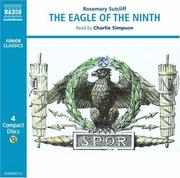
Start with the novel our catalogue files as The Eagle of the Ninth. 1400 Grundwörter. The book underneath that catalogue string is The Eagle of the Ninth, published in 1954: a young centurion, invalided out of the army after a spear wound to the thigh, goes north of the Wall with a single companion to find out what became of his father's legion and to bring back its lost standard. Every Roman novel Sutcliff wrote afterwards runs downstream of it, so this is the entry point.
Deal with the edition before you buy anything. The only record our catalogue resolves for that novel is a German-market school edition with a controlled vocabulary of 1,400 basic words, prepared for German learners of English. That is a simplified text, not Sutcliff's prose, and Sutcliff's prose is the reason to read her. Buy any ordinary English edition instead. The remaining thirteen titles here resolve to normal trade editions, though the catalogue lowercases several of them (Dawn wind, The shield ring, Warrior scarlet) — a cataloguing habit, not a different book.
The Dolphin Ring, in order
The books usually grouped as the Dolphin Ring sequence are linked by a flawed emerald signet ring handed down through one family from the Roman occupation to the Norman conquest. They are not a serial. Decades or centuries pass between them and no character survives from one to the next, so read them in internal chronological order, which here is very nearly publication order.
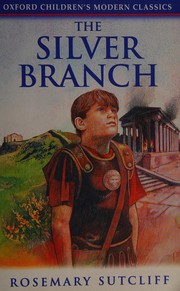
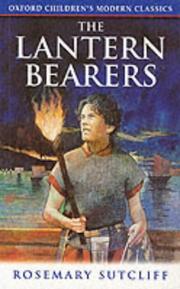
After the first novel comes The Silver Branch (231 pages, 1957), set two generations later under the breakaway emperor Carausius — shorter and tighter, and the first book in which the ring does real narrative work. Then The Lantern Bearers (252 pages, 1959), in which the last Roman troops leave Britain and Aquila deserts rather than sail with them. It won the Carnegie Medal and it is the emotional peak of the sequence. Read it third and not before: its force depends on having watched the province still working in the two earlier books.
Sword at Sunset (480 pages, 1963) follows directly. Arthur as a Romano-British cavalry commander, narrated in the first person, written for adults rather than children — longer, bloodier and sexually frank where the others are not. Then Dawn wind (265 pages, 1961), which opens on a boy waking among the dead after the final Saxon victory, and The shield ring (225 pages, 1956), where the Norse of the Lake District hold out against the Normans and the sequence closes.
The one real order argument
Frontier wolf (202 pages, 1980) is the genuine dispute. Many listings count it inside the Dolphin Ring, between The Silver Branch and The Lantern Bearers, because its protagonist belongs to the same family. This path treats it as a separate Roman novel, and either choice works, because the book is entirely self-contained. It is also the most purely enjoyable thing she wrote — a disgraced young officer commanding native scouts on the northern frontier — and readers who find the first novel slow are often better served by starting here.
The other two Roman standalones are The mark of the Horse Lord (253 pages, 1965), a gladiator impersonating a Dalriad king, which many readers name her finest book and whose ending she refused to soften; and Outcast (229 pages, 1955), a Roman-raised British boy sold into galley slavery, the cruellest book on this list.
Before Rome, after the legions
Warrior scarlet (207 pages, 1958) is Bronze Age Britain and a boy with a withered arm who must kill a wolf single-handed to be counted a man. Sutcliff had Still's disease from the age of two, and the book is plainly personal. Song for a dark Queen (179 pages, 1978) tells Boudicca largely through her harper and is the most formally experimental thing she attempted. The Shining Company (267 pages, 1990) turns the Gododdin, the earliest surviving poem from Britain, into a novel about three hundred men riding to certain death.
Where to stop, and what is missing
For the Roman core alone, stop after The Lantern Bearers. For the one adult novel, stop after Sword at Sunset. The final pair is optional but worth it: Black Ships Before Troy (128 pages) is her prose Iliad for children, illustrated by Alan Lee, and Blue remembered hills a recollection (144 pages, 1983) is the memoir — a childhood largely spent immobile, a mother reading Norse myth aloud — which makes the recurring wounded protagonists impossible to unsee afterwards.
Sutcliff wrote roughly sixty books and this list holds fourteen. The Odyssey companion to her Iliad, The Wanderings of Odysseus, is not in our catalogue, nor is Knight's Fee, nor the Arthurian retellings beginning with The Sword and the Circle. The full ordered sequence, stage by stage, is at /paths/pt_ai_rosemary-sutcliff.