Best Books on Rocket Propulsion and Engine Design, in Order
Rocket propulsion is an unusually unforgiving subject to read into, because the good books are engineering texts and they assume you arrive with thermodynamics, compressible fluid mechanics and heat transfer already in hand. This path states that cliff instead of hiding it: after two books read purely for pleasure and orientation, it spends a whole stage on the gas dynamics that the nozzle equations are an application of, and only then reaches the propulsion courses, the design references, and finally the specialist literature on combustion devices, solid motors and electric thrusters. If you want the physics without the mathematics, stop after stage one — nothing after it is readable without calculus and a thermodynamics course.
Why rockets are hard, before any equations
IntermediateUnderstand what a rocket engine has to do and why almost every attractive-looking propellant or cycle turns out to be a bad idea, with no mathematics required.
▸ Study plan for this stage
Pace: Six to eight weeks for 1,310 pages, and this is the only stage on the path that needs no mathematics at all — it is also a legitimate place to stop. Clark's Ignition! is 302 pages and reads at 25-30 pages an evening because it is funny and because Clark was a chemist telling stories about work he di
- Specific impulse as the figure of merit, and why a high-performance propellant can still be a bad choice
- Storability, hypergolicity and handling — the constraints Clark shows repeatedly defeating performance
- Combustion instability as the recurring failure mode of liquid engines
- The delta-v budget, and why it is the currency of every mission decision
- Staging, and the reason a single-stage vehicle is so hard from Earth
- The basic spacecraft subsystems and where propulsion sits among them
- Why almost every attractive-looking exotic propellant was tried and abandoned
- Why did fluorine-based oxidisers keep being revisited despite performance being known in advance, and what ended each attempt?
- What is a hypergolic propellant combination, and what operational problem does it solve?
- What was the specific technical obstacle Goddard spent the longest on, according to Clary?
- What does a delta-v budget for low Earth orbit actually consist of, item by item?
- Why does staging help, and what does it cost in complexity and reliability?
- Make a list from Clark of every propellant combination he describes being abandoned, with the reason beside each, and sort the reasons into performance, handling and stability
- Compute a delta-v budget for a launch to low Earth orbit using Sellers's method, including gravity and drag losses, and compare your total with a real vehicle's
- Work Sellers's orbital mechanics problems on Hohmann transfers by hand until the two-burn structure is automatic
- Read Clary's account of one Goddard test failure and write down which subsystem failed and how a modern engine addresses that failure mode
- Write half a page on why Clark thinks combustion stability, rather than specific impulse, is the hard problem — then keep it to check against stage four
Next up: Every quantity you have met so far — thrust, specific impulse, nozzle expansion — is a result in compressible flow, and the next stage is where those results come from rather than where they are quoted.
The famously funny insider history of liquid propellant research, by a chemist who worked on it: read it first because it teaches, through anecdote, the constraint that governs the whole field — that performance is easy and handling, storability and combustion stability are what kill you. The record is the 1972 original; the modern Rutgers reprint carries the same text.

Clary's biography of Robert Goddard, and the human counterpart to Clark's chemistry: the slow, secretive, badly funded work of getting the first liquid rocket to fly at all. Placed here because it makes the later engineering choices legible as answers to problems someone had to discover.
The gentle systems-level bridge into the technical stages: orbits, launch, spacecraft subsystems and where propulsion sits among them, at roughly first-year undergraduate level. Read it if you are coming from outside aerospace; skip it if you already know what a delta-v budget is.
The gas dynamics the nozzle equations come from
BeginnerDerive and use isentropic flow relations, normal and oblique shocks, and converging-diverging nozzle behaviour, so that thrust coefficient and characteristic velocity are results rather than formulas to memorise.
▸ Study plan for this stage
Pace: Five to seven months for 1,170 pages, and this stage is the cliff the path exists to state plainly. Anderson's Modern compressible flow is 760 pages and is the direct prerequisite for every nozzle calculation in the remaining three stages; work it at 5-6 pages a day with the derivations reproduced a
- Isentropic flow relations, and stagnation versus static properties
- The area-Mach number relation and why a converging-diverging duct is required for supersonic flow
- Choking at the throat, and what it does and does not fix about the mass flow
- Normal shocks, the Rankine-Hugoniot relations, and the entropy increase across them
- Oblique shocks and Prandtl-Meyer expansion, and the theta-beta-Mach relation
- Overexpanded and underexpanded nozzle operation, shock in the divergent section, and flow separation
- Fanno and Rayleigh flow — friction and heat addition in a duct — and their application to a combustion chamber
- Real gas effects, and where the perfect gas assumption stops being adequate
- Derive the area-Mach relation and explain physically why area must increase for a supersonic flow to accelerate
- What determines whether a nozzle is overexpanded or underexpanded, and what does each look like in the exhaust plume?
- Where does the shock sit in a converging-diverging nozzle at a given back pressure, and how do you locate it?
- Why does adding heat to a subsonic duct flow accelerate it, and what happens when it thermally chokes?
- How does Fanno flow describe a long injector passage, and what limits the length?
- What is characteristic velocity, and which part of the engine does it characterise?
- Derive the isentropic relations from the energy equation yourself before reading Anderson's derivation, then compare
- Compute the full pressure ratio sequence for a converging-diverging nozzle of a chosen area ratio: the design condition, the subsonic solution, the shock-at-exit condition, and locate the shock for an intermediate back pressure
- Work Anderson's oblique shock problems until you can use the theta-beta-Mach chart without hesitation, then do the same set with John's worked examples for a second pass
- Solve a Rayleigh flow problem for a duct with heat addition and identify the heat input at which it chokes
- Take a published rocket engine's chamber pressure, throat area and exit area, and compute its ideal thrust coefficient and vacuum specific impulse from isentropic relations alone — then keep the number for comparison in stage three
Next up: Thrust coefficient and characteristic velocity are now results you derived rather than formulas you were handed, which is exactly what the propulsion courses assume and never supply.

The clearest compressible flow text there is, and the direct prerequisite for every nozzle calculation in the rest of the path. Anderson's historical asides make it readable in a way its competitors are not. Our record is the 1982 first edition; the third edition is the current one.
The practical companion to Anderson, with more worked problems on nozzle flow, real gas effects and flow with friction and heat addition — which is what a combustion chamber actually is. The record is an early edition of a long-lived text; buy current.
A first propulsion course
BeginnerCompute specific impulse, mass flow, nozzle geometry and stage performance for chemical rockets, and understand where a rocket engine differs from every other heat engine.
▸ Study plan for this stage
Pace: Four to six months for 1,099 pages, and the ordering here matters: Turner before Hill, and neither before the gas dynamics. Turner's Rocket and Spacecraft Propulsion is 440 pages and is the best-paced entry to the technical literature — the rocket equation, chemical propulsion, launcher staging and
- The rocket equation, and the exponential penalty it imposes on mass ratio
- Specific impulse, characteristic velocity and thrust coefficient as three separable measures of three different things
- Nozzle expansion ratio and its optimisation for a given ambient pressure history
- Chemical equilibrium in the combustion chamber, and frozen versus shifting flow in the nozzle
- Theoretical versus delivered performance, and where the losses are — divergence, boundary layer, mixing, two-phase flow
- Staging analysis, optimal staging, and payload fraction
- Why a rocket differs from every other heat engine in that its working fluid is also its energy source
- Electric propulsion as a different point on the thrust-versus-specific-impulse tradeoff
- Derive the rocket equation and state precisely which assumptions it makes about thrust and mass flow
- What does the thrust coefficient depend on and what does characteristic velocity depend on — and why is that split useful diagnostically?
- How would you choose an expansion ratio for a first stage versus an upper stage, and why do the answers differ?
- What is the difference between frozen and shifting equilibrium performance, and which is the more optimistic estimate?
- Why does optimal staging generally give unequal stage mass ratios, and what does Turner's analysis say determines them?
- Where does Hill and Peterson's common thermodynamic treatment make the rocket-versus-turbojet comparison illuminating rather than forced?
- Compute the ideal performance of a specific propellant combination — chamber temperature, characteristic velocity, specific impulse — using an equilibrium code or Hill's tables, and compare with the published delivered figure for a real engine burning it
- Redo the thrust coefficient calculation from the previous stage using Turner's method and reconcile any discrepancy with what you got from isentropic relations alone
- Work Turner's staging analysis for a two-stage and a three-stage vehicle for the same mission and find where the third stage stops paying for itself
- Compute nozzle divergence loss for a conical nozzle of a chosen half-angle and compare with a bell contour
- Work Hill and Peterson's problems comparing a rocket and a turbojet at the same flight condition, and write down which term in the thrust equation dominates in each
Next up: You can now size an ideal engine; the next stage is what a real one is made of, and why the ideal numbers are never the delivered ones.
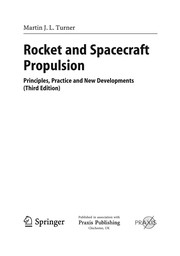
The best-paced entry to the technical literature: Turner covers the rocket equation, chemical propulsion, launcher staging and electric propulsion in one manageable volume, with more explanation and fewer tables than Sutton. Read it before Sutton, not after.
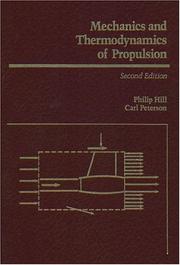
Hill and Peterson is the classic propulsion course text and derives rockets and airbreathing engines from the same thermodynamics, which is the right way to see why a rocket carries its own oxidiser. Note that our record is the 1965 first edition — the second edition of 1992 is substantially rewritten and is the one to buy.
The field's reference works and real design practice
BeginnerWork the way a propulsion engineer does: size a real engine, choose a power cycle, and understand injectors, cooling, turbopumps and combustion instability well enough to read a design report.
▸ Study plan for this stage
Pace: Nine months to a year for 1,801 pages, and these three books are used differently from one another. Sutton and Biblarz's Rocket Propulsion Elements is 784 pages and has been the field's standard reference for sixty years — encyclopaedic rather than pedagogical, which is why it sits after Turner and
- Power cycles: gas generator, staged combustion, expander and pressure-fed, and the performance-complexity tradeoff among them
- Injector design — impinging, coaxial, pintle — and the mixing and atomisation each produces
- Regenerative, film and ablative cooling, and the heat flux each can carry
- Combustion instability: chugging, buzz and screech, and the acoustic modes behind high-frequency instability
- Baffles and acoustic cavities as instability fixes, and why they are still partly empirical
- Turbopump layout, inducers, cavitation and net positive suction head
- Solid motor internal ballistics and grain geometry as a thrust-time programming problem
- Engine throttling, restart and gimballing as system-level requirements that drive component design
- Compare a gas generator and a staged combustion cycle on performance, on complexity, and on development risk — what does each buy?
- How does an injector element type determine mixing quality, and what is the connection between mixing and combustion stability?
- How would you size a regenerative cooling channel: what is the limiting condition, and what happens as you approach it?
- What distinguishes chugging from screech in cause, frequency and consequence?
- Why does an inducer exist on a rocket turbopump, and what is it protecting the main impeller from?
- What are the current open problems in combustion instability prediction according to Heister and his co-authors, and why has the problem resisted for so long?
- Size a complete liquid engine from a required thrust and specific impulse using Huzel and Huang: chamber dimensions, injector element count, cooling channel geometry, and turbopump power
- Choose a power cycle for a specified mission using Sutton's comparison tables, then justify the choice against two alternatives on performance, mass and development risk
- Compute the acoustic mode frequencies of a cylindrical chamber of your dimensions and compare them with the instability frequencies Heister reports for engines of similar size
- Take a real flown engine, gather its published chamber pressure, area ratio and specific impulse, and work backwards to estimate its combustion efficiency and nozzle efficiency separately
- Design a solid grain cross-section to produce a specified thrust-time curve, and compute the burn area history that results
- Compare Huzel's design rules for injector pressure drop with what Heister says about the same choice, and note where sixty years have changed the answer
Next up: The reference works have shown you the whole engine at working depth; the last stage goes down one level in a single direction, at the level of the research and industrial literature.

The field's standard reference for sixty years, and the book you will keep. Encyclopaedic rather than pedagogical, which is why it sits after Turner and Hill. Our record is the seventh edition, co-authored with Oscar Biblarz; the ninth is current and the propellant and electric propulsion chapters have moved on, so buy the latest.
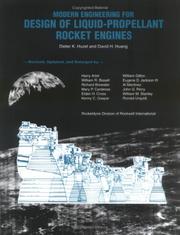
Huzel and Huang wrote the Rocketdyne design manual, and this is it: injector patterns, regenerative cooling passages, turbopump layout, gimbal actuators, with real numbers from engines that flew. The single most useful book here for anyone actually designing hardware.

The modern academic text, written by Heister with Anderson, Pourpoint and Cassady, and the most current treatment of combustion instability, hybrid motors and modern propellants. Read it as the up-to-date complement to Sutton's breadth and Huzel's practice.
Specialisations: chambers, solids, electric
BeginnerGo deep in one direction — liquid combustion devices, solid motor design, or electric propulsion — at the level of the research and industrial literature.
▸ Study plan for this stage
Pace: A year or more if you take all four, which is 2,182 pages of research-level material — but the honest use of this stage is to pick one direction and read one book properly. Yang's Liquid Rocket Thrust Chambers is 725 pages and is effectively a survey of the research literature on injection, atomisat
- Atomisation and spray formation, and the length scales that set combustion efficiency
- High-frequency combustion instability as a coupled acoustic-combustion problem, and the response function that closes the loop
- Chamber wall heat transfer and the limits on flux for each cooling method
- Solid propellant formulation: binder, oxidiser, metal fuel, and the burn rate law
- Grain geometry and the neutral, progressive and regressive thrust profiles it can produce
- Propellant ageing and structural integrity of a cast grain
- Ion and Hall thruster physics: ionisation, acceleration, neutralisation and beam divergence
- Life-limiting erosion in electric thrusters, and why lifetime rather than efficiency is the design constraint
- What determines droplet size distribution from an impinging injector, and how does that propagate into combustion efficiency?
- What is a combustion response function, and why is measuring one so difficult?
- How does a solid propellant burn rate depend on chamber pressure, and what does the pressure exponent have to satisfy for stable operation?
- Why can a grain crack turn a motor into a failure within a second, and what in Davenas's ageing chapters predicts it?
- What limits the lifetime of a gridded ion thruster, and how does that differ from what limits a Hall thruster?
- For a given in-space mission, how would you decide between chemical and electric propulsion, and what does the trip-time constraint do to the answer?
- Take one combustion instability incident described in Yang, identify the acoustic mode implicated, and compute that mode's frequency for the chamber geometry given
- Design a solid grain to Davenas's method for a required neutral thrust profile and compute the burn area versus web history, then check the pressure exponent gives stable operation
- Compute the thrust, specific impulse and power requirement of an ion thruster from Goebel and Katz's relations for a chosen propellant and beam voltage
- Work a mission trade for a geostationary transfer using chemical and electric propulsion, quantifying the propellant mass saved against the trip time added
- Read Sutton's account of one Soviet engine and one American engine of the same era and write down which design decisions differ and what constraint explains each difference
Next up: This is the end of the path: from here the natural continuations are the AIAA journal literature Yang surveys, the combustion and plasma physics underneath the engineering, and the vehicle-level design texts that treat propulsion as one subsystem among many.
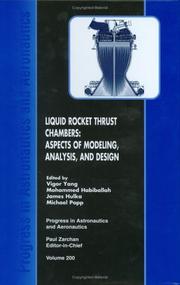
The AIAA volume on the hardest part of a liquid engine: injection, atomisation, combustion stability and heat transfer in the chamber. Effectively a survey of the research literature, and where to go once Huzel's design rules stop explaining themselves.

The standard reference on solids — grain design, propellant formulation and casting, ballistics, ageing — a subject the general texts cover in one chapter and every launch vehicle and missile depends on. Translated from the French original.

Goebel and Katz's JPL text on ion and Hall thrusters: plasma physics, discharge and life-limiting erosion, written for engineers rather than plasma physicists. The right final technical book, since electric propulsion is where most new in-space engine work now happens.
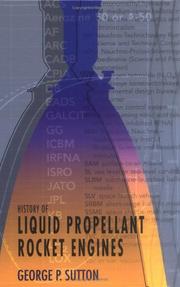
The capstone, and a strange, wonderful book: Sutton's engine-by-engine, country-by-country account of what was actually built, including the Soviet work Western texts ignored for decades. Read it last, when you know enough to see why each design is the way it is.
Discussion
Keep reading
Paths that share books, cover the same subject, or open a related topic.