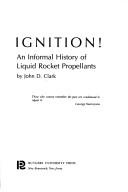
Start with John Clark's Ignition! whatever your background. It is a 302-page insider history of liquid propellant research by a chemist who did the work, it is genuinely funny, and it teaches through anecdote the constraint that governs the entire field: performance is the easy part, and handling, storability and combustion stability are what kill you.
After that the path forks on mathematics, and it is worth being blunt about where. Everything from the second stage onward assumes calculus, a thermodynamics course, and eventually compressible fluid mechanics and heat transfer. If you want the physics without the mathematics, read the first stage and stop; nothing later is readable otherwise, and no amount of enthusiasm substitutes for the fluid mechanics.
Orientation, no equations required
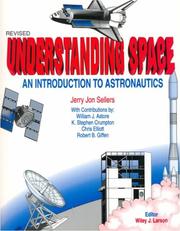
Alongside Ignition!, David Clary's ROCKET MAN is a biography of Robert Goddard and the human counterpart to Clark's chemistry: the slow, secretive, underfunded work of getting a liquid rocket to fly at all. Jerry Jon Sellers's Understanding Space is the systems-level bridge at roughly first-year undergraduate level — orbits, launch, spacecraft subsystems and where propulsion sits among them. Skip it if you already know what a delta-v budget is.
The gas dynamics the nozzle equations come from
This stage is the prerequisite most reading lists omit, and it is why people bounce off Sutton. John Anderson's Modern compressible flow is the clearest text on the subject and the direct prerequisite for every nozzle calculation later: isentropic relations, normal and oblique shocks, converging-diverging nozzles. Our record is the 1982 first edition at 760 pages; the third edition is current. James John's Gas dynamics is the practical companion, with more worked problems on nozzle flow, real gas effects, and flow with friction and heat addition — which is what a combustion chamber actually is. Do this stage properly and thrust coefficient and characteristic velocity become results rather than formulas.
A first propulsion course
Martin Turner's Rocket and Spacecraft Propulsion is the best-paced entry to the technical literature: the rocket equation, chemical propulsion, staging and electric propulsion in one 440-page volume, with more explanation and fewer tables than the standard reference. Read it before Sutton, not after.
Hill and Peterson's Mechanics and thermodynamics of propulsion derives rockets and airbreathing engines from the same thermodynamics, which is the right way to see why a rocket carries its own oxidiser. Our record is the 1965 first edition at 659 pages; the 1992 second edition is substantially rewritten and is the one to buy.
The reference works and real design practice
Rocket Propulsion Elements by George Sutton and Oscar Biblarz has been the field's standard reference for sixty years and is the book you will keep. It is encyclopaedic rather than pedagogical, which is why it sits here rather than at the start. Our record is the seventh edition, 784 pages; the ninth is current and the propellant and electric propulsion chapters have moved on, so buy the latest.
Huzel and Huang's Modern Engineering for Design of Liquid-Propellant Rocket Engines is the Rocketdyne design manual: injector patterns, regenerative cooling passages, turbopump layout, gimbal actuators, with real numbers from engines that flew. At 431 pages it is the single most useful book here for anyone actually sizing hardware. Heister, Anderson, Pourpoint and Cassady's Rocket Propulsion is the modern academic text and the most current treatment of combustion instability, hybrid motors and contemporary propellants — read it as the up-to-date complement to Sutton's breadth.
Going deep in one direction
The last stage is specialisation, and you are not expected to read all of it. Vigor Yang's Liquid Rocket Thrust Chambers is the AIAA volume on the hardest part of a liquid engine — injection, atomisation, combustion stability, chamber heat transfer — and is effectively a survey of the research literature. Alain Davenas's Solid rocket propulsion technology, translated from the French, is the standard reference on grain design, propellant formulation, casting and ageing, a subject the general texts cover in a single chapter and every launch vehicle and missile depends on. Goebel and Katz's Fundamentals of electric propulsion is the JPL text on ion and Hall thrusters, written for engineers rather than plasma physicists, and it is where most new in-space engine work now happens.
Finish with Sutton's History of Liquid Propellant Rocket Engines, an engine-by-engine, country-by-country account of what was actually built, including the Soviet work Western texts ignored for decades. It reads completely differently once you know enough to see why each design is the way it is.
The full sequence, with page counts and edition notes, is on the rocket propulsion reading path.