Roberto Bolano Reading Order: Where to Start
This curriculum moves through Bolaño's work in ascending complexity — from his lean, allegorical novellas to his sprawling masterworks — while weaving in Latin American literary criticism that illuminates the tradition he was both inheriting and dismantling. Each stage builds the thematic and formal vocabulary needed for the next, so that by the time you reach 2666, you arrive fully equipped.
Entry Points: The Short Novels
IntermediateEstablish Bolaño's core obsessions — fascism, poetry, exile, complicity, and the detective-as-literary-figure — through his two most concentrated long fictions, reading them in the order that builds tonal and thematic familiarity.
▸ Study plan for this stage
Pace: 2–3 weeks, ~20–25 pages/day (Distant Star is ~150 pages); allow extra days for re-reading the final two chapters and the Epilogue
- Fascism and aesthetic complicity: how Bolaño implicates art-making itself in political atrocity through Wieder's sky-writing and photography
- The poet-as-monster: the inversion of the Romantic ideal of the poet as moral visionary, replaced by the poet as perpetrator
- The detective-as-literary-figure: Romero the private investigator as a reader/interpreter of texts, mirroring the narrator's own act of reconstruction
- Exile and memory: the narrator's displaced, unreliable retrospection as the structural engine of the novel
- The Chilean coup (1973) as historical wound: how Bolaño uses a real political rupture as the gravitational center of fictional lives
- Metafiction and testimony: the blurring of witness account, literary criticism, and invented biography
- The avant-garde's dark double: how Wieder's infrarealist gestures are indistinguishable from — and continuous with — his crimes
- Complicity and the bystander: the narrator's guilt-laden passivity as a moral position Bolaño forces the reader to examine
- How does Carlos Wieder use poetry and aerial sky-writing as instruments of fascist ideology, and what does Bolaño suggest about the relationship between aesthetic ambition and political evil?
- In what ways is the narrator an unreliable witness, and how does his unreliability serve Bolaño's broader argument about memory and historical trauma?
- What is the significance of Romero the detective being hired to identify Wieder? How does his role as a 'reader of faces' parallel the act of literary interpretation?
- How does Distant Star engage with the real history of Pinochet's Chile without becoming a straightforward historical novel?
- What does the novel say about the avant-garde — specifically the infrarealist movement Bolaño himself belonged to — by making its most extreme practitioner a war criminal?
- By the novel's end, is justice achieved, and how does Bolaño's ambiguous conclusion reflect his larger moral vision?
- Close-reading log: For each of Wieder's sky-writing episodes, write a one-paragraph analysis of the specific words or phrases used, their poetic register, and how they function simultaneously as art and as threat. Collect these into a single document to see the escalation.
- Character map of complicity: Draw a diagram placing every named character on a spectrum from 'active perpetrator' to 'passive bystander' to 'victim.' Write two sentences justifying each placement, then ask yourself where the narrator falls — and where you, as reader, fall.
- Historical context dossier: Research the Pinochet coup of September 11, 1973, and the DINA secret police for 30–45 minutes. Write a one-page note on two or three real events or figures that Bolaño appears to be fictionalizing, and how fictionalization changes their moral weight.
- Rewrite the ending: After finishing the novel, write a one-page alternative final scene in Bolaño's spare, retrospective style — one in which Wieder is not found. Reflect on how the novel's meaning changes depending on whether the detective succeeds.
- Infrarealism research exercise: Read the original 'Infrarealist Manifesto' (available online, written by Bolaño and Mario Santiago in 1976). Annotate three passages that resonate with or ironize what Wieder does in Distant Star. Bring your annotations to a discussion or journal entry.
- Sentence-style imitation: Select one paragraph of the narrator's retrospective voice — ideally from Chapters 4–6 — and imitate its syntax, tense, and emotional distance to write a short paragraph about a real or invented memory of your own. Identify what formal choices create Bolaño's characteristic tone of mournful detachment.
Next up: Distant Star's compressed, single-arc structure and its portrait of the poet-criminal establish the emotional and thematic vocabulary — exile, complicity, the detective-reader, the avant-garde's shadow — that Bolaño will explode into a multi-voiced, panoramic form in his longer works, making this novel the essential tonal primer for everything that follows.

Read second, this expands the themes of By Night in Chile into a noir-inflected hunt for a poet who became a Pinochet-era torturer. It deepens your feel for Bolaño's recursive storytelling and his use of the detective plot as moral inquiry.
Latin American Context: The Tradition He Inherited
IntermediateUnderstand the Latin American literary and political landscape — the Boom, post-Boom, and the critical frameworks — that Bolaño was consciously writing against and within, so his allusions and provocations land with full force.
▸ Study plan for this stage
Pace: 2–3 weeks, ~25–35 pages/day — Swanson's book is dense but well-organized by author and movement, so read one chapter per sitting and pause to take notes before moving on
- The Latin American Boom: its key authors (García Márquez, Cortázar, Vargas Llosa, Donoso), its internationalization of Latin American fiction, and the cultural mythology it created
- Magical realism as both a literary technique and an ideological construct — and the ways it became a marketing label that later writers, including Bolaño, actively resisted
- The post-Boom reaction: a turn toward popular culture, political disillusionment, urban realism, and a rejection of the Boom's grand ambitions and perceived elitism
- The relationship between Latin American literature and left-wing politics — the Cuban Revolution as a cultural pole, the 'Padilla Affair,' and the fracturing of the intellectual left
- Literary nationalism vs. cosmopolitanism: the tension between writers who rooted their work in local identity and those (like Borges, and later Bolaño) who drew on world literature
- The role of the literary institution — prizes, publishing houses, critical gatekeepers — in constructing and policing the Latin American canon
- Testimonio and politically committed writing as a counter-tradition to the aestheticism of the Boom
- Swanson's critical framework: how he periodizes and evaluates Latin American fiction, and where his own interpretive biases shape the narrative
- According to Swanson, what were the defining aesthetic and commercial features of the Boom, and which authors does he treat as its core figures?
- How does Swanson characterize the post-Boom, and what specific literary strategies mark its departure from Boom aesthetics?
- What was the political relationship between Boom writers and the Cuban Revolution, and how did events like the Padilla Affair complicate or rupture that relationship?
- How does Swanson position magical realism — as a genuine regional tradition, a critical construct, or something more contested?
- Where does Borges fit in Swanson's account, and why is his position in the tradition unusual or paradoxical?
- What gaps or silences do you notice in Swanson's account — which voices, regions, or movements receive less attention, and why might that matter for reading Bolaño?
- Create a one-page annotated timeline: map every author, movement, and political event Swanson discusses onto a single chronological axis, then annotate each entry with one sentence on its literary significance — this becomes your reference map for all future Bolaño reading
- Write a 300-word 'position paper' from Bolaño's imagined perspective responding to the Boom as Swanson describes it — what would he embrace, mock, or mourn? Use only evidence from Swanson to ground your claims
- Choose two authors Swanson discusses in depth (e.g., García Márquez and Cortázar) and write a comparative note: list three ways their projects overlap and three ways they diverge, then ask yourself which of those divergences Bolaño's work seems to exploit
- After finishing the book, go back through your notes and highlight every moment Swanson uses evaluative language ('important,' 'minor,' 'failed,' 'revolutionary') — then write a short paragraph questioning one of those judgments and what it reveals about the critical framework itself
- Draft a glossary of 10–12 key terms as Swanson uses them (Boom, post-Boom, magical realism, testimonio, cosmopolitanism, etc.) with your own definitions in plain language — revisit and revise this glossary at the end of every subsequent stage
Next up: Swanson's map of the tradition gives you the literary and political coordinates Bolaño was born into, making it possible to read his own essays, manifestos, and interviews — the next logical step — as precise, targeted interventions against specific authors, movements, and myths that Swanson has now named.

A concise, scholarly overview of the movements — Boom, magical realism, post-Boom — that maps the literary geography Bolaño navigates. Provides the contextual scaffolding for understanding his generational rebellion.
The Masterworks
ExpertRead Bolaño's two great novels with the full context and formal preparation built in prior stages, experiencing their scope, structural daring, and moral weight as intended.
▸ Study plan for this stage
Pace: 10–12 weeks, ~25–30 pages/day (the novel's ~900 pages divided into its five named Parts, reading one Part every 2 weeks, with a full week of review and synthesis at the end)
- The Pentagonal Architecture: how the five Parts ('The Part About the Critics,' 'The Part About Amalfitano,' 'The Part About Fate,' 'The Part About the Crimes,' 'The Part About Archimboldi') function as autonomous novellas that secretly share a gravitational center — the city of Santa Teresa and its
- Santa Teresa as Allegory: the fictionalized Ciudad Juárez as a symbol of systemic evil, late-capitalist indifference, and the disposability of women's bodies under globalization
- The Aesthetics of Evil: Bolaño's deliberate, clinical, almost bureaucratic prose style in 'The Part About the Crimes' as a formal argument — the numbing repetition of murder reports enacts the world's failure to mourn
- The Elusive Center — Archimboldi: how the novel withholds and then delivers its nominal subject, and what it means that the 'answer' to the mystery is itself a displaced, fragmented life story rooted in 20th-century European catastrophe (WWII, the Holocaust)
- Digression as Structure: the role of embedded stories, anecdotes, and seemingly irrelevant episodes (e.g., the Seaman's story, the dream sequences) as Bolaño's method of mapping a world too large for linear narrative
- The Unfinished and the Posthumous: reading 2666 with awareness that Bolaño died before final revisions, and how that incompleteness is thematically resonant with the novel's own obsessions with disappearance and the unresolved
- Intertextuality and the Literary Phantom: the figure of Benno von Archimboldi as a composite of Bolaño's literary heroes (Kafka, Pynchon, Sebald, Borges) and what his hiddenness says about the limits of literary criticism and the cult of authorship
- Moral Witness vs. Aesthetic Distance: the ethical tension Bolaño navigates between making art from atrocity and bearing honest witness — and how the reader is implicated in that tension
- How do the five Parts of 2666 relate to one another structurally — what unifies them beyond the shared setting of Santa Teresa, and what would be lost if any single Part were removed?
- What formal and tonal choices does Bolaño make in 'The Part About the Crimes,' and how does the relentless, affectless cataloguing of murders function as both a moral statement and a literary risk?
- In what ways does 'The Part About Archimboldi' reframe everything that precedes it — and does the revelation of Archimboldi's identity feel like a resolution or a deepening of the novel's central mystery?
- How does 2666 engage with the legacy of 20th-century European violence (the Holocaust, WWII) alongside late 20th-century Latin American violence, and what argument, if any, does it make about the relationship between these histories?
- What is the role of the intellectual or the literary critic in 2666, and how does Bolaño use the four critics in Part One to satirize, mourn, or indict the academic relationship to literature and to suffering?
- Where do you locate yourself, as a reader, in the ethical dilemma the novel poses: is reading 2666 an act of witness, voyeurism, complicity, or resistance — and what textual evidence supports your answer?
- Part-by-Part Reaction Journals: After finishing each of the five Parts, write a 300–500 word response addressing (a) the dominant tone, (b) one formal technique you noticed, and (c) how this Part changes your understanding of the whole — then compare all five entries at the end to map your evolving reading
- The Crimes Ledger: While reading 'The Part About the Crimes,' keep a running log of the murder reports — note any variations in detail, language, or emotional register. At the end, write a one-page analysis of what patterns emerge and what Bolaño's stylistic choices reveal about systemic indifference
- Character Web Mapping: Draw a visual map connecting all major characters across the five Parts, annotating each connection with the nature of the link (geographic, thematic, narrative). Identify which characters never meet but are thematically mirrored, and write a paragraph explaining one such pairing
- Comparative Close Reading — Two Passages: Select one passage of beauty or dark comedy from Parts 1–3 and one passage from 'The Part About the Crimes.' Write a 500-word comparative analysis of Bolaño's prose style in each, focusing on sentence rhythm, diction, and emotional effect
- The Missing Center Exercise: Write a 1–2 page imagined scene in Bolaño's style in which two characters from different Parts of 2666 meet in Santa Teresa. Focus on capturing his digressive, anecdote-laden voice and the atmosphere of dread beneath ordinary conversation
- Final Synthesis Essay: Write a 750–1000 word essay responding to the question: 'Is 2666 a novel about literature, about violence, or about the failure of one to adequately respond to the other?' Use specific textual evidence from at least three of the five Parts to build your argument
Next up: Completing 2666 equips the reader with the full experiential and analytical vocabulary of Bolaño's world — its scale, its ethics, its formal radicalism — providing the foundation needed to engage critically with his shorter, earlier, and posthumous works as a unified, retrospectively illuminated body of writing.

The culminating work: five interlocking novels in one, circling femicide, evil, and the limits of literature. Every prior book in this curriculum — the novellas, the stories, the criticism — becomes a lens that makes this vast, difficult masterpiece fully legible.
Critical Afterword: Reading Bolaño in Depth
ExpertConsolidate and deepen your understanding of Bolaño's place in world literature through the best available scholarly and critical work written after his death.
▸ Study plan for this stage
Pace: 3–4 weeks, ~20–25 pages/day; the Companion is dense with scholarly essays, so budget extra time for re-reading argumentative passages and taking structured notes. Aim to finish each chapter/essay in a single sitting to preserve its argumentative arc.
- Bolaño's positioning within the Latin American novel tradition — how Kristal's contributors situate him relative to the Boom and post-Boom generations
- World literature vs. regional literature: the tension between Bolaño's Chilean/Mexican roots and his reception as a 'global' author, as debated across the Companion's essays
- The politics of translation and canon formation — how Anglophone publishing and academic gatekeeping shaped Bolaño's posthumous reputation
- Narrative form and genre hybridity in the Latin American novel: how the Companion frames the detective novel, the historical novel, and autofiction as modes Bolaño exploits and subverts
- The legacy of the Latin American literary 'system' (Boom infrastructure of publishers, agents, prizes) and how Bolaño both inherited and rejected it
- Violence, memory, and testimony: the Companion's broader frameworks for how Latin American novelists process dictatorship, exile, and trauma — essential context for reading Bolaño's obsessions
- Comparative aesthetics: how contributors use close reading alongside cultural-historical analysis, modeling the kind of dual methodology advanced readers should practice
- The question of literary influence and intertextuality — Borges, Cortázar, Parra, and the genealogies the Companion traces that run through Bolaño's work
- According to the frameworks presented in The Cambridge Companion to the Latin American Novel, in what specific ways does Bolaño represent a break from, and a continuation of, the Boom generation's literary project?
- How do the Companion's contributors define 'world literature,' and what does that definition reveal about the institutional forces — prizes, translations, university syllabi — that elevated Bolaño to canonical status so rapidly after his death?
- What formal and thematic features of the Latin American novel tradition (as mapped by Kristal's volume) does Bolaño most visibly inherit, and which does he most aggressively transform?
- How does the Companion treat the relationship between political violence, exile, and narrative form across multiple authors, and how does that comparative lens sharpen your reading of Bolaño's own treatment of these themes?
- Which critical methodologies — historicist, formalist, postcolonial, comparatist — do the contributors deploy, and which do you find most productive for analyzing Bolaño's texts specifically?
- After working through the Companion, how would you construct an argument about Bolaño's place in world literature that goes beyond biography and reception, grounding it instead in textual and historical evidence?
- Annotated chapter map: After reading each essay in the Companion, write a 3–5 sentence summary of its central argument and note one specific claim that either supports or complicates your existing view of Bolaño. Compile these into a master document you can consult when writing.
- Genealogy diagram: Using the literary lineages described in the Companion (Boom authors, precursors, contemporaries), draw a visual map placing Bolaño within the Latin American novel tradition. Add arrows indicating influence, reaction, or subversion, and annotate each arrow with a textual example from Bolaño's work.
- Comparative close reading: Select one formal technique discussed in the Companion (e.g., fragmented chronology, unreliable narration, genre hybridization) and write a 600–800 word close reading of a passage from a Bolaño novel you have already read, applying the critical vocabulary the Companion provides.
- Scholarly dialogue exercise: Choose two essays from the Companion that appear to disagree — or at least emphasize different things — about the Latin American novel's defining characteristics. Write a 400-word synthesis that identifies the crux of their difference and stakes out your own position.
- Canon-formation reflection: Research the timeline of Bolaño's English translations and major award nominations/wins. Cross-reference this with the publication dates of the Companion's essays to analyze how critical and commercial canonization happened simultaneously. Write a one-page reflection on what this reveals about literary prestige.
- Draft a thesis-driven essay of 1,000–1,200 words arguing for Bolaño's specific contribution to the Latin American novel, using the Companion's frameworks as your critical scaffolding and at least three direct quotations from the volume as evidence.
Next up: Mastering the Companion's scholarly frameworks and critical vocabulary equips the reader to move from guided academic analysis into fully independent research — writing original arguments, engaging with primary sources, and contributing their own voice to the ongoing critical conversation about Bolaño's legacy.
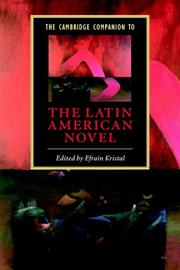
This essay collection situates Bolaño within the full arc of the Latin American novel from the 19th century to the present, providing the broadest critical frame for understanding his legacy and originality.
Discussion
Keep reading
Paths that share books, cover the same subject, or open a related topic.