Redwall Reading Order: Publication or Chronological?
This curriculum guides a beginner through Brian Jacques's beloved Redwall series, first by experiencing the two most iconic entry points to build familiarity with the world, characters, and tone, then by following the full publication order for the richest narrative experience, and finally by revisiting select titles in chronological (in-world) order to appreciate the deeper lore and history of Mossflower Wood. Each stage builds vocabulary, emotional investment, and world-knowledge needed for the next.
The Gateway: Where to Begin
BeginnerGet hooked on the world of Redwall — its language, its heroes, its villains, and its feasts — through the two books most recommended as entry points.
▸ Study plan for this stage
Pace: 6–8 weeks total: spend 3–4 weeks on "Redwall" (~20–25 pages/day) and 3–4 weeks on "Mossflower" (~20–25 pages/day). Reading sessions of 30–45 minutes work well; the episodic, chapter-based structure of both books makes natural stopping points easy to find.
- The world of Redwall Abbey: Understand the Abbey as a physical, moral, and communal center — a sanctuary of warmth, fellowship, and goodness that anchors both novels.
- Hero archetypes — the reluctant warrior: Matthias in 'Redwall' and Martin the Warrior (as legend and spirit) in 'Mossflower' both embody the idea that true heroes are humble, brave, and called rather than self-appointed.
- Villain archetypes — pure menace: Cluny the Scourge ('Redwall') and Tsarmina ('Mossflower') represent different flavors of evil — brute conquest vs. paranoid tyranny — establishing the series' tradition of vivid, theatrical antagonists.
- Anthropomorphic worldbuilding: Jacques maps human virtues and vices onto animal species (mice as gentle and brave, rats as cruel, otters as bold, etc.) — recognizing these conventions is key to reading the whole series.
- The role of legend and prophecy: The tapestry of Martin the Warrior in 'Redwall' and Martin's living story in 'Mossflower' show how myth and history intertwine to inspire present-day heroes.
- Feasts as culture and community: The elaborate, lovingly described Redwall feasts are not mere decoration — they signal safety, celebration, and the values of hospitality and abundance that define Redwall culture.
- Language and voice — Jacques' style: Rich, sensory prose; distinct dialects for different species (Mole-speak, Hare bluster, Sparrow pidgin); rousing battle cries and songs. Noticing these stylistic signatures is central to appreciating the books.
- Prequel vs. sequel storytelling: 'Mossflower' is a prequel that tells the founding story hinted at in 'Redwall.' Reading them in this order shows how Jacques uses backstory to deepen mythology already established.
- In 'Redwall,' how does Matthias's journey from clumsy novice to warrior mirror the legend of Martin the Warrior, and what role does the tapestry play in connecting them?
- Compare Cluny the Scourge ('Redwall') and Tsarmina ('Mossflower') as villains: what are each one's primary motivations, methods, and ultimate downfalls?
- How does 'Mossflower' recontextualize events and places you already encountered in 'Redwall' — specifically Redwall Abbey and the figure of Martin?
- What function do the feasts and food descriptions serve beyond plot? How do they reflect the values and social bonds of Redwall's community?
- Jacques gives different species distinct speech patterns and dialects. Choose two species from either book and explain how their way of speaking reflects their character or culture.
- By the end of both books, what does 'Redwall' (the place) represent thematically — and how do both Matthias and Martin contribute to that meaning from their different time periods?
- Feast Journal: After finishing 'Redwall,' write a one-page menu for a Redwall feast using only ingredients and dishes mentioned or implied in the book. Then, after 'Mossflower,' write a second menu for a woodland feast in Mossflower country. Compare the two — what do the differences say about each setting?
- Villain Profile Cards: Create a character card for both Cluny the Scourge and Tsarmina. For each, note: species, goal, key strength, fatal weakness, and one memorable quote or action. Use this as a template you can continue filling out for villains in later stages.
- Dialect Transcription: Find one passage of Mole-speak in 'Redwall' and one passage of Sparrow-speak in 'Mossflower.' Rewrite each in standard English, then reflect in 2–3 sentences on what is lost in translation — what does the dialect add to the character?
- Timeline Map: Draw a simple two-column timeline. In one column, place the key events of 'Mossflower' (the founding era). In the other, place the key events of 'Redwall' (Matthias's era). Draw arrows showing which people, places, or objects connect across time (e.g., Martin's sword, the Abbey itself).
- Hero's Journey Outline: Using Joseph Campbell's basic Hero's Journey stages (call to adventure, trials, transformation, return), map Matthias's arc in 'Redwall.' Then do the same for Martin in 'Mossflower.' Note where the two journeys rhyme and where they diverge.
- Sensory Reading Log: While reading, keep a running list of at least 10 sensory details (sights, sounds, smells, textures, tastes) from each book. At the end, review the list and write a short paragraph on how Jacques uses sensory language to make Redwall feel like a real, lived-in world.
Next up: Having absorbed the Abbey's founding myth through Martin ('Mossflower') and its first great defense through Matthias ('Redwall'), the reader is now ready to follow the series deeper into Redwall's history and expanding geography — meeting new champions who carry Martin's legacy forward in later installments.

The first book published and the one that started it all; introduces Redwall Abbey, the core cast of woodland creatures, and the classic good-vs-evil quest structure that defines the entire series.
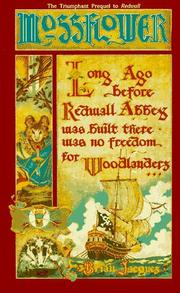
A prequel set centuries before Redwall, this is the second book published and reveals the founding of the Abbey; reading it second deepens appreciation of the world you just fell in love with.
Publication Order: The Early Years (Books 3–7)
BeginnerFollow the series as Jacques originally released it, building familiarity with recurring locations, creature cultures, and the episodic quest formula.
▸ Study plan for this stage
Pace: 6–8 weeks total; roughly 20–25 pages per day. Suggested pacing: Mattimeo in weeks 1–3 (~400 pages), Mariel of Redwall in weeks 4–5 (~400 pages), and Salamandastron in weeks 6–8 (~400 pages). Reading sessions of 30–45 minutes daily work well for a beginner.
- The episodic quest formula: a hero (or group) leaves a place of safety, faces escalating dangers, and returns transformed — trace this arc in all three books (Mattimeo's rescue mission, Mariel's search for identity and revenge, the defense of Salamandastron).
- Recurring geography as a living character: Redwall Abbey appears in all three books as a moral and physical anchor, while Salamandastron is introduced as a second great stronghold, establishing the series' two-pole world.
- Creature cultures and species typecasting: Jacques consistently codes species as heroic (mice, otters, hares, badgers) or villainous (rats, ferrets, weasels, stoats, foxes) — notice how each book reinforces or subtly complicates these conventions.
- The badger lord archetype: Salamandastron introduces the Bloodwrath, the berserker fury unique to badger rulers, making badgers simultaneously the mightiest protectors and the most dangerously uncontrollable heroes.
- The Long Patrol hares: first fully developed in Salamandastron, hares serve as a military caste defined by wit, appetite, and fierce loyalty — a recurring comic-heroic counterpoint to the graver badger lords.
- Generational storytelling and legacy: Mattimeo directly continues Matthias's story from Redwall, showing how heroism passes from parent to child, a theme Jacques will use repeatedly throughout the series.
- Villains as dark mirrors: Slagar the Cruel (Mattimeo), Gabool the Wild (Mariel), and Ferahgo the Assassin (Salamandastron) each embody a different flavor of tyranny — cunning deception, paranoid cruelty, and cold-blooded ambition — broadening the series' moral palette.
- Oral and bardic tradition: the Redwall books embed songs, poems, and riddles as plot devices; tracking the verses in these three books reveals how Jacques uses them to foreshadow events and encode clues.
- In Mattimeo, how does Slagar the Cruel's backstory connect him to Redwall Abbey, and why does that connection make him a more personal villain than a random raider would be?
- Mariel of Redwall opens with an amnesiac protagonist washed ashore — how does Mariel's gradual recovery of her identity mirror the classic quest structure, and what does she ultimately reclaim beyond her name?
- How does Salamandastron expand the world of the series beyond Redwall Abbey, and what does the mountain's history (the line of badger lords, the Long Patrol) add to the reader's understanding of how good creatures organize against evil?
- Across all three books, what patterns do you notice in how Jacques structures his parallel plotlines — one group at Redwall, one group on a quest or under siege — and what effect does this intercutting create?
- Choose one villain from each book (Slagar, Gabool, Ferahgo) and compare their methods of control: how does each maintain power over followers, and what ultimately causes each one's downfall?
- How do songs, riddles, or prophecies function as plot devices in at least two of the three books, and what do they suggest about the role of storytelling within the world Jacques has created?
- Quest map: After finishing each book, sketch a simple hand-drawn map tracing the main quest route (e.g., Slagar's slave trail in Mattimeo, Mariel's journey to Terramort, the movements around Salamandastron). Compare the three maps — note which landmarks recur and how the series' geography is slowly filling in.
- Villain profile cards: Create a one-page character card for Slagar, Gabool, and Ferahgo. Include their species, method of control, key henchbeasts, fatal flaw, and how they die. Use only evidence from the text, with page references.
- Species census: As you read, keep a running tally of which species appear on the 'good' side and which on the 'evil' side. At the end of Salamandastron, review your list — are there any exceptions or surprises? Write a short paragraph on what this pattern says about Jacques' moral worldview.
- Song and riddle log: Copy out at least two songs or verse riddles from each book into a notebook. After finishing each book, annotate them: What did they foreshadow? Were they solved correctly by the characters? How did they advance the plot?
- Parallel-plot timeline: For one book of your choice, create a two-column timeline — left column for the 'away' plot (quest/siege), right column for the 'home' plot (Redwall or Salamandastron under threat). Mark moments where the two timelines converge or echo each other thematically.
- Reflection journal — 'What makes a hero?': After each book, write a half-page journal entry answering: Who is the true hero of this book, and what quality — courage, cleverness, loyalty, sacrifice — defines their heroism? Compare your three entries at the end of the stage to see if Jacques' definition of heroism shifts.
Next up: These three books solidify the series' core formula, geography, and creature archetypes, giving the reader the foundational fluency needed to appreciate how later entries — whether prequels, deeper lore expansions, or new hero lineages — deliberately vary, subvert, or enrich the patterns established here.
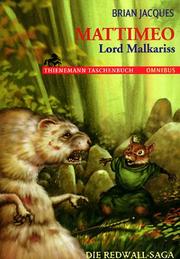
A direct sequel to Redwall featuring Matthias's son; reading it third in publication order pays off character threads from book one and introduces the next generation of heroes.

Shifts focus to a new heroine and expands the world beyond the Abbey walls, broadening the reader's sense of the wider Redwall geography.
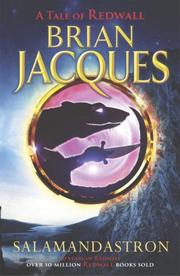
Introduces the mountain fortress of the badger lords and the Long Patrol hares, two pillars of Redwall lore that recur throughout the rest of the series.
Publication Order: The Middle Chronicles (Books 8–12)
IntermediateEngage with the series at full stride — more complex villains, richer world-building, and the confident storytelling of Jacques at his peak.
▸ Study plan for this stage
Pace: 6–8 weeks total; roughly 25–30 pages per day. Suggested pacing: Martin the Warrior (2 weeks) → The Bellmaker (1.5 weeks) → Outcast of Redwall (1.5 weeks) → The Pearls of Lutra (2 weeks). Allow a 2–3 day reflection pause between each book to journal and review notes before moving on.
- Origin storytelling and retroactive myth-building: Martin the Warrior reveals the backstory of Redwall's founding hero, showing how Jacques uses prequels to deepen series lore already established in earlier books.
- Moral complexity in villainy: Badrang the Tyrant (Martin the Warrior) and Ublaz Mad Eyes (The Pearls of Lutra) represent a shift toward more psychologically motivated antagonists — driven by ego, obsession, and cruelty rather than simple evil.
- The nature vs. nurture debate in Outcast of Redwall: Veil the ferret's arc is the series' most explicit exploration of whether a creature born of evil can choose good, challenging the usual Redwall moral binary.
- Legacy and inherited destiny: Martin the Warrior establishes how a single life of sacrifice echoes across generations, a theme The Bellmaker reinforces through Mariel and Dandin's continued questing in their father-figure's shadow.
- Expanded geography and world-building: The Pearls of Lutra introduces Sampetra and the open sea, while The Bellmaker ranges far south — Jacques deliberately widens the map at this stage of the series.
- The quest narrative as spiritual journey: Each book in this stage structures its plot around a journey with a moral or emotional transformation at its core, not merely a physical destination.
- Jacques's prose style at its peak: Rich dialect differentiation (Guosim shrews, Sparra, sea creatures), layered feast descriptions, and the interweaving of multiple simultaneous plotlines reach their most confident execution in these four books.
- Sacrifice and the cost of heroism: Martin's enslavement, Rose's death, and the fates of secondary characters across all four books reinforce that heroism in Redwall carries genuine, irreversible loss.
- How does Martin the Warrior recontextualize the legend of Martin as presented in earlier Redwall books — what details of his life make his eventual role as a spiritual guide more poignant?
- In Outcast of Redwall, does Jacques ultimately resolve the nature vs. nurture question for Veil, or does he leave it ambiguous? What evidence from the text supports your reading?
- Compare Badrang the Tyrant and Ublaz Mad Eyes as antagonists: in what ways are their motivations, methods, and downfalls similar or different, and what does each reveal about Jacques's evolving approach to villainy?
- How does The Bellmaker function as both a sequel to Mariel of Redwall (not in this stage) and a standalone adventure — what storytelling techniques does Jacques use to make it accessible while rewarding continuity readers?
- The Pearls of Lutra introduces a maritime setting largely absent from earlier books. How does this new environment change the tone, pacing, and types of challenges the characters face?
- Across all four books in this stage, what does Jacques suggest about the relationship between personal sacrifice and the survival of a community or ideal?
- Character motivation map: For each major villain (Badrang, the antagonists in The Bellmaker, Swartt Sixclaw, and Ublaz), create a one-page diagram listing their core desire, their method of pursuing it, the moment they cross a moral point of no return, and what ultimately destroys them. Compare the four diagrams side by side.
- The Veil Essay: Write a 400–600 word argumentative paragraph answering the question 'Was Veil given a fair chance?' using at least three specific scenes from Outcast of Redwall as evidence. This forces close reading of the book's most morally charged passages.
- Geography sketchbook: Draw or annotate a hand-drawn map of the Redwall world as it expands across these four books — mark Marshank (Martin the Warrior), the southern lands (The Bellmaker), and Sampetra (The Pearls of Lutra). Note which locations are revisited and which are unique to one book.
- Prose style imitation: Select one feast scene and one battle scene from any of the four books. Write a 1–2 paragraph imitation of each in Jacques's style, paying close attention to his use of sensory detail, dialect, and rhythm. Then annotate what specific techniques you were trying to replicate.
- Thematic timeline: Create a visual timeline that tracks the theme of 'sacrifice' across all four books — list each significant sacrifice made by a named character, who benefits, and whether the narrative frames it as triumphant, tragic, or ambiguous.
- Comparative villain monologue: Choose either Badrang or Ublaz and write a 200-word internal monologue from their point of view at the moment of their defeat. Ground it in details from the text to demonstrate understanding of their psychology, then reflect in a short note on what the exercise revealed about Jacques's characterization.
Next up: Mastering Jacques's peak storytelling craft and his willingness to challenge the series' moral framework in these four books equips the reader to critically appreciate how the later chronicles either build on, repeat, or consciously depart from the patterns established here.
The origin story of Redwall's greatest hero; by now you know Martin's legend well enough that this book hits with full emotional weight.
A sequel to Mariel of Redwall that runs two parallel storylines simultaneously — a structural step up that rewards readers now comfortable with the series' rhythms.
One of the series' most morally complex entries, exploring themes of nature vs. nurture; best appreciated after you've internalized the series' usual moral framework.
A treasure-hunt mystery with a memorable villain; continues the publication journey and showcases Jacques's skill at weaving multiple plot threads.
Chronological Deep Dive: Reading the In-World Timeline
ExpertRe-experience the Redwall universe in the order events actually occur within the fictional world, revealing how the history of Mossflower unfolds from its earliest days to its later age — a rewarding exercise for fans who now know the lore deeply.
▸ Study plan for this stage
Pace: 1–2 weeks, ~40–50 pages/day (Lord Brocktree is ~390 pages); experienced Redwall readers can move briskly, but allow extra time for analytical note-taking befitting the advanced level
- Lord Brocktree as the chronological origin point of the Redwall universe's recorded heroic history, establishing the earliest known age of Mossflower and Salamandastron
- The founding mythology of Salamandastron: Brocktree's campaign to reclaim the mountain from Ungatt Trunn establishes the template for all future Badger Lords and their Bloodwrath legacy
- Ungatt Trunn and the Blue Hordes as the archetype of the conquering warlord — his methods of psychological domination (erasing identity, rewriting history) foreshadow later villains in the broader saga
- The Bark Crew and the guerrilla resistance movement as an early model of how ordinary woodland creatures organize against overwhelming tyranny — a recurring structural theme across the series
- Stonepaw's tragic stewardship: his role as the aging, outmatched Badger Lord illustrates the cost of a power vacuum and the weight of legacy
- The 'Telling of Stories' framing device (Brogalaw's holt storytelling sessions) as a meta-narrative tool — Jacques uses oral tradition within the novel to comment on how history and legend are preserved and transmitted in this world
- Dotti the hare as a comedic yet genuinely courageous foil to Brocktree, representing the Long Patrol spirit in its earliest literary incarnation and showing how levity and heroism coexist in Jacques's world-building
- Chronological reading payoff: details in Lord Brocktree (place names, bloodlines, the mountain's layout) gain new resonance when understood as the *root* from which all later Salamandastron lore grows
- How does Ungatt Trunn's strategy of psychological conquest — renaming places, erasing the hares' sense of identity — differ from or anticipate the methods of warlords encountered in other parts of the Redwall saga you have already read?
- What does Stonepaw's fate reveal about the nature of succession and legacy at Salamandastron, and how does it set up the expectation that a Badger Lord must be a warrior as well as a ruler?
- How does the novel's framing device (stories told within the story) reflect the broader way the Redwall universe treats oral history and legend, and why is this especially significant when reading this book as the chronological starting point?
- In what ways does Dotti's character arc — from flippant young hare to tested fighter — establish the Long Patrol ethos that readers will recognize from later (in-universe, later) books?
- Identify at least three specific world-building details in Lord Brocktree (locations, customs, lineages) that you can now trace forward to events or places in books set later in the in-world timeline. How does reading this first change your understanding of those later references?
- How does the Bark Crew's resistance movement reflect Jacques's recurring theme that courage and community among 'ordinary' creatures are just as vital to victory as the singular heroism of a Badger Lord or warrior champion?
- Create a 'World-State Document': as you read, maintain a running record of what Mossflower and Salamandastron look like at this earliest chronological moment — who holds power, what places are named, what alliances exist — so you have a baseline to compare against books set later in the timeline.
- Draft a character lineage chart tracing the Badger Lord succession: place Brocktree at the root and, drawing on your prior knowledge of the series, sketch forward to later Badger Lords, annotating what traits or burdens each seems to inherit from this origin story.
- Write a 500-word in-universe 'chronicle entry' as if you are a recorder at Salamandastron writing down the deeds of Lord Brocktree for future generations — practice capturing the epic, oral-legend tone Jacques uses and consider what a later creature (e.g., a hare in a future book) would emphasize or mythologize.
- Villain analysis comparison: write a structured paragraph comparing Ungatt Trunn's methods and psychology to one other major Redwall villain you encountered in a previous stage. Focus on what Trunn's position at the chronological beginning suggests about whether Jacques sees certain evil archetypes as timeless or historically specific.
- Map exercise: sketch a rough map of Salamandastron and the surrounding coastline as described in Lord Brocktree, then annotate it with notes on how geography shapes the military strategy of both Trunn's occupation and Brocktree's assault — this builds spatial literacy for the rest of the chronological reading stage.
- Reflection journal entry: now that you have read the chronological 'first' book, write about how your reading experience differed from encountering this story without prior series knowledge. What dramatic ironies did you notice? What felt like a 'root' you could trace forward? This metacognitive exercise sharpens the analytical lens you will apply to every subsequent book in the stage.
Next up: Establishing Lord Brocktree as the chronological bedrock — with Salamandastron claimed, its first great Lord defined, and the hare warrior culture crystallized — gives the reader a living origin myth to carry forward, so that every subsequent book in the in-world timeline can be read as a chapter in a single, unfolding history rather than a standalone adventure.
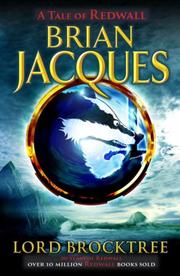
Set furthest back in Redwall's in-world history, this book is the chronological starting point and gains enormous resonance once you already know the legends that grew from these events.
Discussion
Keep reading
Paths that share books, cover the same subject, or open a related topic.