Start with Redwall. Publication order, first book, no cleverness. It is the one Brian Jacques wrote for the students at the Royal Wavertree School for the Blind, it is the reason everything else exists, and it teaches you the shape of the series in a single volume: a young mouse who is nobody, an abbey under siege, a tapestry, a sword, and an enormous amount of food.
The alternative you will be offered is chronological order, which starts with Lord Brocktree or Martin the Warrior and works forward through the centuries of Mossflower history. It is a real and widely used order. It is also, in my view, the wrong one for a first read, and the reason is specific rather than general.
Why publication order wins
In Redwall, Martin the Warrior is a legend. He is a figure on a tapestry, a name in a riddle, a sword nobody living has held. Mossflower then goes back and shows you the actual mouse — awkward, angry, exiled — and the effect is the best thing Jacques ever engineered. Read chronologically and there is no legend to unravel, because you met the man first. You have traded a reveal for a timeline, which is a bad trade.
Chronological order has one honest advantage: the early history books are among the strongest in the series, so it front-loads quality. If you have already read Redwall and Mossflower and want to organise the rest by era, that is perfectly reasonable. As a first pass, it is not.
The order
- Redwall
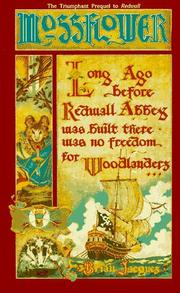
- Mossflower
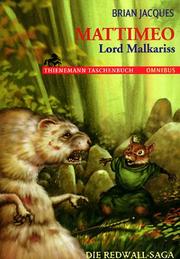
- Mattimeo (Redwall #3)
- Mariel of Redwall
- Salamandastron
- Martin the Warrior
- The Bellmaker
- Outcast of Redwall (Redwall #8)
- The Pearls of Lutra
Lord Brocktree sits later in publication order — it is the thirteenth book — but it is the earliest in Mossflower chronology, telling how Salamandastron came to be held by badgers. It reads perfectly well as a standalone and is a good one to save.
The series runs to 22 books. The ones above are the first stretch and, by most readers' reckoning, the best of it.
Honest warnings
The formula is real and it sets in early. Jacques found a structure that worked and used it: a young creature discovers a destiny, vermin besiege the abbey, a riddle in verse points to a hidden weapon, hares arrive, a feast is described in loving and slightly absurd detail. By the sixth or seventh book you will be able to predict the beats. Some readers find this comforting, which is a legitimate reason to keep going; others hit a wall around The Bellmaker and never return.
The dialect voices — moles especially, written phonetically — are heavy going in print and much better read aloud. Jacques wrote for the ear, and the audiobooks he narrated are genuinely the superior format.
And the morality is fixed by species. Rats, ferrets, stoats and weasels are bad; mice, otters, badgers and hares are good; almost nothing complicates it. Older readers coming to the books for the first time often find this flatter than they expected.
Where to stop
The strongest run is books one through six, ending on Martin the Warrior, which is the saddest and best-written book in the series. Stopping there is a real option and a good one. If you want more, Lord Brocktree and The Pearls of Lutra are the standouts from what follows. Then find your next series in Discover.
Follow the full ordered path here: Redwall Reading Order: Publication or Chronological?.