Best Books on Quakers and Quakerism, in Order
This curriculum moves from the living heart of Quaker experience outward to its history, social witness, and contemporary expression. Each stage builds the spiritual vocabulary and historical context needed for the next, so that by the end the reader understands not just what Quakers believe but why those beliefs have driven some of the most consequential moral movements in Western history.
Foundations: The Quaker Spirit
BeginnerGrasp the core of Quaker spirituality — the Inner Light, silent worship, and the testimonies — through accessible, firsthand voices before tackling history or theology.
▸ Study plan for this stage
Pace: 4–5 weeks, ~20–25 pages/day, with 2–3 days per week for reflection and exercises
- The Inner Light: the direct experience of God's presence within each person, central to Quaker faith
- Silent worship and listening: the practice of corporate silence as a method for encountering the divine
- The Quaker testimonies (SPICES): Simplicity, Peace, Integrity, Community, Equality, and Stewardship as lived expressions of faith
- The priesthood of all believers: rejection of ordained clergy and emphasis on direct access to spiritual truth
- Quaker discernment: the process of seeking divine guidance through communal listening and consensus
- Practical spirituality: how Quaker faith translates into ethical action and social witness in daily life
- What is the Inner Light, and how do Quakers understand their relationship to it?
- How does silent worship function in Quaker practice, and what is the purpose of corporate silence?
- What are the six Quaker testimonies, and how does each one shape Quaker life and values?
- Why do Quakers reject ordained clergy, and what does 'the priesthood of all believers' mean in practice?
- How do Quakers approach decision-making and discernment, and what role does community play?
- How does Quaker spirituality connect to social action and ethical living in the world?
- Sit in 20–30 minutes of silent meditation weekly, noting what arises; journal on whether you sense an 'inner light' or stillness
- Attend a local Quaker meeting for worship (in-person or online) and observe the practice of silence; record your observations and feelings
- Choose one Quaker testimony and research how it appears in both books; write a 1–2 page reflection on how it challenges or resonates with your own values
- Create a visual map (diagram, poster, or digital graphic) showing how the six testimonies interconnect and support one another
- Interview a Quaker (in person, by email, or via video) about their personal experience of the Inner Light and silent worship; synthesize their answer with what you've read
- Write a short personal essay (500–750 words) exploring how one Quaker testimony could reshape a specific area of your own life or community
Next up: This stage establishes the spiritual and ethical foundations of Quakerism, preparing you to understand how these core beliefs developed historically and were tested through centuries of persecution, social change, and theological debate in the next stage.

The living anthology of Quaker thought across four centuries, organized by theme. Starting here gives the reader the essential vocabulary — Light, Meeting, testimony, leadings — in the Quakers' own words.
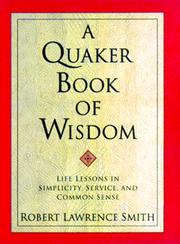
A warm, readable introduction to how Quaker principles apply to everyday life. It bridges the spiritual language of the tradition and the modern reader, making it the ideal second step before diving into history.
The Founding: George Fox and the Early Friends
BeginnerUnderstand the dramatic 17th-century origins of Quakerism — Fox's revelations, the early movement's radicalism, and the persecution Friends endured — through primary and narrative sources.
▸ Study plan for this stage
Pace: 8–10 weeks, approximately 25–30 pages per day. Start with Fox's Journal (weeks 1–6, ~60 pages/week), then move to Dandelion's "The Quakers" (weeks 7–10, ~40 pages/week) to consolidate and contextualize.
- George Fox's spiritual experiences and the doctrine of the Inner Light as the foundation of Quaker theology
- The radical nature of early Quakerism: rejection of ordained clergy, sacraments, and formal worship structures
- The social and political context of 17th-century England and how religious persecution shaped the early movement
- The role of testimony, direct revelation, and the Quaker understanding of the Holy Spirit working in all people
- Early Quaker activism: preaching, disruption of parish churches, and confrontation with religious and civil authorities
- The distinction between Fox's personal mystical journey (Journal) and the broader institutional development of the movement (Dandelion)
- Key early Quaker practices: silence, vocal ministry, and the refusal to swear oaths or show deference to rank
- What were the key spiritual experiences and revelations that led George Fox to establish the doctrine of the Inner Light, and how did he describe them in his Journal?
- How did early Quakers' rejection of ordained clergy and formal sacraments challenge the religious establishment of 17th-century England?
- What forms did persecution of early Friends take, and how did Fox and his followers respond to imprisonment and violence?
- How does Pink Dandelion's 'The Quakers' help explain the transition from Fox's personal spiritual movement to an organized religious movement?
- What was the relationship between Quaker theology (Inner Light, direct revelation) and Quaker social practices (silence, testimony, refusal of oaths)?
- Why were early Quakers considered radical or dangerous by both religious and secular authorities in the 17th century?
- Keep a reading journal while working through Fox's Journal: note 3–4 key revelatory moments, Fox's emotional responses, and how his understanding of the Inner Light evolved over time.
- Create a timeline of major events in Fox's life and the early Quaker movement (1647–1660s) using both texts, marking spiritual breakthroughs, persecutions, and organizational milestones.
- Select one passage from Fox's Journal (200–300 words) that exemplifies radical Quaker theology or practice, and write a 1–2 page analysis explaining why it would have been controversial to 17th-century authorities.
- Comparative chart: list 5–6 ways early Quaker beliefs and practices differed from mainstream Protestantism and Catholicism, citing specific examples from both Fox and Dandelion.
- Write a short narrative (500 words) from the perspective of a 17th-century parish priest or magistrate encountering early Quakers, incorporating details from the texts about their disruptions and refusals.
- Discussion or reflection: How do Fox's personal mystical experiences in the Journal connect to the institutional and theological framework that Dandelion describes? What was gained and lost in the transition?
Next up: This stage establishes the theological and historical foundations of Quakerism through its founder's voice and an analytical overview, preparing you to explore how Quaker thought and practice evolved, diversified, and adapted across subsequent centuries and different geographic contexts.
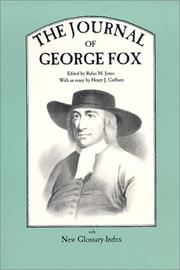
The foundational primary source: Fox's own account of his spiritual crisis, his discovery of the Inner Light, and the birth of the movement. Reading it after the introductory stage means the reader already understands the concepts Fox is living out.
A concise, scholarly overview of Quaker history and sociology from the 17th century to today. It contextualizes Fox within the broader arc of the movement and prepares the reader for deeper historical study.
Silent Worship and Inner Theology
IntermediateDevelop a richer theological and contemplative understanding of unprogrammed worship, the doctrine of the Inner Light, and how Quaker mysticism compares to the broader Christian tradition.
▸ Study plan for this stage
Pace: 6–8 weeks, ~25–30 pages/day (with 2–3 days per week for reflection and note-taking)
- The doctrine of the Inner Light as the foundation of Quaker theology and the basis for direct access to divine truth without institutional mediation
- Barclay's systematic defense of unprogrammed worship as a legitimate Christian practice rooted in Scripture and early Christian experience
- The relationship between reason, Scripture, and the Inward Light in Barclay's epistemology—how Quakers know religious truth
- Mysticism within Christian orthodoxy: how Barclay positions Quaker experience as continuous with rather than opposed to broader Christian tradition
- The role of silence and waiting in spiritual discernment and the theological significance of vocal ministry emerging from corporate silence
- Barclay's critique of sacramentalism and outward forms, and his argument for spiritual substance over ceremonial practice
- The concept of the Seed of God in all humanity and its implications for salvation, grace, and the universal availability of divine encounter
- What is Barclay's central argument for why the Inner Light, rather than Scripture or institutional authority, should be the primary guide for Christian faith and practice?
- How does Barclay defend unprogrammed worship theologically, and what does he claim happens in the silence of a gathered meeting?
- According to Barclay, what is the relationship between the Inward Light and Scripture? Can they contradict each other, and if so, which takes precedence?
- How does Barclay's theology of the Inner Light compare to mystical traditions within Catholicism, Protestantism, or Eastern Christianity? What makes his version distinctly Quaker?
- What is the 'Seed of God' in Barclay's theology, and what are the soteriological (salvation-related) implications of his teaching about it?
- How does Barclay argue against the necessity of outward sacraments and formal liturgy, and what does he propose as their spiritual equivalent?
- Read Barclay's Propositions 1–3 (on the Word of God and the Inner Light) twice: first for comprehension, then annotate the logical structure of his arguments and identify his key theological claims
- Attend or participate in an unprogrammed Quaker meeting (in person or online) and journal for 20–30 minutes afterward, reflecting on how Barclay's theology illuminates what you experienced
- Create a comparative chart mapping Barclay's doctrine of the Inner Light against one mystical theology from another Christian tradition (e.g., Meister Eckhart, St. John of the Cross, or Orthodox hesychasm); note similarities and differences
- Write a 500–750 word response to this prompt: 'How would Barclay respond to the objection that relying on the Inner Light leads to spiritual chaos and contradictory truth claims?' Ground your answer in specific passages
- Select one of Barclay's key Propositions (e.g., on silence, sacraments, or the Seed) and write a modern-day application: how might his argument speak to a contemporary Christian debate or spiritual question?
- Engage in a 30-minute contemplative reading session with one passage from Barclay (e.g., on waiting or the nature of the Light), reading slowly and pausing to sit with the ideas in silence, then reflect on what emerged
Next up: By mastering Barclay's systematic theological defense of the Inner Light and unprogrammed worship, you will be equipped to explore how these doctrines were lived out, contested, and developed in Quaker history and practice—moving from theory to lived experience and historical development.
The most systematic theological defense of early Quakerism, written in 1676. Having Fox's experiential account first makes Barclay's intellectual framework feel grounded rather than abstract.
The Testimonies in Action: Abolition and Pacifism
IntermediateSee how the Quaker testimonies of equality, peace, and integrity translated into the most consequential social activism of the 18th and 19th centuries, especially the abolition of slavery.
▸ Study plan for this stage
Pace: 4–5 weeks, ~25–30 pages/day, with 2–3 days per week for reflection and note-taking
- Woolman's concept of 'the Light' as a guide for ethical action and social conscience
- The connection between personal spiritual integrity and public witness against slavery
- How Quaker testimonies (simplicity, equality, peace) directly motivated abolitionist practice
- Woolman's method of quiet persuasion and moral suasion rather than confrontation
- The economic and spiritual dimensions of slavery as Woolman understood them
- Woolman's pacifism and how it shaped his approach to social change
- The role of conscience and inner conviction in sustaining long-term activism
- How did Woolman's spiritual experiences shape his understanding of slavery as a moral evil?
- What specific arguments does Woolman make about the spiritual and economic harm of slavery?
- How does Woolman's method of persuasion differ from more confrontational approaches to reform?
- Which Quaker testimonies does Woolman explicitly connect to his abolitionist witness, and how?
- What role does Woolman's concept of 'the Light' play in his activism and decision-making?
- How does Woolman balance his pacifism with his commitment to justice and social change?
- Create a timeline of Woolman's major spiritual awakenings and trace how each led to concrete action against slavery
- Annotate 3–4 key passages where Woolman connects a Quaker testimony directly to abolitionist argument; write a one-page synthesis
- Write a dialogue between Woolman and a slaveholder in which you capture Woolman's actual rhetorical strategy from the essays
- Identify and analyze one instance where Woolman's pacifism created tension with his abolitionist convictions; discuss how he resolved it
- Compare Woolman's language and tone in addressing slavery with that of a non-Quaker abolitionist of the same era (use secondary source); note differences
- Reflect in a journal entry: How would Woolman's method of 'speaking truth in love' apply to a contemporary social justice issue you care about?
Next up: This stage grounds you in the lived example of how Quaker testimonies became radical social action, preparing you to examine the broader institutional and political impact of Quaker abolitionism in the 18th and 19th centuries.
One of the great spiritual autobiographies in the English language. Reading Slaughter's biography first provides the historical scaffolding; now the reader can experience Woolman's moral reasoning in his own luminous prose.
Quakers Today: Diversity, Renewal, and Global Witness
ExpertEngage critically with the diversity of modern Quakerism — programmed vs. unprogrammed, evangelical vs. universalist — and assess the tradition's ongoing relevance as a spiritual and social force.
▸ Study plan for this stage
Pace: 4–5 weeks, ~25–30 pages/day, with 2–3 days per week reserved for reflection and exercises
- The Quaker testimonies (Simplicity, Peace, Integrity, Community, Equality) as living practices, not historical artifacts, and their application to contemporary life
- How unprogrammed (silent) worship and contemplative practice remain spiritually vital in a hyperconnected, distraction-filled world
- The tension between individual spiritual experience and communal discernment, and how this shapes modern Quaker identity
- Quaker approaches to social witness and ethical living as rooted in direct experience of the Divine rather than doctrine or authority
- The diversity within modern Quakerism—how different meetings and traditions interpret and practice the Quaker way differently
- Practical integration of Quaker wisdom into daily life: decision-making, relationships, work, and personal transformation
- Quakerism as a countercultural force offering alternatives to consumerism, violence, and spiritual superficiality
- How does Gulley define the five Quaker testimonies, and what does it mean to 'live' them rather than merely recite them?
- What is the relationship between silence, listening, and spiritual discernment in Quaker practice, and why might this be relevant today?
- How does Gulley address the diversity of modern Quakerism, and what common threads unite different Quaker traditions despite their differences?
- What specific examples does Gulley provide of how Quaker principles can transform personal relationships, work decisions, and community engagement?
- How does Gulley position Quakerism as a response to contemporary cultural problems (consumerism, violence, disconnection), and is this framing convincing?
- What does Gulley suggest about the future relevance and renewal of Quakerism, and what conditions would need to exist for the tradition to thrive?
- Attend or observe a Quaker meeting (programmed or unprogrammed) and journal on how the experience relates to Gulley's descriptions of worship and community discernment
- Select one Quaker testimony (Simplicity, Peace, Integrity, Community, or Equality) and audit your own life for one week—document where you live it well and where you fall short, then propose one concrete change
- Practice a 20–30 minute silent sitting practice inspired by unprogrammed Quaker worship; afterward, reflect on what 'listening' meant in that context and how it differs from meditation
- Identify a personal decision or ethical dilemma you're currently facing; use Gulley's framework of Quaker discernment to work through it, documenting your process and insights
- Interview a Quaker (from your local meeting or online) about how they practice the testimonies in their work and relationships; compare their lived experience to Gulley's presentation
- Write a 2–3 page personal essay: 'How Quaker Wisdom Challenges My Current Life.' Identify at least three specific ways Gulley's vision of the Quaker way conflicts with or reframes your assumptions
Next up: This stage establishes Gulley's contemporary, accessible vision of Quaker practice and values, providing a foundation to examine how different branches of modern Quakerism—evangelical, universalist, programmed, unprogrammed—interpret and embody these principles in divergent ways, and to assess the tradition's global witness and future viability.
A contemporary Quaker pastor reflects on the five testimonies for a modern audience. It closes the curriculum by bringing everything learned — history, theology, social witness — back to the question of how to live now.
Discussion
Keep reading
Paths that share books, cover the same subject, or open a related topic.