Quakerism resists the usual approach to learning a religion, because there is no creed to memorize and the central claim — that anyone can experience direct guidance without clergy or sacrament — is about practice rather than doctrine. Reading about silent worship gets you only so far; a single hour in a meeting communicates more than a chapter.
The second complication is that Friends are not one thing. Liberal unprogrammed meetings, largely in Britain and the northeastern United States, worship in silence with no paid minister. Evangelical and programmed Friends churches, which are the majority worldwide and concentrated in East Africa and Latin America, have pastors, hymns, and prepared sermons. The books below lean liberal and unprogrammed, and it is worth knowing that going in rather than concluding the tradition is smaller and more uniform than it is.
Start with practice, not doctrine
Begin with Quaker faith & practice, the book of discipline of Britain Yearly Meeting. Its structure is unusual and revealing: instead of stating doctrine, it assembles extracts from four centuries of Friends' writing alongside the practical procedures for meetings, marriage, and decision-making. Note that it is the British book — American yearly meetings publish their own, and the differences between them are informative.
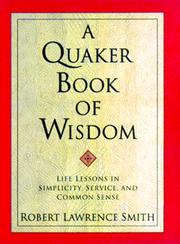
Then A Quaker book of wisdom by Robert Lawrence Smith, the gentlest introduction on the list. Smith, a former Sidwell Friends headmaster, writes short chapters on silence, simplicity, truth-telling, and work, aimed at readers with no background. It gives you the values in ordinary language before the seventeenth-century prose arrives.
The founders
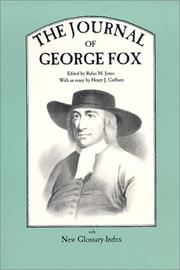
The journal of George Fox is the origin document. Fox, a weaver's son wandering England in the 1650s, records his conviction that there is one, even Christ Jesus, that can speak to thy condition, along with his imprisonments, his confrontations with clergy, and the founding of a movement that spread with startling speed. The prose is difficult and the accounts of his opponents are one-sided, but no summary substitutes for it.
Then An apology for the true Christian divinity by Robert Barclay, published in 1676, which is the systematic theology the early movement lacked. Barclay was arguing with educated critics, so he sets out the doctrine of the inward light, the rejection of outward sacraments, and the basis of silent worship in careful propositional form. It is the hardest book here and the one that shows Quakerism could hold its own as theology rather than only as enthusiasm.
Balance both with The Quakers by Pink Dandelion, the scholarly outside account. Dandelion is a sociologist of the movement and covers the whole span, including the splits — the Hicksite separation, the evangelical revivals, the branches that make the global picture so varied — that insider books tend to pass over quickly.
Conscience in practice
The journal and major essays of John Woolman is, for many readers, the most affecting book of the tradition. Woolman was an eighteenth-century New Jersey tailor who spent decades travelling to persuade fellow Quakers to free their slaves, one household at a time, decades before organized abolitionism. His essays on commerce, labor, and the treatment of indigenous peoples trace how a testimony works: an individual leading, tested in meeting, slowly becoming a corporate position. It is also the clearest illustration of why Friends were disproportionately present in abolition, prison reform, and later peace work.
Close with Living The Quaker Way Timeless Wisdom For A Better Life Today by Philip Gulley, a contemporary and deliberately accessible treatment of the testimonies — simplicity, peace, integrity, community, equality — as a way of living now. Gulley writes from the liberal end of the tradition and some Friends read him as too far from its Christian roots; that disagreement is itself a useful window into where the movement currently sits.
One practical note: most meetings welcome visitors with no expectation of membership or belief, and attending a meeting for worship alongside this reading will teach you things the books cannot.
Readers interested in the political history often continue with the political science path. Follow the full reading path to take these in order.
Follow the full ordered path here: Best Books on Quakers and Quakerism, in Order.