Start Pilates: core strength and control
This curriculum takes a complete beginner from understanding the philosophy and body mechanics behind Pilates, through mastering the foundational mat repertoire, and finally into building lasting strength, posture, and mobility. Each stage builds the vocabulary, body awareness, and technical precision needed for the next, ensuring you practice safely and effectively from day one.
The Philosophy & Body Foundations
BeginnerUnderstand where Pilates comes from, what its core principles are (centering, control, breath, concentration, precision, flow), and how the body is designed to move — giving you the mental framework before you hit the mat.
▸ Study plan for this stage
Pace: 2–3 weeks, ~15–20 pages/day (the book is short, ~100 pages of text); re-read Pilates's introductory philosophy chapters at least twice before moving on to the exercise descriptions
- Contrology as a discipline: Pilates's original name for his method emphasizes complete coordination of body, mind, and spirit — not just physical exercise
- The six core principles: Centering, Control, Breath, Concentration, Precision, and Flow — understand each as Pilates implicitly describes them throughout the text
- The 'powerhouse' concept: the deep abdominal, lower-back, hip, and glute muscles as the central engine from which all movement originates
- Spinal health as the foundation of vitality: Pilates's conviction that a flexible, strong spine is the key indicator of youth and well-being
- Mind-body unity: the insistence that every movement must be performed with full mental attention — mindless repetition is explicitly rejected
- Natural breathing as a cleansing mechanism: Pilates's emphasis on full inhalation and complete exhalation to oxygenate the blood and expel toxins
- Corrective exercise philosophy: the idea that modern sedentary life creates postural imbalances, and Contrology is designed to systematically correct them
- Sequential, progressive movement: exercises in 'Return to Life' are ordered deliberately — each one prepares the body for the next, reflecting the principle of Flow
- In your own words, what did Joseph Pilates mean by 'Contrology,' and how does that name reflect his broader philosophy about human movement?
- What are the six core principles of Pilates, and can you find at least one passage or exercise description in 'Return to Life' that illustrates each one?
- Why does Pilates place the spine at the center of his health philosophy, and what does he argue is the relationship between spinal flexibility and overall vitality?
- How does Pilates describe the role of breath — what is it meant to accomplish physically, and why does he treat incomplete breathing as harmful?
- What critique does Pilates make of modern (early 20th-century) lifestyles and conventional exercise, and do you think his argument still applies today?
- How does the ordering of the exercises in 'Return to Life' reflect the principle of Flow and progressive difficulty?
- Annotate the philosophy chapters: As you read Pilates's introductory text, highlight every sentence that maps to one of the six principles; write the principle name in the margin so you build a living reference guide
- Write a one-page personal manifesto: After finishing the book, summarize Pilates's philosophy in your own words as if explaining it to a friend who has never heard of Pilates — this forces genuine comprehension over passive reading
- Breath awareness practice (daily, 5 minutes): Sit or lie still and practice Pilates's full breathing cycle — inhale deeply through the nose to expand the ribcage laterally, then exhale completely through pursed lips; do this before each reading session to embody the concept as you study it
- Posture audit: Stand in front of a mirror and observe your natural posture. Note where you see the imbalances Pilates describes (rounded shoulders, forward head, weak core). Journal what you find — this makes his corrective philosophy personally relevant
- Spine mobility check: Gently perform a standing forward fold, a seated spinal twist, and a cat-cow stretch on the floor. Note where you feel stiffness. Re-read Pilates's passages on spinal health immediately after — the physical sensation will anchor the text
- Principle mapping exercise: Draw a simple table with the six principles as column headers. As you re-read the exercise descriptions in 'Return to Life,' place each exercise under the principle(s) it most strongly embodies — this reveals how the principles are woven into practice, not just theory
Next up: Internalizing Pilates's original philosophy and the 'why' behind every movement in 'Return to Life' gives you the interpretive lens needed to engage with more modern instructional material in the next stage, where abstract principles become concrete mat technique and cueing.

The original source — reading Joseph Pilates in his own words first gives you the authentic philosophy and intention behind every exercise, so you never lose sight of the 'why' as you learn the 'how'.
Foundational Mat Work
BeginnerLearn the classical beginner mat exercises with correct alignment, breathing patterns, and modifications — establishing safe, effective habits from the very first session.
▸ Study plan for this stage
Pace: 6–8 weeks total: Weeks 1–3 cover "Pilates Anatomy" by Rael Isacowitz (~20–25 pages/day, focusing on anatomical chapters and muscle-action diagrams before attempting any movement); Weeks 4–8 cover "The Pilates Body" by Brooke Siler (~15–20 pages/day, reading each exercise section slowly, pausing to p
- The Pilates Powerhouse (core): understanding the deep stabilizing muscles — transversus abdominis, multifidus, pelvic floor, and diaphragm — as illustrated and named in Isacowitz's anatomical breakdowns
- Neutral spine vs. imprinted spine: when each position is appropriate during mat work, and how Isacowitz's anatomical diagrams clarify the spinal mechanics behind each choice
- The six Pilates principles — Concentration, Control, Centering, Flowing Movement, Precision, and Breathing — as the philosophical and practical framework Siler uses to introduce every exercise in The Pilates Body
- Lateral thoracic (ribcage) breathing: inhaling to expand the ribcage sideways and back without lifting the shoulders, and exhaling to knit the ribs down, as described by both authors as the breath pattern that protects the spine during exertion
- Scapular stabilization and shoulder girdle mechanics: keeping the shoulder blades anchored and depressed, a prerequisite Isacowitz establishes anatomically before Siler applies it in exercises like the Hundred and Roll-Up
- Classical beginner mat sequence from The Pilates Body: the Hundred, Roll-Up, Single Leg Circle, Rolling Like a Ball, Single Leg Stretch, Double Leg Stretch, Spine Stretch Forward, and Swan — their purpose, sequence logic, and safe entry/exit
- Modifications and contraindications: how Siler's step-by-step cues and Isacowitz's muscle maps together help beginners identify when to bend the knees, reduce range of motion, or skip an exercise entirely
- Body reading and self-assessment: using Isacowitz's anatomical imagery to observe your own postural tendencies (e.g., anterior pelvic tilt, rib flare, forward head) and correct them before and during practice
- After reading Isacowitz's anatomical chapters, can you name the four muscles of the Powerhouse and describe the specific role each plays in stabilizing the spine during a mat exercise like the Hundred?
- How does Siler distinguish between neutral and imprinted spine in The Pilates Body, and which beginner exercises call for each position — and why?
- Walk through the breath pattern for the Roll-Up as described by Siler: at which exact moments do you inhale and exhale, and what does Isacowitz's anatomy tell us about why that breath sequence protects the lumbar spine?
- Which of the six Pilates principles does Siler emphasize most heavily in her cueing for Rolling Like a Ball, and how would you explain that principle to a brand-new student using only the language from The Pilates Body?
- Using Isacowitz's muscle diagrams as your reference, which primary and secondary muscles are targeted in the Single Leg Stretch, and what common alignment error would cause the wrong muscles to dominate?
- How do the modifications Siler provides for the Double Leg Stretch change the muscular demand of the exercise, and when would a beginner know it is time to progress to the full version?
- Anatomy mapping session (Week 1–2): After each anatomical chapter in Isacowitz, draw or label a simple body outline identifying the muscles discussed. Then lie on your mat, place your hands on those areas, and consciously contract and release them to build the mind-muscle connection before any full exercise.
- Breath practice drill (Week 2): Spend 10 minutes daily practicing lateral thoracic breathing as described by both authors — hands on the sides of your ribcage, inhaling for 4 counts to push the hands apart, exhaling for 4 counts to draw the navel to spine. Log whether your shoulders stay down and your belly stays relatively flat.
- The Hundred progression journal (Week 4–5, alongside Siler): Practice only the Hundred for three sessions in a row, starting with Siler's most modified version (knees bent, head down). Each session, note in a journal which of the six principles felt strong and which felt absent, then re-read Siler's cues for that principle before the next session.
- Full beginner sequence run-through (Week 6–7): Using Siler's exercise order in The Pilates Body as your guide, perform the complete beginner mat sequence (Hundred through Swan) three times per week. After each session, cross-reference one exercise with Isacowitz's anatomical section for that movement and write two sentences about what you felt vs. what the anatomy predicts you should feel.
- Modification decision tree (Week 7): Create a one-page personal reference chart — one row per beginner exercise from Siler — listing: (1) the full version, (2) Siler's stated modification, (3) the anatomical reason for the modification drawn from Isacowitz, and (4) your personal trigger for when you need it.
- Video self-assessment (Week 8): Record yourself performing the beginner sequence, then watch it with Isacowitz's anatomical cues in mind. Identify one alignment issue per exercise (e.g., rib flare in the Hundred, lumbar gripping in Swan) and write a corrective cue for yourself using language from both books.
Next up: ">Mastering the anatomical awareness from Isacowitz and the disciplined movement habits from Siler's beginner sequence gives you the stable, intelligent body needed to safely explore the intermediate classical repertoire — where exercises demand greater spinal articulation, longer lever arms, and more complex coordination — in the next stage.

Pairs every foundational exercise with clear anatomical illustrations showing exactly which muscles are working, bridging your body-knowledge from Stage 1 directly into mat practice.
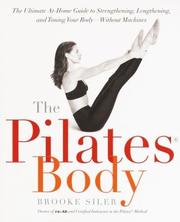
A beautifully photographed, step-by-step guide to the full classical mat sequence written by a master teacher — the go-to beginner manual for learning proper form and sequencing.
Breath, Control & the Deeper Principles
IntermediateDeepen your understanding of Pilates breathing mechanics, spinal articulation, and the mind-body connection — moving beyond 'doing the shapes' to truly embodying the principles of control and precision.
▸ Study plan for this stage
Pace: 3–4 weeks, ~20–25 pages/day — read slowly and reflectively, pausing to practice movements described in the text before moving on. Re-read key sections on breathing and spinal articulation at least twice.
- Pilates Breathing Mechanics: lateral thoracic (intercostal) breathing as the engine of every exercise, coordinating inhale/exhale with specific movement phases to stabilize the core and oxygenate working muscles
- The Six Pilates Principles: Concentration, Control, Centering, Flow, Precision, and Breath — understanding each not as abstract ideals but as concrete physical cues that change how an exercise feels and functions
- The Powerhouse: Gallagher's articulation of the deep abdominal, gluteal, and spinal stabilizer complex as the structural foundation from which all movement originates
- Spinal Articulation: the ability to move the spine sequentially — vertebra by vertebra — in flexion, extension, and rotation, distinguishing mobilization from stabilization depending on the exercise goal
- Mind-Body Connection & Concentration: the deliberate, inward attention required to sense muscular engagement rather than simply completing a shape, turning each repetition into a conscious neuromuscular event
- Control vs. Effort: Gallagher's emphasis on quality over quantity — fewer, perfectly controlled repetitions outperform many sloppy ones, and tension in the wrong muscles signals a breakdown in principle
- Precision of Alignment: understanding how small positional details (chin placement, shoulder depression, neutral vs. imprinted pelvis) dramatically alter which muscles are recruited and protected
- Historical & Philosophical Context: Joseph Pilates' original intent as presented by Gallagher — 'Contrology' as a complete system of self-mastery, not merely a fitness trend — grounding the reader in the 'why' behind every rule
- According to Gallagher's presentation of the method, what is lateral thoracic breathing, and why is it preferred over chest or belly breathing during Pilates exercises?
- How does Gallagher define the 'Powerhouse,' and which specific muscle groups does he identify as belonging to it? How should awareness of the Powerhouse change the way you set up for an exercise?
- In your own words, explain the difference between 'control' and 'effort' as Gallagher distinguishes them — what does a loss of control look and feel like in practice?
- What is spinal articulation, and how does Gallagher use exercises like the Roll-Up or Spine Stretch to train it? Why does sequential vertebral movement matter more than simply reaching a final position?
- How do the six Pilates principles interact with one another during a single exercise? Choose one mat exercise from the book and trace how each principle applies to it simultaneously.
- What does Gallagher suggest about the relationship between the mind and the body in the original Pilates method — and how does this philosophy distinguish 'Contrology' from conventional exercise?
- Breath Mapping Practice: Before reading each new chapter, lie in constructive rest and spend 5 minutes practicing lateral thoracic breathing — place hands on the sides of your ribcage and feel it expand 360°. Journal one observation about how breath changes your abdominal engagement.
- Principle Annotation: As you read, keep a two-column notebook — on the left, copy a passage describing an exercise; on the right, label which of the six principles it is primarily addressing. By the end of the book, review which principles appear most and least often in Gallagher's language.
- Slow-Motion Repetition Drill: Choose three exercises described in the book (e.g., The Hundred, Roll-Up, Single Leg Stretch). Perform each at half your normal speed, narrating aloud what each body part is doing and which principle you are applying. Record yourself and review for alignment breakdowns.
- Spinal Articulation Journal: Practice rolling down a wall (standing) or performing the Roll-Up on a mat daily for two weeks. Each session, write two sentences: one describing where in the spine you feel restriction, and one describing what changed compared to the previous session.
- Principle Violation Experiment: Deliberately perform an exercise with one principle removed (e.g., hold your breath during The Hundred, or rush the tempo of the Roll-Up). Note what compensations arise in your body. Write a short reflection on what Gallagher's principles are actually protecting against.
- Concept-to-Cue Translation: After finishing the book, write a one-page 'coaching script' for a single exercise of your choice, using only language grounded in Gallagher's principles. Read it aloud as if teaching someone else — this forces you to own the concepts rather than just recognize them.
Next up: Mastering the 'why' behind breath, control, and the six principles as Gallagher presents them gives you the principled lens needed to critically evaluate and safely progress into more advanced or apparatus-based Pilates material in the next stage.

A thorough examination of the classical method's principles and progressions, helping intermediate practitioners understand how each exercise connects to the larger system of body conditioning.
Strength, Posture & Long-Term Mobility
IntermediateApply Pilates principles to building functional strength, correcting postural imbalances, and designing a sustainable long-term practice that supports health and mobility for life.
▸ Study plan for this stage
Pace: 3–4 weeks, ~20–25 pages/day — The Anatomy of Pilates is a visually rich, anatomically detailed text; read slowly and deliberately, pausing to study each diagram and cross-referencing the muscles illustrated with your own body awareness during or after each session.
- Musculoskeletal anatomy as the foundation of Pilates — understanding which specific muscles (deep stabilizers vs. global movers) are targeted in each exercise and why
- The role of the 'powerhouse' (core): how the transversus abdominis, multifidus, pelvic floor, and diaphragm work together as a deep stabilizing unit
- Postural archetypes — identifying common spinal deviations (kyphosis, lordosis, scoliosis, flat back) through Massey's anatomical lens and how Pilates corrects them
- Joint mechanics and movement planes — how flexion, extension, rotation, and lateral flexion at the spine, hip, shoulder, and knee relate to safe Pilates execution
- Muscle imbalance patterns: the relationship between overactive/shortened muscles and underactive/lengthened muscles, and how targeted Pilates exercises restore balance
- Breath mechanics and intra-abdominal pressure — lateral thoracic breathing as a tool for spinal stability and functional strength
- Progressive loading principles within Pilates — how lever length, range of motion, and spring/body-weight resistance can be systematically increased for long-term strength gains
- Injury-aware practice: using anatomical knowledge from Massey to modify exercises for common vulnerabilities (lower back, neck, knees, shoulders) and sustain a lifelong mobility practice
- According to Massey's anatomical breakdowns, which deep stabilizing muscles must be pre-activated before initiating a Pilates movement, and what happens biomechanically when they are not?
- How does The Anatomy of Pilates explain the relationship between postural imbalances (e.g., anterior pelvic tilt or rounded shoulders) and specific muscle length-tension dysfunctions?
- For any given exercise illustrated in the book (e.g., the Hundred, Roll-Up, or Single Leg Stretch), can you name the primary movers, secondary stabilizers, and the joints involved?
- How does Massey use anatomical reasoning to justify the Pilates emphasis on spinal articulation — and what are the functional, long-term mobility benefits of this approach?
- What anatomical principles from the book inform safe exercise modification for someone with a common postural issue such as lumbar hyperlordosis or thoracic kyphosis?
- How can the anatomical knowledge in this book be used to design a balanced, progressive weekly Pilates practice that addresses both strength and mobility over the long term?
- Body mapping while reading: as you study each exercise illustration in Massey's book, physically perform the movement slowly, palpating (touching) the muscles named and noticing which are working — bridge anatomy on the page to sensation in your body
- Postural self-assessment journal: using the postural archetypes described by Massey, photograph or observe your own standing and seated posture, identify your dominant imbalance pattern, and note which exercises the book recommends to address it
- Anatomy annotation practice: choose 5 exercises from the book and, without looking, draw a simple stick figure and label every muscle Massey identifies as primary or secondary — then check your accuracy against the illustrations
- Progressive exercise sequencing project: design a 4-week Pilates program using only exercises from The Anatomy of Pilates, deliberately applying the progressive loading principles (lever length, range, tempo) to build functional strength week by week
- Muscle imbalance correction drill: identify one antagonist muscle pair highlighted by Massey (e.g., hip flexors vs. glutes), perform the lengthening exercise for the overactive muscle and the strengthening exercise for the underactive one back-to-back, and journal the difference in movement quality
- Breath and stability integration: practice lateral thoracic breathing as described by Massey for 5 minutes before each reading session, then perform the Hundred or a similar core exercise, consciously connecting breath timing to core engagement as the anatomy of the movement dictates
Next up: By internalizing the anatomical 'why' behind every Pilates movement through Massey's work, the reader is now equipped to move beyond individual exercises and begin exploring how Pilates integrates with broader therapeutic, athletic, or specialized training contexts at an advanced level.

Provides a detailed postural and structural analysis of the Pilates exercises, helping you identify and address your own imbalances and design a practice that corrects them over the long haul.
Discussion
Keep reading
Paths that share books, cover the same subject, or open a related topic.