Build a home yoga practice
This curriculum takes a complete beginner from zero yoga knowledge to a confident, self-led home practice built on solid alignment and sustainable habits. Each stage builds directly on the last: you first learn the language and philosophy of yoga, then develop precise alignment skills, then deepen your understanding of the body, and finally learn how to design and sustain your own practice for life.
Foundations: Language, Philosophy & First Poses
BeginnerUnderstand what yoga is, learn its core vocabulary and philosophy, and safely explore your first foundational poses with confidence.
▸ Study plan for this stage
Pace: 10–12 weeks total. Weeks 1–5: "The Heart of Yoga" by Desikachar (~20–25 pages/day, 3–4 days/week) — read slowly and reflectively, journaling as you go. Weeks 6–12: "Light on Yoga" by Iyengar (~15–20 pages/day, 3–4 days/week) — treat the asana plates as a visual practice guide, pausing to attempt eac
- Yoga as a personal, adaptive practice: Desikachar's core teaching that yoga must be tailored to the individual (the concept of Viniyoga) rather than applied as a one-size-fits-all system
- The Eight Limbs of Yoga (Ashtanga) as outlined through Desikachar's lens of Patanjali's Yoga Sutras — especially Yama, Niyama, Asana, and Pranayama as the foundational four for beginners
- The role of the breath (Pranayama) as the central thread linking body and mind — Desikachar's emphasis that breath awareness is more important than achieving a perfect pose shape
- Vinyasa Krama: the principle of intelligent, step-by-step sequencing of poses — moving into and out of a posture with as much care as holding it
- Iyengar's anatomical precision: understanding alignment, symmetry, and the use of the whole body in foundational poses such as Tadasana (Mountain Pose), Trikonasana (Triangle Pose), and Savasana
- Core Sanskrit vocabulary: asana, pranayama, vinyasa, drishti, bandha, sukha (ease), sthira (steadiness) — the language used throughout both books
- The philosophical purpose of asana: poses are not ends in themselves but tools for preparing the body and mind for deeper states of awareness (Desikachar) and for cultivating discipline and self-study (Iyengar)
- Safety and self-respect as non-negotiables: both authors stress ahimsa (non-harming) toward oneself — never forcing the body into a pose, and understanding contraindications
- In your own words, what does Desikachar mean when he says yoga must be adapted to the individual — and how does this change the way you approach your home practice?
- What are the Eight Limbs of Yoga, and why do both Desikachar and Iyengar treat the physical limbs (asana and pranayama) as a gateway rather than the destination?
- How does Iyengar describe the relationship between alignment and awareness in Tadasana (Mountain Pose) — and why does he consider it the blueprint for all standing poses?
- What is the difference between sthira (steadiness) and sukha (ease/comfort) as qualities of a pose, and how do you personally experience that balance in a pose you have tried?
- How does Desikachar use the concept of Vinyasa Krama to argue that the transitions between poses are just as important as the poses themselves?
- After reading both books, how do Desikachar's philosophical, relationship-centered approach and Iyengar's anatomically precise, structured approach complement rather than contradict each other?
- Daily Tadasana check-in (5 minutes): After reading Iyengar's description of Mountain Pose, stand in Tadasana each morning before practice. Use his anatomical cues (feet, knees, thighs, spine, arms) as a checklist and write one sentence in a journal about what you notice each day.
- Breath-first pose exploration: Choose any three foundational poses from Light on Yoga (e.g., Trikonasana, Virasana, Savasana). Before attempting the shape, sit quietly and take 10 slow breaths as Desikachar instructs. Notice how breath-awareness changes your experience of entering the pose.
- Sanskrit vocabulary flashcards: As you read both books, build a running glossary of every Sanskrit term you encounter. Create physical or digital flashcards (term on one side, meaning + which book it appeared in on the other). Aim for 20–30 cards by the end of the stage.
- Eight Limbs mapping journal: Draw a simple diagram of the Eight Limbs. Each week, write 2–3 sentences connecting something you read in either book to one of the limbs. By the end of the stage you should have notes touching on at least five of the eight limbs.
- Pose plate study sessions: Spend 10 minutes per session with Iyengar's photographic plates in Light on Yoga. Sketch the outline of one pose, label the body parts he emphasizes, and write the key alignment instruction in your own words — this builds both visual memory and comprehension.
- Weekly self-inquiry reflection (Desikachar-inspired): At the end of each week, answer this prompt in your journal: 'What did my body, breath, or mind teach me this week that a book could not?' This mirrors the Svadhyaya (self-study) principle both authors champion.
Next up: Mastering the philosophical framework and foundational poses from Desikachar and Iyengar gives you the vocabulary, body awareness, and safety instincts needed to explore more varied sequences, deeper poses, and dedicated pranayama practices in the next stage with confidence rather than confusion.

Written by one of the most respected teachers in the modern tradition, this book introduces yoga's philosophy and purpose in plain language — the perfect first frame before touching a single pose.
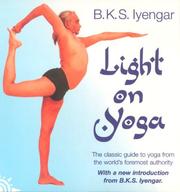
The canonical visual reference for asana: clear descriptions and photographs of poses give beginners a reliable, precise vocabulary of the physical practice to return to throughout the entire curriculum.
Alignment: Building a Safe & Intelligent Body
BeginnerUnderstand the anatomical principles behind alignment cues so you can practice poses correctly and avoid injury without a teacher in the room.
▸ Study plan for this stage
Pace: 8–10 weeks total: Weeks 1–5 cover "Yoga Anatomy" by Leslie Kaminoff (~20–25 pages/day, including time to pause and locate each muscle/joint on your own body); Weeks 6–10 cover "Alignment Matters" by Katy Bowman (~15–20 pages/day, reading it like a journal — slowly, with frequent movement breaks to t
- Breath as the foundation of movement: Kaminoff's central argument that every yoga pose is an expression of the breath, not a static shape to be forced
- The spine's natural curves (cervical, thoracic, lumbar, sacral) and how poses either support or collapse them — a recurring lens in both books
- Joint mechanics and range of motion: how bones, cartilage, ligaments, and tendons define the safe boundaries of each pose (Kaminoff, per-pose anatomy sections)
- Muscle action — the difference between concentric, eccentric, and isometric contractions and why each appears constantly in holding and transitioning poses (Kaminoff)
- Tensegrity and load distribution: Bowman's model of the body as an integrated tension network, where misalignment in one area creates compensatory strain elsewhere
- Neutral vs. habitually distorted posture: Bowman's concept of 'input' — that the positions we hold all day (sitting, standing, sleeping) are themselves a form of training that either supports or undermines yoga practice
- Alignment cues decoded: translating common teacher phrases ('root down through the four corners of your foot,' 'lengthen your tailbone') into the specific anatomical actions Kaminoff and Bowman describe
- Self-assessment without a mirror: using proprioception and the anatomical knowledge from both books to feel, rather than just see, correct alignment
- After reading Kaminoff's introduction, can you explain in plain language why breath mechanics — not aesthetic shape — are the primary organising principle of a yoga pose?
- Pick any three poses illustrated in 'Yoga Anatomy' (e.g., Tadasana, Downward Dog, Warrior I): which specific muscles are lengthening, which are contracting, and which joints are under the most load?
- Bowman argues that alignment is not just a yoga-class concern but a 24/7 lifestyle issue. What daily habits does she identify as the most common sources of misalignment, and how do they show up on the mat?
- What is the difference between a ligament injury and a muscle strain in the context of overzealous home practice, and which tissues does Kaminoff flag as most vulnerable for beginners?
- How does Bowman's concept of 'proximal vs. distal' loading help a home practitioner decide whether to use props (blocks, straps) in a given pose?
- Using both books together, how would you explain to a friend why two people with different bone structures should NOT look identical in the same yoga pose?
- Body-mapping journal: Each time Kaminoff introduces a new pose, pause and physically move into it. Sketch a simple stick figure and annotate which muscles you actually feel working — then compare your sketch to Kaminoff's illustration to find gaps in your proprioception.
- Breath audit: Before each reading session, lie in constructive rest and observe your breath for 3 minutes. After finishing Kaminoff's breath chapter, repeat the audit and write one paragraph on what changed in your awareness.
- Postural snapshot log (Bowman-inspired): Once a week, have someone photograph your standing posture from the front and side, or use a doorframe as a reference. Use Bowman's alignment markers (ear over shoulder over hip over ankle) to track changes across the 10 weeks.
- Alignment-cue translation drill: Write down 10 verbal cues you have heard in a yoga class or video. After finishing both books, rewrite each cue in anatomical language (e.g., 'engage your core' → 'isometrically contract the transverse abdominis to stabilise the lumbar spine against anterior pelvic tilt').
- Prop experiment: Choose one pose you find difficult (e.g., seated forward fold). Practice it three ways — no props, with a block, with a strap — and write a short note after each attempt using Bowman's load-distribution framework to explain what changed and why one version felt safer.
- Two-book synthesis card: After finishing both books, create a single reference card for five foundational poses (Tadasana, Downward Dog, Warrior I, Bridge, Child's Pose). For each pose, list: (1) the key anatomical action from Kaminoff, (2) the alignment/lifestyle insight from Bowman, and (3) one self-check you can perform without a mirror.
Next up: Internalising the anatomical 'why' behind alignment in these two books gives you a reliable inner compass — a prerequisite for the next stage, where you will begin building a self-directed home sequence and need to make real-time decisions about pacing, modification, and progression without external guidance.
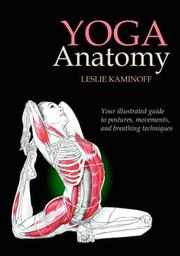
Pairs beautifully detailed anatomical illustrations with pose-by-pose breakdowns, translating abstract alignment cues into concrete body knowledge — essential before practicing alone at home.

Expands alignment thinking beyond the mat into everyday movement and posture, helping beginners understand why alignment habits matter for long-term health and injury prevention.
Going Deeper: Breath, Sequencing & the Inner Practice
IntermediateIntegrate breathwork (pranayama) with asana, understand how to sequence poses intelligently, and begin connecting the physical practice to its meditative roots.
▸ Study plan for this stage
Pace: 10–12 weeks total. Week 1–3: "The Breathing Book" by Donna Farhi (~20–25 pages/day, including time to pause and practice the breath explorations). Week 4–7: "Yoga" by Silva Mehta (~25–30 pages/day, cross-referencing sequences with your mat practice). Week 8–12: "The Yoga Sutras of Patanjali" by Sri
- Natural breath anatomy: how the diaphragm, intercostals, and pelvic floor work together as a breathing system (Farhi)
- The four qualities of breath — wave, rhythm, depth, and continuity — and how disrupting them signals held tension (Farhi)
- Pranayama as a bridge: using conscious breath regulation (e.g., ujjayi, nadi shodhana) to link the physical and meditative layers of practice (Farhi + Mehta)
- Intelligent sequencing principles: warming, peak poses, counter-poses, and cool-down — building a practice that has a beginning, middle, and end (Mehta)
- The role of alignment and anatomical awareness in sustaining a safe home practice over time (Mehta)
- Patanjali's Eight Limbs (Ashtanga): understanding how asana (limb 3) and pranayama (limb 4) are explicitly steps toward dharana, dhyana, and samadhi (Satchidananda)
- Pratyahara — withdrawal of the senses — as the pivotal turning point from outer to inner practice, and how breath and stillness cultivate it (Satchidananda)
- The concept of chitta vritti (fluctuations of the mind) and yoga's goal of stilling them: reframing the entire physical practice as mental/spiritual training (Satchidananda)
- According to Donna Farhi, what are the most common ways people habitually restrict their breath, and what physical or emotional patterns cause them?
- How does Silva Mehta recommend structuring a balanced home sequence — what are the essential categories of poses and why does their order matter?
- What is the relationship between pranayama and asana in an integrated practice: should breath lead movement, or movement lead breath, and why?
- What are Patanjali's Eight Limbs, and how do the first four (the 'outer' limbs) lay the foundation for the final four (the 'inner' limbs)?
- How does Satchidananda define samadhi, and what does the Yoga Sutras say about the role of consistent, disciplined practice (abhyasa) and non-attachment (vairagya) in reaching it?
- After working through all three books, how would you describe the difference between 'doing yoga' (performing poses) and 'practicing yoga' (the integrated inner discipline)?
- Breath audit (Farhi): Spend 5 minutes lying in constructive rest before every practice session for two weeks. Notice which parts of your torso move, which are still, and journal one observation per session — tracking how your breath changes as the weeks progress.
- Breath-led asana (Farhi + Mehta): Choose 6 poses from Mehta's sequences and practice each one for 10 breaths, letting the inhale initiate expansion and the exhale initiate release. Record whether the breath changes the quality of the pose compared to your usual approach.
- Design and test a 45-minute home sequence (Mehta): Using Mehta's sequencing principles, write out a full practice on paper — warm-up, standing poses, a peak pose, counter-poses, and savasana. Practice it three times in one week, refining it each time based on how it feels.
- Pranayama sit (Farhi): Introduce one pranayama technique from Farhi (e.g., diaphragmatic breathing or nadi shodhana) as a 5-minute standalone sit before or after asana, three times per week. After two weeks, write a short paragraph on how it affects your mental state.
- Eight Limbs mapping journal (Satchidananda): After finishing the Yoga Sutras, create a one-page personal map of the Eight Limbs. For each limb, write one sentence describing how it currently shows up (or doesn't) in your home practice — be honest and specific.
- Sutra memorization and reflection: Select 5 sutras from Satchidananda's translation that resonate most strongly. Write each one out by hand, then write 3–5 sentences in your own words explaining what it means to you and how it changes how you approach your mat.
Next up: By grounding the physical practice in conscious breath, intelligent sequencing, and the philosophical framework of the Eight Limbs, this stage equips the reader to move beyond technique into a sustained, self-directed practice — setting the stage for deeper exploration of meditation, yoga philosophy, and advanced asana at the next level.
Breath is the engine of yoga, and this book is the clearest, most practical guide to understanding and retraining it — a crucial skill for self-led practice where no teacher is cueing your breath.
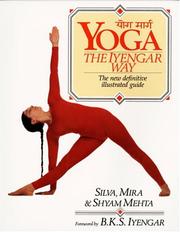
Provides structured, progressive sequences organized by level and goal, giving the home practitioner a reliable template for building intelligent, balanced sessions.

Reading yoga's foundational philosophical text at this stage — after the body work is established — allows its teachings on mind and practice to land with real personal meaning.
Sustaining the Practice: Designing Your Home Yoga Life
IntermediateLearn how to design a personal, evolving home practice that adapts to your body, schedule, and life stage — and keeps you practicing for years, not weeks.
▸ Study plan for this stage
Pace: 6–8 weeks total: Weeks 1–4 cover "Yoga for You: Healthy Living" by Tara Fraser (~20–25 pages/day, including time to try each sequence described); Weeks 5–8 cover "Meditations from the Mat" by Katrina Kenison (read one daily meditation per day as intended — roughly one entry per sitting, with journal
- Personalizing a home practice: Fraser's framework for adapting sequences to your own body, energy level, and available time rather than following a fixed class format
- Sequencing intelligence: understanding how to order poses (warm-up, standing, seated, supine, inversions, savasana) so the practice feels coherent and safe without an instructor
- Listening to the body as the primary teacher: Fraser's emphasis on sensation-based feedback over aesthetic alignment, especially important when practicing alone
- Consistency over intensity: building a sustainable rhythm (shorter, regular sessions) rather than sporadic long sessions — a throughline in both Fraser and Kenison
- The role of reflection and intention-setting: Kenison's daily meditations model how a brief contemplative moment before or after practice anchors yoga as a life philosophy, not just exercise
- Adapting practice across life stages: Fraser's modifications for energy fluctuations, injury, aging, and busy schedules; Kenison's reflections on how the mat mirrors life's changing seasons
- Integrating the Eight Limbs off the mat: Kenison draws on Patanjali's broader framework (yamas, niyamas, pranayama, pratyahara) to show that home practice extends beyond asana into daily conduct and awareness
- Creating a home practice environment and ritual: physical space, props, time-of-day choices, and the psychological cues (a mat rolled out, a candle lit) that make practice feel inevitable rather than optional
- After reading Fraser, can you design a complete 30-minute home sequence — including warm-up and closing — that is appropriate for how your body feels today, and explain why you chose each section?
- How does Fraser suggest modifying a practice when energy is low, time is short, or a body part is injured — and have you applied at least one of those modifications in a real session?
- What does Kenison mean when she says the mat is a mirror? Can you describe a specific moment in your own practice where what arose on the mat reflected something happening in your life?
- How do Kenison's daily meditations reframe 'missing a day' of practice — and how does that reframing differ from the perfectionist mindset many home practitioners struggle with?
- In what ways do both Fraser and Kenison treat home practice as inherently more honest than studio practice — and do you agree? What evidence from each book supports your answer?
- Can you articulate your own 'why' for a home yoga practice — drawing on at least one idea from Fraser and one from Kenison — and describe how that 'why' would keep you practicing through a difficult season of life?
- Design-your-own sequence (Fraser): Using Fraser's sequencing principles, write out three different home sequences — one for a 15-minute morning, one for a 45-minute weekend session, and one for an evening wind-down. Practice each one at least twice and revise based on how your body responded.
- Body-feedback journal (Fraser): For two weeks, immediately after each practice write 3–5 sentences answering: What did I notice? What did I modify and why? What would I change next time? Use Fraser's language of sensation and breath rather than pose names alone.
- Daily meditation practice (Kenison): Read one entry from 'Meditations from the Mat' each morning before you step on the mat. Write a single sentence in response — not a summary, but a personal reaction. At the end of the book, re-read all your sentences as a record of your evolving inner practice.
- Life-stage mapping exercise (both books): Draw a simple timeline of the last 3 years of your life (stressful periods, healthy periods, transitions). Mark where your yoga practice was strong or absent. Using insights from both Fraser and Kenison, write a paragraph about what conditions support your practice and what derails it — then design one small structural change to address the biggest deraile
- Environment audit and ritual design: Photograph or sketch your current home practice space. Using Fraser's practical guidance on props and space, make at least two concrete improvements. Then, inspired by Kenison's emphasis on intention, design a 2-minute opening ritual (a breath, a word, a gesture) and a 1-minute closing ritual, and use them consistently for the remainder of the stage.
- Letter to your future self: At the end of week 8, write a one-page letter to yourself to be read in six months. Describe the home practice you want to have, the obstacles you anticipate, and — drawing directly on Kenison's meditations — the deeper reason you keep returning to the mat. Seal it and schedule a calendar reminder to open it.
Next up: By the end of this stage you will have a living, self-designed home practice and a reflective relationship with it — the ideal foundation for exploring more advanced or specialized yoga paths (such as pranayama, yoga nidra, or a specific lineage) that demand exactly the self-awareness, consistency, and philosophical grounding Fraser and Kenison have helped you build.

A practical, beautifully structured guide to building a personal home practice from scratch, with sequences for different times, energy levels, and goals — ideal for making practice truly self-led.

Closes the curriculum by weaving together the physical, philosophical, and personal dimensions of yoga into a daily-practice format, helping the reader sustain motivation and deepen meaning over the long term.
Discussion
Keep reading
Paths that share books, cover the same subject, or open a related topic.