Best Books to Learn Petroleum Engineering, in Order
Petroleum engineering is three problems stacked on each other: work out what is in the rock, work out how much of it will come out, and build something that gets it to surface without killing anybody. This path follows that order. It starts with the plain-English books that every operations person is handed on their first week, moves to formation evaluation and reservoir engineering, and finishes with drilling, completions and production — the stages where the arithmetic becomes real equipment.
Plain-English orientation
BeginnerUnderstand the whole upstream sequence — prospect to producing well — and use the industry's vocabulary correctly before meeting any equations.
▸ Study plan for this stage
Pace: Four to six weeks for 1,079 pages, all of it readable without mathematics. Van Dyke's Fundamentals of Petroleum is 359 pages, Hyne's Nontechnical Guide 536 and Baker's A Primer of Oilwell Drilling a short 184. Hyne is the one book on this entire path you should read cover to cover; the other two are
- The upstream sequence end to end: prospect identification, exploration drilling, appraisal, development, production, and abandonment. Every technical chapter later on sits at one point in this sequence and is easier to place once the sequence is automatic.
- The physical vocabulary, which the rest of the path uses without definition — derrick and substructure, drillstring, bit, casing string, cement, wellhead, christmas tree, separator, flowline. Van Dyke exists to make these concrete rather than abstract.
- What a reservoir actually is: porous, permeable rock holding fluids under pressure beneath an impermeable seal, in a trap. Not a cavern. This misconception costs more later than any other.
- Porosity and permeability as distinct properties. Porosity is storage, permeability is flow, and a rock can have plenty of one and almost none of the other — which is the whole story of unconventional reservoirs.
- From Baker: how a rig makes hole. Rotation, weight on bit, and circulation of drilling mud that carries cuttings up the annulus, cools the bit and — critically — holds back formation pressure with its hydrostatic column.
- Mud weight and the blowout preventer stack as the two lines of well control. Baker gives the plain-English version; Applied Drilling Engineering later gives the arithmetic. Understand now that this is the life-safety part of the discipline.
- Tripping, casing and cementing as the operations that punctuate drilling, and why each casing string exists — isolating a formation, protecting fresh water, allowing a change of mud weight.
- The commercial frame Hyne supplies: reserves, leases, operators and service companies, and the fact that petroleum engineering is practised inside an industry with its own decision structure rather than as pure technical work.
- Describe the full sequence from prospect to producing well, naming the decision made at each stage and who makes it.
- Distinguish porosity from permeability, and give a rock type with high porosity and low permeability.
- What holds back formation pressure while drilling, and what happens when it does not? Give the primary and secondary barriers.
- Why is a well drilled with several casing strings of decreasing diameter rather than one? Give at least three distinct reasons.
- Explain a trap, a seal and a source rock to someone with no background, and say why all three are needed.
- Sketch the surface flow path from the wellhead to the point where oil, gas and water are separated.
- Draw the whole upstream sequence on one page as a flow diagram and keep it on the wall. Add to it as each later stage supplies detail.
- Build a glossary of a hundred terms from Van Dyke and Hyne with a one-line definition each. Every later text assumes this vocabulary silently.
- Draw a rig in cross-section from Baker, labelling the drillstring, annulus, mud circulation path and BOP stack. Redraw it from memory a week later.
- Draw a well schematic with three casing strings, marking setting depths, cement tops and the reason for each string. This diagram recurs in every subsequent stage.
- Read Hyne cover to cover and write a one-page summary of each major section. It is the only cover-to-cover read on the path and the summaries are what carry forward.
Next up: You know what the equipment is and what the sequence is; the next stage is the subsurface half of the discipline, which determines everything the equipment is then asked to do.

The University of Texas PETEX training text, written for people entering the industry without an engineering degree. The shortest way to learn what a rig, a casing string and a separator actually are.
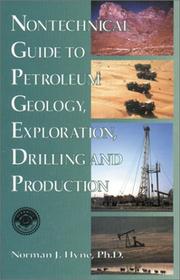
The standard plain-English entry to the discipline, and the book most petroleum engineers read before their first technical course. Covers the whole chain in one volume with almost no mathematics. Read it cover to cover — it is the only book here you should.

Another PETEX title, and the classic introduction to the rig itself: the drillstring, mud, the blowout preventer stack, tripping. It gives you the mental picture that Applied Drilling Engineering later formalises.
Where the oil is, and how you know
IntermediateRead a suite of logs, describe a trap and a seal, and estimate hydrocarbons in place from petrophysical data.
▸ Study plan for this stage
Pace: Three to four months for 1,498 pages, and the first stage with real technical work. Selley and Sonnenberg's Elements of Petroleum Geology is 526 pages, Asquith's Basic Well Log Analysis 244 and Ellis's Well Logging for Earth Scientists 728. Read Selley first for the geology, then Asquith — which is
- The petroleum system as an assembly of elements that must all be present and correctly timed: source rock, maturation, migration pathway, reservoir, seal and trap. Any one missing and there is no accumulation, which is why exploration is mostly the elimination of prospects.
- Source rock quality and maturity — organic content, kerogen type, and the temperature history that determines whether a source generated oil, gas or nothing. Timing relative to trap formation matters as much as the chemistry.
- Trap types, structural and stratigraphic, and why stratigraphic traps are both more common and harder to find. Selley is written for petroleum people rather than geology majors and keeps this practical.
- Reservoir quality as a depositional and diagenetic outcome. The same formation can be excellent in one place and worthless a mile away, and understanding why is what stops a reservoir engineer making bad assumptions about continuity.
- The basic log suite and what each measurement responds to: gamma ray for shale volume, resistivity for fluid saturation, density and neutron for porosity and for gas effect, sonic for porosity and mechanical properties.
- Log interpretation as a workflow rather than a set of readings — shale volume, then porosity, then water saturation via Archie's equation, then net pay by cutoff. Asquith teaches this as a procedure and the procedure is the deliverable.
- Archie's equation and its assumptions: clean, water-wet, non-shaly formations. Knowing where it fails matters more than knowing the equation, and shaly-sand corrections exist because it fails often.
- Volumetric estimation of hydrocarbons in place — area, thickness, porosity, water saturation, formation volume factor — and an honest sense of how large the uncertainty on each term is.
- From Ellis: the physics behind the tools. Why a density tool reads what it reads, what the depth of investigation and vertical resolution of each measurement actually are, and why invasion by mud filtrate complicates every saturation calculation.
- List the elements of a petroleum system and explain why timing between them is as important as their presence.
- Given a gamma ray, resistivity, density and neutron suite over an interval, walk through the full interpretation from shale volume to net pay.
- State Archie's equation, define every term, and name the formation conditions under which it should not be used.
- Compute hydrocarbons in place for a simple case and then state which input term dominates the uncertainty and why.
- What is invasion, and how does it affect a resistivity measurement? How do tools with different depths of investigation help?
- How does depositional environment control reservoir quality and lateral continuity? Give a case where continuity assumptions would be dangerous.
- Why does a reservoir engineer who has skipped the geology make systematically optimistic assumptions?
- Work every worked example in Asquith. This is not optional and it is the single highest-value block of effort in this stage; log interpretation is a skill and reading about it does not produce it.
- Take a published log suite and interpret it independently, then compare with the published interpretation. Where you differ, work out which of your steps caused it.
- Build a cross-section from several well logs, correlating markers between them. Correlation is where the geology and the log analysis meet.
- For one field described in Selley, write out its full petroleum system and identify which element was the exploration risk.
- Compute hydrocarbons in place three times with low, best and high estimates for each input, and present the range rather than a number. Presenting a single number is the habit this exercise is meant to break.
Next up: You can now say what is in the rock and roughly how much; reservoir engineering is the far harder question of how much of it will come out, and over what time.

The standard geology text written for petroleum people rather than for geology majors — source rock, migration, trap, reservoir quality. This is the subsurface half of the discipline and skipping it is why reservoir engineers make bad assumptions.

The AAPG methods volume, and the fastest route to actually interpreting gamma ray, resistivity, density and neutron logs. Worked examples throughout; do them.

The physics behind the tools Asquith teaches you to read. Take it second, when you already know what a log looks like and want to know why the measurement behaves the way it does.
Reservoir engineering
BeginnerPerform material balance calculations, identify drive mechanisms from production history, and reason about recovery factor and displacement.
▸ Study plan for this stage
Pace: Six to nine months for 2,406 pages, the core of the discipline and the longest stage on the path. Dake's Fundamentals of Reservoir Engineering is 397 pages, Ahmed's Reservoir Engineering Handbook 863, Dake's The Practice of Reservoir Engineering 546 and Lake's Enhanced Oil Recovery 600. Work Dake's
- The material balance equation as a statement of conservation applied to a tank: expansion of oil and dissolved gas, expansion of gas cap, expansion of connate water and pore volume compaction, and water influx, all balancing production. Dake's derivation is the clearest anywhere and you should be ab
- Drive mechanisms and their signatures — solution gas drive, gas cap expansion, water drive, compaction, gravity drainage — each with a characteristic pressure and gas-oil-ratio history. Identifying the drive from production data is the classic reservoir engineering diagnosis.
- PVT properties and where they come from: formation volume factors, solution gas-oil ratio, compressibility, viscosity, and the bubble point. Ahmed carries this and it is the input every calculation depends on.
- Material balance as a straight-line problem. Rearranging the equation so that a plot of measured quantities should be linear, and reading the drive mechanism and the original oil in place off the deviation from that line, is the technique the whole method exists for.
- Well testing and transient flow: the diffusivity equation, the semi-log straight line, skin factor and wellbore storage, and what a pressure buildup actually tells you about permeability and near-well damage.
- Recovery factor as the outcome of displacement efficiency and sweep efficiency, and why the two fail for different reasons — one microscopic and capillary, one macroscopic and geological.
- Relative permeability and capillary pressure as the link between rock properties and multiphase flow. Almost every disappointing waterflood is explained here.
- Dake's argument in The Practice of Reservoir Engineering: the profession has drifted toward simulation without adequate physical reasoning, and a simulator will reproduce whatever history you tune it to. His complaint is the most useful thing on this path for developing judgement.
- From Lake: displacement theory proper, including fractional flow and the Buckley-Leverett solution, then miscible flooding, chemical flooding and thermal methods, and an honest account of why enhanced recovery is often uneconomic rather than infeasible.
- Derive the general material balance equation and state every assumption you have made. Which assumption is most often violated in practice?
- Given a pressure and gas-oil-ratio history, identify the drive mechanism and justify the identification.
- Set up material balance as a straight-line plot for a specific drive mechanism. What does curvature in the plot indicate?
- Interpret a pressure buildup test: identify the semi-log straight line, compute permeability and skin, and say what wellbore storage did to the early data.
- Distinguish displacement efficiency from sweep efficiency and give a field situation dominated by each.
- State Dake's criticism of simulation practice. Is it fair, and what would a properly disciplined use of a simulator look like?
- Why do so many enhanced oil recovery projects fail commercially despite working technically? Answer using Lake's economics as well as his physics.
- Derive material balance from first principles on paper, without the book, until it comes out right. Then do it again a week later.
- Take a published production history and perform a full material balance analysis: straight-line plot, drive identification, and an estimate of original oil in place with a stated uncertainty.
- Work through a complete well test interpretation by hand, including the diagnostic plot, before ever using software for it.
- Construct a fractional flow curve and apply Buckley-Leverett to compute breakthrough time for a waterflood. This is the calculation that connects rock properties to a production forecast.
- Read The Practice of Reservoir Engineering with a notebook of Dake's specific complaints, and for each one write what practice you would adopt to avoid it.
- Screen one real reservoir for enhanced oil recovery using Lake's criteria, and write the recommendation you would actually give, including the case for doing nothing.
Next up: The arithmetic now tells you what the reservoir can deliver; the next two stages are where that becomes steel in the ground, starting with the well itself.
The core text of the discipline, and still the clearest derivation of material balance anywhere. Dake writes as an engineer arguing with you rather than as a lecturer; work the material rather than reading it.

Broader and more example-driven than Dake, with the PVT and fluid-property treatment that Dake assumes. The natural companion volume, best read alongside rather than after.
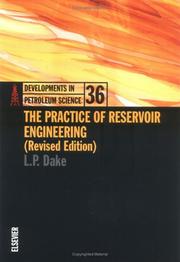
Dake's later book, and his attack on the profession's drift toward unexamined simulation. Read it after Fundamentals, when you have enough theory for his complaints to land. It is the most opinionated book on this path and the most useful for judgement.

Displacement theory, miscible and chemical flooding, thermal methods. The standard graduate text on getting the two-thirds of the oil that primary and secondary recovery leave behind.
Drilling and completions
BeginnerDesign a well — mud programme, casing scheme, cement, completion type — and understand where well control is won or lost.
▸ Study plan for this stage
Pace: Four to six months for 1,213 pages — Applied Drilling Engineering at 502 and Bellarby's Well Completion Design at 711. Read the drilling text first and work its problems; it is the SPE course text and is built around worked calculation. Bellarby follows and is written from operating experience rathe
- Drilling hydraulics: pressure losses through the drillstring, bit nozzles and annulus, and the optimisation of hydraulic horsepower at the bit against the requirement to lift cuttings. This is the calculation that determines pump programme and bit selection.
- Mud properties and their functions — density for pressure control, rheology for hole cleaning, filtration control for wellbore stability, and chemistry for the formations being drilled. Every property is a compromise against another.
- The pressure window between pore pressure and fracture gradient, which is the constraint the entire well design is built around. Casing setting depths exist to keep each section inside its window.
- Well control in full: kick detection, shut-in procedure, the driller's method and the wait-and-weight method, and kill sheet arithmetic. This is where the arithmetic is genuinely life-safety and the standard for knowing it is different from the rest of the path.
- Casing design against burst, collapse and tension with design factors, and cement design for zonal isolation. Bad cement is a leading cause of well integrity failure and it is a design problem rather than an execution accident.
- Bit mechanics and rate of penetration: weight on bit, rotary speed, bit type selection, and the economics of drilling cost per foot including trip time.
- Directional and horizontal drilling: build rates, dogleg severity, torque and drag, and the fact that most modern wells are not vertical, which changes hole cleaning and completion design substantially.
- From Bellarby, the gap most curricula leave: what happens between drilling the well and producing it. Perforating strategy, sand control, tubing and packer selection, completion fluids, and the choice between cased-hole and open-hole completions.
- Completion design as a constraint on production for the life of the well. A completion decision made once determines the flow performance, the intervention options and the abandonment cost for decades.
- Compute the circulating pressure losses for a given drillstring and derive the optimum bit nozzle size for maximum hydraulic impact.
- Given pore pressure and fracture gradient curves, select casing setting depths and justify each one.
- Walk through the full response to a kick from detection through shut-in to kill, and produce the kill sheet arithmetic.
- Design a casing string against burst, collapse and tension for a stated well, and state the design factors used and why.
- What causes poor zonal isolation in a cement job, and what design and execution measures address each cause?
- For a given reservoir, choose between a cased-and-perforated and an open-hole completion, and defend the choice on flow, sand and intervention grounds.
- When is sand control required, and how do you choose between screens, gravel pack and frac pack?
- Work every hydraulics and well control problem in Applied Drilling Engineering. The well control problems should be worked until they are automatic rather than until they are understood.
- Produce a complete well design for a stated set of conditions: pressure window, casing scheme with setting depths, mud programme, cement design and a directional profile.
- Complete a kill sheet from a realistic kick scenario, then repeat it with a different mud weight and hole geometry.
- Design a completion for the reservoir you analysed in the previous stage, using Bellarby, and write the reasoning as a memo rather than as calculations alone.
- Take one well integrity failure case study from the public record and identify which design or execution decision was the root cause.
Next up: You have a well in the ground and a reservoir with known deliverability; the last stage couples them and asks what actually arrives at surface.

The SPE textbook, and the standard course text for drilling worldwide: hydraulics, bit mechanics, casing design, well control. Open Library's record lists the co-authors Millheim and Chenevert rather than Bourgoyne first, but it is the same book. Fundamentals of Drilling Engineering by Mitchell and Miska is the modern successor if you want a more recent treatment.

The gap in most curricula: what happens between drilling the well and producing it — perforating, sand control, tubing and packer selection, completion fluids. Written from operating experience and the most practically useful book in this stage.
Getting it to surface
BeginnerAnalyse well performance through inflow and tubing curves, and size an artificial lift or stimulation treatment against the reservoir's actual deliverability.
▸ Study plan for this stage
Pace: Three to four months. Economides's Petroleum Production Systems is 682 pages and is the book that ties the whole path together; Reservoir Stimulation is a dense multi-author reference without a page count in the catalogue record, and is used selectively rather than read through. Take Production Syst
- Nodal analysis as the organising idea of the stage and the synthesis of the whole path: reservoir, completion, tubing and surface facilities treated as one coupled system, with the operating point set where inflow and outflow curves intersect.
- Inflow performance: the productivity index for undersaturated flow, Vogel's relationship below the bubble point, and the effect of skin. Everything you learned about reservoir deliverability enters the system here.
- Outflow performance: multiphase flow in vertical tubing, pressure traverse calculations, and the reason tubing size is a genuine optimisation rather than a bigger-is-better choice — too large and the well loads up with liquid.
- Skin as the concept linking drilling, completion and production. Formation damage from mud filtrate, perforation geometry, partial penetration and turbulence all appear as skin, and separating the components is what tells you whether to stimulate.
- Artificial lift selection: rod pumps, electrical submersible pumps, gas lift and progressing cavity pumps, chosen against depth, rate, gas fraction, deviation and intervention cost. There is no default answer and the selection criteria are the examinable content.
- Matrix acidising as the treatment for damage — dissolving the damaged zone at pressures below fracture — versus hydraulic fracturing as the treatment for low permeability, which creates a new flow path. Confusing the two is the classic error and Economides is emphatic about it.
- Hydraulic fracture design: fracture geometry models, fluid and proppant selection, conductivity and dimensionless fracture conductivity, and the net pressure analysis that tells you what actually happened downhole.
- Why so much modern production is stimulated. Unconventional reservoirs have permeability low enough that the fracture, not the rock, is the flow system, which changes the economics and the engineering entirely.
- How to use a multi-volume desk reference: the handbooks are for a specific question at depth, and knowing what is in them is more valuable than reading them.
- Construct inflow and outflow curves for a stated well and find the operating point. Now change the tubing size and explain the direction the operating point moves.
- Decompose a measured skin into its components. Which components can be removed by treatment and which are geometric?
- A well has a high skin and moderate permeability. Do you acidise or fracture? Justify the answer on Economides's own criteria.
- Select an artificial lift method for a deep, deviated, high-gas-fraction well and defend the choice against the two nearest alternatives.
- Design a hydraulic fracture treatment: fluid, proppant, target geometry, and the dimensionless conductivity you are aiming for. What does net pressure during the job tell you?
- Why is a low-permeability reservoir's production dominated by fracture conductivity rather than by rock permeability?
- Take the reservoir, well and completion you have designed across the previous stages and produce a single coupled forecast. Where in the system is the bottleneck?
- Build a complete nodal analysis for one well by hand before using any software, and produce a sensitivity on tubing size, skin and reservoir pressure.
- Take the reservoir from stage three, the completion from stage four, and produce an integrated production forecast for the whole system. This is the capstone of the path.
- Work through an acidising design and a fracture design for the same well and write the comparison as a recommendation with costs.
- Practise using the multi-volume handbooks as references with timed retrieval questions, exactly as you did with the log analysis workflow.
- Write a final page on where in this system the largest uncertainty sits, and what data you would acquire to reduce it. Being able to answer that is what distinguishes a petroleum engineer from someone who has read the textbooks.
Next up: This is the end of the path: subsurface evaluation, reservoir behaviour, well construction and production performance, coupled into one system and grounded in the calculations rather than the summaries.

The definitive treatment of nodal analysis — reservoir, completion, tubing and surface facilities as one coupled system. This is the book that ties the reservoir and drilling stages together, so it belongs at the end.
The reference on hydraulic fracturing and matrix acidising, edited with Kenneth Nolte. Dense and multi-author, and the right place to finish given how much of modern production is stimulated. Larry Lake's Petroleum Engineering Handbook and Lyons's Standard Handbook of Petroleum and Natural Gas Engineering are the multi-volume desk references to keep beside it.
Discussion
Keep reading
Paths that share books, cover the same subject, or open a related topic.