Best Books to Become a Penetration Tester
This curriculum is built for an intermediate learner who already understands basic networking and security concepts and wants to build a professional penetration testing career. It moves from structured methodology and mindset, through hands-on web and network exploitation, into professional reporting and client communication, and finally to the certifications and career strategy that make you hireable and credible. Each stage's books are ordered so that vocabulary and technique learned early unlock deeper material later.
Methodology & Professional Mindset
IntermediateUnderstand the full penetration testing lifecycle, industry-standard methodology, scoping, rules of engagement, and how professional pentesters think and operate.
▸ Study plan for this stage
Pace: 8–10 weeks, ~40–50 pages/day (mix of reading and active note-taking)
- The five phases of penetration testing: reconnaissance, scanning, enumeration, exploitation, and post-exploitation/reporting
- Scoping, rules of engagement (ROE), and legal/contractual frameworks that govern professional pentesting
- Methodology frameworks (NIST, OWASP, PTES) and why standardized approaches reduce risk and improve outcomes
- The mindset of a professional penetration tester: curiosity, persistence, ethical responsibility, and client communication
- Information gathering and passive reconnaissance techniques to build an accurate attack surface map
- Active scanning and enumeration strategies to identify vulnerabilities without triggering alarms prematurely
- Exploitation planning: prioritization, chaining vulnerabilities, and maintaining access responsibly
- Documentation, reporting, and remediation guidance—translating technical findings into business value
- What are the five core phases of the penetration testing lifecycle, and what is the primary objective of each phase?
- Why is scoping and establishing rules of engagement critical before a penetration test begins, and what legal/contractual risks arise from poor scoping?
- How do industry-standard methodologies (NIST, OWASP, PTES) differ, and when would you choose one over another for a specific engagement?
- Describe the difference between passive reconnaissance and active scanning—when is each appropriate, and what are the risks of moving too quickly to active techniques?
- How should a penetration tester prioritize and chain vulnerabilities during exploitation, and what ethical considerations guide this process?
- What makes a penetration testing report actionable for a non-technical client, and how do you translate technical findings into business risk?
- Read and annotate the scoping/ROE sections of both books; draft a sample rules of engagement document for a fictional company, including testing windows, out-of-scope systems, and escalation procedures
- Map out the five phases of penetration testing using a flowchart or mind map; for each phase, list 3–5 specific tools and techniques mentioned in The Hacker Playbook 3 and Penetration Testing
- Conduct a passive reconnaissance exercise on a public company (using only OSINT, no active scanning): gather information via DNS, WHOIS, LinkedIn, job postings, and public records; document your findings in a structured format
- Set up a lab environment (e.g., HackTheBox, TryHackMe, or local VMs) and perform a full pentest lifecycle on a deliberately vulnerable application, documenting each phase and the decisions you made at each step
- Write a mock penetration testing report for a fictional engagement, including executive summary, technical findings, risk ratings, and remediation recommendations; have a peer review it for clarity and actionability
- Create a comparison table of three methodology frameworks (NIST, OWASP, PTES) highlighting their phases, focus areas, and when each is most applicable
Next up: This stage establishes the professional framework and systematic thinking required for penetration testing; the next stage will deepen technical execution by focusing on specific attack vectors, tools, and hands-on exploitation techniques across different systems and protocols.

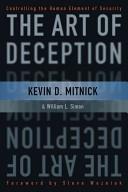
A practical, scenario-driven walkthrough of a real-world pentest engagement from start to finish — ideal for an intermediate learner to see how methodology is applied before diving into deep technical detail.

A comprehensive, structured introduction to the full pentest process covering reconnaissance, exploitation, and post-exploitation; establishes the vocabulary and workflow that all later books assume.
Web Application Exploitation
IntermediateMaster the OWASP Top 10 and beyond — understand how to find, exploit, and chain web vulnerabilities in real engagements.
▸ Study plan for this stage
Pace: 8–10 weeks, ~40–50 pages/day with 2–3 days per week for hands-on labs
- HTTP request/response fundamentals and how browsers communicate with servers
- Authentication and session management flaws (credential submission, token handling, privilege escalation)
- Access control vulnerabilities and how to identify and bypass authorization checks
- Injection attacks (SQL, OS command, LDAP, XPath) — root causes and exploitation techniques
- Cross-site scripting (XSS) — reflected, stored, and DOM-based variants and their impact chains
- Cross-site request forgery (CSRF) and how to craft malicious requests on behalf of authenticated users
- Business logic flaws and how to identify non-obvious vulnerabilities in application workflows
- Information disclosure, error handling, and how to extract sensitive data from responses
- What are the three main categories of XSS (reflected, stored, DOM-based) and how do you test for each in a real application?
- How would you identify and exploit a SQL injection vulnerability, and what techniques would you use to extract data or escalate privileges?
- Explain the difference between broken authentication and broken access control — provide examples of each and how to test for them.
- How do CSRF attacks work, and what are the key differences between CSRF and XSS in terms of attack vector and impact?
- Describe a business logic vulnerability you could find in an e-commerce application and how you would exploit it to cause financial or reputational harm.
- What is the relationship between information disclosure and other vulnerabilities, and how do you use leaked information to chain attacks?
- Set up DVWA (Damn Vulnerable Web Application) or WebGoat locally and work through SQL injection, XSS, and CSRF labs systematically, documenting each payload and result
- Intercept and modify HTTP requests using Burp Suite Community on a practice application; practice adding headers, changing parameters, and replaying requests to understand server behavior
- Perform a full authentication test on a vulnerable application: attempt credential enumeration, session fixation, token prediction, and privilege escalation — document each finding
- Craft and execute a stored XSS payload that persists in a database, then demonstrate how it executes for other users; compare with reflected XSS payloads
- Identify and exploit a business logic flaw in a practice e-commerce or banking application (e.g., price manipulation, race conditions, workflow bypass); document the impact
- Chain multiple vulnerabilities together (e.g., information disclosure → SQL injection → authentication bypass) to demonstrate real-world attack scenarios
Next up: This stage equips you with deep knowledge of common web vulnerabilities and exploitation techniques, preparing you to move into advanced topics like API security, infrastructure-level attacks, and how to design comprehensive penetration test reports that demonstrate business impact.
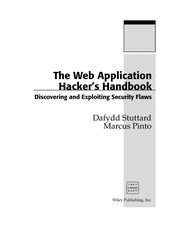
The definitive canonical reference for web application security testing; read first in this stage to build a complete mental model of web attack surfaces before moving to more targeted technique books.
Network & Infrastructure Exploitation
IntermediateDevelop deep skills in network-level attacks, Active Directory exploitation, lateral movement, and post-exploitation — the core of most corporate pentest engagements.
▸ Study plan for this stage
Pace: 12–14 weeks, ~40–50 pages/day (accounting for dense technical content, code examples, and lab work)
- Low-level network protocols (TCP/IP stack, packet structure, socket programming) and how to manipulate them for exploitation
- Active Directory architecture, authentication mechanisms (NTLM, Kerberos), and common misconfigurations enabling lateral movement
- Shellcode development, buffer overflows, and memory exploitation techniques as foundational attack primitives
- Post-exploitation tradecraft: persistence, privilege escalation, credential harvesting, and maintaining access in corporate environments
- Lateral movement techniques including pass-the-hash, pass-the-ticket, Kerberoasting, and abuse of trust relationships
- Network reconnaissance and enumeration at scale (SMB, LDAP, DNS) to map attack surface within enterprise networks
- Practical exploitation frameworks and custom tool development for real-world pentest scenarios
- Operational security (OPSEC) and evasion techniques to avoid detection during network-based attacks
- How does the TCP/IP stack work at the protocol level, and how can you craft malicious packets to exploit network services?
- What is the Kerberos authentication flow, and how can you exploit it through attacks like Kerberoasting or golden ticket creation?
- How do you perform lateral movement in an Active Directory environment after gaining initial access?
- What are the key steps in developing shellcode and exploiting buffer overflows, and when would you use them in a pentest?
- How do you establish persistence and maintain access in a compromised corporate network while avoiding detection?
- What reconnaissance techniques allow you to enumerate Active Directory, SMB shares, and other network services to identify exploitation paths?
- Work through Erickson's code examples in 'Hacking': write and execute socket programs to craft raw TCP/UDP packets; modify and compile shellcode snippets
- Set up a lab Active Directory environment (Windows Server + domain-joined clients) and practice the attack chains from 'The Hacker Playbook 2': initial compromise → credential theft → lateral movement → persistence
- Perform a full pentest simulation using techniques from all three books: reconnaissance (RTFM), exploitation (Hacking + Playbook 2), post-exploitation, and lateral movement
- Develop custom exploitation tools: write a Kerberoasting script, a pass-the-hash utility, or a persistence mechanism based on techniques from the books
- Document and execute buffer overflow exploits from 'Hacking' in a controlled lab environment; understand the memory layout and shellcode injection
- Practice OPSEC-aware post-exploitation: use living-off-the-land techniques, disable logging, and cover tracks using methods discussed in RTFM
Next up: This stage equips you with the offensive techniques and deep network knowledge needed to move into advanced topics like cloud infrastructure exploitation, red team operations, and specialized attack scenarios (supply chain, physical security integration, or advanced persistent threat simulation).
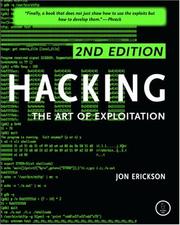
Builds a low-level understanding of how exploits actually work at the memory and network level, giving you the intuition needed to adapt tools and techniques rather than just run scripts.

Focuses heavily on network-based attacks, Active Directory, and lateral movement in enterprise environments — read after Erickson so the techniques are grounded in a solid technical foundation.

A dense, practical reference of commands and techniques for network exploitation and post-exploitation; best used as a companion reference once you understand the concepts from the previous two books.
Certifications & Career Strategy
ExpertUnderstand which certifications (OSCP, CEH, GPEN, eJPT, etc.) matter to employers, how to prepare for them strategically, and how to build a sustainable pentesting career.
▸ Study plan for this stage
Pace: 8–10 weeks, ~40–50 pages/day (CEH guide: 5–6 weeks; Tribe of Hackers: 2–3 weeks for reflection and synthesis)
- CEH exam domains and the breadth of knowledge required: reconnaissance, scanning, enumeration, system hacking, malware, sniffing, social engineering, DoS, session hijacking, web application attacks, and cryptography
- Exam strategy: time management, question types (scenario-based vs. definition), common pitfalls, and how to leverage the 4-hour window effectively
- Certification ROI and employer expectations: what CEH signals to hiring managers versus what real-world pentesting demands
- Red team mindset and operational security: how certifications fit into a broader career trajectory beyond exam passing
- Career sustainability: balancing technical depth with business acumen, client management, and continuous learning
- Certification stacking strategy: how CEH positions you for OSCP, GPEN, and other advanced credentials
- Ethical and legal frameworks: understanding the responsibility that comes with certified pentester status
- Building reputation and specialization: moving from generalist certified hacker to recognized expert in specific domains
- What are the 10 domains of the CEH exam, and which 2–3 do you consider most critical for real-world pentesting work?
- How would you structure your study time across the CEH domains to maximize retention and exam performance, and why?
- What is the difference between what CEH certification signals to employers versus what red team operators actually need to know?
- According to Tribe of Hackers, what are 3 key pieces of advice from experienced red teamers about building a sustainable pentesting career?
- How should you approach the decision to pursue CEH versus jumping directly to OSCP or GPEN, based on your current skill level?
- What operational security and ethical considerations should guide your approach to pentesting work post-certification?
- Take a full-length CEH practice exam under timed conditions (4 hours) and analyze your weak domains; create a targeted review plan for the bottom 3 domains
- Create a personal certification roadmap: plot CEH, OSCP, GPEN, and eJPT on a timeline with prerequisites, estimated study hours, and cost; justify your sequencing
- Select 3 red team insights from Tribe of Hackers and translate each into a concrete career action (e.g., skill to develop, network to build, specialization to pursue)
- Build a mock penetration test scope document that demonstrates mastery of 5+ CEH domains (reconnaissance, scanning, enumeration, system hacking, web app attacks); explain your methodology
- Interview 2–3 working penetration testers or red teamers (in-person, video, or async); ask them which CEH domains they use most and which they've had to learn on the job; synthesize findings
- Write a 1–2 page personal career narrative: where you are now, why CEH (or another cert) is your next step, and how you'll build toward a specialized niche (e.g., cloud pentesting, OT security, web app specialist)
Next up: This stage equips you with both formal certification knowledge (CEH's breadth across 10 domains) and strategic career wisdom (Tribe of Hackers' practitioner insights), positioning you to either pursue advanced certifications like OSCP with clarity, or immediately apply pentesting skills in real engagements with a professional foundation and ethical grounding.

Provides broad, certification-mapped coverage of pentesting domains; reading this consolidates all prior learning into the framework that hiring managers and certification bodies use to evaluate candidates.

Career advice and real-world perspectives from dozens of professional red teamers and pentesters — the ideal final read to map your skills to a career path and understand what the industry actually values.
Discussion
Keep reading
Paths that share books, cover the same subject, or open a related topic.