Paul Theroux Reading Order: Where to Start
Theroux has published more than fifty books in two distinct careers — the travel books, which are what he is famous for, and the novels, which he considers the real work. This path keeps them clearly separated. It runs the travel books in a deliberate sequence, starting with the one that invented the modern rail-travel genre, then moves through Asia and Africa before turning to the fiction, which is worth reaching but should not be where you begin.
The Rail Books That Started It
BeginnerRead the two journeys that made Theroux's name and set the form — a man alone on trains, talking to strangers, refusing to be charmed.
▸ Study plan for this stage
Pace: Two books, roughly 790 pages, and a month is comfortable — these are episodic by construction, so twenty pages on a commute works where it would not for a novel. The Great Railway Bazaar is 354 pages and moves fast; The Old Patagonian Express is 432 and slows in the middle, through Central America,
- The form he invented: no research, no interviews arranged in advance, no destination worth arriving at — the train carriage is the subject and the countries pass the window
- Dialogue as the whole method. Theroux reproduces long conversations with strangers verbatim and lets them condemn themselves, which is why the books read as fiction and why he has been accused of improving the transcripts
- The 1973 route in The Great Railway Bazaar is now historically unrepeatable — Iran under the Shah, Afghanistan before the Soviet invasion, Vietnam with the war still running — and much of the book's value is that nobody can take that journey again
- The absent narrator: he tells you almost nothing about himself, which reads as reticence and is actually concealment (see the Oceania book two stages on)
- His rule that a travel book is about the going, not the arriving — note how little time either book spends at any destination
- The Old Patagonian Express is built as a diminuendo: the further south he goes the emptier it gets, and the last chapter with Borges in Buenos Aires and then the nothing beyond it is the argument the whole book was making
- Compression: he will spend fifteen pages on a four-hour delay and one sentence on crossing a border, and the ratio is always deliberate
- What does Theroux think a travel book is for, and where in The Great Railway Bazaar does he say it outright rather than demonstrate it?
- Pick one passenger he humiliates on the page. Would the book be better or worse without the portrait, and what is it doing besides being funny?
- The Old Patagonian Express opens on a Boston subway platform in the snow. Why start a South American book there, and what does the choice tell you about his idea of a journey?
- Which of the two books has more actual information in it, and which has more scene? Does that difference change which one you would recommend?
- By the end of the Patagonian book, what does he seem to be travelling away from rather than toward?
- Keep a two-column list as you read The Great Railway Bazaar: places he is generous about, places he is cruel about. The pattern that emerges — and it is a pattern — is the most useful thing you can carry into the rest of the path.
- Read the final chapter of The Old Patagonian Express twice, back to back. It is the best passage he has written about why he travels and it goes past you the first time.
- Look up the 1973 rail map of the Asia route and mark which of those lines still run. Four or five do not, and knowing which changes how you read those chapters.
- After finishing both, write three sentences on whether you like this narrator. If the answer is no, stop the path here rather than at book six — that is a legitimate outcome and this stage exists partly to let you find out.
Next up: You now know the method and have decided whether you can live with the voice, which matters because the next three books are where the voice gets sharper and considerably less defensible.
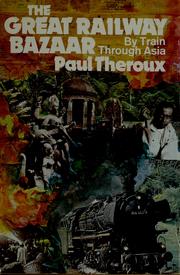
London to Tokyo and back by train in 1973, through Iran, Afghanistan and Vietnam mid-war. Start here: it created the modern travel book and half the genre since is answering it.
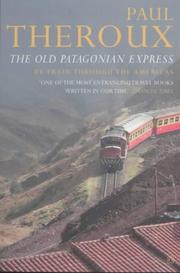
Boston to the tip of Argentina, entirely by train. Read second — the same method turned on the Americas, and the ending is the best passage he has written about why he travels at all.
More Journeys
IntermediateFollow the travel writing through Britain, China and the Pacific, where the tone gets sharper and more contentious.
▸ Study plan for this stage
Pace: Three books and about 1,360 pages — the longest stage on the path, and the one to spread over two months rather than force. The Kingdom by the Sea is 353 pages and the funniest; Riding the Iron Rooster is 480 and the most repetitive, because a year of Chinese trains in the mid-1980s produces a lot o
- The resident outsider: Theroux had lived in Britain for over a decade when he walked its coast, so The Kingdom by the Sea is an insider pretending to be a foreigner, which is a different and nastier position than the Asian books
- The Falklands War runs underneath the British book as a constant radio murmur, and his refusal to engage with it directly is a deliberate way of showing how a country talks to itself
- Riding the Iron Rooster is now a document of a China that has been demolished — the value has shifted from reportage to accidental archive, and reading it against any photograph of the same city today is the exercise
- His treatment of officials and minders in China: the running comedy of the state-appointed companion is his best sustained comic material
- The Tibet chapters are the exception in the China book — the sourness lifts, and it is worth asking why he can be moved there and nowhere else on the trip
- Oceania is where the concealment breaks. His marriage had collapsed and he says so, and the misanthropy that looked like a pose in the earlier books suddenly has a visible cause
- The collapsible kayak as a method: alone on water, he cannot be handled by hosts or officials, which produces the most unmediated encounters in his travel writing
- The Kingdom by the Sea is written by a man who chose to live in the country he is mocking. Does that make it more honest or less, and how does he handle the contradiction?
- What does the China book get right about the mid-1980s that nobody could have known was worth recording, and what does it plainly get wrong about where the country was heading?
- Why does Tibet break the tone of Riding the Iron Rooster, and does the break improve the book?
- In The Happy Isles of Oceania, what changes once he admits what is happening at home — in the prose, not just in the content?
- Across these three, is there any place he actually likes? What do the exceptions have in common?
- He walked, took trains and paddled. How much of each book's character comes from the mode of transport rather than the destination?
- Pick five towns from The Kingdom by the Sea and look at what they are now. The book is forty years old and coastal Britain has changed in specific, checkable ways; the gap is instructive about how travel books age.
- Read the China book with a map open. He names lines and stations constantly and the geography is genuinely hard to hold otherwise.
- In Oceania, mark the point where he first mentions the divorce. Then reread the fifty pages before it. The book is doing something different in those pages than you thought it was.
- Read one contemporary review of Riding the Iron Rooster written by a China specialist. The disagreement about what he saw is part of the record and is more interesting than agreeing with him.
- Take a week off between books here. Three Theroux travel books back to back flatten into one and the individual characters are worth preserving.
Next up: Oceania shows the man behind the persona for the first time, which is the right preparation for the African books, where he returns to the place he was young and the anger finally has a target he has earned.
Walking the entire coastline of Britain during the Falklands War, by a resident American who finds the country dismal. Funny and unfair, and the book that established his reputation for being rude about hosts.
A year by train across China in the mid-1980s, ending in Tibet. A record of a country that no longer exists, which is now its main value.
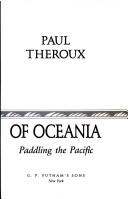
Paddling a collapsible kayak through the Pacific islands after his marriage collapsed. The most personal of the travel books, and where the misanthropy has an evident cause.
Africa
IntermediateRead the two late African journeys, which are the strongest thing he has written since the 1970s.
▸ Study plan for this stage
Pace: Two books, 863 pages, six weeks. Dark Star Safari is 495 pages and is the strongest thing he wrote after the 1970s; Last Train to Zona Verde is 368 and is explicitly its sequel and its refutation, so read them in that order with no gap longer than a fortnight. Theroux taught in Malawi with the Peace
- Return as a structure: he is measuring 2001 Africa against the Africa he taught in forty years earlier, so every scene is a comparison and the book's judgements depend on the accuracy of a forty-year-old memory
- The aid argument in Dark Star Safari — that the apparatus of assistance has created dependency and insulated a class of foreign staff from the countries they work in — stated as polemic, not as reporting, and worth testing against other sources
- Overland by choice: he refuses to fly, which is the formal constraint that makes the book, and he says explicitly what flying does to a traveller's understanding
- The schools he taught in, revisited, as the book's emotional core and the only place his defences drop
- Last Train to Zona Verde as a book about quitting. He announces mid-journey that this is his final African trip, and the reader watches a writer decide his own method has run out
- The Angola chapters in Zona Verde are the bleakest pages in his work, and the honest question is whether despair is a form of observation or a substitute for it
- Old age enters the writing here. He is sixty in Dark Star Safari and over seventy in Zona Verde, and the physical difficulty of the travel becomes part of the subject
- What specifically is Theroux's charge against the aid industry, and what evidence does he actually offer for it as opposed to assert?
- How does the Malawi he returns to differ from the one he describes teaching in, and how much of that difference is the country changing versus a man in his sixties remembering his twenties?
- Dark Star Safari refuses air travel entirely. Name three things that decision lets him see that a flying journalist would have missed.
- Why does he stop in Zona Verde, and does the book make the case for stopping or merely announce it?
- Read together, do these two books amount to a judgement on Africa or a judgement on the traveller? Where does the text let you decide?
- Which of the two is the better book, and is it the same as the one you would rather have read?
- Before starting Dark Star Safari, read one substantial critique of the aid-dependency argument from someone who works in development. Reading the polemic with a counterargument in your head is the only way to read it usefully.
- Track his route on a map from Cairo southward. The overland-only rule produces detours that look arbitrary in prose and make immediate sense geographically.
- Mark every passage where he is describing 1964 rather than 2001. Then reread only those. There is a whole short memoir buried in the book and it is the warmest thing he ever wrote.
- Read the last ten pages of Last Train to Zona Verde immediately after the last ten pages of Dark Star Safari. The reversal is the argument and it only lands side by side.
Next up: You have now read the travel writer at his best and at the end of his rope, which is the right moment to switch strands entirely and see what he does when he is not the narrator.
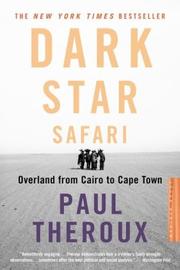
Cairo to Cape Town overland, returning to the Malawi where he taught in the Peace Corps forty years earlier. The best of his later books and a genuinely angry argument about foreign aid.
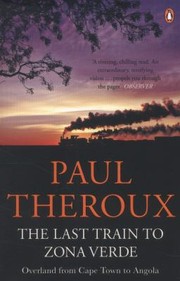
Cape Town northwards up the western side, and the book where he decides he is done with Africa. Read directly after Dark Star Safari; it is explicitly its sequel and its refutation.
The Novels
IntermediateSwitch strands to the fiction, starting with the novel almost everyone has heard of.
▸ Study plan for this stage
Pace: Three novels, 1,142 pages, and a real change of gear — these cannot be read in twenty-page commuting chunks the way the travel books can, because they are plotted and the momentum matters. Budget two months. Order matters here and the path has it right: The Mosquito Coast (382 pages, and the one mos
- Allie Fox in The Mosquito Coast as the travel persona taken to its endpoint: a man whose contempt for his own country is total, who is certain he can do better elsewhere, and who destroys his family proving it
- The child narrator. The Mosquito Coast is told by Fox's son, so the reader sees a monster through eyes that love him, and that gap is the entire technical achievement of the book
- Saint Jack's expatriate Singapore, written in 1973 before the travel career began, showing that the subject was always displacement rather than travel
- Jack Flowers as Theroux's one genuinely decent protagonist, which is worth noticing in a body of work this cold
- Autobiographical fiction as a confession device: My Secret History admits things in the third person that the travel books were built to hide, particularly about the marriage and the double life
- The Massachusetts-to-Africa-to-London arc of My Secret History is the actual shape of his life, and the novel is where the biography this path has been circling finally gets stated
- How differently he writes when he is not the narrator — the sentences lengthen, the judgements slow down, and the cruelty gets assigned to characters rather than delivered directly
- Is Allie Fox a self-portrait, a self-criticism, or both? Point to the passage that decides it for you.
- Why does Theroux give The Mosquito Coast to Fox's son rather than telling it himself, and what would be lost in the first person?
- Saint Jack was written before The Great Railway Bazaar. What in it already looks like the travel writer, and what does not?
- What does My Secret History tell you about the narrator of the first four books on this path that those books actively concealed?
- Theroux has said he considers the novels the real work and the travel books the day job. Having read both, do you agree, and does it matter what he thinks?
- Which of these three would survive if the travel books did not exist?
- Read the first chapter of The Mosquito Coast immediately after finishing Dark Star Safari. The voices are close enough to be uncomfortable, and that is the point of putting fiction after travel in this order.
- Watch the 1986 film after finishing the novel, not before. The casting of Harrison Ford resolves an ambiguity the book deliberately leaves open, and seeing the resolution imposed clarifies what the book was doing.
- Keep a list while reading My Secret History of the episodes you recognise from the travel books. There are more than you expect and the discrepancies are the interesting part.
- After all three, go back to a single scene in The Great Railway Bazaar and reread it. It reads differently now that you know what the narrator was leaving out.
Next up: With the fiction read and the persona dismantled, the last book on the path is the one where he turns the whole apparatus on his own country and finds, unexpectedly, that he can be kind.
An American inventor drags his family to the Honduran jungle to escape a country he despises, and destroys them. His best novel, and it reads as the travel books' misanthropy taken to its logical end.

An American pimp in Singapore, decent and doomed. The early novel that shows how long he had been working the expatriate subject before the travel writing took over.
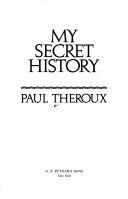
A thinly disguised autobiographical novel following a writer from a Massachusetts boyhood through Africa to literary London. Read it last of the fiction: it is the key to how much of the travel persona is a construction.
Late Theroux
IntermediateFinish with the American journeys, where the outsider finally turns on his own country.
▸ Study plan for this stage
Pace: One book, 441 pages, three weeks. Deep South is organised by season — he drove the back roads of the American South four times across a year and a bit — so reading it a season at a time, four sittings, matches its own structure better than pushing straight through. It is the last stop on this path a
- Repetition as a new method: returning to the same towns and the same interviewees across four seasons gives him relationships rather than encounters, and it is the first time his subjects get to change
- The foreign-correspondent trick applied domestically — he treats Alabama the way he treated Malawi, and the point being made is that rural American poverty goes unreported for the same reason it does abroad
- The aid argument from Dark Star Safari returns here in an American key: he asks why foundations fund clinics overseas while the Mississippi Delta goes without, and the continuity between the two books is deliberate
- Age and mortality in the writing. He is in his seventies, driving alone, and the physical ease of a car after decades of trains changes what he notices
- Structure by season rather than by route, which is why the book has no arrival and no destination — an unusual choice from a writer whose whole career was journeys with endpoints
- The absence of contempt, which is the most striking thing about the book if you have read the path in order, and the question of whether it is maturity or fatigue
- What does Theroux find in the American South that he says he had been looking for abroad, and do you believe him?
- How does going back to the same people four times change the portraits, compared with the one-shot encounters of the train books?
- He explicitly connects Delta poverty to the aid industry he attacked in Dark Star Safari. Is the comparison earned or is it a writer reusing a good argument?
- Is the gentler tone here an improvement? Answer it in your own terms before reading anyone else's review.
- Having finished the path, which Theroux is the real one — the man on the Iranian train in 1973 or the man in the Arkansas church in 2013?
- Read it one season at a time, with a gap between, and note what has changed for the people he revisits. Reading it straight through erases the effect the structure exists to produce.
- Set a passage from Deep South beside a passage from The Great Railway Bazaar describing a comparable encounter. Forty years of the same writer is visible in a single page and the comparison is the best exercise on this path.
- Write your verdict on whether the late warmth is a gain or a loss, then go and read what the reviewers said. This is one of the few genuinely open questions about his career.
- If you want more, the obvious next steps are not in our catalogue and are worth naming: Ghost Train to the Eastern Star, in which he retraces the Great Railway Bazaar route thirty-three years later and is honest about what the first book concealed, and Sir Vidia's Shadow, his account of the collapse of his friendship with V. S. Naipaul. Neither is on this path; both are the natural continuation of
Next up: This is where the path ends; the next move is either Ghost Train to the Eastern Star, which closes the circle on the book you started with, or a return to the travel writers Theroux was arguing against, since half the genre reads differently once you know what he did to it.
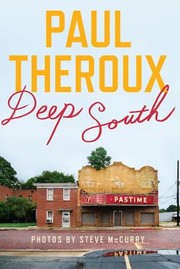
Four seasons driving the back roads of the American South, gun shows and catfish farms and collapsed towns. The late book that surprised people who thought he only travelled abroad, and a good place to stop.
Discussion
Keep reading
Paths that share books, cover the same subject, or open a related topic.